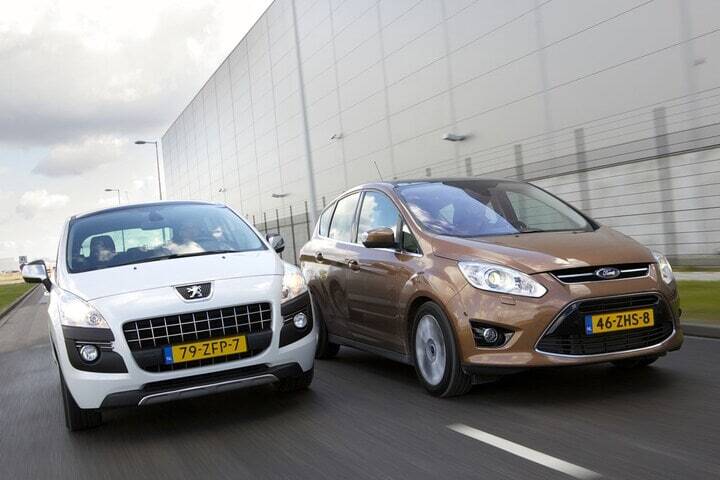
With the introduction of the first generation 3008, Peugeot launched a striking and practical crossover in 2009. By combining features of both an SUV and an MPV, it created a model that addresses the desire for space and comfort in a modern design. Families and business drivers, in particular, appreciate this versatile Peugeot.
Since 2009, the Peugeot 3008 has distinguished itself as a compact crossover that combines practical and comfortable features. While Peugeot originally positioned the model as a cross between an SUV and an MPV, the first generation stands out for its spacious seating position, an ergonomic interior, and smart solutions such as a HUD and a split tailgate. The dashboard feels high-quality and surrounds the driver like a cockpit, which contributes to comfort.
The luggage space is quite spacious, with 432 to 512 liters of capacity – in hybrid models, the space is somewhat limited by the technology. Thanks to a clear interior and practical details, the 3008 clearly feels at home as a family car.
On the road, it is noticeable how comfortable and quiet the car drives: the chassis filters out bumps well, while aids such as Dynamic Rolling Control counteract leaning in corners. In terms of engines, there is a choice of, among other things, the modest but strong 1.6 THP, the 2.0 HDiF, and the innovative Hybrid4, the first hybrid with a diesel engine in this class. The Hybrid4 scores particularly well with its low emissions, although this sometimes comes at the expense of towing capacity and comfort due to the robotized transmission.
However, there are points to consider. The striking exterior divides opinions, and some engines – especially the THPs – are known for technical problems. For motorists looking for a functional and comfortable crossover, the first generation 3008 is certainly an attractive option, especially thanks to its innovative details and spacious, practical usability.
In terms of performance, the first generation Peugeot 3008 offers something for everyone. Until the facelift in 2013, you can choose from petrol engines such as the 1.6 VTi with 120 hp and the powerful 1.6 THP with 156 hp. If you prefer to drive on diesel, you have the choice of a 1.6 HDi (112 hp), a 1.6 e-HDi (115 hp) and the stronger 2.0 HDi with 150 hp.
For those who want to combine economy with more power, there is the HYbrid4: a hybrid with a 2.0 HDi diesel engine and a system power of 200 hp, unique for this class. After the facelift, the engine range is further expanded. On the petrol side, there are options such as the 1.6 VTi (120 hp), the 1.2 PureTech (130 hp) and the 1.6 THP with 156 hp, but also a 1.6 e-THP with 165 hp for those looking for a little more power.
Diesel enthusiasts can choose from the 1.6 e-HDi (115 hp), the 1.6 BlueHDi (120 hp), the 2.0 HDi (150 hp) or the 2.0 BlueHDi (150 hp). The hybrid version also remains in the range after the facelift as HYbrid 2.0 HDi with 200 hp, with which you combine economical driving and extra power, without a plug.
Thanks to the high, spacious seating position and the clear interior, both driver and passengers sit comfortably in the Peugeot 3008, with sufficient head and legroom. With a luggage space that varies from 432 to 512 liters depending on the version – and a handy split tailgate for easier loading and unloading – the 3008 is excellent for family, weekend trips, or shopping trips.
Smart solutions such as an extra deepenable loading floor and numerous storage options make daily use extra easy. In hybrid models, it is noticeable that the luggage space is slightly more limited, but for most users, it remains spacious enough for everyday tasks.
Although there are plenty of reasons to choose the Peugeot 3008, there are also some points to consider as a buyer. The THP petrol engines are known for their high oil consumption and the high-pressure pump can fail in these versions, leading to malfunctions.
The later introduced 1.2 PureTech engine has a timing belt that runs through the oil. This can wear out over time, causing pieces of the belt to end up in the oil and possibly clog oil channels. This can cause significant engine damage if it is not discovered in time.
If you drive diesel, pay attention to the particulate filter: it sometimes gets clogged in these models. A clogged filter ensures that the car no longer meets the emission requirements, and replacing it can be very expensive.