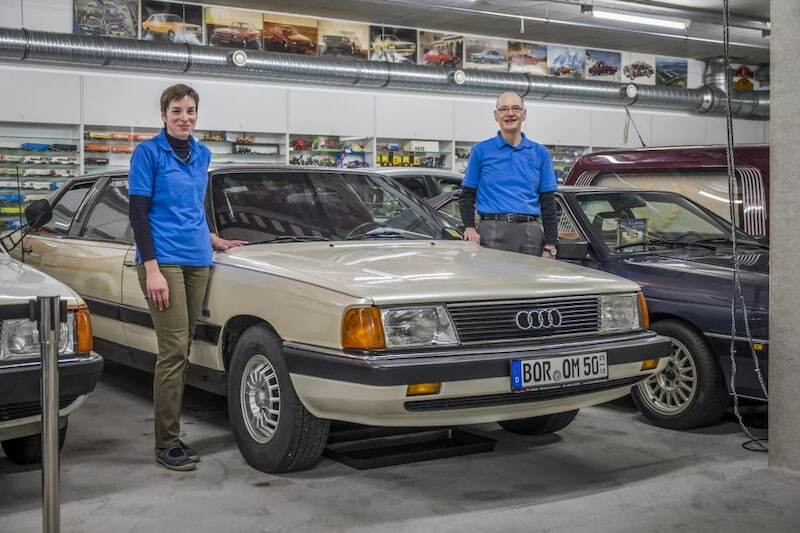
The AutoWeek Classics once portrayed the Opel Museum in Tijnje, Friesland, a private collection that has grown into a full-fledged museum over the years. Just across the border, in Thomas and Karin Höing’s Siku-Audi-und-Oldtimermuseum, we found another collection of such magnitude.
Visitors have come to the Siku-Audi-und-Oldtimermuseum from all over the world: from Chile to Japan and from New Zealand to South Africa. “We also regularly receive guests from the Netherlands, both individually and in clubs,” explains founder and owner Thomas Höing. Not surprising, as the Siku-Audi-und-Oldtimermuseum is located in Stadtlohn, just across the border near Winterswijk.
For those who are not very proficient in German, such a visit across the border need not be a problem: Karin, in particular, speaks good Dutch. But the universal language here is the love for – especially – Audi, and that started early. Thomas: “A friend’s father was an Audi dealer, and whether that had anything to do with it, I don’t know, but after their 1968 Beetle, my parents switched to Audi, with the 60 being their first. I actually grew up in the back of Audis.”
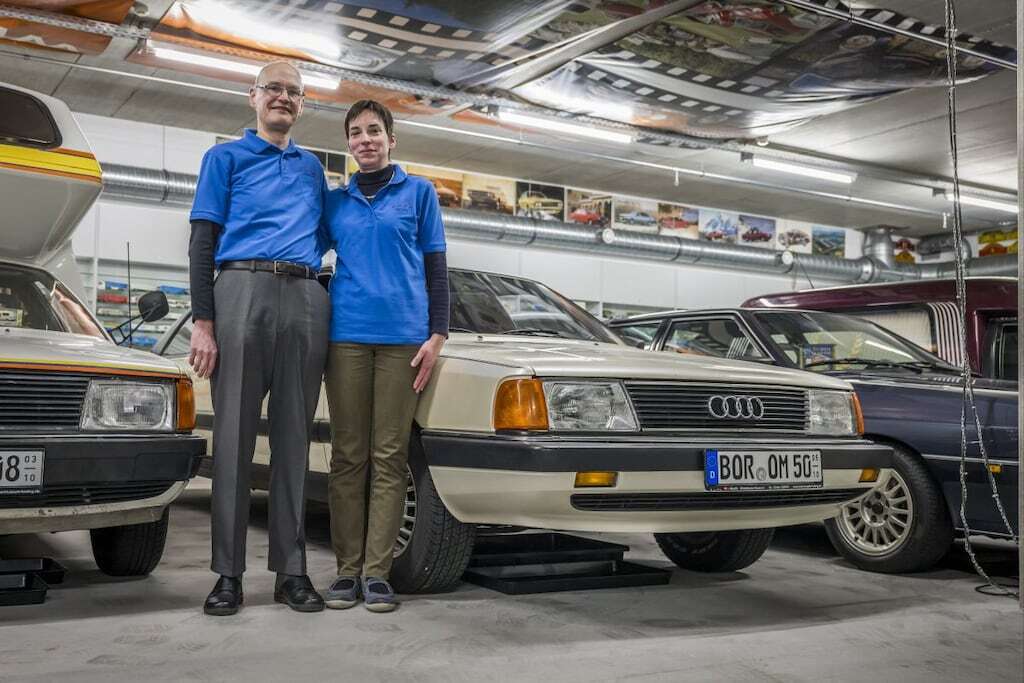
Started Collecting Brochures
Our host was already a car enthusiast back then. This manifested itself, for example, in visiting dealers to collect brochures. At the local Mercedes-Benz representative, Thomas struck out. “I was told that my father had to buy a Mercedes first, then I would get a folder. Not even a balloon was included.”
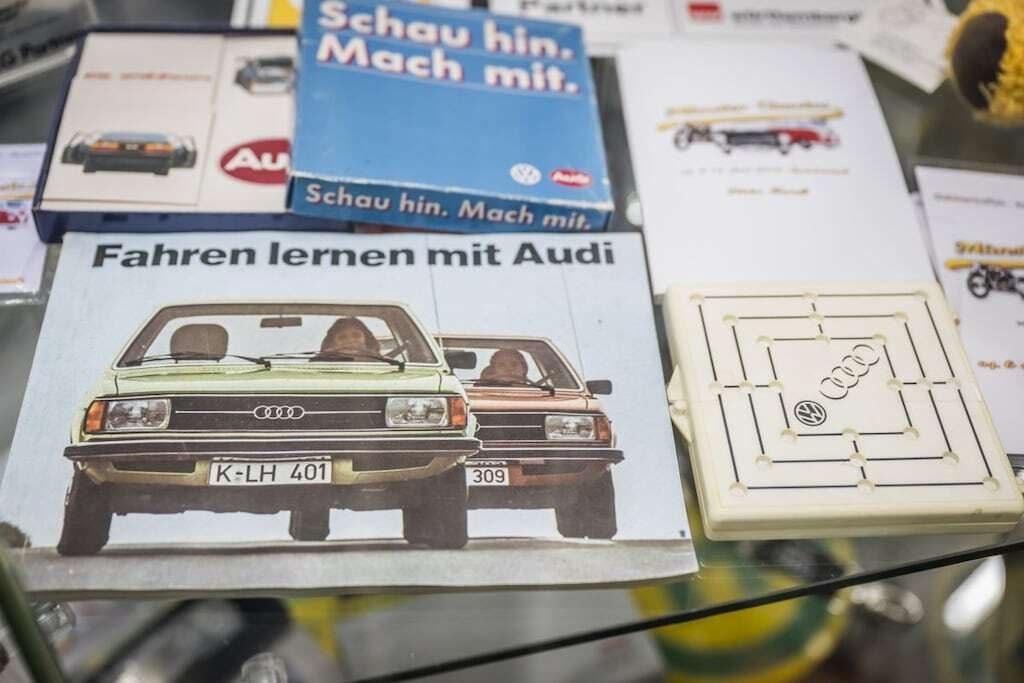
The Höing household, however, remained loyal to the four rings, and so did their son. “When I was 13 years old, I saw a photo with an Audi Quattro on it for the first time. That car made a deep impression.” Of course, a real one was not yet an option, but perhaps a small one. “As a child, I once visited the Siku factory. That sparked my interest in miniature cars, so I started collecting them.”
Despite his love for large and small four-wheelers, Thomas did not go into the automotive field. “No, I am originally a furniture maker and later worked my way up to construction engineer.” We are visiting a piece of his architecture today, because the museum with more than 2,200 square meters of exhibition space is of his own design. “It was built in five months,” he says not without pride. This is how the puzzle pieces fit together nicely, or as Thomas himself says: “A lot in my life happened by chance, with this as a result.”
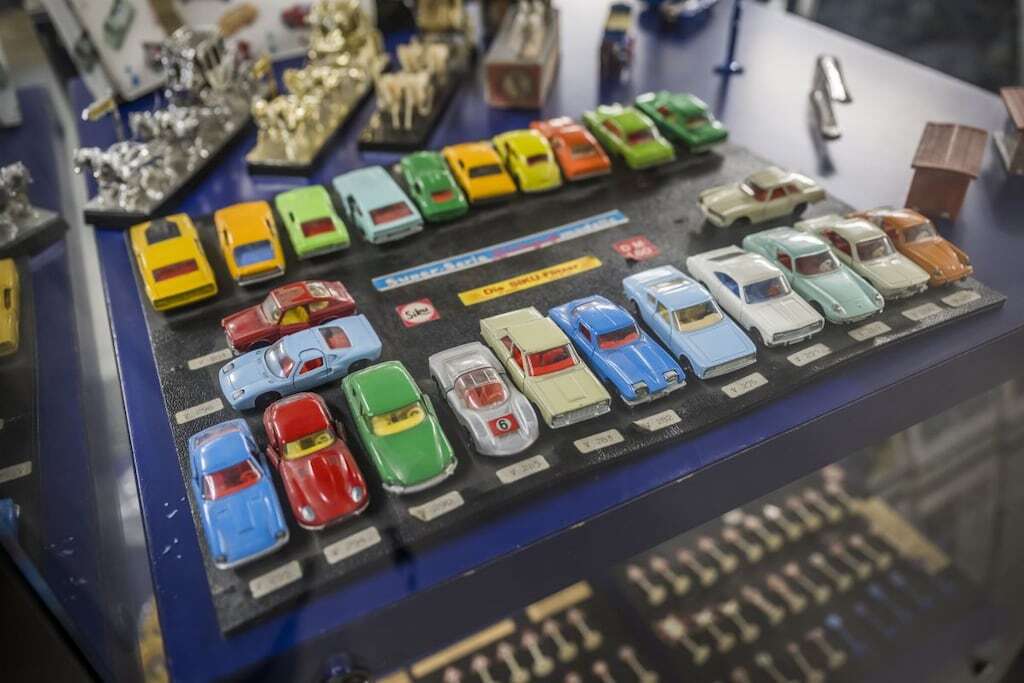
40,000 Miniatures
Thomas has said goodbye to his previous profession, now he is a full-time museum director. Not surprisingly: spread over two floors (but the museum is equipped for the disabled), the collection includes around 90 cars. In addition, more than 27,500 miniatures of the German brand Siku, over 11,500 Audi models of all brands and around 1,000 Wiking vehicles in the well-known model railway scale 1:87. You don’t just do something of this size on the side, especially with all the interest from home and abroad. Every year, a good three thousand enthusiasts travel to Stadtlohn.

Thomas’ First Car Was an Audi 80
To Thomas’ great regret, his first own car is missing among the 1:1 cars: “That was an Audi 80 LD that I had to sell in 1992 due to lack of space. I was still living with my parents at the time and at one point there was no more space in their garage. I still got a good price for it from the Audi dealer, my school friend’s father, but I still wanted to buy it back after a while. Because the 80 was standing tightly between many other cars, we just let it go for a while. Until I got a call from him: he had closed his business and I could pick up my car. But wherever I looked, I couldn’t see my ex-80 anywhere. We think he sold a large number of vehicles abroad at once, but where? I have searched in both the Netherlands and Poland to see if my 80 might be driving there. In vain: I never found him again.”
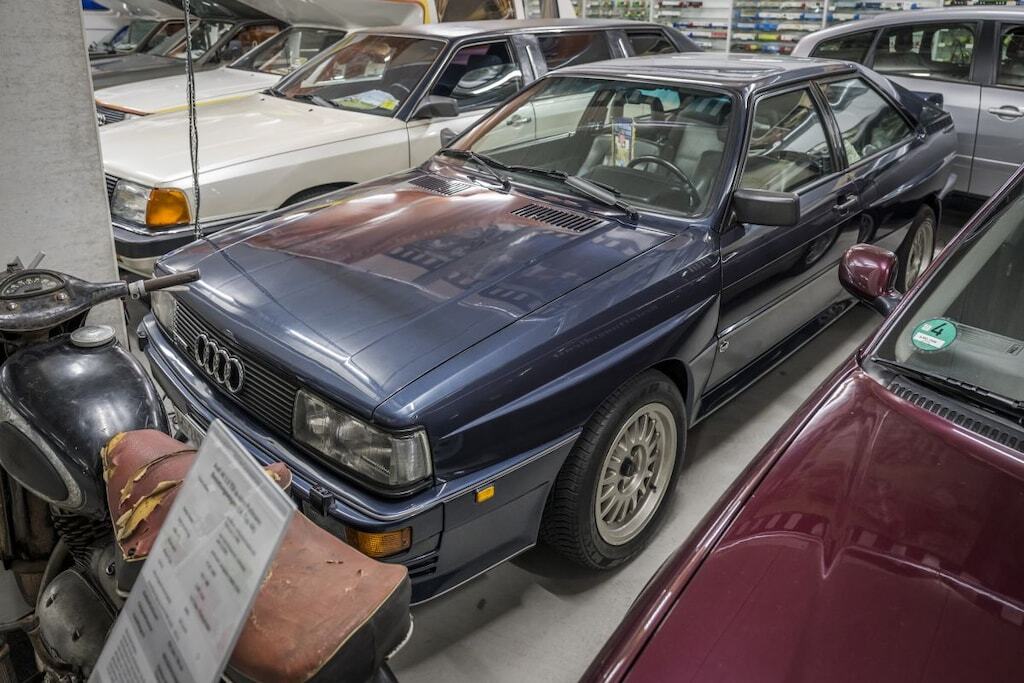
Ur-Quattro Foundation Museum
That is extra wry when you see how much space the museum has. Although, the growth here also went fast, so your eyes barely get any rest: it is almost door handle to door handle. This is not only due to the detective work to get hold of special copies (more on this later), but also because once known, the couple regularly received discarded Audis, free of charge. His next Audi, a 90, is still there, as is his childhood dream; the Ur-Quattro that was bought in Switzerland in 2002. “The Ur-Quattro was more or less the foundation of the museum.”
Two-Strokes, Rotary Engines and Maya the Bee
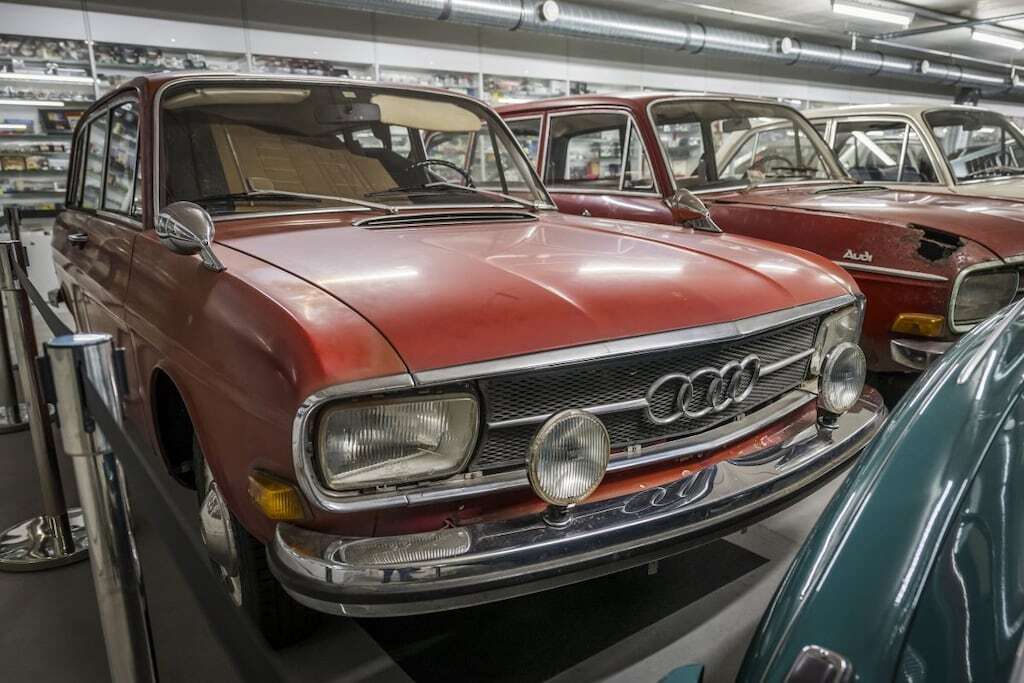
We start with one of Audi’s ancestors; DKW. After two motorized two-wheelers from 1956 and 1957, we come to the passenger cars – a Junior 800 from 1962, a Sonderklasse Coupé from 1955 – although you cannot directly qualify the Munga 6 as a family car. We see it more as a snowplow. Also nice is the DKW/Auto-Union 1000 S Coupé with its 1.0-three-cylinder – with these specifications it could almost be a modern power source, if it were not a two-stroke engine.
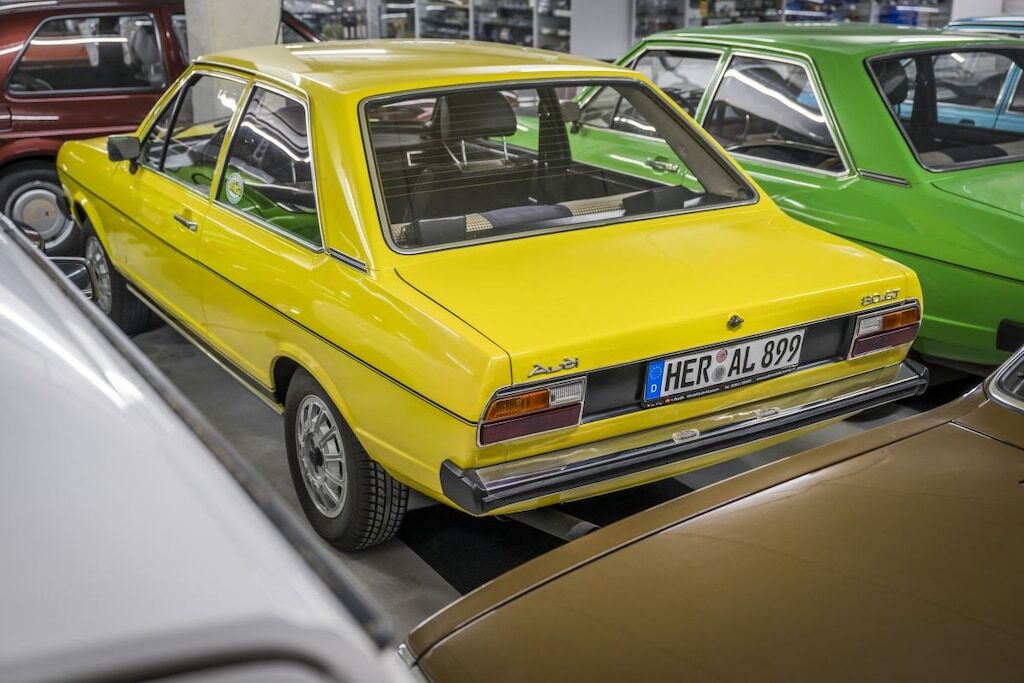
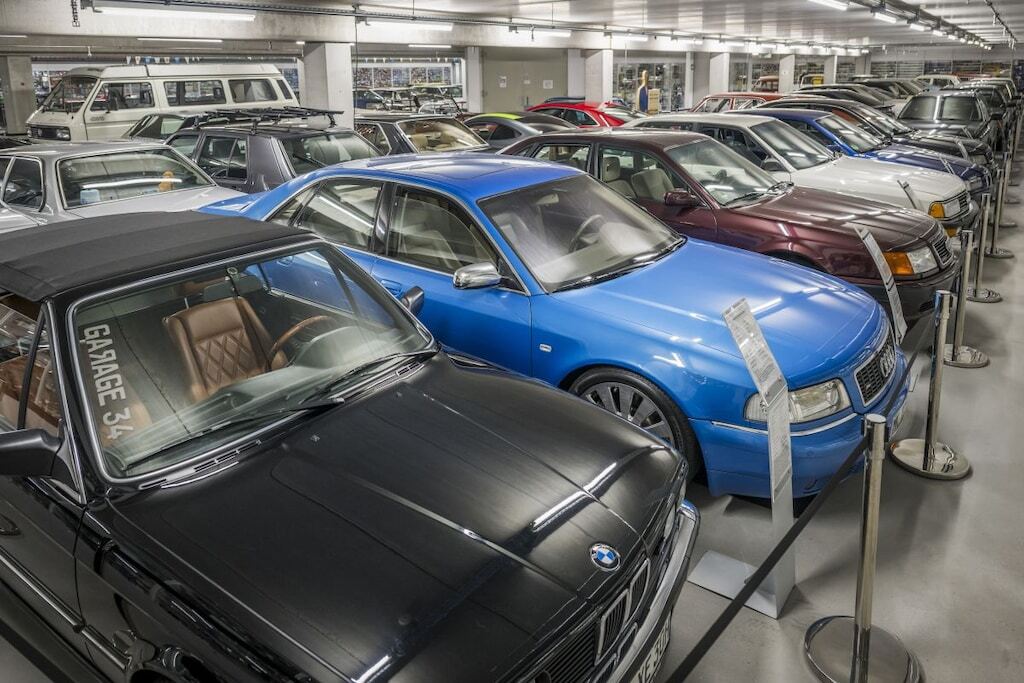
A completely different type of machine (a rotary or Wankel engine) is housed in the orange NSU Ro 80 from 1975, actually the forerunner of the Audi 100 Type 44, and with that we have arrived at the center of gravity of the collection: Audi. Dressed in a wonderful 1970s livery are the poison green 50 (1976), the red 60 Variant (1971), the white 75 (1971), the brown 80 (1973), the yellow 80 GT (1974) and bright green 80 GTE (1976), and the beautiful mandarin-colored 100 Coupé S from 1972. Also nice is the latest addition: a yellow 80 in basic trim. The 1,300 cc engine houses 55 horses that bring ‘Maja’ (from Maya the Bee, because of the paint color) to 100 km/h in 17.5 seconds and then on to a modest top of 145 km/h. In 1979 that was enough for the first owner.
Premium Aspirations
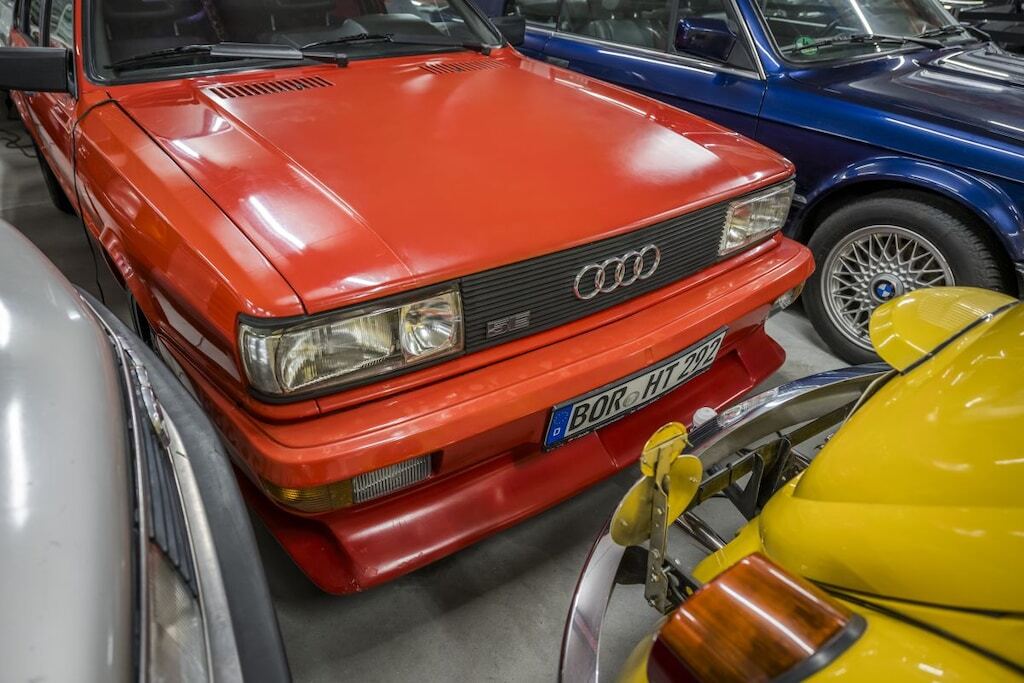
Gradually the emphasis shifts: the brand gets premium aspirations – metallic paint makes its entrance, the bodies become more angular and stately. We also see modified models of all kinds. What about the Coupé GT 5S from 1981 that was equipped with gull-wing doors by the previous owner? The 100 Crayford Cabriolet from 1975 that, should the topless version not be striking enough, is painted in banana yellow? Bischofberger converted 100s into camping vehicles. We see a Type 43 from 1980 and some Type 44s from 1982 (with pop-up roof) and 1984, flanked by garden furniture. Thomas: “Those Type 44s were prototypes, test vehicles from Audi. We were able to take over these for little money.”
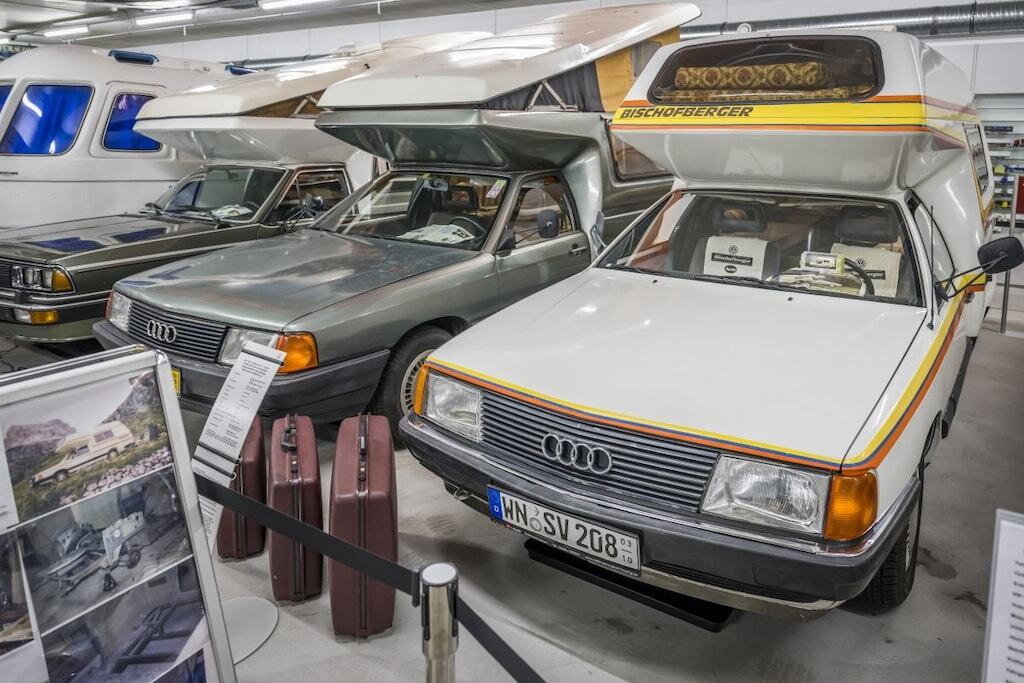
100 Avant 2.3E quattro from the Audi Company Fire Brigade
There are more interesting anecdotes. For a 100 Avant 2.3E quattro from 1990 from the Audi company fire brigade, Thomas can tell that this is one of the very last built Avants of the Type 44, from December 1990. He and Karin personally picked him up from Ingolstadt. We stop at a green metallic specimen with a flag on the fender. “That is from the Bundeswehr. From a general even, because he was entitled to metallic paint. Lower ranks were driven around in cars with matte paint. But general or not; under the hood purrs a modest 75-hp power source.”
We also see vehicles from other services, such as the police and the Red Cross. Thomas: “Special, because after work, these vehicles were demolished or rebuilt to civilian. We were able to save this copy from the Red Cross.” But we also see cars from the THW (Technisches Hilfswerk), an A6 converted into a hearse and an American 100 (called 5000 there) that was extended into a stretch limousine by the New York bodywork company Picasso and functioned as a wedding car for Thomas and Karin.
Even an Electric A2
This way you run out of eyes: 80, 90, 200, Cabriolet, a V8 Evo and even an electric A2, which never went into series production. “For the municipality of Leipzig, Bosch and LE Mobile converted a few A2s into electric vehicles. After proven services, Audi did not want them back, because the conversion was done by Bosch. Most copies were then demolished. Too bad, because the consumption was promisingly low: 10 to 12 kWh per 100 kilometers.”
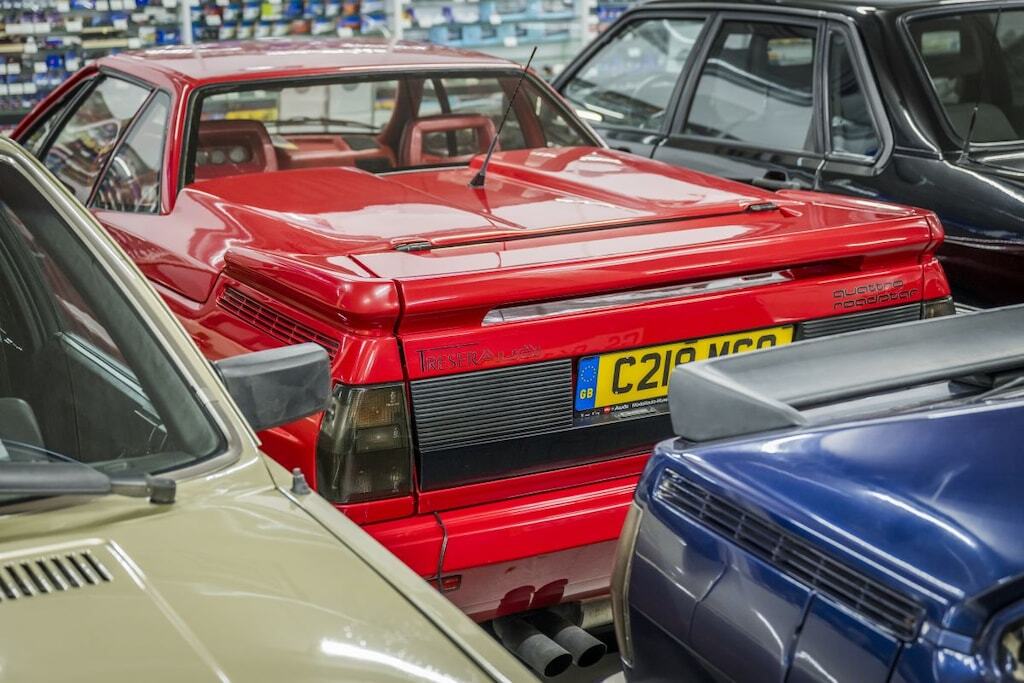
Of a different order are the tuned models. In particular, Treser, also based in Ingolstadt, knew how to visually and motorically spice up many Audis. To begin with, a 200 Avant quattro tackled with co-tuner Artz, which initially delivered 400 hp, but has now been retuned to a still substantial 320 hp. “This car once pulled a service car from rally driver Walter Röhrl out of the ditch.”
Treser Hunter: Expanded Audi 80 and 90
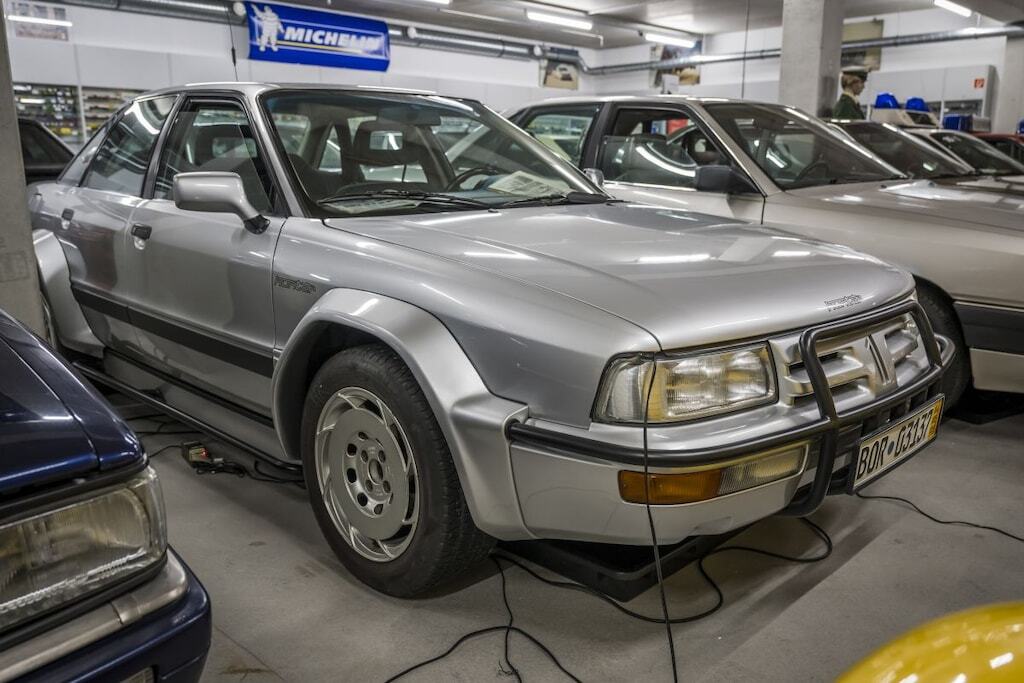
We come across more Tresers. The expanded 80, which goes through life as Hunter, looks terrifyingly fast, but under the hood of this ’87-er a normal 1.8 of 112 hp serves. Although, normal, well the GTE engine (and Golf GTI). A 90 (1985) that has also been transformed into a Hunter, does more justice to its heroic appearance: 250 hp. This Audi 90 has been nicknamed ‘Zwarte Mamba’.
Thomas’ favorite is now no longer the Ur-Quattro, but his red Treser Audi Quattro Roadster (1985) brought from Great Britain. After these special vehicles, a number of Volkswagens seem almost normal: Beetle, Golf, Scirocco, Passat and Transporter, with the Polo Harlekin as a colorful outlier. That’s what makes the museum so much fun: in addition to diverse, separate and downright rare material, we also come across house, garden and kitchen cars that used to be on almost every street corner. These are the cars that Thomas and Karin often got offered, both from private individuals and from (older) dealers. Also from our country by the way: we see a ’94 Audi 80 with the license plate from that year (JP-DJ-35).