EV Range Champion Emerges
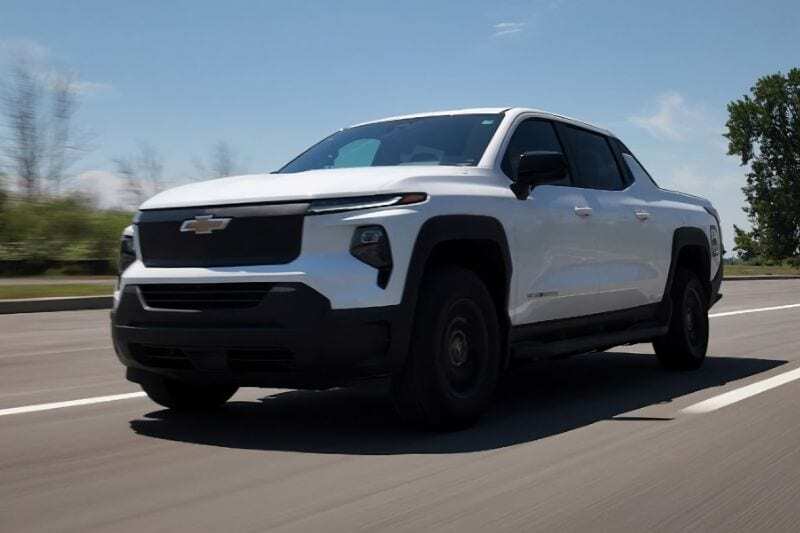
The Chevrolet Silverado EV has broken a record. Never before has an electric vehicle traveled so many kilometers without recharging. This is remarkable. The nearly 4,000-kilogram electric pickup truck dethrones the sleek and significantly lighter Lucid Air.
In July, a Lucid Air Grand Touring entered the Guinness World Records book by driving over 1,200 kilometers on a single charge. That record has now been broken by a vehicle of a very different order: a hefty electric pickup truck. Indeed, a Chevrolet Silverado EV dethrones the Lucid Air. A Chevrolet Silverado EV Max Range Work Truck, to be precise. This is the lightest variant of the electric pickup and also the version that naturally achieves the greatest range. However, “light” should be taken with a grain of salt; the nearly six-meter-long behemoth weighs 3,840 kilograms…
The Chevrolet Silverado EV Max Range Work Truck covered a distance of no less than 1,705 kilometers without visiting a charging station. The maximum range on paper is 793 kilometers. The pickup truck thus managed to travel twice as far as it should. Of course, the distance of 1,705 kilometers was not covered under normal circumstances.
A group of GM technicians drove in one-hour time slots on public roads around GM’s Milford Proving Ground test track in the U.S. state of Michigan. The software was not tampered with for the record attempt. Where possible, an average speed of 32 to 40 kilometers was maintained. Hard braking was avoided, as was hard acceleration. The windshield wipers were set to the lowest possible position for optimal aerodynamics, the tires were inflated to their maximum capacity, the spare tire was removed, and the wheel alignment was adjusted. The cargo bed was covered with a so-called *tonneau*, the climate control was not used, and the record attempt was made in the summer for optimal battery conditions.
It’s certainly possible to get even more kilometers out of the EV, one of Chevy’s technicians explains in an accompanying note. “If we were driving downhill all the time, we would of course get an insane number of kilometers. But that wasn’t the point here. We wanted this to really happen, on public roads.”