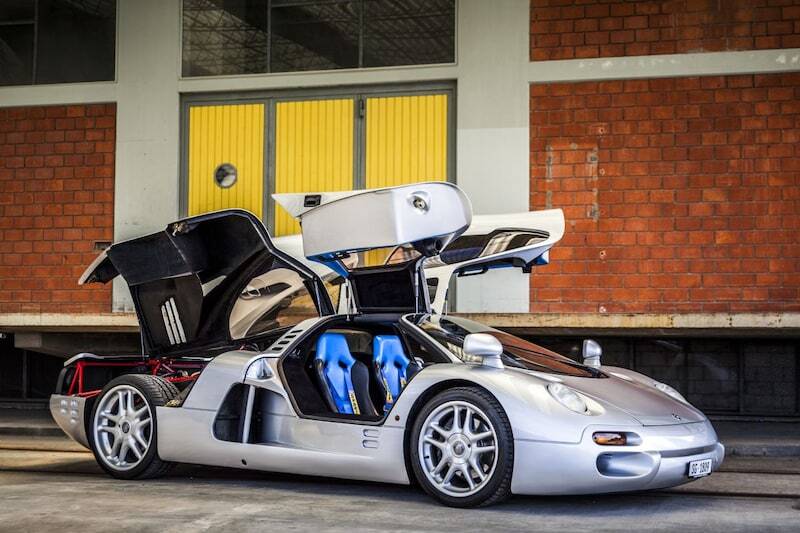
The Isdera Commendatore 112i is weird, very weird. Whether this mysterious spectacle that was developed in the 90s as the foundation for a new supercar dynasty, there is only one. For the first time in A Long Time, This Unique Piece is Hitting the Road. With us Behind the Wheel. In reality, and not virtualy, as older gamers might remember from the racing game need for speed. This German Supercar was also in it!
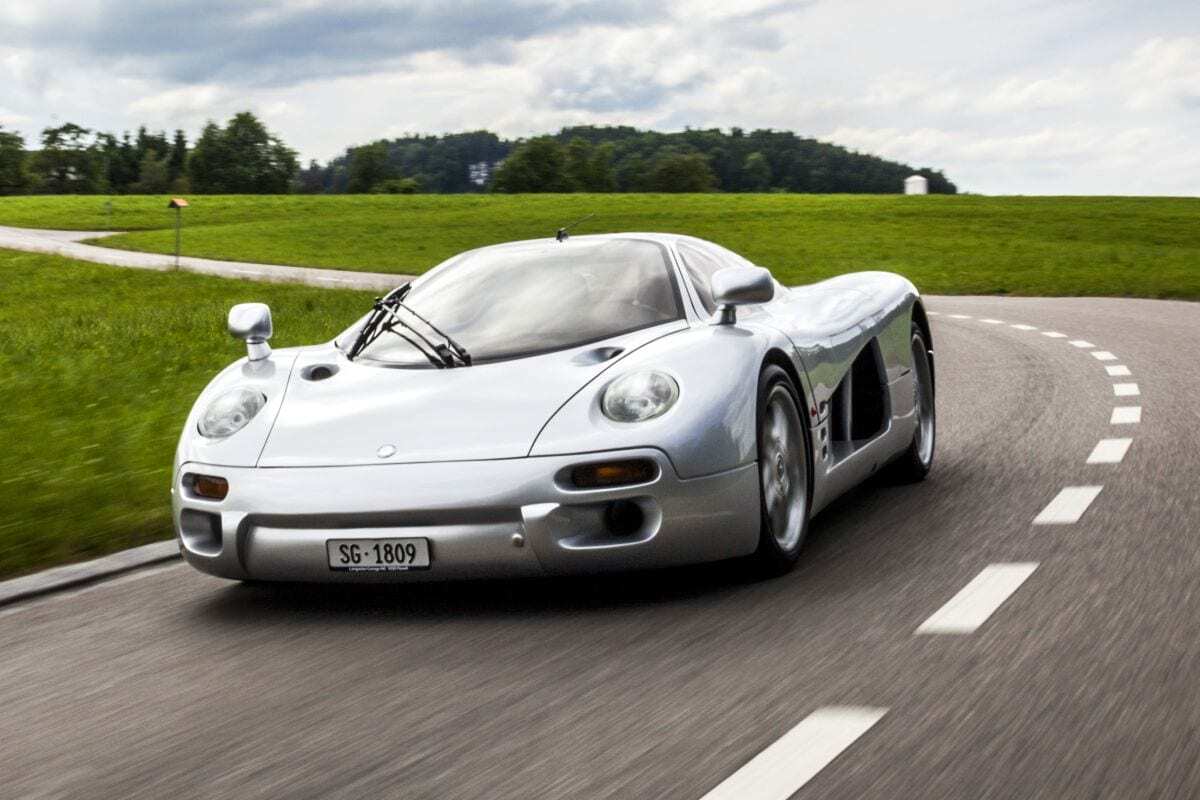
Two: Ouch; Three: Ouch; Four: Ouch. Driving Hard in the Isdera Commendatore 112i Turns Out To Be A Rather Masochistic Affair. Every time the clutch engages when shifting up and the car makes a Sharp Leap Forward, our crown slams against a sneaky metal bar that sits against the low ceiling. It is tropical of hot in the car; The Air Conditioning is not working, The Windows Cannot Be Opened. The Four-Point Seat Belts Cut Into The Shoulders As The Mighty Machine Slows Down thanks to Hard Kicking On The Middle Pedal. Sweat pours down our bodies from all sides, just a few centimeters behind us the twelve-cylinder is roaring even more hot air into the cramped cabin. Pebbles rattle loudly in the Wheel Arches, somewhere under the dashboard a strange electric Hum can be heard. No time to check what it is, because it is hard work to stay in the wake of our predecessor in this supercar. Because that is a Lamborghini Aventador LP700-4.
Out of sight after IAA performance in 1993
A Few Hours ago We Finally Got Acquainted with the Isdera Commendatore 112i, A Car We Have Been Hunting For A Year with the Help of An Enthusiastic German Isdera Fan, A Lot of Persuasion and A Dose of Luck. After Its Introduction In 1993 at the Frankfurt Motor Show, This Obscure Supercar From A Small German Design Agency Disappeared From View So Quickly That Nobody Really Knew WHETER IT Still Existed – And Where. Isdera itsself has always leg rather secretive about the production. The First Car, which was on display in Frankfurt 21 years ago, was tasks separately and stored a long time ago. The manufacturer does not want to say why.
A Second Isdera Was Built in 1999
In 1999 A Second Car was Built for a Swiss Customer. That car sometimes resurfaced in subsequent years when it was put up for sale. After that, The Commendatore Usually Went Underground Again Quickly. This Supercar Has Never Been A Showpiece on the Road, But An Investment Object – OR A Means of Payment in Kind For A Business Deal. This is how the current owner, a swiss real estate magnate, got the commendatore, his son jeffrey tells us. Jeffrey (who prefers not to reveal more his identity than his first name) is the owner of the Aventador, Nice and Willing, but by no meanly interested in the history of his father’s Isdera. “It drives stubbornly, Everything Works Heavily, it’s old – This is just not my child or car.” Honest Language. But a Bit Painful for the Commendatore Who was Once Built with the Intention of Starting A Supercar Dynasty.
What does isdera mean?
Eberhard Schulz Founded His Engineerbüro Fur Styling, Design und Racing (Isdera, Therefore) in 1982 in Leonberg, Near Stuttgart. He Mainly Earned His Money With Consultancy and Technological Services for Large Car Companses; Isdera Built, Among Other Things, Wind Tunnel Models, Concept Cars, Mock-Up and Prototypes and Did Wind Tunnel Research or Design Work for Third Parties. In 1983 he presented the First Isdera that Went Into Series Production: The Spyder 033i/036i, An Open Sports Car With, Depending on the Year of Production, A Mercedes Four or Six-Cylinder in the Middle. This was followed in 1984 by the imperator 108i, a sports coupe with a mid-engine and gull-wing Doors, equipped with varous generations of AMG-TUNED V8S. Both Cars Remained in Production for ten years, The Imperator Even Received A Facelift in 1991, But Ultimately Only A Handful of Both Models Were Build.
Around 1987, Schulz Started Designing His Most Ambitious Project to Date: A Car For The 24 Hours of Le Mans, which had to compete in the Fiercely Contested GT1 class. That participation came to Nothing After Isdera Ran Into Serious Financial Difficulties After An Investor Withdrew.
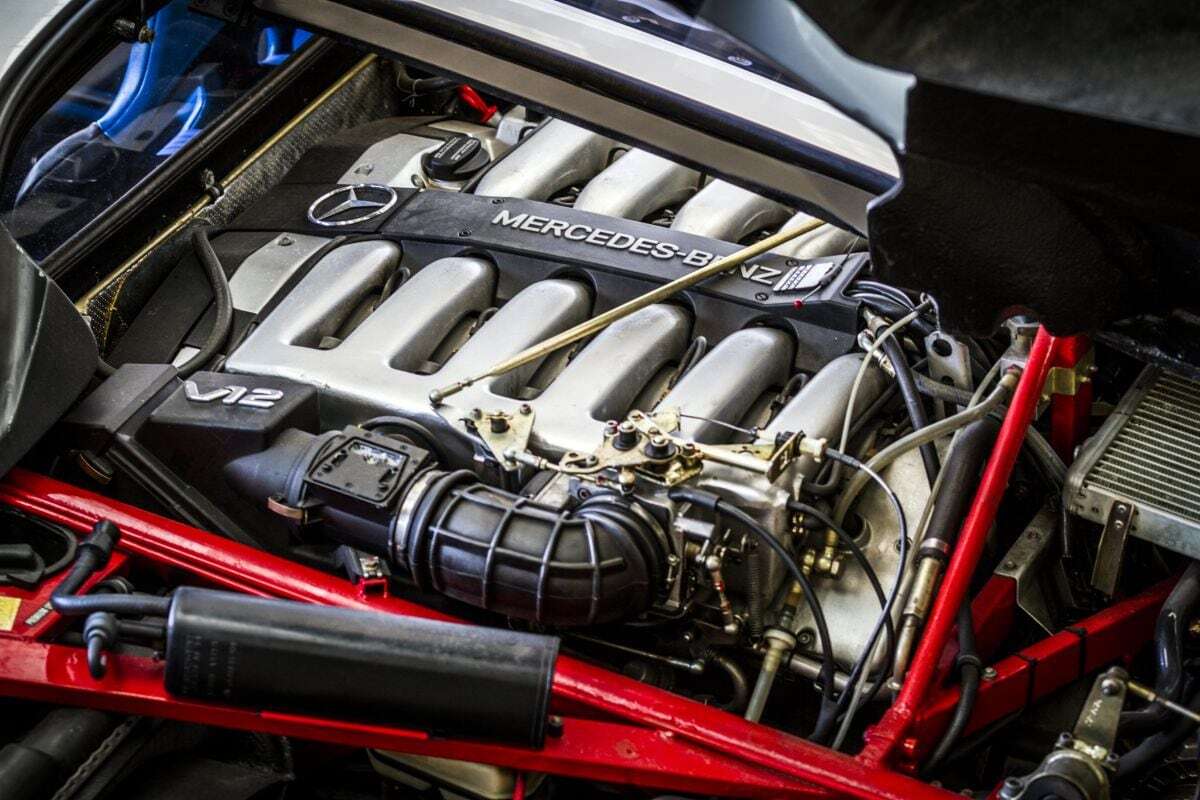
Mercedes V12
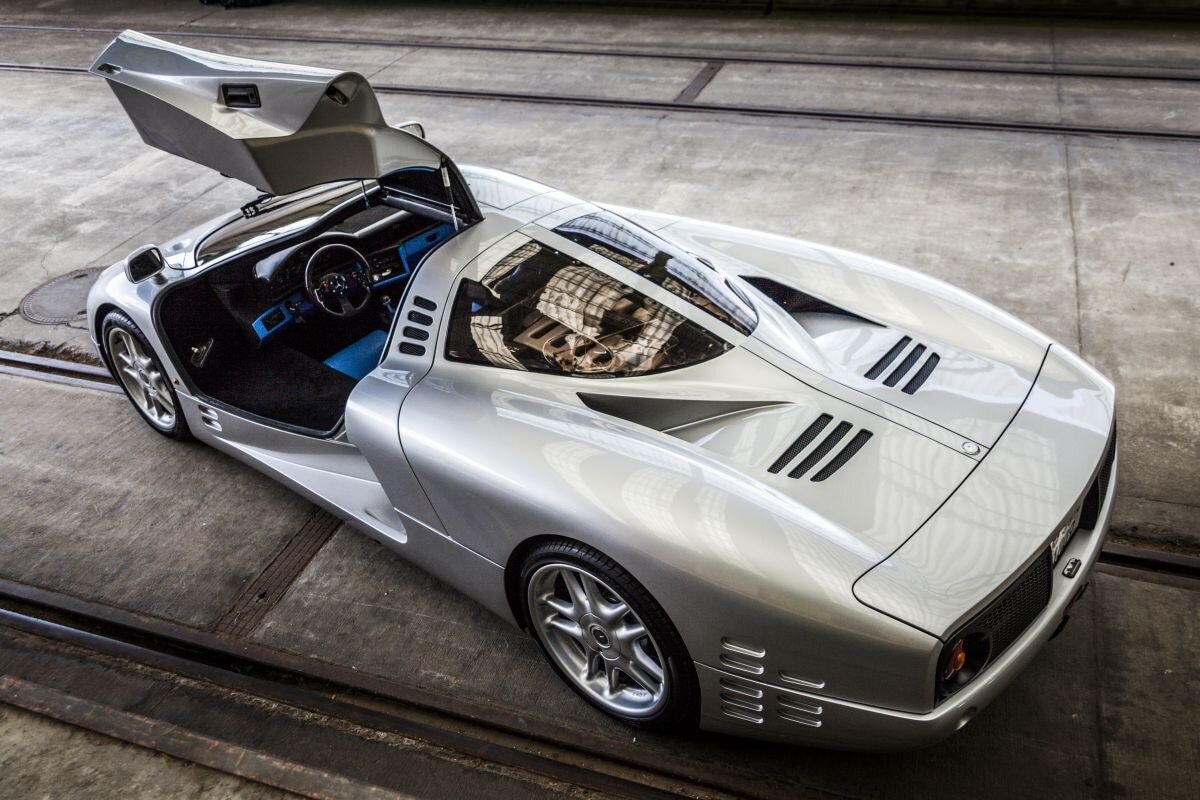
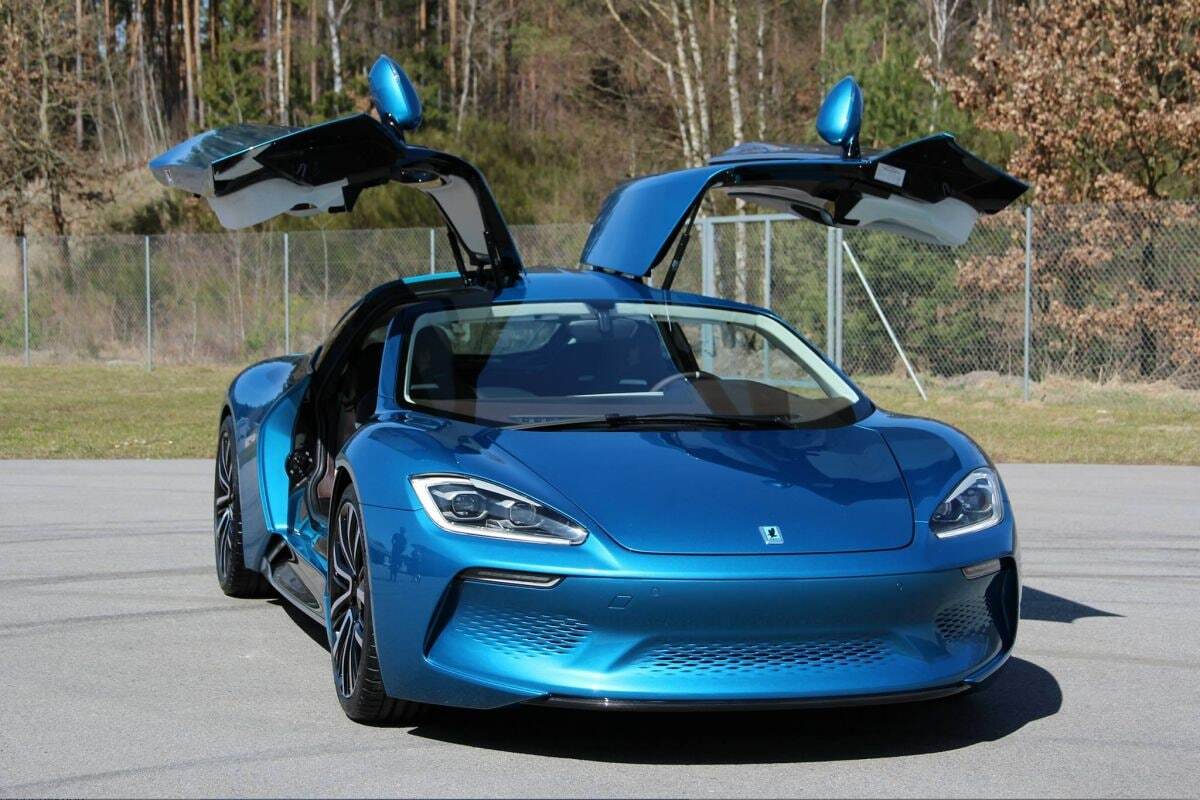
Schulz decided to take his design to the streets. The basis is a lightweight tubular frame, on which a body of carbon fiber and reinforced fiberglass is placed. The Mercedes-Derived 6.0 V12 Lies Lengthwise in Front of the Rear Axle, With the Gearbox Behind It. Schulz Wanted the Commendatore To Be A Practical Supercar, Suitable for Everyday Use – More or A GT Than a Racing Car for the Public Road. The Car Therefore Got A 120-liter tank, A 200-liter LugGage Compartment in the Front and a Cramped But Comfortable Interior, Including Leather Racing Seats. Furthermore, there is ABS, ASR, A chassis that automatically regulates the ride height (Low on the Autobahn, Higher in City Traffic) and – Even then – A Hydraulically Operated Brake Valve on the Rear Deck.
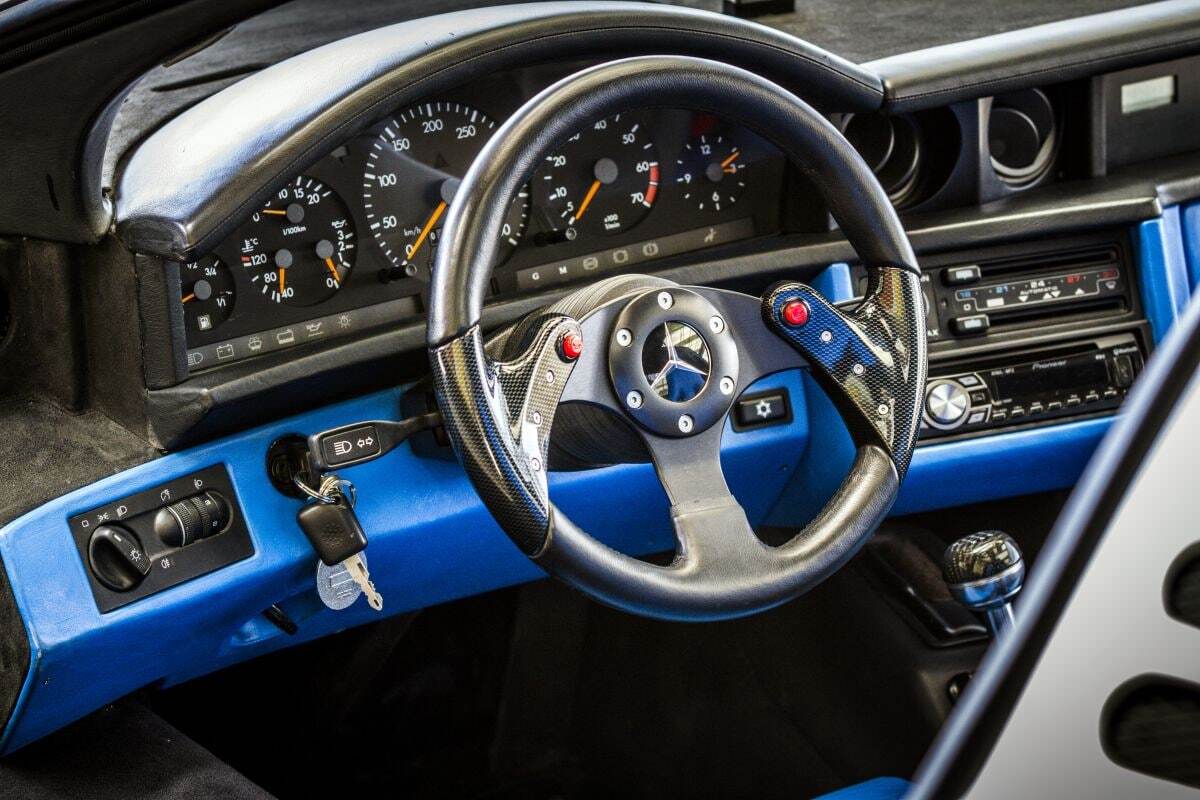
Instrumentation of the Mercedes 600 SEL
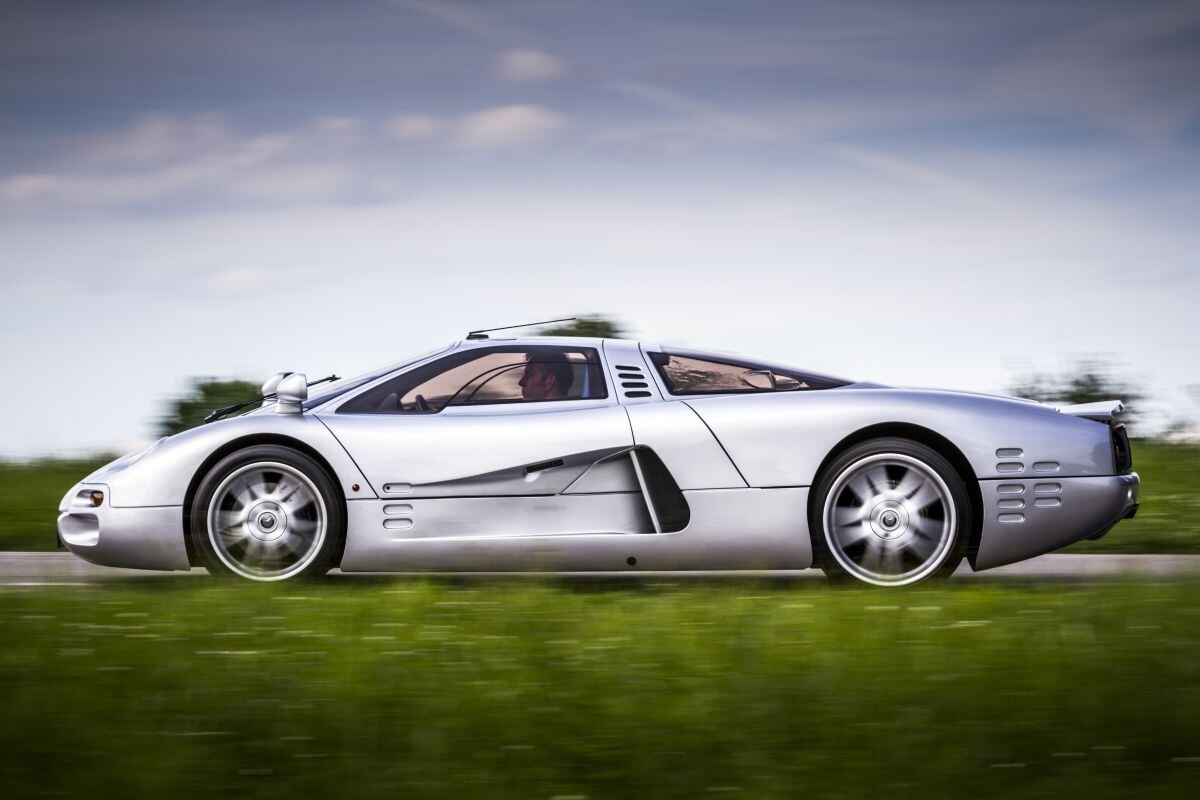
With its length or 4.66 meters, The Commendatore is about as long as a modern midi-suv, but it is only 1.04 meters high. As a result, it seems much longer than it is. It weighs 1,575 kilos – Exactly the same as the Aventador. The Commendatore is unmistakly a child of the wild supercar period of the late 80s and early 90s, but with its porsche-like nose it looks less aggressive than you might from a construction from that time. That feeling is reinforced by the interior, which is dominated by the Standard instrumentation from the Mercedes 600 sel that served as the engine donor and by a number of cheap-looking operating instruments that seem to have leg randomly gathered together. However, The Interior is Spotless, Although Not Everything Works Properly-Such as the Unlocking of the Gull-Wing by On The Passenger Side And, The Most Important Problem, The Ventilation System.
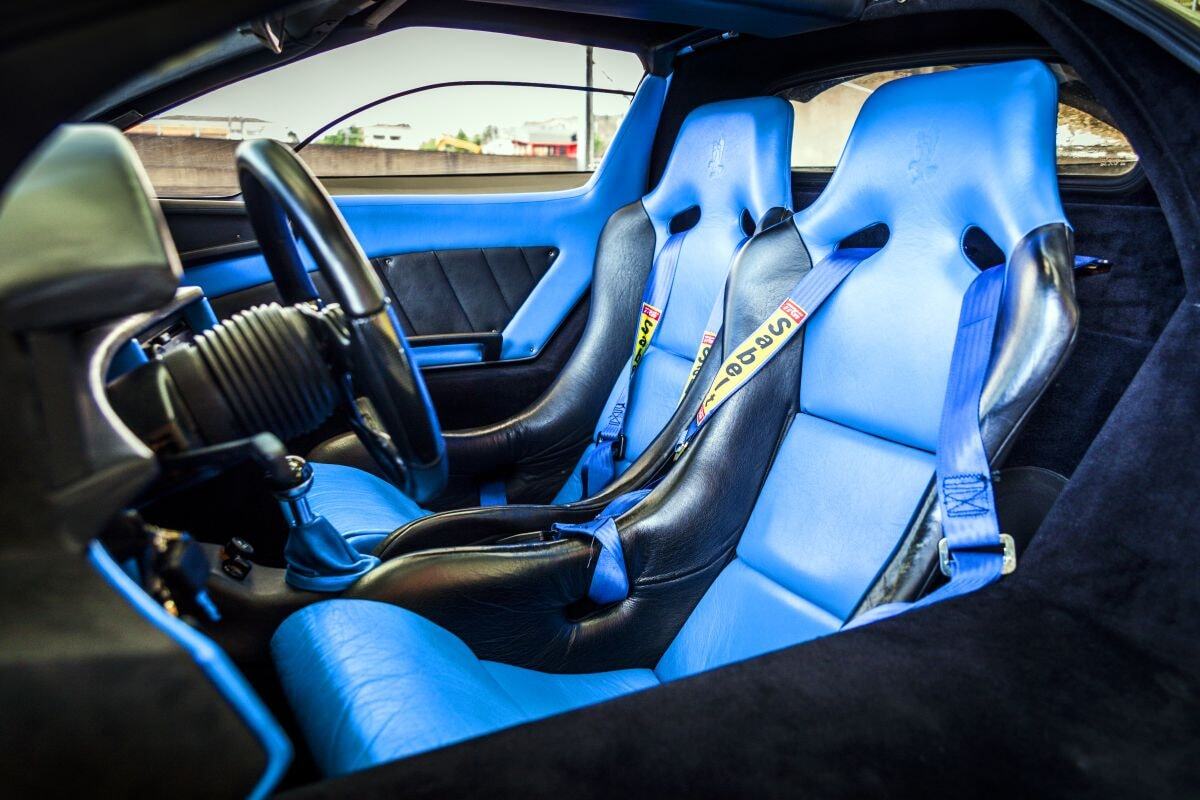
Very Hot
And as said, some cooling is sorely missed. It is getting hotter and hotter in the cockpit. In this corner of Switzerland, near Lake Constance, Highways are sparsely sown. Our Ride is over Hilly Country Roads, Full of Fast Turns, Tight Bends, Vicious Potholes in the Road, Large Height Differences between Asphalt and Roadside and Unexpectedly Looming Villages and Oncoming Traffic. This is about Pulling Short Sprints and Fierce Braking Reactions. Driving Hard Straight Ahead is a piece of cake in any car, but on this winding route it Doesn’tn’t Take Long Before it Becomes Painully Clear What Two Decades of Technological Progress Make A Difference. Every time we have caught up a bit at the end of a straight stretch by accelerating a little more, the Aventador rounds the next corner like a scaleextric car, while the isdera follows without a treed or overstear. Our predecessor also has an unblown v12 in the back, but the lamborghini’s delivers 700 hp against the commendatore’s 420. Moreover, the Aventador has a seven-speed semi-automatic, Four-Wheel Drive and a carbon fiber fiber fiber fiber fiber fiber fiber fiber fiber fiber fiber fiber fiber fiber fiber fiber fiber fiber fiber fiber fiber fiber fiber fiber fiber fiber fiber fiber fiber fiber fiber fiber fiber fiber fiber fiber fiber fiber fiber fiber fiber fiber fiber fiber fiber fiber fiber fiber monocoque. The Lambo, which is more than two seconds faster on the sprint from 0-100 km/h alone, effortlesly chops up the isdera. Or course he does. Who cares?
Mechanical Feel
The Hard Chassis and the Low, Wide Tires Turn the Smallest Camber in the Road Surface Into A Slope, Every Threshold Into A Mountain and Every Longitudinal Rib Into A Track That The Tires Like To Follow; The Sports Steering Wheel Sometimes Tries to Escape Your Grip Like A Hyperactive Puppy. Braking is a matter of kicking hard on the middle pedal, but the deceleration of the meaning brembos is fierce. The Gears Can Be Engaged with Short, Precise Clicks, But The Gear Liver Feels Heavy – Everything Works Heavily in the Isdera. Also the power steering, also the clutch, which engages so abruptly that at low speeds you have to be careful not to dribble over the road like a drunken canta. But this oldie can still go blood-hard-and the sensation of speed is sensational. Provied it is tackled with a firm hand, this thing goes like a rocket. And althegh he may be searching, he follows every line you order him to. We enjoy the mechanical feel of the car when accelerating; The Force You Have To Exert To Push The Gear Lever Through The Gears, The Unruly Pedals, The Fact That You Really Have To Drive The Car And – Above All – The Pounding Primal Power of That Great V12.
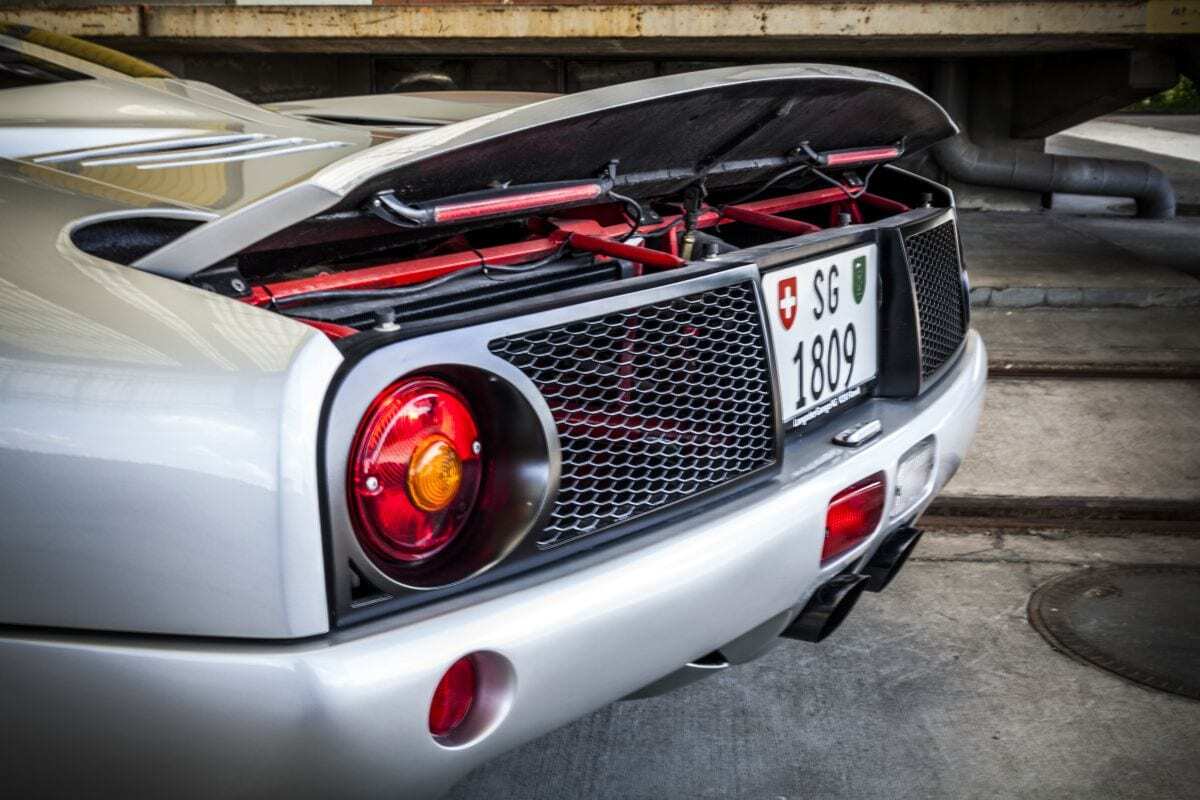
Other Mirrors
This car Differs in details from the commendate that was presented at the iaa in Frankfurt in 1993. It has two mirrors on the front fenders; The Roof Mirror With Periscope Function has Been Replaced by A Normal Interior Rear-View Mirror. The Reason? Swiss Traffic Law Requires A Right-Hand Exterior Mirror. The Isdera Logos Have Been Replaced by Mercedes Rosettes and it stands on Other Wheels. Despite all the secrecy surrounding the car, it is Certain that is the only driving example – for the time being, because the first commendatore is currently being by a customer himself from the parts that has stored for years. Accordance to the Isdera Price List, The Commendatore 112i had to cost 800,000 DM in 1993 (The Equivalent of Almost 898,000 Old Guilders) and Options Such as Metallic Paint Or A High-end Audio System Could Easily Add Tens of Thousands of Marks. At a time when you could buy supercars from more and more reputable brands for competitive prices and craftsmanship Became Too Exensive for a Small Brand to Compete Against Such Parties, The Commendatore was Doomed to Failure. Isdera Put its Car Production on Standby and Never Released a Production Model Again.
The only commendatore in the world, with a mileaage of 9,500, was for sale the ride for an Asking price of 1.2 million euros. We Bring the Commendatore To A Standstill with A Handing Brakking Action-Especial to See That Insane Brake Valve Flip Up to its Maximum Position of 80 Degrees In The Rear-View Mirror. The Gear Lever Goes Into First Gear. Just Enjoy That V12 Rumble. Then: Get out of here as hard as possible. Two: Ouch; Three: Ouch; Four: Ouch. Delicious.
High-Tech and Retro
In 1968 Eberhard Schulz Built His First Own Car, The Erator. Hey then Went to Work for Porsche in the Design and Development Department in 1971; In 1978 he moved to amg. Meanwhile, Mercedes had presented the C111 concept in 1968. The Spectacular Car Broke a Number of Speed Records, But It was never intended that the C111 would go Into Production. Schulz decided to develop his own version in his own time and with his own resources. Not least because he was dissatisfied with the course Porsche was a bar at that time: “I was invaded in the development of the 928 and I thought that was a car that porsche should not want to make,” Schulz Tells us. “I wanted to show what a sports car should look like in my opinion.” His design was called CW 311, A Play on the name C111, The CW Value of Schulz’s Brainchild (0.311) and 300 SL, The Mercedes That Mainly Inspired Schulz. The Design Grew Into The 108i Imperator. While That Car, Together With The PreviOutly Developed Spider, was in Production, Schulz Designed, Among Other Things, Cars for Baur (The TC3 Coupé Based on BMW), Bitter (A Roadster Prototype) and Irmscher (The Gt) and a WHOUSTERS FOR RENOWNED Allowed to say anything.
After the Commendatore, It Remained Silent Around Schulz for a Long Time, Until He Suddenly Surfaced In 2006 With a New Project: The Autobahnkurier 116i. That looks like a mercedes coupé from 1936, but is powered by two v8 engines from the w126 s-class from Mercedes; Each Eight-Cylinder Drives One Axle. That car has never leg for sale; Schulz Built The Car As A Child or Hobby Project.