Buying a Young Used Diesel: Yes or No?
New diesels are becoming less and less available. What about used ones? We’re focusing on buying a used diesel. Where does the break-even point lie, for example, with a popular used car like the Volkswagen Polo?
The diesel has certainly been in a bad light for the last ten years. But this is not the first time. As early as 1986, the Nature and Environment Foundation was concerned about soot from diesel exhaust gases. They were said to be responsible for many cases of lung complaints such as asthma. In 1992, the European Union (EU) came up with the first emission standard for harmful substances. In the Netherlands, among other countries, the catalytic converter is required to make exhaust gases cleaner. Since then, the EU has introduced a revised, stricter standard every few years that car manufacturers must adapt to. This raises the question of whether you can still buy a young, reliable kilometer-eater in 2025.
NEDC and WLTP
For a long time, the emission of a diesel engine was measured using the NEDC method. In 2015, the Euro 6 standard was introduced. From Euro 6c (2017), the more accurate WLTP method is used, with which the same car emits more harmful substances than measured with the NEDC method. To limit the emission of harmful substances, environmental zones are created. Utrecht and Eindhoven had the scoop in 2007, followed by cities such as Amsterdam, The Hague and Rotterdam. In such a zone, only vehicles that meet a certain emission standard are allowed to drive. As of January 1, 2025, Dutch municipalities can decide for themselves whether to operate a green (Euro 4 and higher) or blue (Euro 5 and higher) environmental zone.
Which Second-Hand Diesel Can You Still Buy?
If the year of construction is 2015 or higher, you can easily buy any second-hand diesel, including Martin Kleinjan or Kleinjan Dieseltechniek in Nijverdal. “Because all cars from that year of construction fall within the Euro 6 standard and that standard is the most current, you can in principle buy any diesel. In this case, it is more important for the consumer to look at aspects such as the mileage and the maintenance history of a car.” Although the new Euro 7 standard has already been developed, the legislation is not yet that far. According to spokesperson Paul de Waal of the Bovag, the choice for purchasing a diesel depends very much on your personal situation, for example, whether you often come to a large city where an environmental zone is in force. “Some municipalities, such as Arnhem, offer a day’s exemption for passenger cars with a too low emission class. Such an exemption is intended for one-time access.”
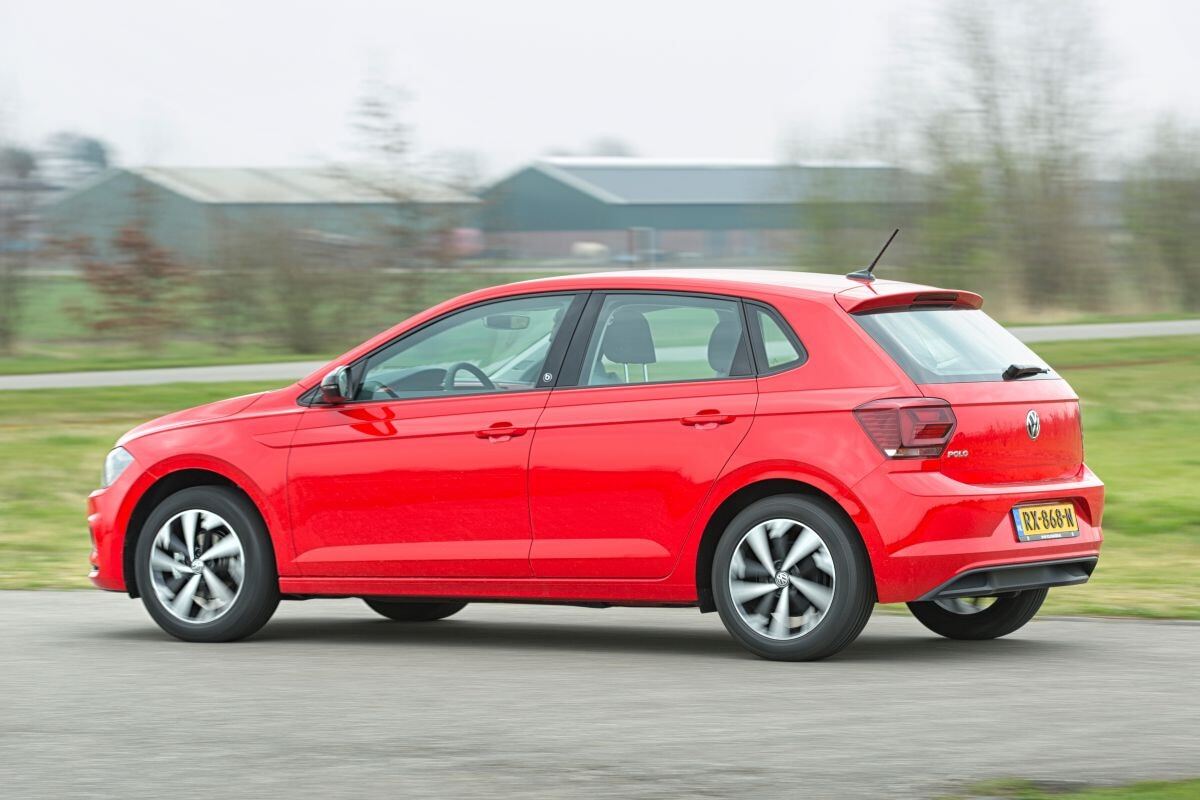
The personal situation that Bovag spokesperson Paul de Waal is talking about is also related to the number of kilometers you drive – in addition to whether or not you come to a large city where an environmental zone applies. When that number is equal to or higher than a certain mileage, you reach the break-even point. That is the point at which driving with one fuel is cheaper than with the other. For the break-even point in this article, we base ourselves on the most popular used car of 2025 so far, a Volkswagen Polo. We compare the 95 hp 1.0 TSI petrol version and the also 95 hp 1.6 TDI diesel version, both manual and with 2020 as the year of construction.
For the 1.0 TSI, an average consumption of 1 liter per 17.9 kilometers applies and a road tax rate of €114 per quarter in the province of Noord-Holland. The Dutch list price for a liter of petrol (Euro 95) is €2.17 at the time of writing. For the 1.6 TDI, an average consumption of 1 in 27 applies and a road tax rate of €321 per quarter in the same province. The Dutch list price for a liter of diesel is €1.91 at the time of writing. If we then make a calculation for the annual costs of both versions, whereby we want the total amount for diesel to be lower than for petrol – the break-even point, therefore – we arrive at an annual mileage of 22,659 or higher. The total amount per year for a Polo on petrol at the mentioned number of kilometers is €5,315.93 compared to €5,315.91 for the Polo on diesel. A look at the used car offer of AutoWeek shows that the average purchase price of a five-year-old Polo on petrol is €15,360 and €14,915 for a diesel.