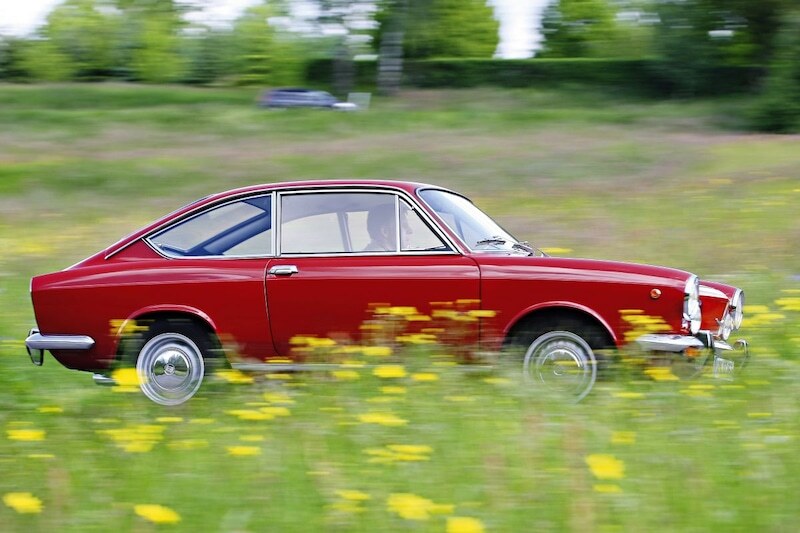
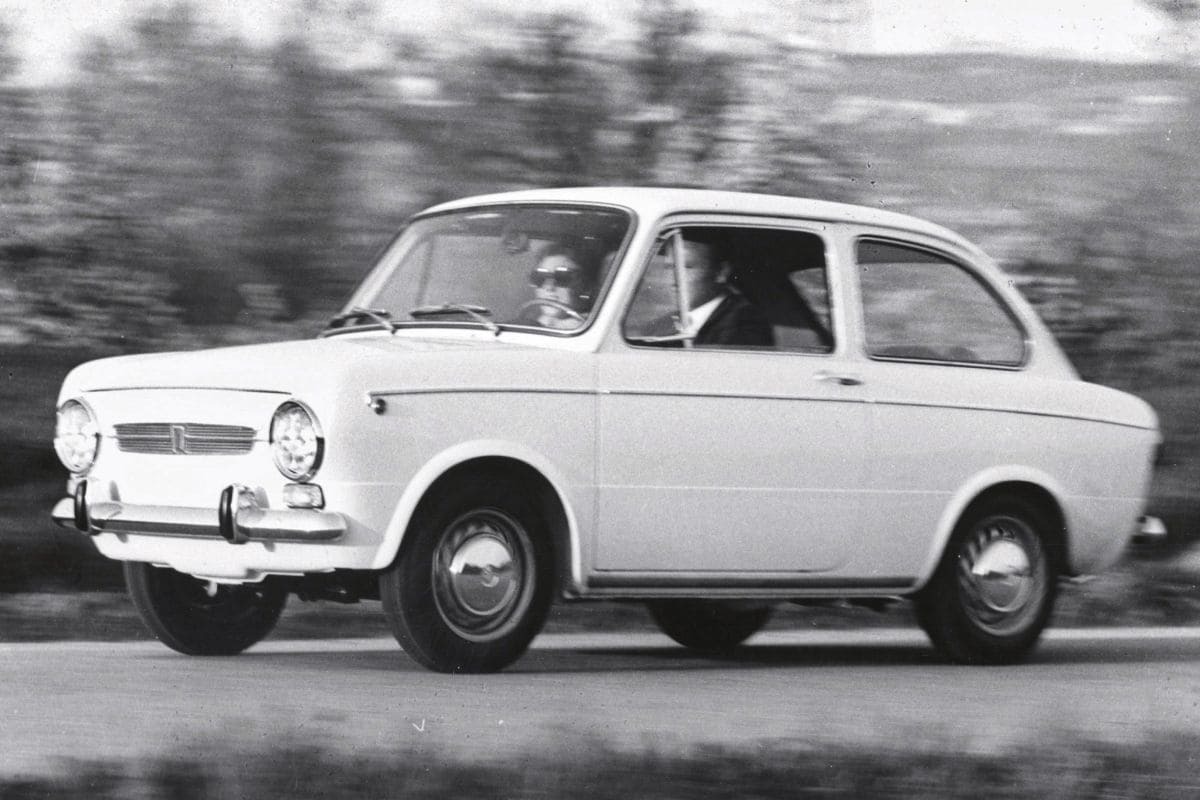
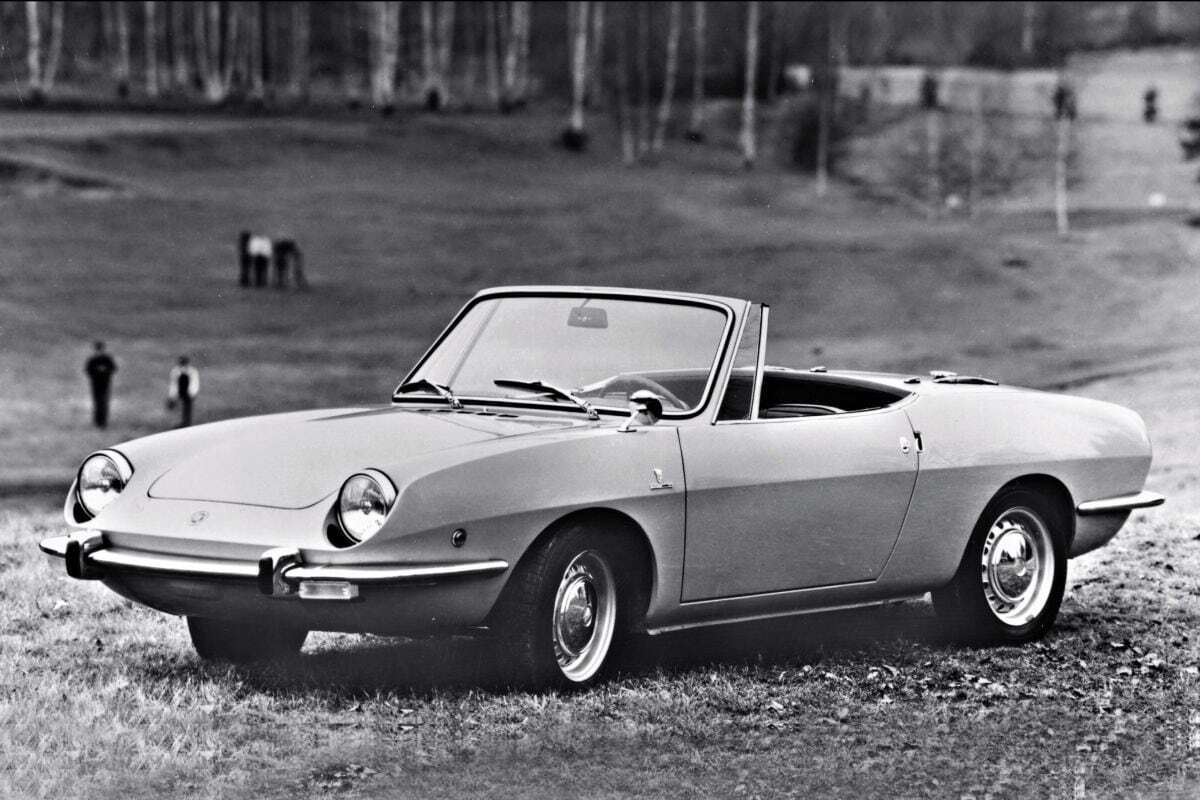
The Fiat 850 Coupé, which debuted in 1965, clearly demonstrates that happiness was still very common in the 1960s. Under its exotically styled bodywork lay the technology of the regular 850, which debuted a year earlier. A power output of 47 hp was therefore sufficient to satisfy the driver. The Coupé was joined by a Spider developed and built by Bertone, but the closed variant sold better north of the Alps. Firstly, because Spider weather is simply not that common in our regions, and secondly, the open version was also a bit more expensive than the Coupé, for which Fiat already charged a significant ‘glamor surcharge’ compared to the 850 sedan.
Masterpiece from Fiat Centro Stile
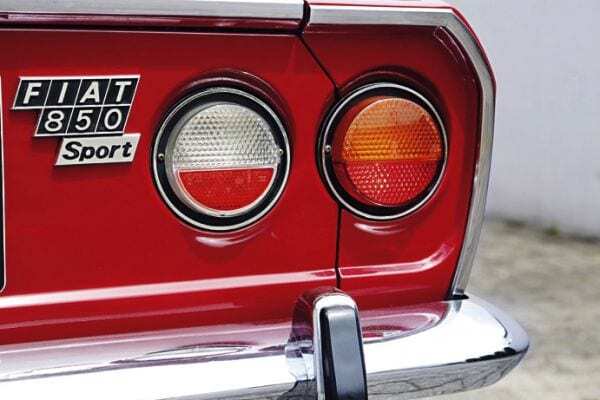
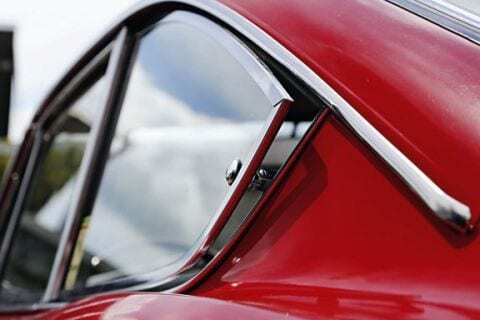
The best selling point Fiat salespeople had was undoubtedly the design of the Coupé. Mario Felice Boano, head of Fiat’s Centro Stile, took up the drawing pencil himself. And we can safely say that he delivered a masterpiece. In its new attire, the Fiat 850 suddenly looks like a small Ferrari, thanks to the long bonnet and the two snazzy round taillights. Even Apple founder Steve Jobs owned the 2+2 seater in his younger years. The somewhat basic mass-production technology probably didn’t sway him, although it certainly has its advantages in terms of daily usability.
Engine with sharper camshaft and larger valves
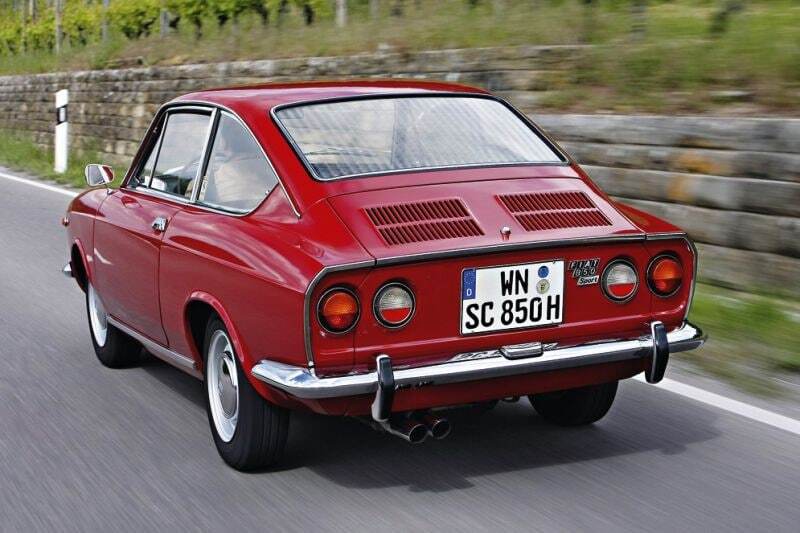
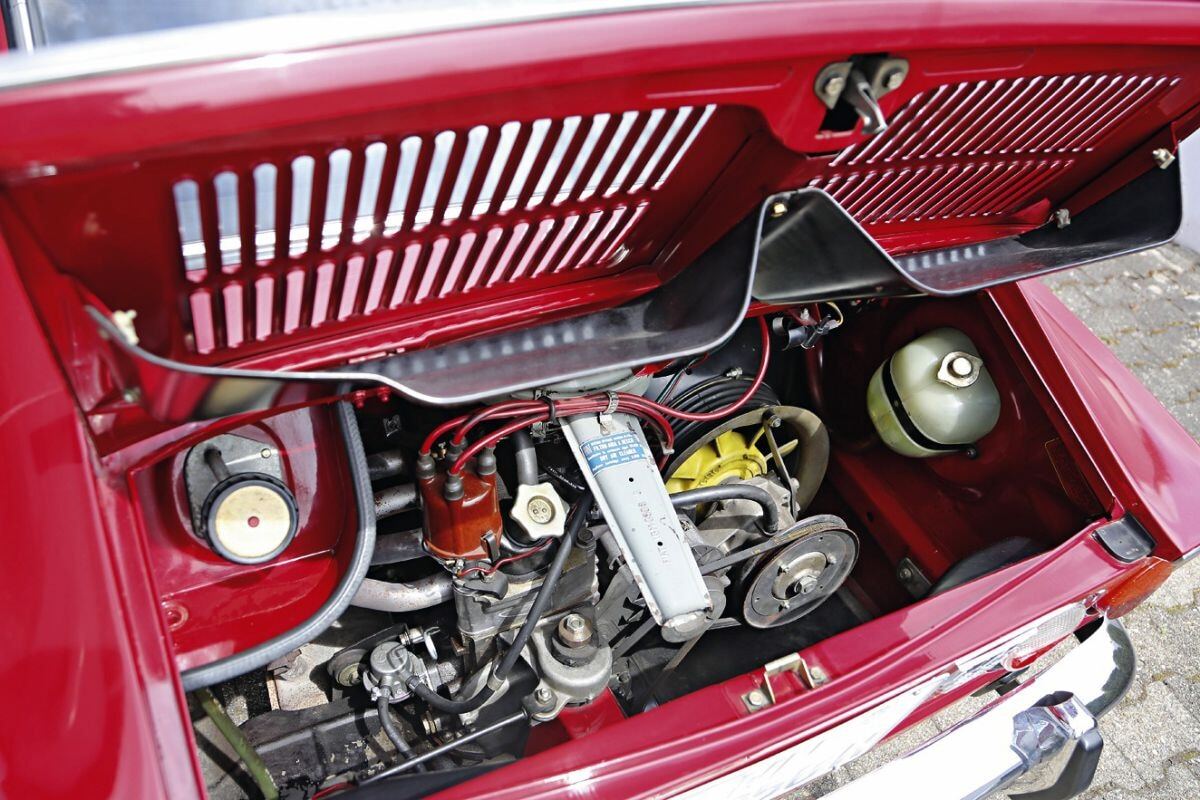
The 850’s engine was served al dente by the Turin-based car manufacturer in the case of the Coupé. Read: a sharper camshaft, larger valves, and a higher compression ratio. In the first series, the engine thus delivers a power of 47 instead of 34 hp; in the second and third series, the four-cylinder, thanks to a displacement of 903 cc, even offers 52 hp – like our photo model, which comes from the second series. This 1970 Coupé is one of the few where no single piece of bodywork is as brown as the bottom of a pizza that has been in the oven for too long. Apart from an Abarth sports exhaust and a Tripmaster in the interior (this car is also occasionally used in classic car rallies), it is moreover in original condition.
Italian sense of drama
The question of whether a car with 52 hp can have the term ‘Sport’ in its model designation is answered with a clear ‘yes’ by the 850 Coupé. At the time, Fiat’s stated time of 19 seconds for the sprint from standstill to 100 km/h was quite respectable, as was the top speed of 145 kilometers per hour. In reality, the Coupé feels (and sounds) much faster – not least because of its fondness for high revs. Below 3,000 giri (revolutions), little happens; the Fiat engine only really comes to life above 4,000 rpm and then pulls through to over 6,000 rpm. With an Italian sense of drama, it screams as if its life depends on it. This almost makes you feel like you’re in a race car, especially since the 52 hp only has to keep 745 kilos moving.
Battery moved forward
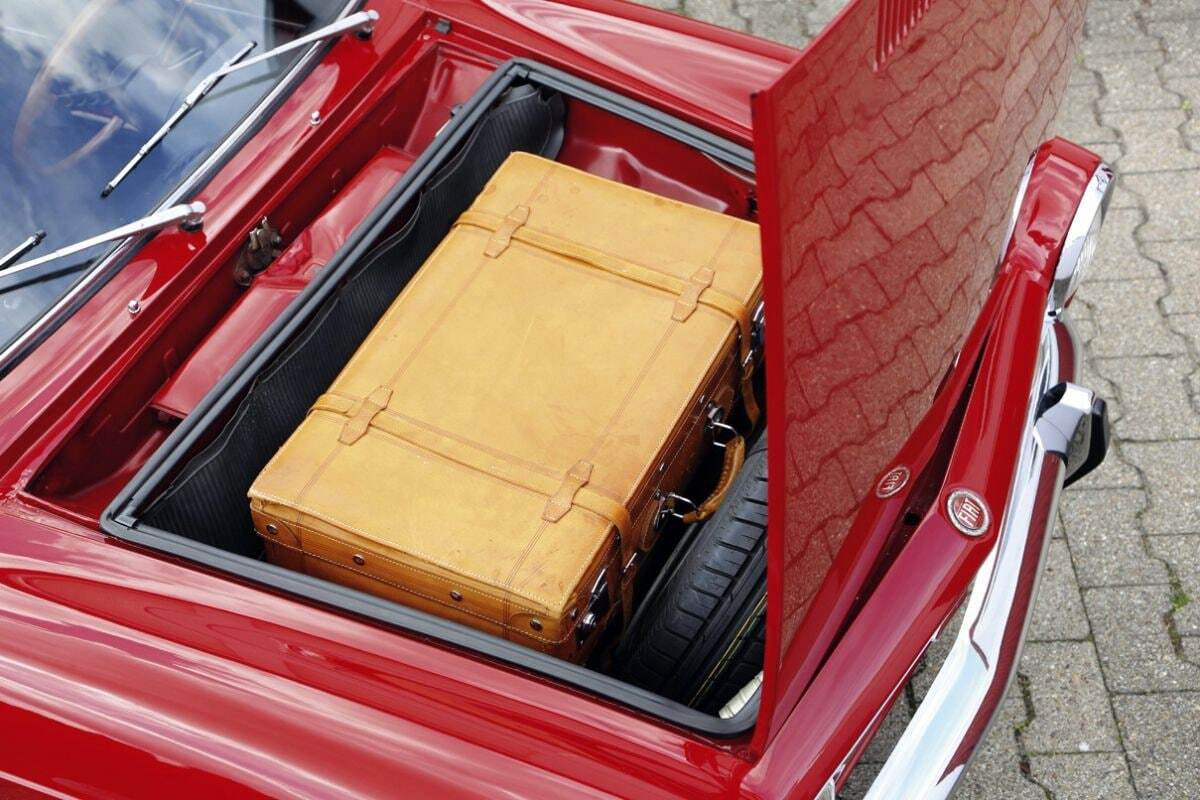
Driving pleasure is thus guaranteed – and in other respects too, the 850 Sport Coupé garners a lot of sympathy with its wonderfully Italian character: it is small, spirited, a little too noisy, and elegantly dressed. Hands are also constantly in motion, as the driver has to shift gears frequently and vigorously ‘hoop’ the steering wheel on winding roads, given that the steering is more indirect than expected. During a fast cornering run, however, the little Fiat impresses with its good-naturedness. The fact that a large part of the weight is at the rear, although the battery serves as a counterweight in the front luggage compartment, is quite noticeable when cornering with a bit more enthusiasm. But even then, it doesn’t pull any crazy stunts.
Macaroni pieces
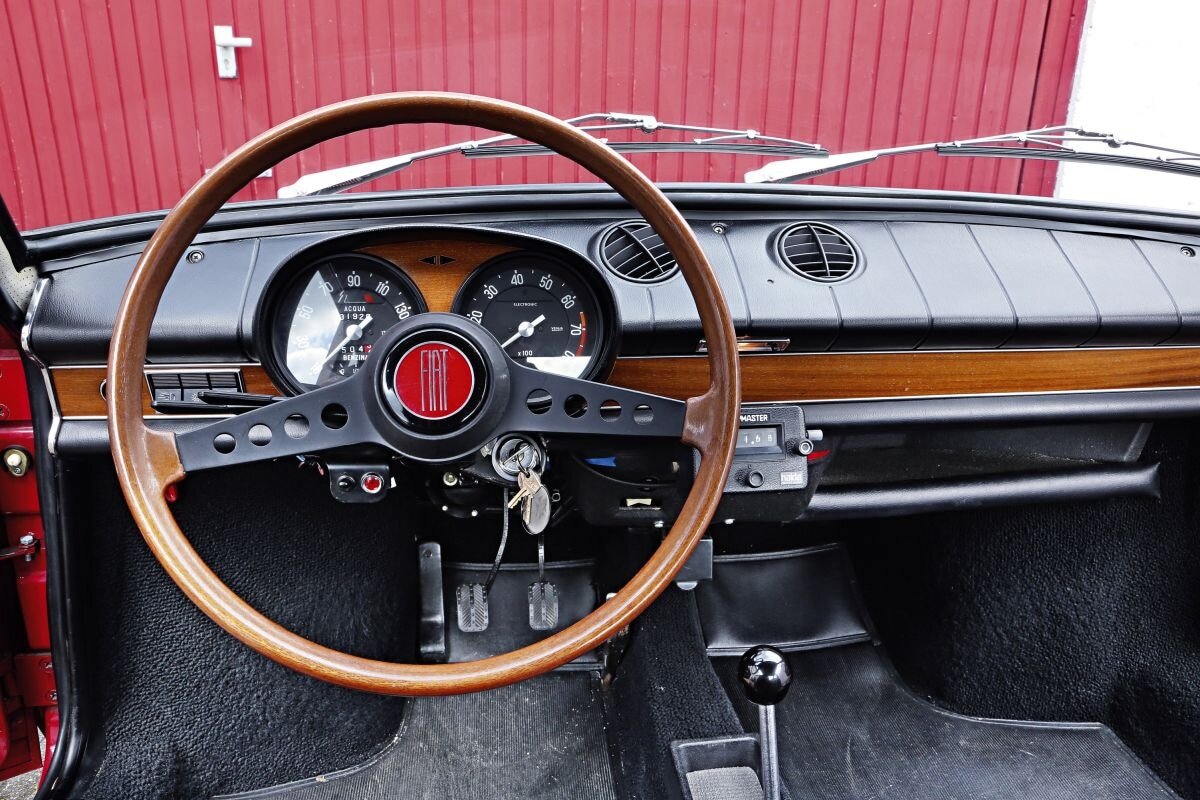
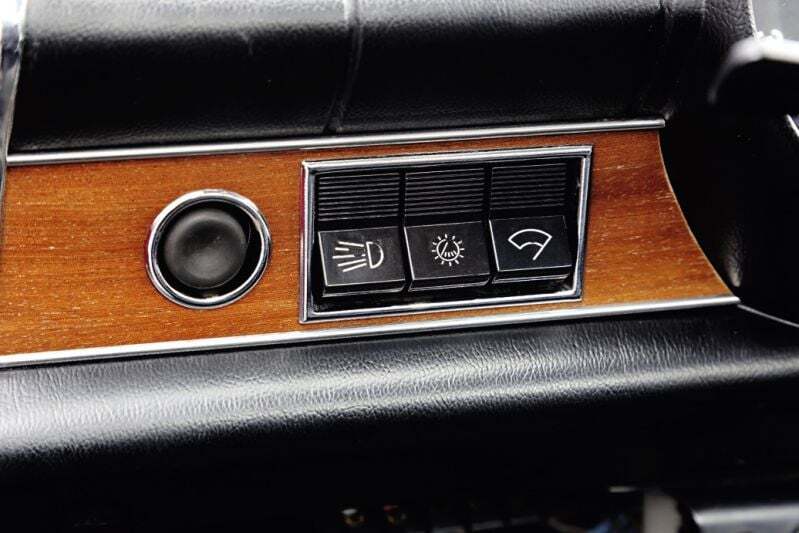
However, the 850 Sport Coupé does have quirky details, such as the manifold whose pipes look like mutated macaroni pieces. Also distinctive are the front seats with different adjustment mechanisms for folding the backrest forward and the position of the pedals, which are placed too far to the right. However, there’s also plenty to enjoy on board. For example, the thin two-spoke steering wheel, the dashboard with its large tachometer, and the chrome handbrake lever are a feast for the eyes. Despite its modest dimensions and equally modest power, this Fiat is one of the coupé classics from the 1960s that still keeps us awake even today. After all, beauty knows no time.
Engine inline-four, longitudinally mounted at the rear, 2 valves per cylinder, single overhead camshaft, Weber downdraft carburetor
Max. power 38 kW / 52 hp at 6,400 rpm
Max. torque 65 Nm at 4,000 rpm
Transmission four-speed manual gearbox
Suspension independent, front with triangular wishbones, transverse springs, anti-roll bar, telescopic shock absorbers, rear with semi-trailing arms, coil springs, anti-roll bar, telescopic shock absorbers
Dimensions (lxwxh) 3.65 x 1.50 x 1.30 m
When Fiat presented the new 850 in 1964, it quickly became clear that it was more about evolution than revolution. While other car manufacturers were gradually switching to front-wheel drive, the Italian brand had simply further developed the 600 and enlarged it somewhat. The 850 also didn’t have a design that set people’s hearts racing. However, when the Coupé and Spider were added to the range a year later, that changed instantly. The Spider saw the light of day at Bertone, while the Coupé simply rolled off the production line at Fiat. Both models used the technology of the 850 sedan. The first series of the Fiat 850 Coupé thus offered only 47 hp and still had two headlights and two taillights. The second series, from 1968 onwards, could showcase its sporting ambitions thanks to five extra hp, and was then called ‘Sport Coupé’. The coupé also gained two small lights next to the headlights, while the rear now featured four round taillights and a subtly integrated spoiler. The third series, built from 1971 (the last production year), can be recognized by the four equally sized light units at the front. In total, Fiat built 342,873 units of the 850 Coupé. While production ended in Italy, it remained in production at Seat in Spain until 1974. Approximately 5,000 Seat 850 Coupés were built over the years. The next small Fiat coupé was named 128 Sport Coupé and saw the light of day in 1971.