Less speed, fewer euros
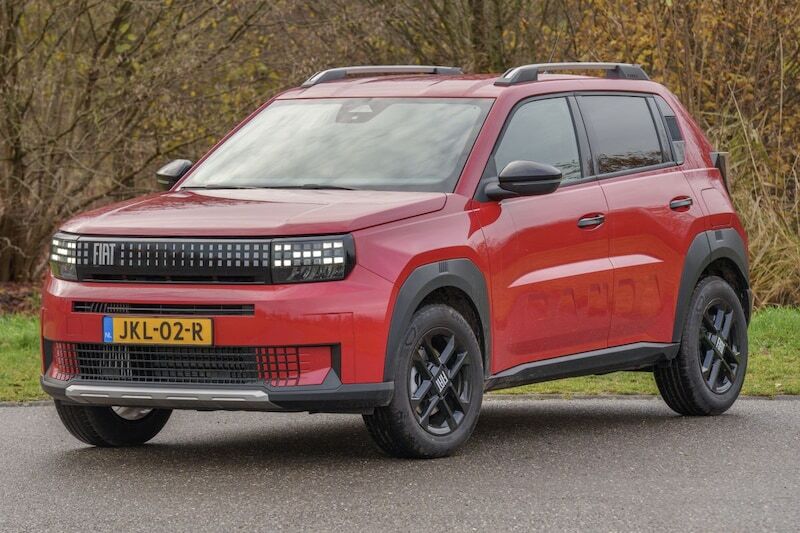
With its top speed of 132 km/h, the electric Fiat Grande Panda Electric is certainly not lightning fast. If it’s up to the head of Fiat, the top speed of Fiat’s city cars will be even lower. “I would like to limit the top speed to 118 km/h,” says CEO Olivier François.
Extensive active and passive safety systems theoretically make cars safer, but also more expensive. According to Fiat CEO Olivier François, the majority of EU-mandated safety systems aim to improve safety at high speeds. For small Fiat models like the 500, Panda, and Grande Panda, some of these systems would not be necessary because they are primarily driven in the city, the CEO told English Autocar. His idea is to limit the top speed of such small models to 118 km/h, allowing those cars to do without ADAS systems. This should make the cars cheaper.
According to the Fiat CEO, 118 km/h is the average maximum speed allowed on European highways, and in his opinion, that would be the ideal limit. “I would like to limit the top speed of our smaller models to the current average maximum speed in Europe. That maximum permissible speed already exists, after all,” says François. “I don’t understand why we have to install all those expensive systems: sensors, cameras, traffic sign recognition… It’s a bit absurd and has contributed to the average price of small models increasing by 60 percent over the past five to six years.”
Fiat’s current small cars are certainly not speed demons. The top speed of the electric Fiat Grande Panda Electric is set at 132 km/h, while the Grande Panda with a petrol engine reaches 160 km/h. The Pandina is good for a top speed of 153 km/h. The top speed of the electric Fiat 500 Electric with a small battery and 70 hp electric motor is 135 km/h. The stronger 500 Electric with 87 hp and a 42 kWh battery achieves a maximum speed of 150 km/h. The Fiat 500 Hybrid has a top speed of 155 km/h, although with the 500 Hybrid Cabrio, you have to settle for a top speed of 150 km/h.