Close to 100%
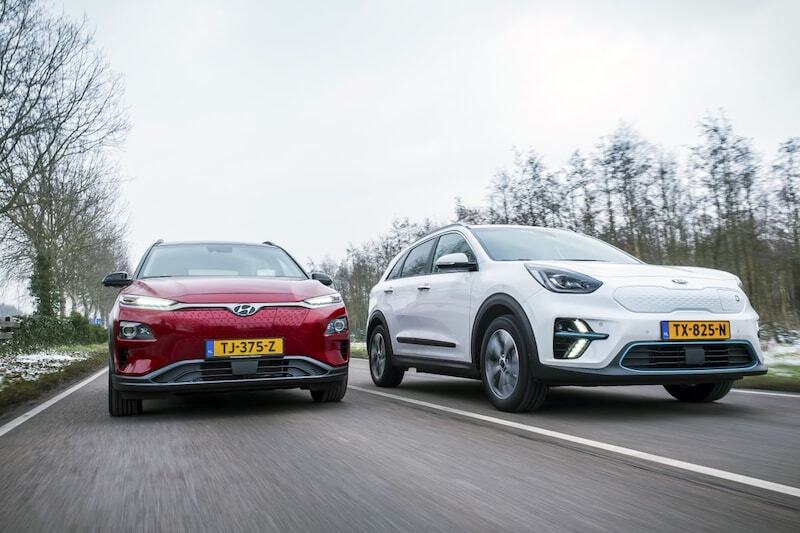
Because with an electric car you want to know how the battery performs when it’s older and has already covered a considerable number of kilometers, we started battery degradation tests over four years ago. In these tests, we measure the remaining capacity of a battery pack of a used EV. From the 33 ‘battery degradations’ we have performed so far, a cautious conclusion can already be drawn: the battery packs of electric Kias perform well.
The five Kias whose battery percentage we have measured in the past four years all scored above 95 percent capacity. The absolute top performer is the 2019 Kia e-Niro, which, with an odometer reading of 99,460 kilometers, still scored a ‘normal’ 100 percent. The Niro generally does well, as the other two we subjected to the test also achieved very respectable values despite higher mileage – one of them had nearly half more kilometers. Even a Kia EV6 used as a driving school car had only lost 4 percent capacity. Sister brand Hyundai also performs well. For example, colleague Marc Klaver’s Ioniq scored 94 percent, exceeding expectations.
For Nissan, it seems to hold true: the higher the mileage, the lower the remaining battery capacity. For example, a Leaf with 67,000 km on the clock achieved 92 percent, while the same model that had driven two hundred thousand kilometers lost another 10 percent.
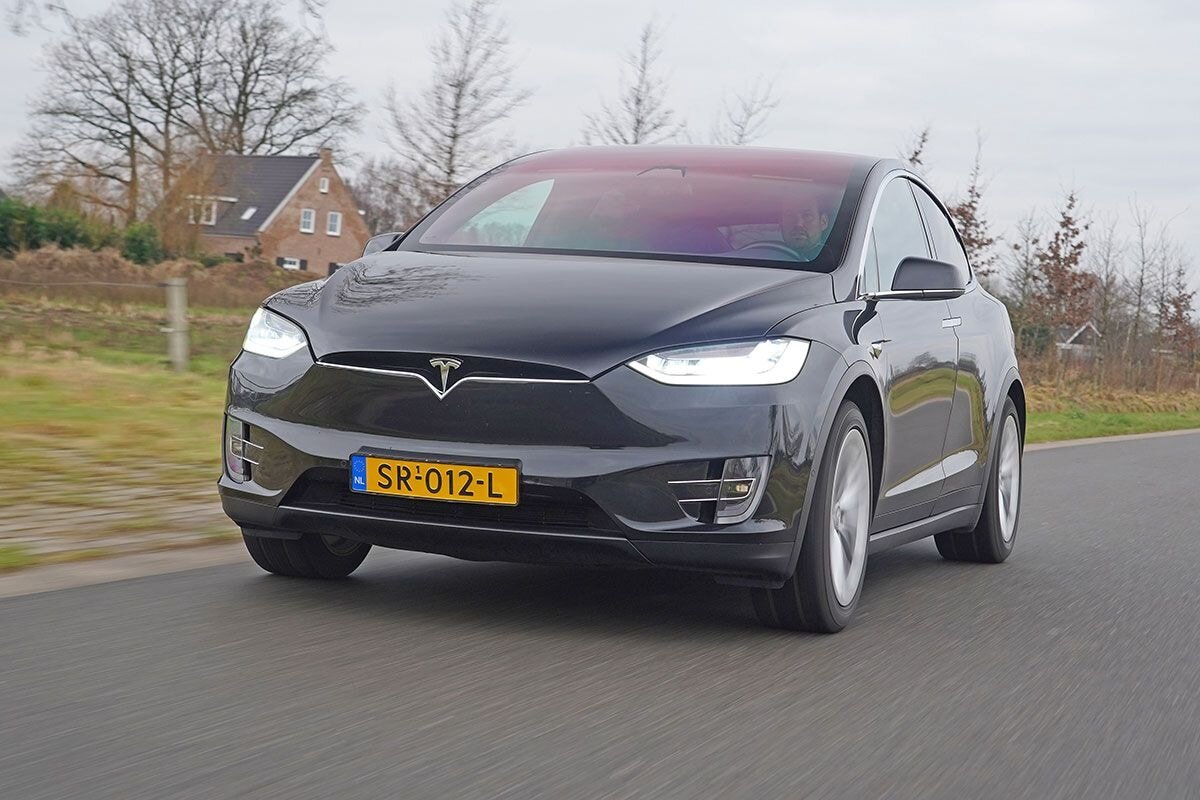
And pioneer Tesla?
Then two other brands we frequently encounter in this section: pioneer Tesla and Volkswagen. They also don’t perform poorly in the battery degradation tests. For example, a 2013 Tesla Model S with 205,000 kilometers of experience still had a state-of-health of 87 percent. A 2017 Model Two early Volkswagen ID3s, on the other hand, performed above average with 94 and 96 percent respectively.
Marcel van Renselaar from battery diagnostic specialist Aviloo – with whom AutoWeek conducts the battery degradation tests – also has an opinion: “What we see in these AutoWeek tests is actually the general picture: it’s difficult to draw firm conclusions. We very often see identical all-electric cars of the same age and the same mileage with a very different battery degradation profile. How is that possible? Due to the treatment by the previous owner.”
This also applies to plug-in hybrids, according to Van Renselaar. There are many diverse examples of these as well: “What is striking is that many owners still think that a plug-in hybrid is the same as an electric car, and they drive it as such.”
What can you do when buying a used electric car?
You simply cannot see the condition of the battery from the outside of the car. So what should you do if you want to buy a used electric car? Van Renselaar: “What certainly doesn’t help is reading out the manufacturer’s SoH (State of Health, ed.) from the battery management system (the SoH from the BMS). This number is too inaccurate, which is why you cannot make any warranty claims based on this number. A car manufacturer has a completely different procedure for this. At Aviloo, we work with our own, brand-independent test. That provides a reliable picture.”
Unfortunately, there are also cars that fall somewhat short, although age is a mitigating circumstance here. A nine-year-old BMW i3 scored 80 percent, and an equally nine-year-old Renault Zoë came in at 77 percent. But the technology gets better every year, so we are curious about an i4 or a Scenic E-Tech in a while.
You increasingly see used electric cars for sale with a State of Health check, and there are growing calls for a standardized check to be introduced.