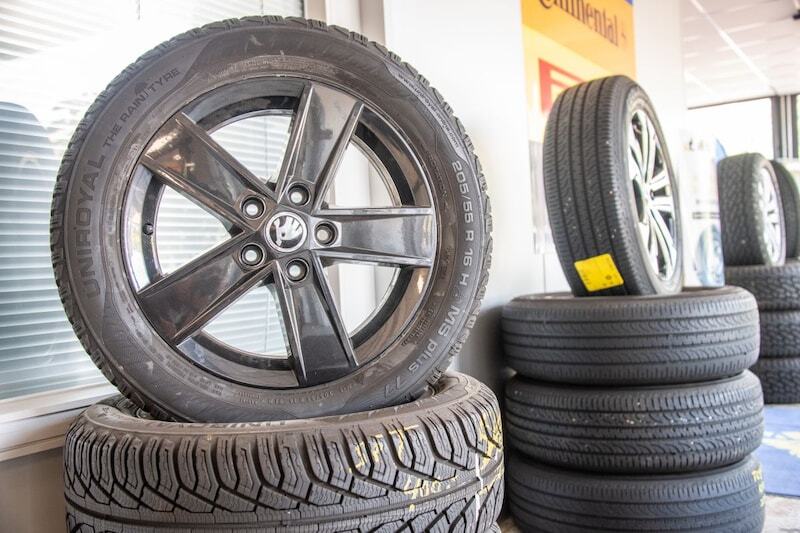
We all buy used cars, and used or refurbished parts have long ceased to be taboo. But used tires? Look before you leap is the motto.
Tires are vital. After all, those four pieces of rubber are the only link between you and the road surface. They drain rainwater and – if all goes well – give you sufficient grip when water or snow makes the road treacherous. And of course, the shortest possible braking distance when every millimeter counts. It is not without reason that we in the Netherlands have an MOT standard that states that a tire must have at least 1.6 millimeters of tread. And it is not without reason that many MOT inspectors still explicitly advise their customers to replace tires from 2 mm of tread, even with that minimum tread.
If you close your eyes and think of ‘used tires’ you will see terrible images. Images of bald treads, bulges, drought cracks, canvas breaks and cars that shoot into the guardrail or shoulder because such a used, completely worn tire gives up. But then think about this: we in the Netherlands massively buy used cars. These are almost without exception delivered on – indeed – used tires, on which the proud, new owner then happily travels thousands or tens of thousands of kilometers without ever worrying about the past of that tire. That fact provides food for thought.
Risk of hidden defects
“Used tires? That can be dangerous for you!” We hear those words when we call Michelin’s customer service, asking how they feel about a set of used Michelins on our fictional ‘somewhat older car that doesn’t drive many kilometers’. An explanation follows about how you can never know the history of a tire and how there can be many hidden defects: “We would never recommend choosing a used tire.” It is an explanation that makes sense in itself.
Fifteen percent of customers opt for used tires
“That’s right. There’s nothing like a new tire, I always tell my customers that,” says Karel Niesing (54), who has run a successful tire company in Brunssum, Limburg, for thirty years. New car tires sell like hot cakes for him. “But there is also a significant group of customers who opt for used tires. Certainly about fifteen percent.”
But if a used tire is dangerous for you, then those people are completely crazy, right? Well, that’s a bit more nuanced. Bovag spokesperson Paul de Waal explains: “The Bovag is certainly not necessarily against used tires. It’s just a matter of looking before you leap.” According to many to tire specialist Karel Niesing, part of the problem lies with the consumer himself: “People simply don’t find tires an interesting topic. They don’t know anything about it and aren’t interested in it. With used tires, they automatically think of ‘used up’. People often just don’t know any better. Wasn’t there a recent study that indicated that motorists still drive on winter tires in the summer? That says a lot.”

Forty percent cheaper
Niesing says he knows why consumers sometimes opt for second-hand car tires. “Used tires are much cheaper than new ones, it saves about forty percent in price. Sometimes you just don’t have any money and then such a tire quickly becomes interesting. Or sometimes your tires are worn out and you know that you only want to drive a car for a few more months. There is demand for used tires, so if we can help our customers with them, we are happy to sell them.” According to Niesing, it is a fact that many cowboys are active in the world of used tires. “They contaminate the trade of the reliable parties. That is why I give a guarantee on the used tires that I sell, because I know what I am selling. I know where the tires come from and I know that they are in good condition.”
Look before you leap
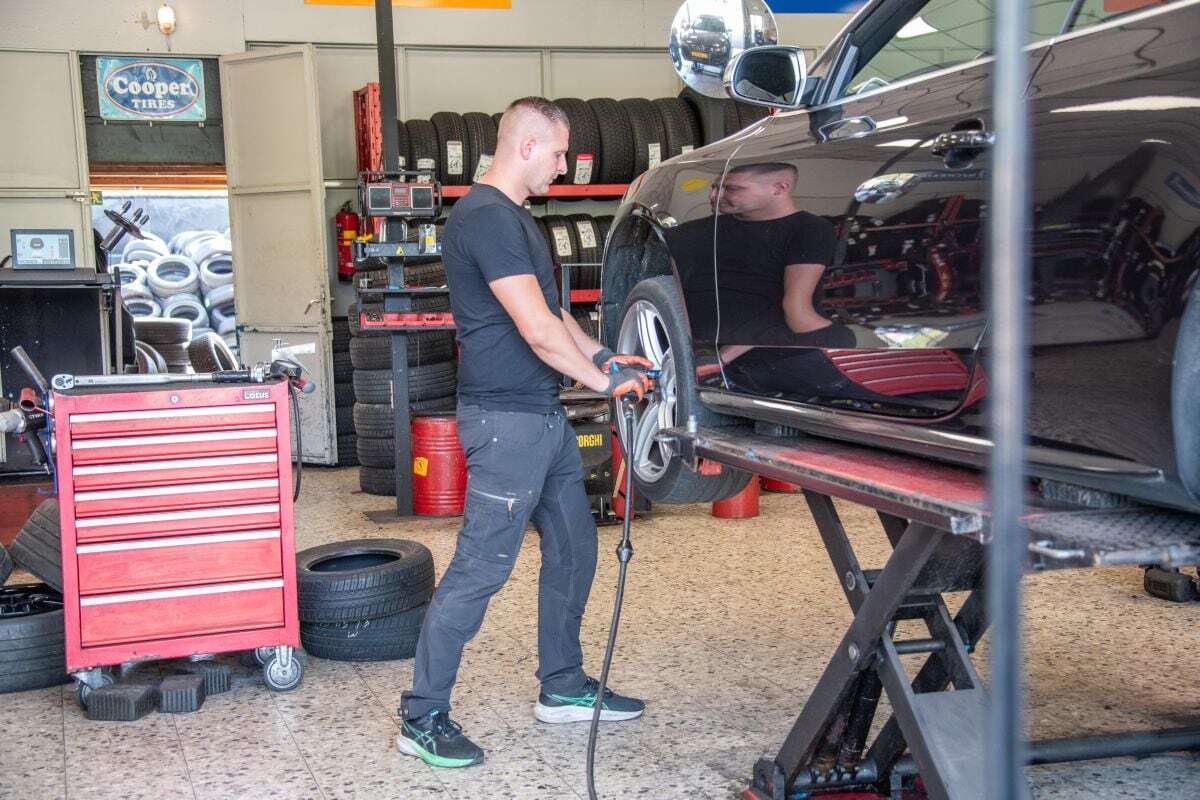
Back to Paul de Waal from the Bovag and his statement ‘look before you leap’. “If an offer is unbelievably cheap, then there is probably something wrong with it. Used tires do not have to be bad at all, but it is wise to be aware of a number of important things. For example, pay close attention to the size and speed index of the tire. In addition, never replace one tire, but always make sure that you have two identical tires on the same axle. But above all, be careful where you buy. Look for a professional and preferably go to an address that you know and trust. If you do that, it can be an interesting alternative, especially if you consider that reuse is more sustainable than throwing away.”
Words of similar meaning come from Joost Kester, COO of RecyBem, the organization that collects and recycles used car tires on behalf of the tire industry. Every year, RecyBEM collects approximately 9 million used tires, most of which are processed into playground tiles, artificial turf fields and asphalt. “But a very small portion of the tires we collect comes back onto the market,” says Kester. “It is very difficult to estimate exactly how large that part is, but it is certainly no more than half a percent of what we collect. Look, tires don’t just end up with us. A garage that rejects a tire does so for a reason. But if you ask me whether it is a bad idea to purchase used tires, I say ‘no’. Look for a professional, someone who is seriously involved with tires and knows what he is talking about. Then a used tire can still be a good buy.”
Industry organization VACO is not against it
The VACO, the industry organization for the tire and wheel industry, represents the interests of approximately 260 companies – with a total of 650 industries – in the Netherlands. According to the VACO, the affiliated companies are without exception professionals who have had the right training and use the right equipment to guarantee the safety of tires. In short, they are tire experts. VACO communication manager Joost Rombout says that the VACO is absolutely not against used tires, but repeats what Paul de Waal from the Bovag and Joost Kester from RecyBEM mention: “If you are considering used tires, then you must realize that there is a lot involved in purchasing them in a good and safe way. Tires are complex, and consumers are often not aware of this complexity and the numerous factors that play a role in the safety of a tire.”
Not from a private individual
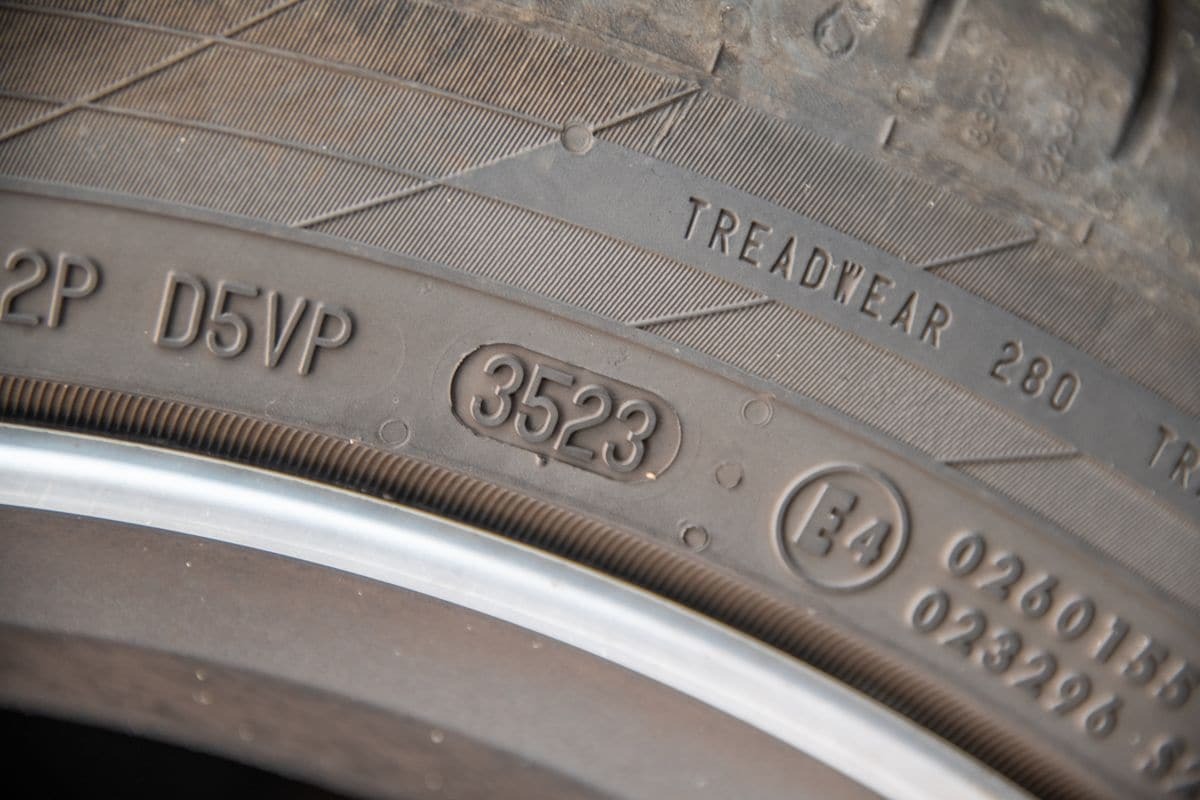
Rombout emphasizes that you should not simply take over used car tires from a private individual. “If you do that, there is always a risk. You don’t know if such a person has driven for too long with too low tire pressure. If that is the case, there may be invisible damage. We can all see whether the tread of a tire is still somewhat in order, but do you also know how to see the age of a tire? That is very important, because tires that are ten years or older can suffer from drought cracks that do not have to be immediately visible, but that can cause danger. We always recommend replacing tires that are older than ten years.”
But there are even more factors involved. Rombout: “How many kilometers are you going to drive on used tires? Do you know which load index you should have? Are you aware of the speed symbol? That is why we advise to always do business with a professional, who knows what to look out for and can guarantee that a tire is safe. Car tires are a profession in themselves and that profession revolves around safety. You should never lose sight of that.”
Used car tires only purchased from dealers and leasing companies
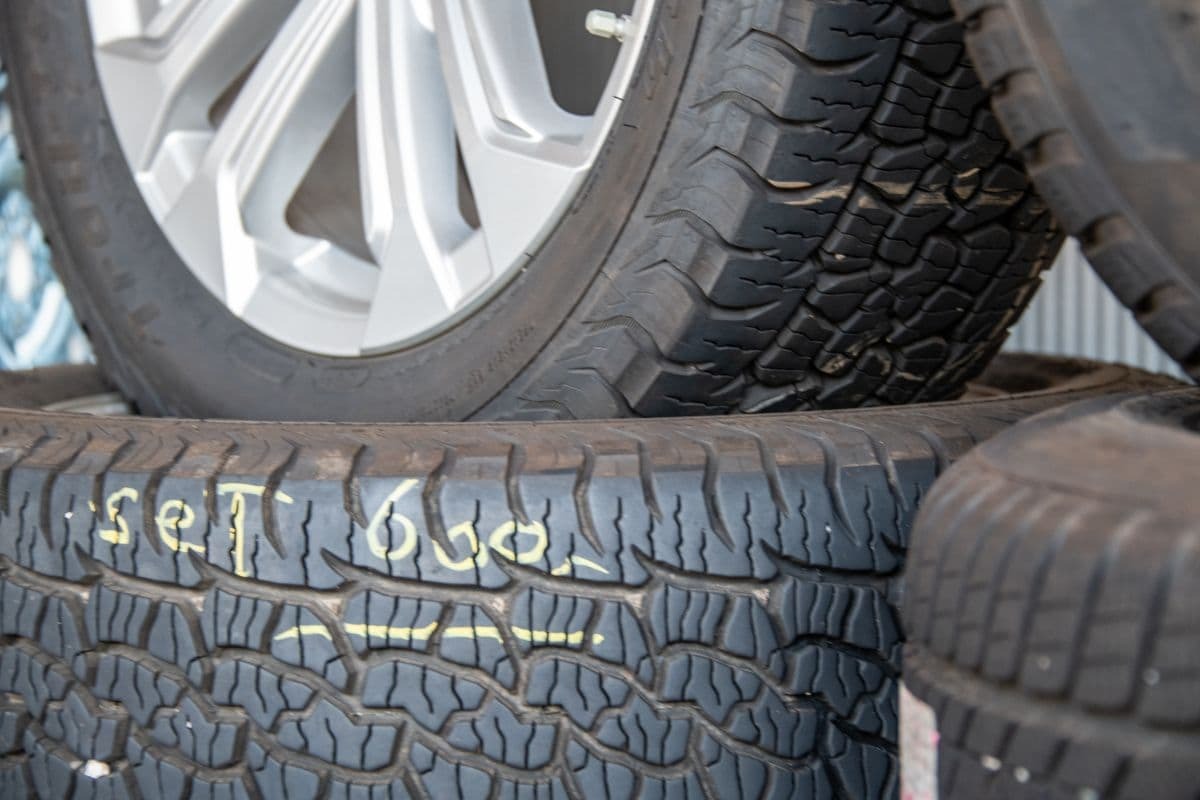
Tire specialist Niesing explains how he looks at used tires, where he finds them and how he can safely sell them to his customers. “A used tire is different from an old tire. I only buy my used tires from dealers and leasing companies and always per set. A lease car that is handed in on summer tires often also has a winter set. And a new SUV is delivered to the dealer on new summer tires, but how often does it happen that the older couple who purchase such a car want to have all-season tires fitted? The summer set that comes from such a car has then driven a few hundred kilometers at most, so how ‘used’ is such a tire then? The same applies to that winter set of that lease car. If it has only driven 10,000 kilometers and has always been checked by a tire specialist, then you cannot say that such a tire has been discarded, right?”
Sustainable alternative
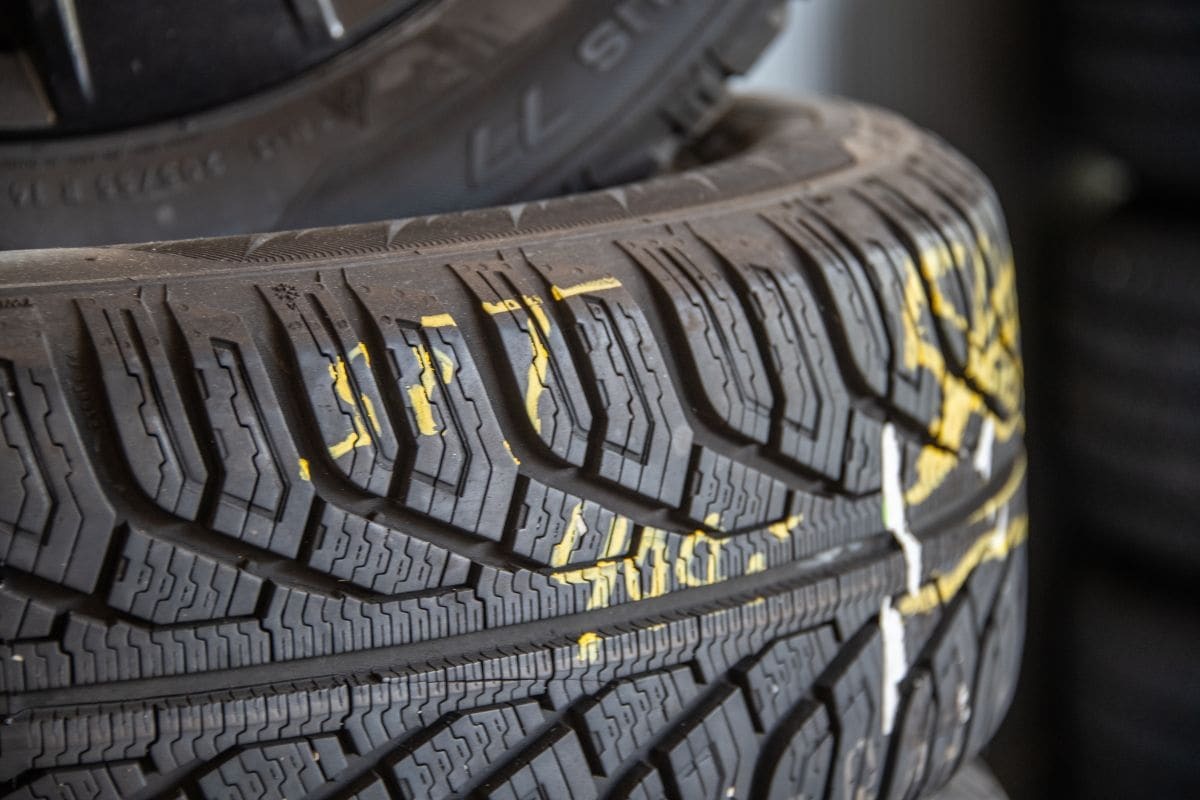
The leasing companies and dealers with whom Niesing works check the tires before they are delivered in Brunssum, and once there, his employees put them on a test machine that puts the tires under high pressure. “This way any fractures are immediately noticeable. No less than 99 percent of the tires we receive are of excellent quality, only 1 percent is rejected. And if one tire has a defect, the entire set goes away. But we often receive demo tires, which are almost new and on which the colored markings can still be seen. Those tires are slightly less cheap, but can also last much longer.”
No tires from damaged cars
Niesing always avoids tires from damaged cars. “They don’t come in with us. I dare to say that a used tire from an A-brand is often a better choice than a new tire from an unknown brand. The difference in rubber quality and therefore grip is often very large. But often people choose a cheap, new tire because ‘new’ has the reputation of being better.” He sees that young people in particular only look at the price of a tire. “I just want to say: people have a wrong image of used car tires. If you buy them from a specialist, they are not worn to the thread, unsafe or turned off. Then they are safe, and still perfectly capable of many safe kilometers. You could well say that a used tire is a sustainable alternative.”
It is striking that the experts, when asked, all acknowledge that used tires do not receive the attention they deserve, while they can still form a sustainable alternative to a new tire. “Used tires are indeed not so much on our radar,” Bovag spokesperson Paul de Waal openly admits. “While used car parts are much more established. After all, it is not for nothing that we can now call the car scrapyard of the past a car dismantling company. Perhaps in the not too distant future we will talk about used tires in the same way. In any case, they deserve not to be ignored.”
Rules do not exist
A used tire is therefore not so crazy at all, provided you buy it from a specialist. But it becomes somewhat misty when you wonder how you recognize that specialist and what rules he should adhere to. Because rules or guidelines regarding used car tires do not exist, much to the annoyance of Karel Niesing: “As long as no one takes up that gauntlet, there will always be an image problem. Apparently the industry is not that far yet,” he sighs. The VACO confirms that there is no quality mark or guideline for used tires: “The quality of used tires depends on so many factors and is therefore so complex that it is very difficult, and perhaps even impossible, to arrive at a clear guideline. But it is certainly something to consider for the future.”