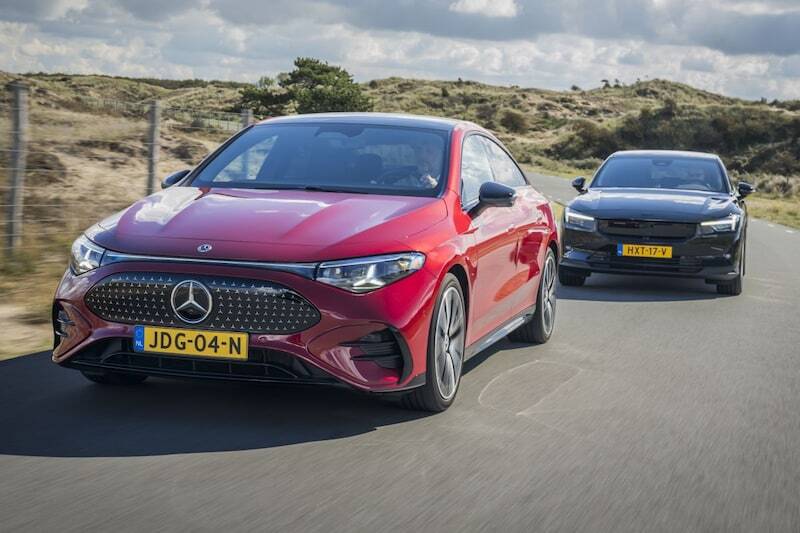
The new Mercedes CLA is almost as big as the C-class. For now, it is only available as an EV; there is no combustion engine in the price list. Is this the new normal at Das Haus? We are lining things up with the Polestar 2 as a benchmark.
The new Mercedes-Benz CLA is larger than its predecessor. At 2 centimeters, the compact mid-range sedan is as long as the C-class. The growth spurt stems from Mercedes’ strategy to focus more on larger cars, which simply yield more than small ones, with the CLA soon becoming the lower limit of the range. As part of the future plan, the CLA is now also fully electric for the first time. In fact, it is only listed as an EV for the time being. Versions with combustion engines are coming, but we’ll have to be patient for that. Initially, the electric CLA is only available as a 250+, with one electric motor. The all-wheel drive electric CLA 350 4Matic will follow in early 2026.
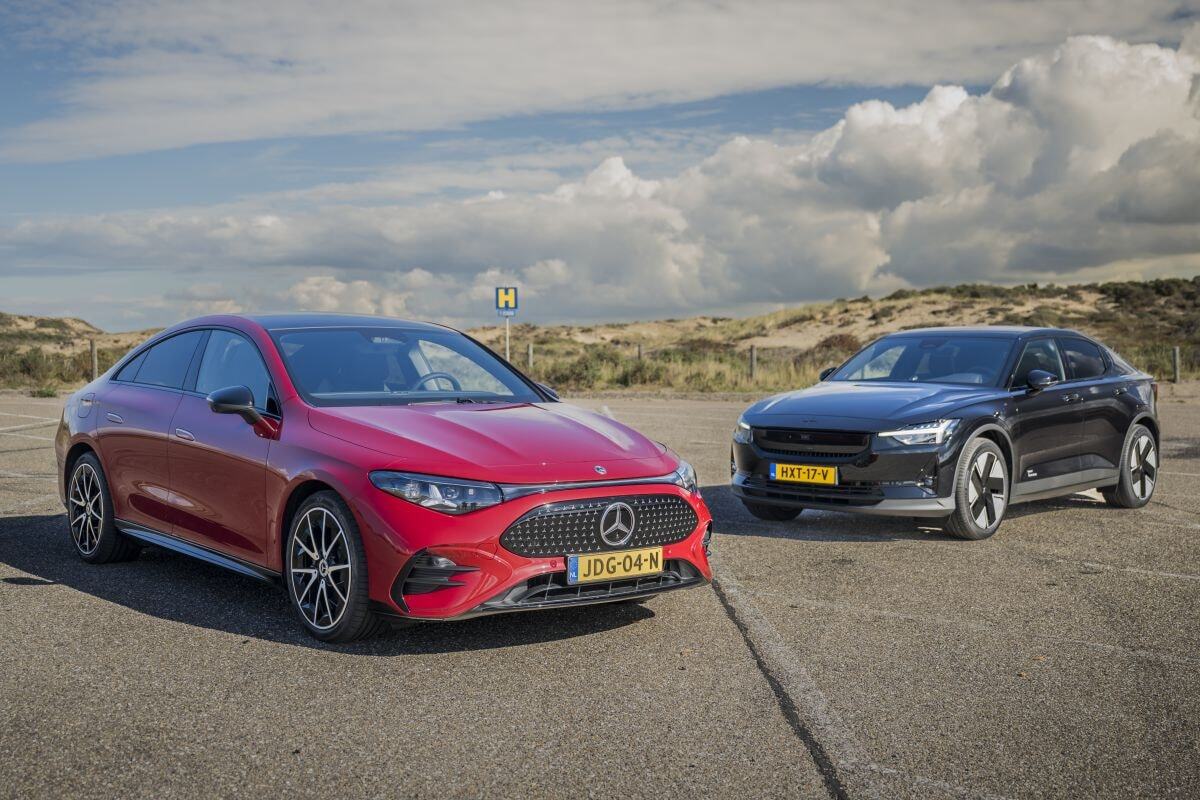
Because the CLA has become larger and electric, the model is an alternative to the Tesla Model 3 and the Polestar 2, among others. To get an idea of where we should place the electric baby Benz, we use the Polestar 2 as a benchmark. The 2 has been around for five years, but Polestar keeps it constantly up to date. We have the 2 Long range Single motor here. The 2 is also available with a smaller battery and is then called Standard range, but with the larger battery it at least keeps pace with the CLA on paper.
Like the CLA, the 2 is available with both two- and four-wheel drive. With the major update of 2023, the 2WD Polestar 2 changed from front-wheel drive to rear-wheel drive. With EVs that you can also get as 4×4, that is not the most complicated intervention, but it does affect the character of the car. The Mercedes CLA has also been transformed from front to rear-wheel drive. At least, with a combustion engine transversely in the front, it is still a front-wheel drive car in principle, but with one electric motor, the CLA is now a rear-wheel drive car.
Good figures
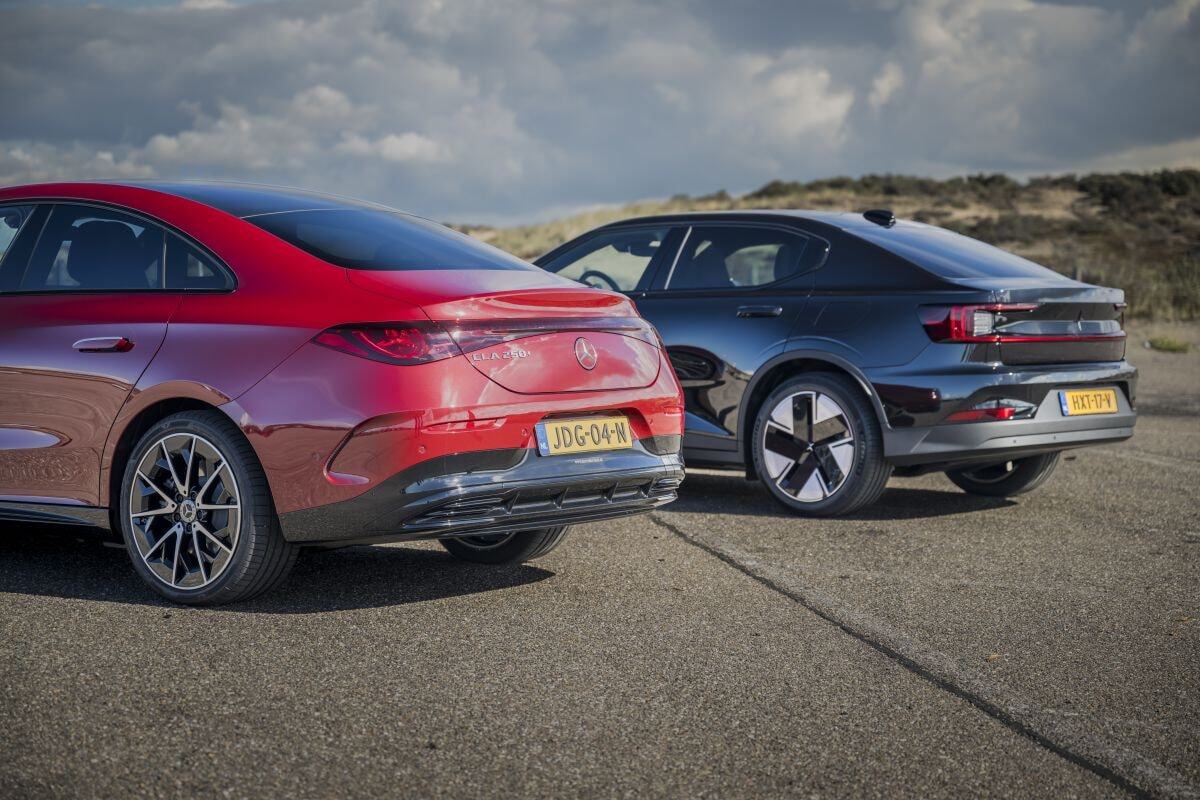
Mercedes is initially supplying the CLA with one battery capacity: 85.5 kWh. A smaller battery will follow later. At the RDW, Mercedes states a range of no less than 743 km for the red CLA 250+ in this test and an average consumption of 13.1 kWh/100 km. We can’t do that, but in our test (albeit extrapolated) we still get a neat 600 km on a full battery and, according to the charging station, we need an average of 16.0 kWh per 100 km. Those are good figures.
The Polestar’s battery has only 3.5 kWh less capacity. Still, we don’t get nearly as far on a charge with the 2 as with the Mercedes. We register an average consumption of 17.9 kWh/100 km, which means it stops after 483 km. A significant difference. Charging is possible at the AC charging station with 11 kW. For an additional €665.50, Mercedes offers the option of charging with 22 kW AC. At the DC fast charger, the CLA peaks at 320 kW thanks to its 800-volt technology, if you have a fast charger that can handle 800 volts. Mercedes is working on an inverter so that it can also be charged at 400-volt fast chargers. Charging takes a little longer with the Polestar, which you can charge with a maximum of 205 kW DC, but then at any fast charger, including Tesla’s.
Motor-wise, we are not short of anything with either car. Keeping up with traffic is no problem at all. The Polestar reacts just a little more enthusiastically to the accelerator pedal than the Mercedes. A look at the specification overview shows that the CLA engine has significantly less torque than that of the Polestar. To still get enough torque to the wheels, Mercedes, like Porsche with the Taycan, uses a two-speed automatic gearbox. As a result, the total transmission ratio of the powertrain is shorter at lower speeds, creating more force on the tire surface.
Mercedes has chosen this solution because it allows a more compact and lighter engine to be used that can work in a more efficient speed range in this way (yes, electric motors also have that). The downside is that the powertrain becomes more expensive due to the use of a gearbox. Mercedes accepts that. In practice, it works out well. There is enough traction from a standstill and the shifting is almost seamless. And indeed, the Mercedes is more economical than the Polestar. You can brake on the engine in three positions in both cars. With the Polestar, you unfortunately have to set this via the multimedia system, while with the CLA you can spontaneously adjust it with a tap on the gear lever on the steering column.
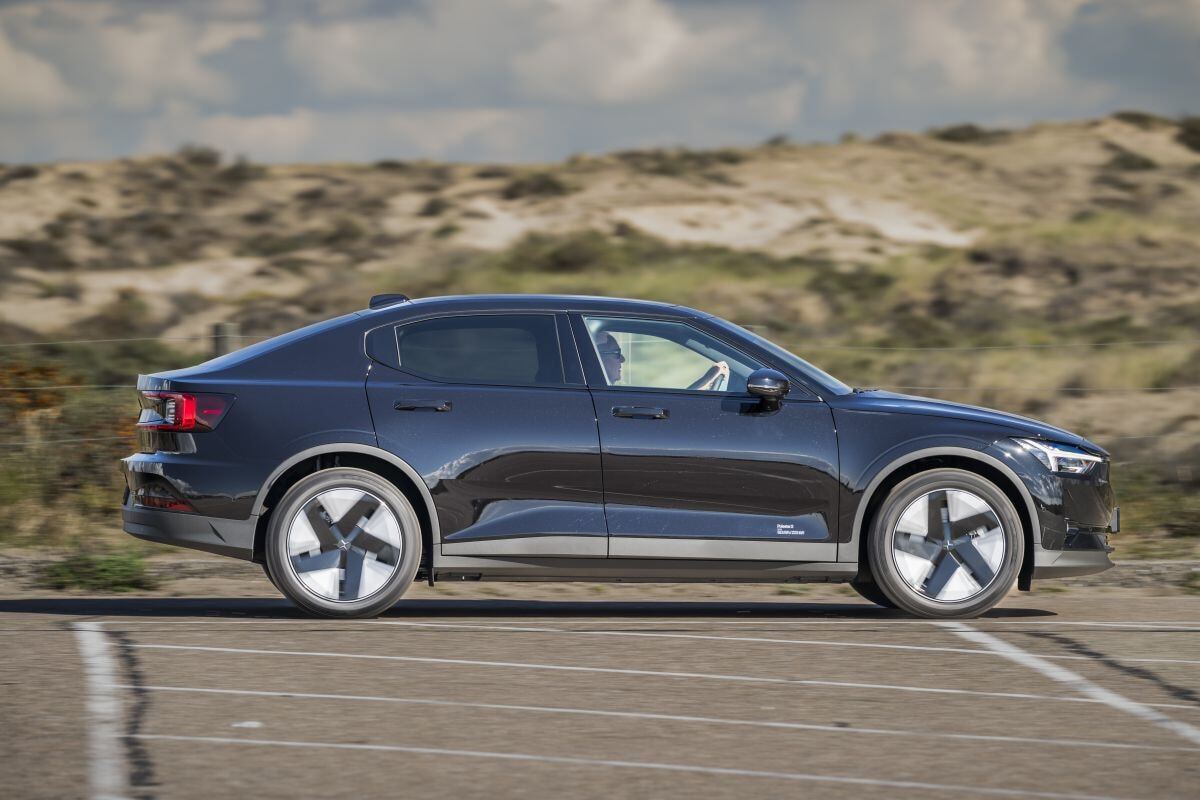
Mercedes steering more assisted, but more communicative
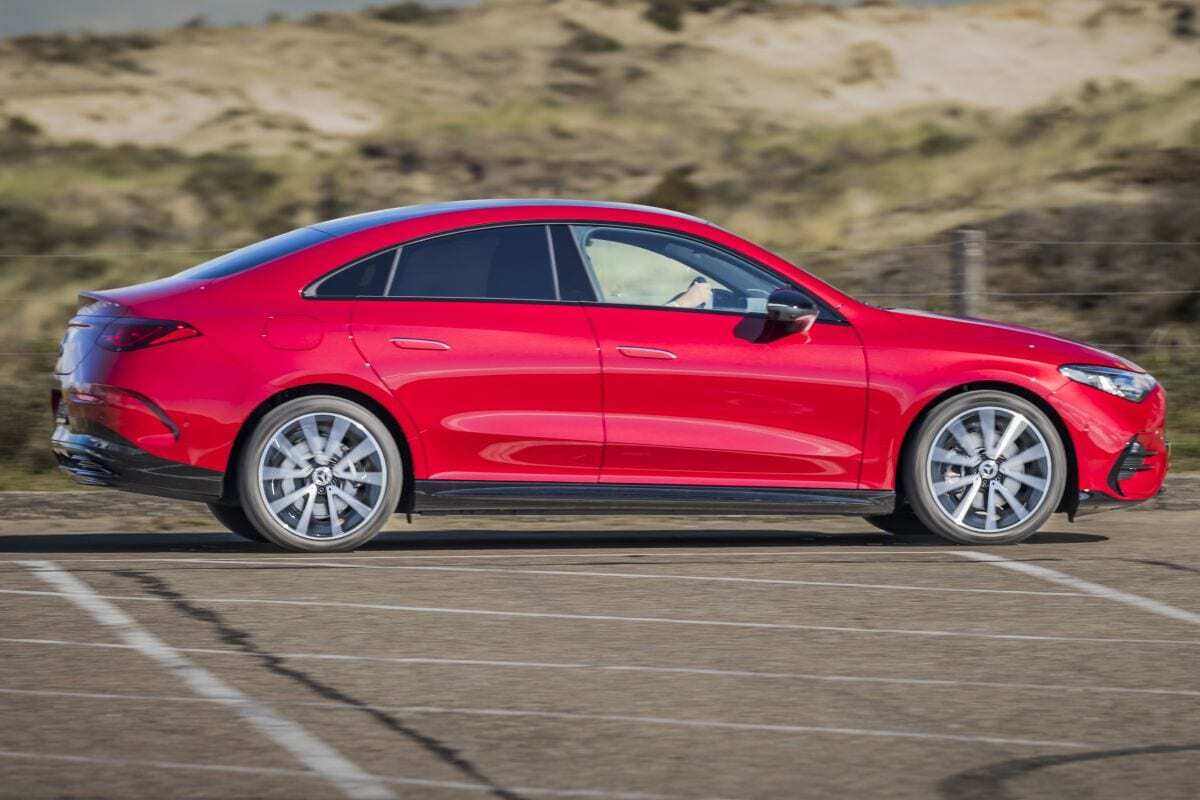
Because we have both the CLA and the 2 here as rear-wheel drive, the front wheels only have one task: steering. The absence of driving forces at the front gives extra peace in the steering system. Yet there is a difference in steering experience. With the Mercedes we experience slightly more assistance, while with the Polestar it feels just a little more distant. The differences are not great, but still. With both test cars, the steering gives more than enough confidence.
Despite the AMG floor mats, the CLA feels slightly softer and therefore a fraction more comfortable than the Polestar. They have a reputation to uphold in Stuttgart. Equally, the CLA is also just a bit more playful than the slightly more sterile 2. Not that driving dynamics are the starting point with these cars, but when you get on the gas a little too early in the corner in a crazy mood, the meshes of the electronic safety just seem a little wider with the Mercedes. You feel better with the German that the rear has the urge to take a step aside before an intervention follows than with the Polestar.
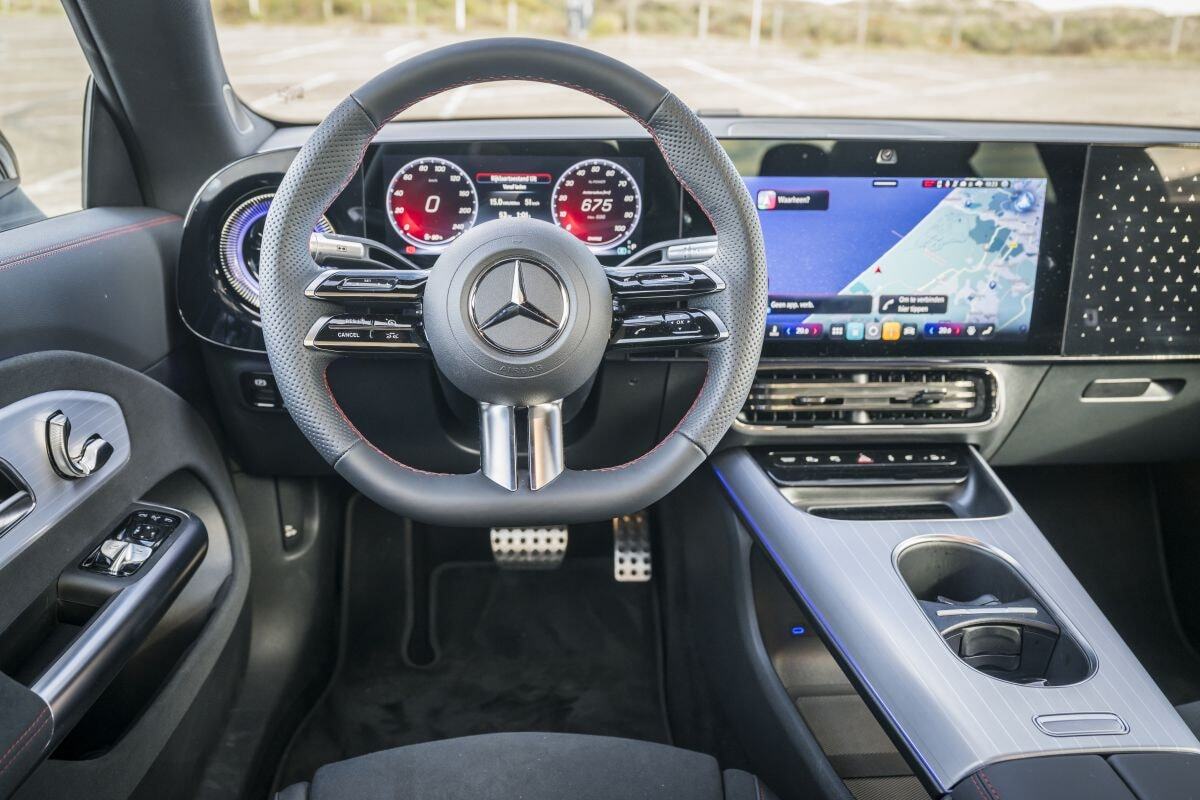
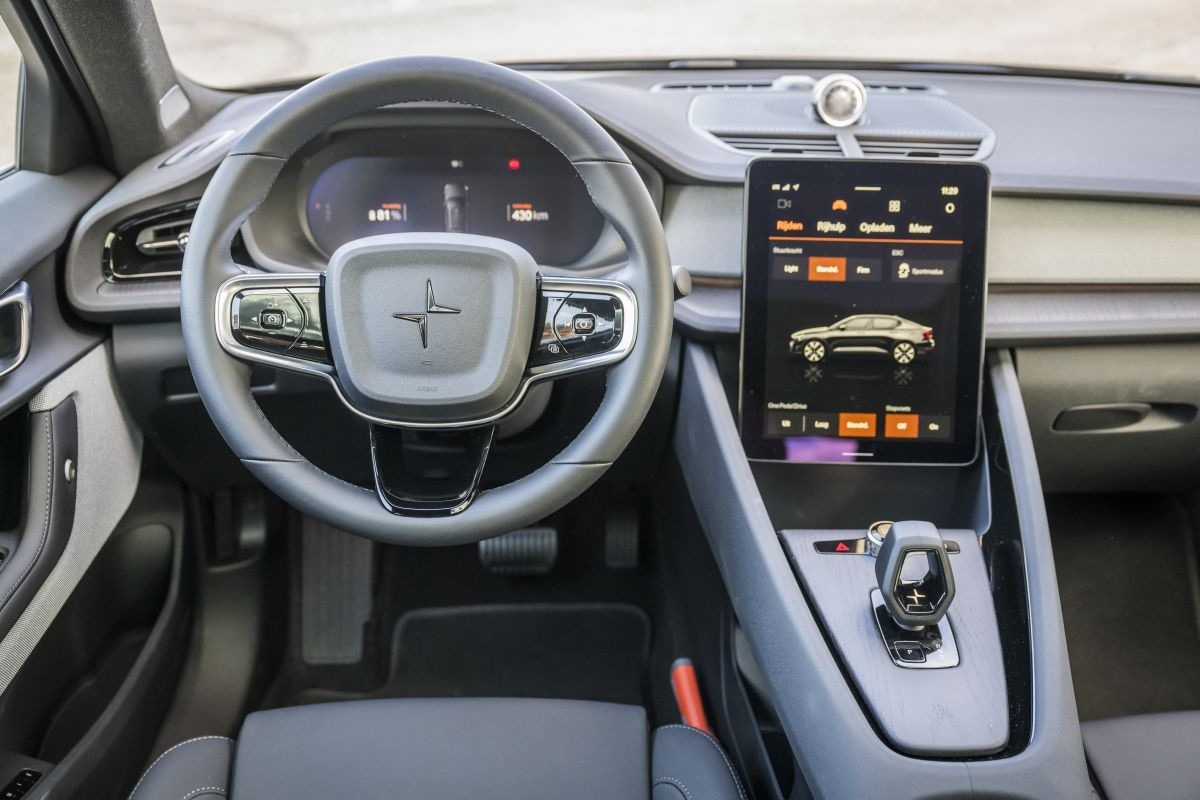
Driving assistance Polestar finer
When it comes to electronic assistance, we prefer the Polestar system. Its adaptive cruise control and lane departure assistant feel a little more natural and react just a little more forgiving when you threaten to do something wrong. It’s about nuances, but in this fiercely competitive market segment, everything counts.
Everything also counts in the interior, especially the millimeters. The CLA is larger in all directions than its predecessor. It doesn’t immediately make him a space wonder. We have no complaints about space in the front and it takes little effort to find a comfortable seating position. The only point of criticism concerns the headrests, which prick between the shoulder blades for drivers with a longer back. There is also enough space for the driver and passenger of the Polestar. The seating position in the 2 is just a bit more upright than in the CLA. That’s different, but not necessarily better or worse. The wheelbase, which is decisive for the interior space, has increased by almost 6 centimeters in the CLA and is therefore also 5.5 cm longer than in the Polestar. Yet this does not immediately translate into a sea of space for the rear passengers. If we have to sit in the back, we prefer the Polestar, not only because you have a little more legroom there, but also because you sit a little higher so that your knees make a less sharp angle.


Greasy fingers
For operation, you mainly rely on touchscreens plus the touch buttons on the steering wheel in both cars. As a plaster on the wound, the Polestar still has a real rotary knob for the audio volume, hail. By definition, the design of the Polestar dashboard, compared to the Mercedes cockpit, is quite classic. For example, the digital instrumentation is still under a cover and the infotainment screen is free, while in the CLA it is an integrated part of the large, shiny surface that extends over the full width of the dashboard, including the greasy-finger-sensitive shiny panel on the passenger side.
The Polestar multimedia system is less extensive and, in all its relative simplicity, easier to understand than the Mercedes system, which offers many more options and gives you more the feeling of being part of the internet of things. Yet Mercedes has managed to keep it clear, so it doesn’t take too much attention to perform exactly the right settings. You also have more options with voice control in the CLA.
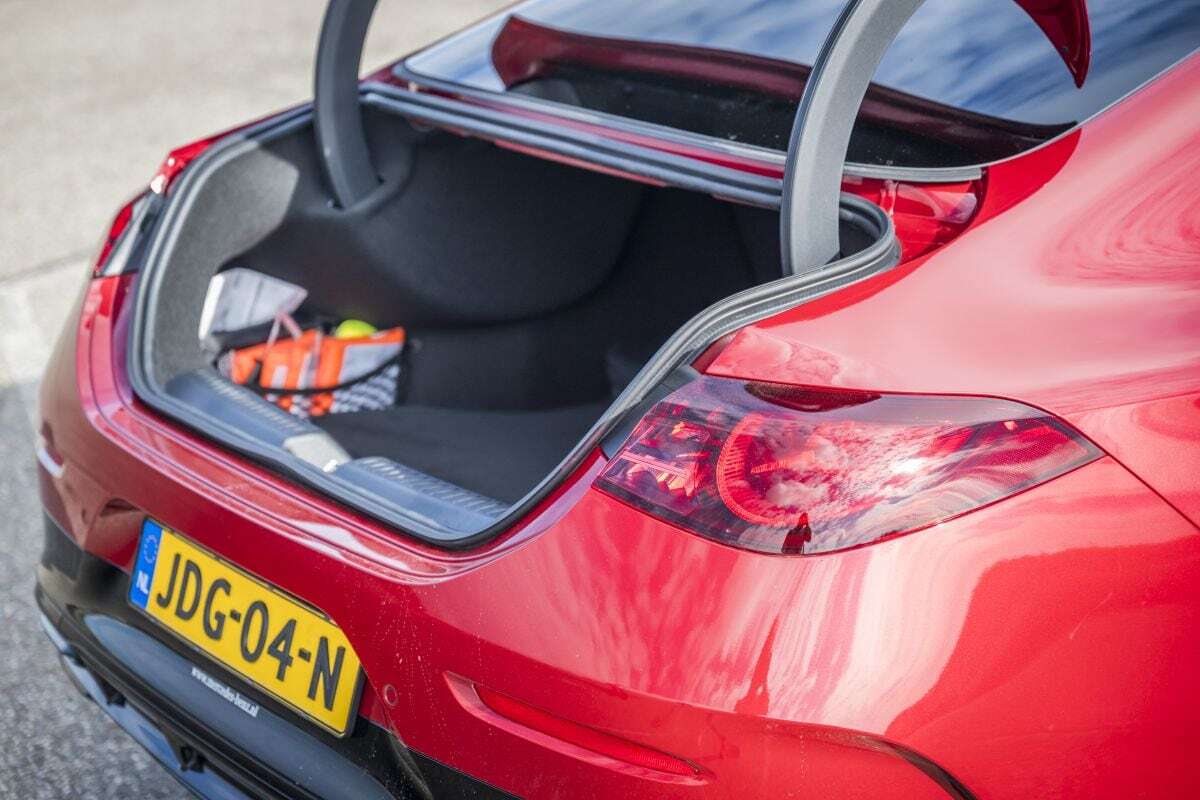
For the time being, the CLA is only available in one version: the very complete Launch Edition. The option list is quite short for Mercedes’ standards: in addition to seven paint colors, it consists of a tow bar, the aforementioned 22 kW AC charger and a series of digital extras such as a parking assistant. If you leave all those options for what they are, the CLA 250+ Launch Edition costs €58,979. The Polestar 2 is a lot cheaper. With the large battery pack, it is listed for €51,200. Although the 2 is already nicely equipped as standard, Polestar offers five different option packages including Pilot Assist, a glass roof or a heat pump, features that are included in the price of the introductory version of the CLA. Its higher price makes the Mercedes good with a more complete equipment.
“`