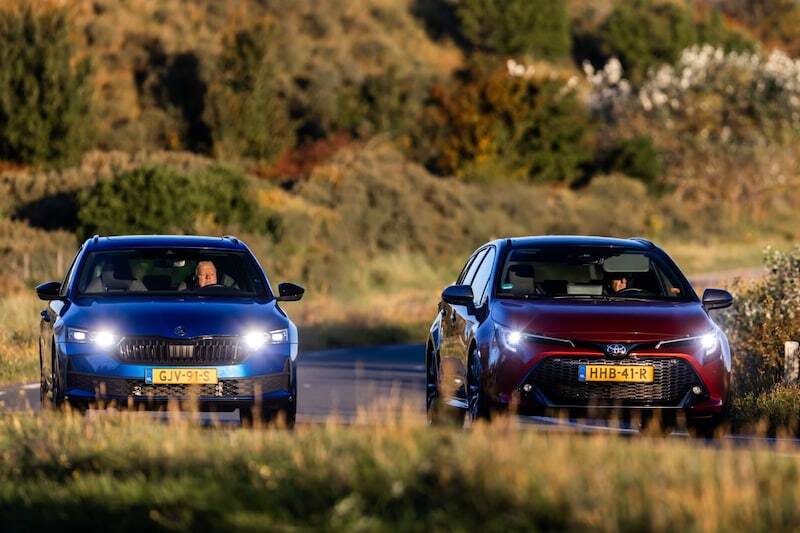
Eccentric SUV bodies, from 0 to 100 in less than 6 seconds, and a square meter of touchscreen? The Skoda Octavia Combi and Toyota Corolla Touring Sports aren’t fooled by that, but remain the practical, down-to-earth, and fine family cars they always were.
It is quite remarkable how quickly the automotive world has changed in recent years. In the Netherlands, we notice this especially in the business market, where down-to-earth station wagons have now almost all been exchanged for electric SUV-like vehicles. Teslas, Enyaqs, EV6s, and Chinese cars now form the traffic jam that not so long ago was formed by Octavias, Astras, and Corollas. In view of the planned ‘pseudo-tax’ for employers who dare to put their employees in a ‘polluting’ gasoline car, the era of those more traditional options could come to an end even faster than expected. For now, they still exist, and in 2025 you might have the last chance to get into such a nice, ordinary station wagon. All the more reason for us to do so once again. The Skoda Octavia has always been very popular in the Netherlands, and rightly so. The mid-sized Skoda is more spacious than many of its competitors, looks extremely presentable, and drives well. However, it is strange that the car is no longer available as a plug-in hybrid since its facelift. Previously, that was the case, and alternative models within the Volkswagen Group now almost all have a heavily revised PHEV powertrain with a huge electric range, but that does not apply to the Octavia for the time being. Here, it remains a 1.5 TSI gasoline engine, depending on the chosen transmission, with or without mild-hybrid support. We are driving it in that form, with a DSG automatic transmission and 150 hp, and in that form, the Octavia is not even that much cheaper than the cheapest Superb, which has much lower CO2 emissions due to its plug-in hybrid powertrain.
Tracksuit
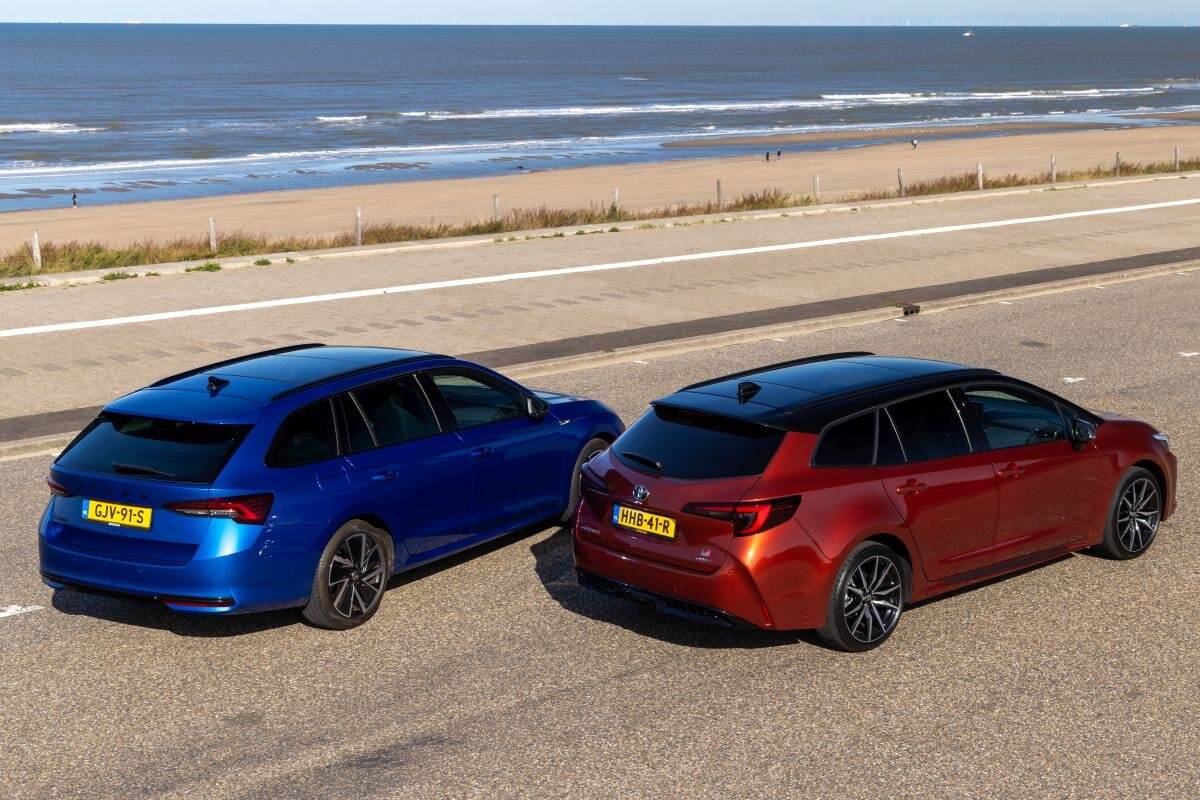
The Octavia fits in perfectly with the Toyota Corolla Touring Sports Hybrid 140. The current Corolla, with a birth year of 2018, is a bit older than the Octavia (2020), but continues to score worldwide. Thanks to a minor facelift in 2022, the car still looks fresh and has also been improved technically in several ways, with fresh and up-to-date powertrains and new and fast infotainment as a result. The same applies to the Octavia, although the facelifted version has only been on the price list here since 2024. Both cars have a neutral, unobtrusive, and business-like appearance that appeals to a wide audience. The Corolla is a bit more playful in shape, and the Octavia is even more business-like, but both appear today in a kind of tracksuit. The Octavia is a Sportline, and the Corolla is similarly sporty, thanks to the GR Sport version. Large wheels, dark accents, and subtly different bumpers contribute to these versions looking just a bit sportier than usual, and the interior has not been forgotten. With Skoda, you also get a slightly lowered sports suspension, but don’t expect too much from that when it comes to real sportiness. Even in this form, the Skoda is emphatically comfortable, quite soft, and quite distant.
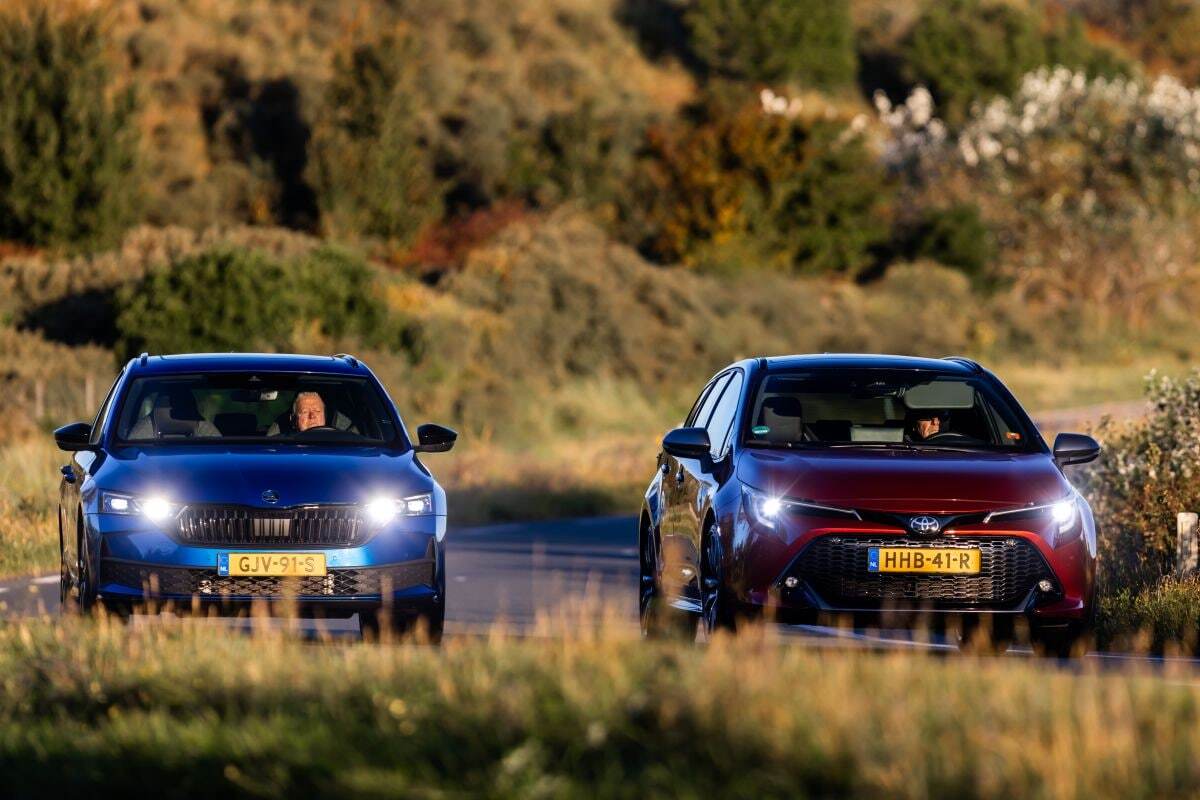
That’s perfectly fine, although the Toyota shows that comfort can also go hand in hand with just a bit more sharpness and driving pleasure. The Corolla reacts more directly to the steering wheel, sits tighter on the road, and is ultimately a much more fun car to drive, but despite its ultra-flat tires, it still manages to be comfortable. Class. The powertrain of the Japanese car, on the other hand, does not invite you to get the most out of it, because the Hybrid 140 aims at economy in everything. The well-known drive combination is stepless and works completely smoothly and jerk-free, but shines especially when you drive calmly. By today’s standards, it is certainly not fast – for that there is the Hybrid 180 – and under full load it still feels less comfortable, although much has been improved in recent years in that area, and even the most modest Corolla Hybrid relies more than ever on its electric motors to move forward. That pays off, because it is almost impossible not to drive economically with this car. Values north of 1 in 20 are equally easily achievable, and that is simply always an achievement for a non-diesel. An achievement that the mild-hybrid Octavia cannot match, although it must be said that we also know this 1.5 as a particularly efficient engine. Moreover, it gets the car going more easily and makes the Octavia not only feel, but also actually be considerably faster than the Corolla. Acceleration here goes ‘simply’ via a seven-speed DSG automatic transmission, which shifts lightning-fast and still jerk-free. At very low (parking) speeds, the car can sometimes be a little grumpy compared to the ever-smooth Corolla, but actually that is not worth mentioning.
Awkward
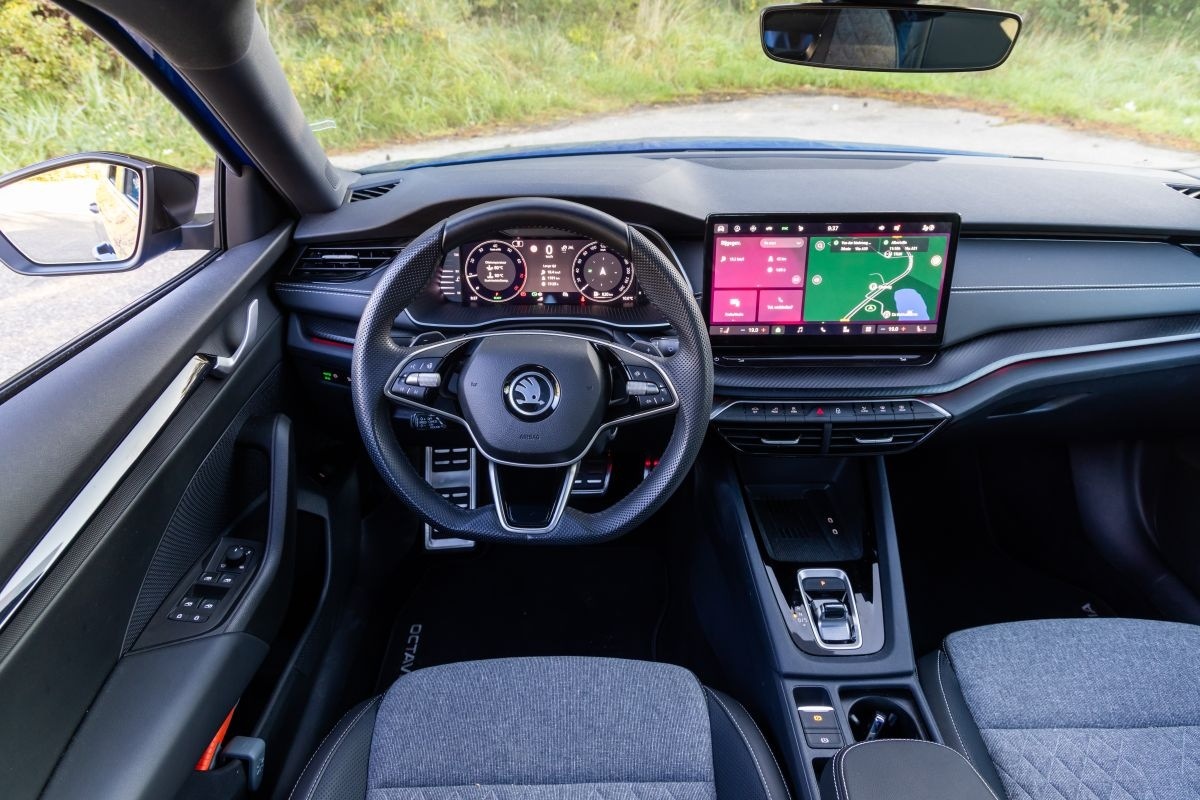
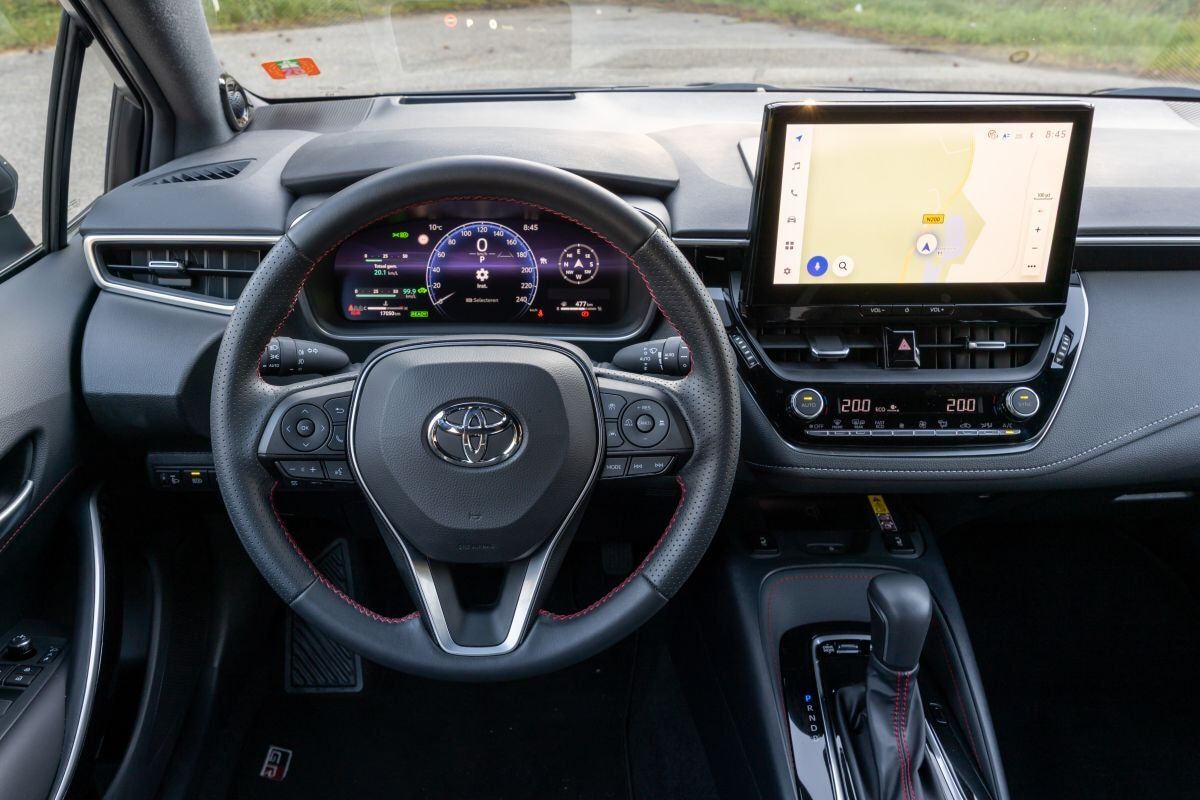
The sporty party doesn’t stop at the exterior of these cars, because Toyota and Skoda have also tried to create a somewhat sporty atmosphere inside. Sports seats, sports steering wheels, door sills, and black headliners contribute to that sporty feeling, although we must note that the sportiness of the Skoda seats is largely limited to the appearance. It’s all a matter of taste, and know that it is also possible without, and that fortunately a neat interior remains. The Toyota’s interior looks the best in terms of quality and feels very solid and high-quality in everything, where we find a cheaper part here and there in the Skoda. It does look a bit more modern inside. This is mainly due to its larger 13-inch touchscreen, which is unfortunately not standard. The Skoda infotainment is fast, extensively customizable, which puts it higher than that of the Toyota. The Corolla has considerably simpler infotainment, although there is something to be said for that. It only contains the most necessary functions, is very clear and easy to understand, helped by the fact that many functions have been deliberately kept outside the screen. The digital instrumentation is nice and extensive in both cases, but it takes quite some time in both cases to understand how it works. Once you’ve figured that out, it works fine. The seating position is well arranged in both cars, but in the Toyota we have more trouble finding a good place for all our loose stuff. The Skoda offers a bit more storage space, although it must be said that both cars fall somewhat short when it comes to the shape and position of cup holders. The wireless phone chargers are also disappointing. In the Skoda, this part mainly produces error messages and heat, while in the Corolla, the awkward position of the charger attracts negative attention.
Sporty Roofline
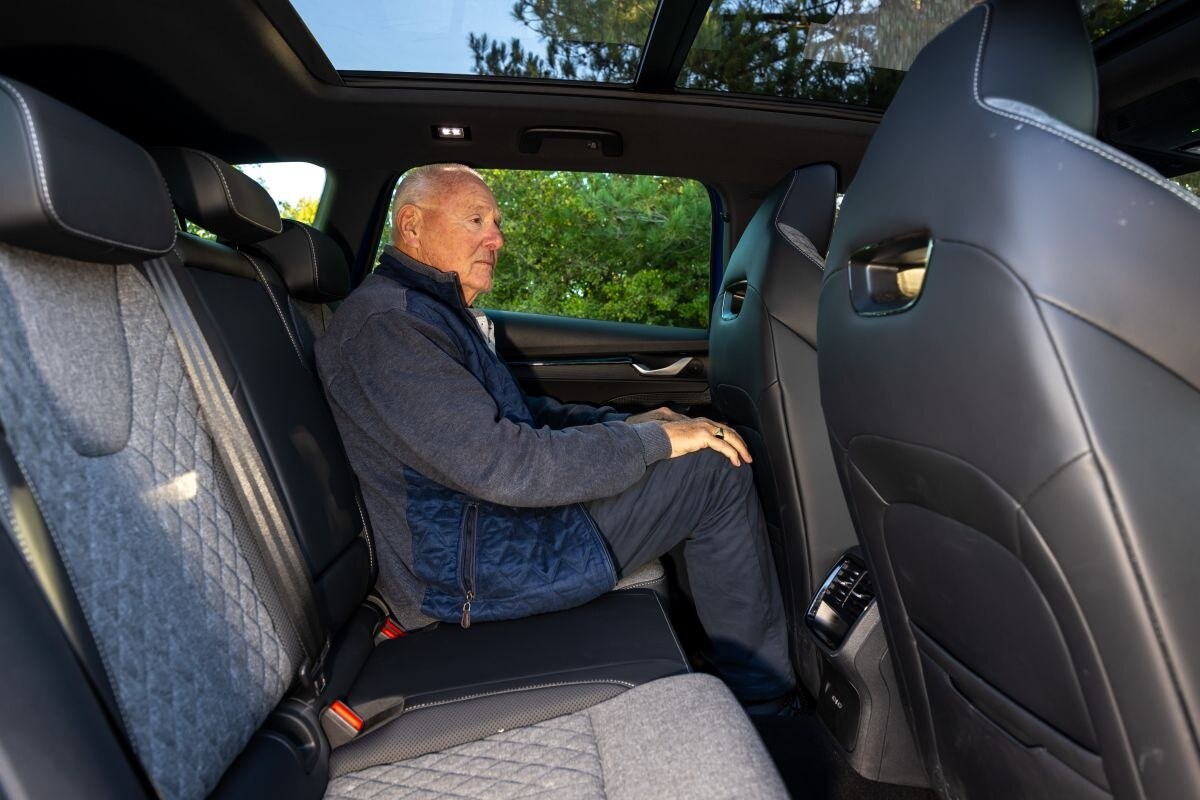
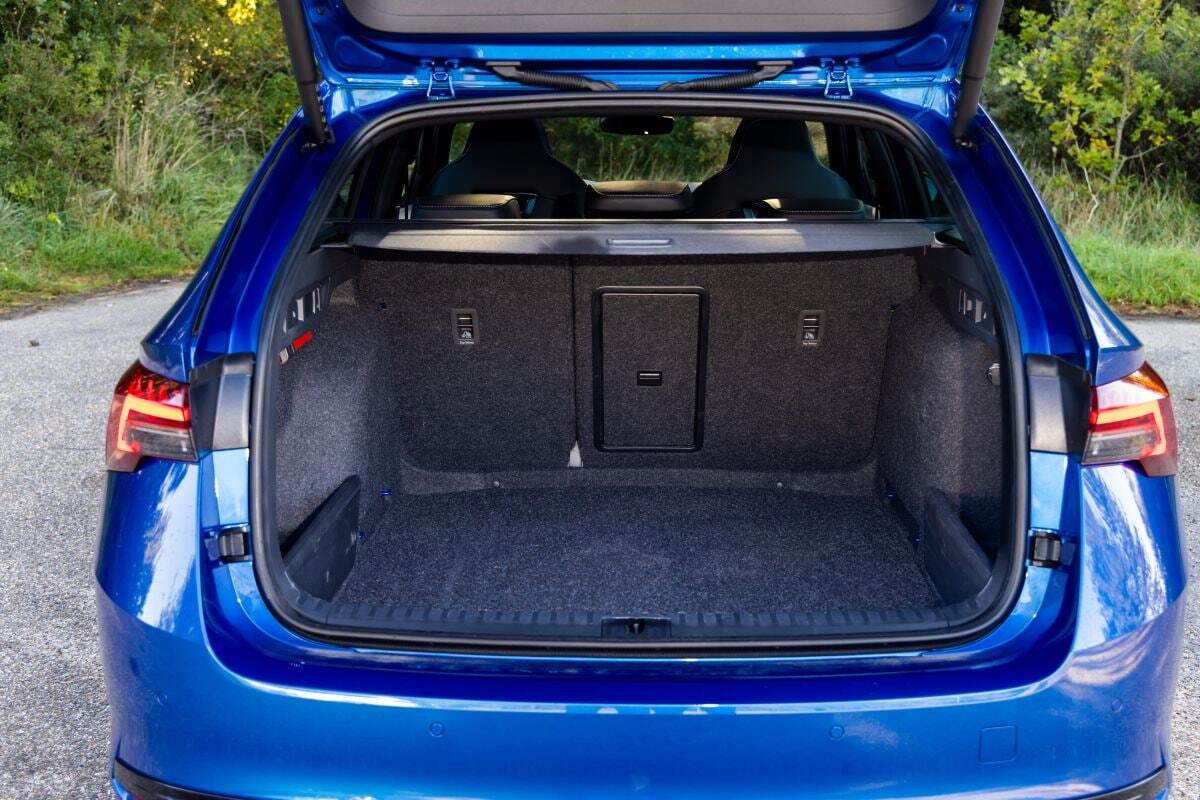
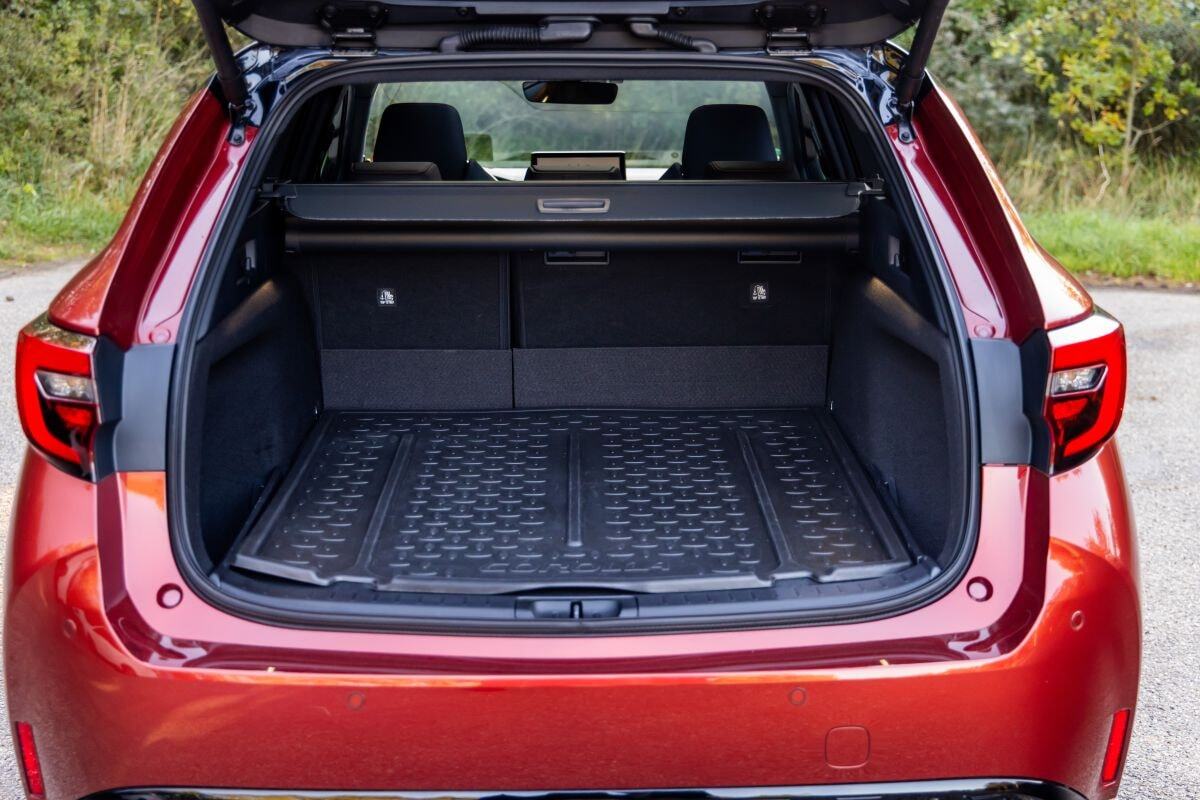
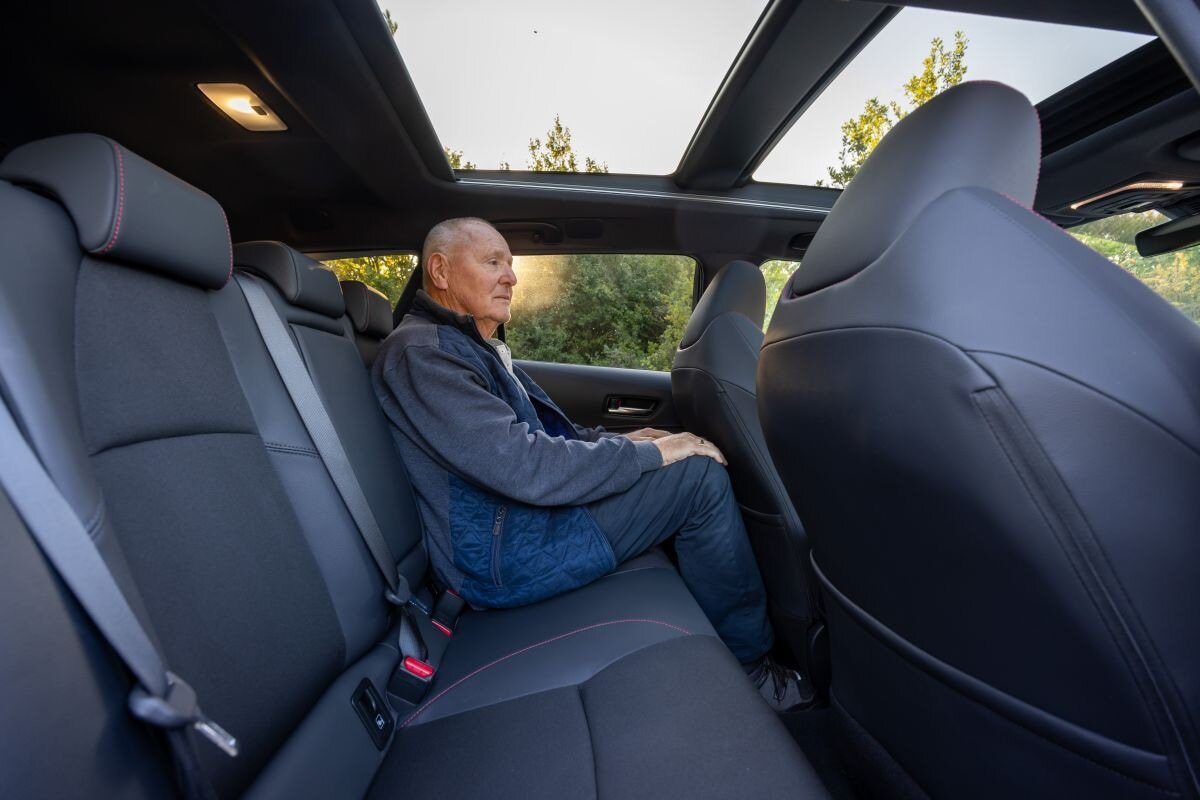
Skoda has a reputation to uphold when it comes to space and owes that name in part to the Octavia. 640 liters of luggage space is a lot even for a station wagon, and the Octavia offers plenty of space in the back seat. The step up to a Superb is therefore not necessary in most cases. The Corolla is not cramped either, but less abundant. This applies to the back seat, but also to the luggage space. The specified content of almost 600 liters does not tell the whole story, because the shape of the Corolla loading space is less favorable than the square ‘box’ of the Skoda. The Japanese tailgate is flatter and thus forms a problem when closing with luggage that just (doesn’t) fit, while the ‘sporty’ roofline limits the possibility of through-loading. No disaster, but clearly other choices have been made here.
Bandwidth
Making choices remains necessary once you have decided to go for one of these cars, because in both cases there are quite a few versions available. The Octavia Sportline Tour is the top version in the range and offers, in addition to sporty styling, also a bit more luxury than the other versions, although even then there are quite a few options and option packages available at Skoda. Our test car has almost everything and costs with thick 50 mille another €7,000 more than a ‘bare’ Sportline, so you have an idea of the bandwidth. Apart from the version, you have such a 150 hp TSI with automatic transmission from €40,490, considerably more than the €34,995 that Toyota wants at least for a Corolla Hybrid 140. Cheaper Octavia driving is possible with less power (and cheaper Corolla driving is not possible), but in this case the Toyota is the cheapest. That remains so when we start dressing up, because even the thickest Corolla remains well below 50 grand with this engine. Then we are talking about an Executive, because the tested GR Sport is just a bit lower on the ladder. Including a two-tone body and a package with a panoramic sliding roof and JBL audio, you will then be €45,663 for a car that hardly differs in luxury from the tested Octavia.