From July, standard in all new cars
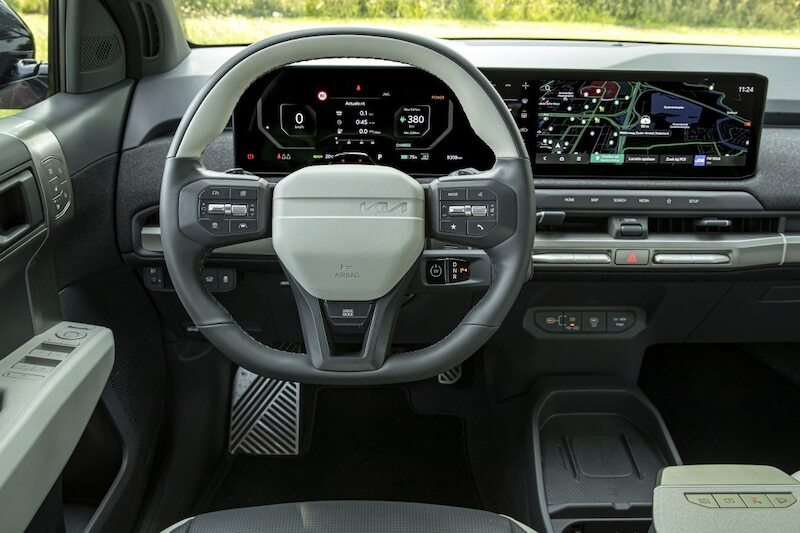
In 2024, the EU launched a new package of safety requirements with a major impact on the automotive industry and anyone who drives a new car. In 2026, they will repeat this process.
The buzzword of 2024 was ‘ISA’, if you can even call it a word. ISA stands for Intelligent Speed Assistance, and although we are still looking for the ‘Intelligent’ part, it is a fact that ISA has since loudly warned you about speeding in every new car. Since July 2024, every new car delivered in the EU must be equipped with the speed warning system, which uses an audible signal or (rarely seen) counter-pressure in the accelerator pedal to indicate that you are driving too fast.
To preempt the comments: this is also annoying if you are not a notorious speeder. Firstly, because not every car manages to always correctly identify the permitted speed, but mainly because the system starts beeping from 1 km/h over the indicated speed on the speedometer. That speedometer actually always shows too much, so the ‘tap on the wrist’ at 101 km/h mainly causes irritation in practice. According to the EU, however, tests show that people do indeed drive slower because of ISA.
In 2024, ISA was the most impactful component of the ‘General Safety Regulation,’ a package of safety requirements for cars. Besides ISA, rear parking assistance (camera or sensors), driver fatigue detection, and lane keeping assistance are also part of this package, which, incidentally, was already mandatory for newly introduced cars from 2022 and only two years later for every new car sold.
ADDW
Now, a next package is being introduced in a similar way. From July 2024, it will be mandatory for all newly launched cars, but from July 2026, the new systems will be mandatory for all cars newly sold here. The package is considerably less extensive than its predecessor but contains one important and impactful component: ‘Advanced Driver Distraction Warning’ (ADDW). It is a system we already know from many new cars, which uses cameras and sensors to monitor the position of the driver’s head and face. If this deviates too much from the forward gaze the system prefers to see, an audible and visible warning follows. All of this should contribute to further reducing the number of fatal accidents, which, according to research, are attributable to distraction in 10 to 30 percent of European cases.
Like ISA, ADDW is mandatorily activated when the vehicle starts. It can be switched off, but this must be done again for every journey. Our practical experience is that there is quite a lot of difference in the operation of such systems. There are systems that indeed only warn of serious distraction, but also numerous systems that start beeping at a single glance at the navigation screen or – even worse – over your shoulder, which often happens precisely to prevent accidents and is then completely incorrectly interpreted as distraction.
The obligation for all new cars may also mean that certain car models will disappear again. After all, installing such a complex system in an existing model that is already unpopular and/or at the end of its life cycle is no longer worth the effort for car manufacturers. From ‘the industry,’ there is also a complaint about these kinds of obligations, which swallow up a huge part of the development budget in already expensive and difficult times.
Privacy
With a camera that continuously monitors the driver’s face, there are, of course, numerous privacy-related concerns to consider. The official rules state that ADDW must function without using ‘biometric personal data’ of occupants. The system may therefore not store, use, or even perceive the shape of the face or even the behavior of passengers, but only observe whether the driver is distracted or not. Whether that provides sufficient reassurance, everyone is, of course, free to decide for themselves.