Many foreign road users
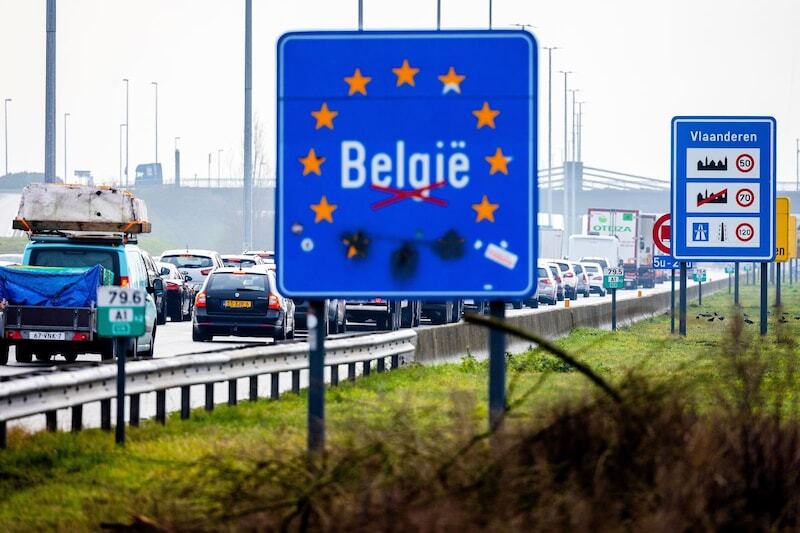
Dutch motorists may also have to start paying to drive on Belgian roads as early as next year. Flanders and Wallonia are largely in agreement on introducing a toll in the form of a national road vignette.
Because more than half of all kilometers driven on Belgian roads are covered by foreign motorists – often Dutch in practice – it means they will soon contribute significantly. An agreement on this in Belgian politics is close, reports the newspaper Het Laatste Nieuws ( HLN ).
Flemish Minister of Finance Ben Weyts makes no secret of it: “Flanders wants to invest heavily in road infrastructure, but that means we need money to build new roads and maintain existing ones. It is therefore logical that we try to ensure that foreigners contribute, as we are pre-eminently a transit country.”
The minister cannot confirm when the vignette will be introduced: “I cannot and will not commit myself to a timeline, but it is my ambition that an agreement will be reached between the governments of Wallonia and Flanders in the coming months.”
Vignette instead of kilometer charge
The toll plan would yield Flanders alone 130 million euros annually, and Wallonia at least 50 million. Flanders and Wallonia deliberately choose a vignette over a kilometer charge. Such a charge is considered technically more complex and politically more sensitive. The road vignette, as known in Switzerland and Austria, would apply to the main motorways and regional roads. Unconfirmed reports have long spoken of a rate of approximately 100 euros per year. For cars older than twenty years, it could increase to 125 euros.
The vignette will likely be fully digital. Motorists will therefore not need to stick a sticker on their windscreen. The system will be linked to the license plate and controlled via roadside cameras. Anyone without a valid vignette risks a fine. Foreign motorists will have to purchase the vignette online, possibly also in variants for shorter periods, such as daily or weekly vignettes.
Exemption for Belgians in violation of EU rules
Currently, only trucks (both domestic and foreign) in Belgium must have a road vignette. They must have a small computer (on-board unit) that registers the number of kilometers driven.
According to Belgian mobility expert Dirk Lauwers, the current traffic tax (comparable to the Dutch Motor Vehicle Tax, MRB) alone yields over a billion euros per year in Flanders. That is more than what the Roads and Traffic Agency spends on road maintenance. Lauwers: “Why the vignette then? Traffic also causes other costs. Think of accidents, time loss due to traffic jams, environmental and health costs. Moreover, owners of electric cars do not pay that tax. Currently, only a small 5 percent of cars are electric, but that is expected to be a quarter within about five years. Then the Flemish government will lose a lot of income.”
According to Lauwers, the financial burden for Belgian motorists will be manageable: “Politicians are confident that the Flemish bill will not increase. That a reduction in traffic tax will compensate for these costs. That also seems feasible to me. Traffic is a major source of income for the government. Currently, we pay more than a billion euros in traffic tax per year, accounting for one-sixth of the Flemish government’s income. The revenue from the vignette will come on top of that because foreigners will also pay.”
ANWB opposes the plans
The ANWB critics sixes the advanced plans. “We are not in favor of a toll if it does not directly offer added value for the motorist,” says spokesperson Jasmijn Dielesen. “Furthermore, we are critical of the intention to only have foreign motorists pay a toll. Belgian motorists would be spared by compensation for car taxes. Similar plans in Germany were ultimately rejected by the European Court of Justice on these grounds.”
How the latter will be precisely resolved is not yet clear. What is certain is that anyone driving through Belgium will likely have to pay significantly. If the plans proceed, it means that Dutch motorists will once again be disadvantaged in a European country. Earlier this week, it was announced that Switzerland also wants to see extra money from holidaymakers who are only passing through.