Every Ferrari has an unparalleled engine sound, crushing performance, and phenomenal handling. You’d think there’s nothing more to improve. Yet, Ferrari saw room for enhancement in every aspect of the 296. For an even more intense driving experience.
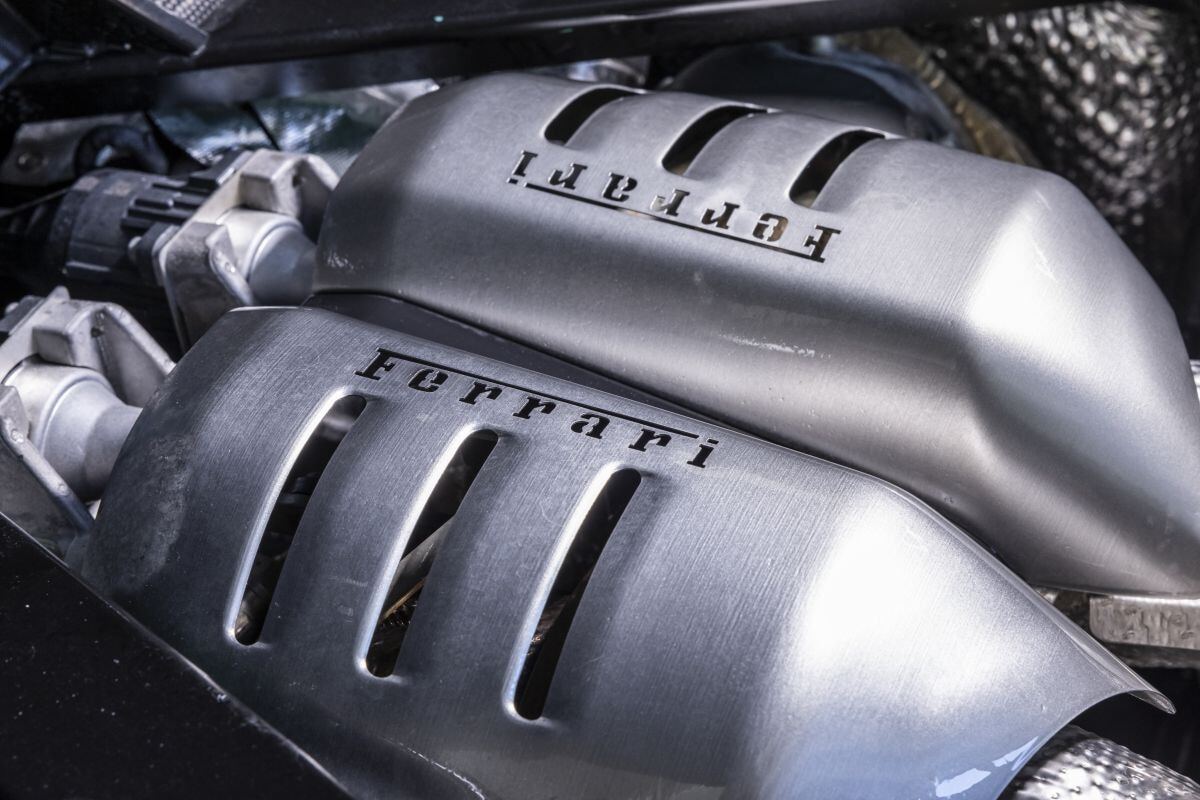
In 2021, Ferrari introduced a production model with a V6 after a long time. And what a V6! The engine has a 120-degree bank angle, and right in the middle of that V, the hot combustion residues enter the two turbos via the exhaust ports. These, in turn, compress the cooled intake air forced in through the intercoolers. Thus, this 3-liter engine produces an impressive 663 hp, equating to 221 hp per liter. A world record for a production car with a turbo engine. But that’s not all, because there’s also assistance in the form of an electric motor, powered by a rechargeable battery pack. This makes the 296 a plug-in hybrid, just like the SF90.
How much power does the Ferrari 296 Speciale have?
The system power thus reaches 830 hp, which allows you to get along quite nicely. The drivetrain of the 296 Speciale adds an extra scoop. The V6 gains an additional 27 hp, and the electric motor’s power increases from 167 to 180 hp. This brings the system power to 880 hp and the specific output of the combustion engine to nearly 234 hp per liter. Can you imagine, a Volkswagen Polo 1.0 TSI with 234 hp? Furthermore, the eight-speed dual-clutch automatic transmission has been finely tuned for even faster shift times. It goes without saying that the electric motor’s torque is almost entirely used to compensate for the already minuscule turbo response time and to make upshifting during acceleration completely seamless.
Additionally, the electric motor can provide an extra boost of power during a track session. In ‘qualifying’ mode, you get an extra push at the right moments to accelerate out of a corner faster. An option that Max Verstappen doesn’t have in the 296 GT3, with which he impressively won at the Nürburgring at the end of September this year. His V6 has no electric assistance but still delivers 600 hp in a car that is 220 kg lighter than the road version.
How many kg lighter is the Speciale compared to the 296 GTB?
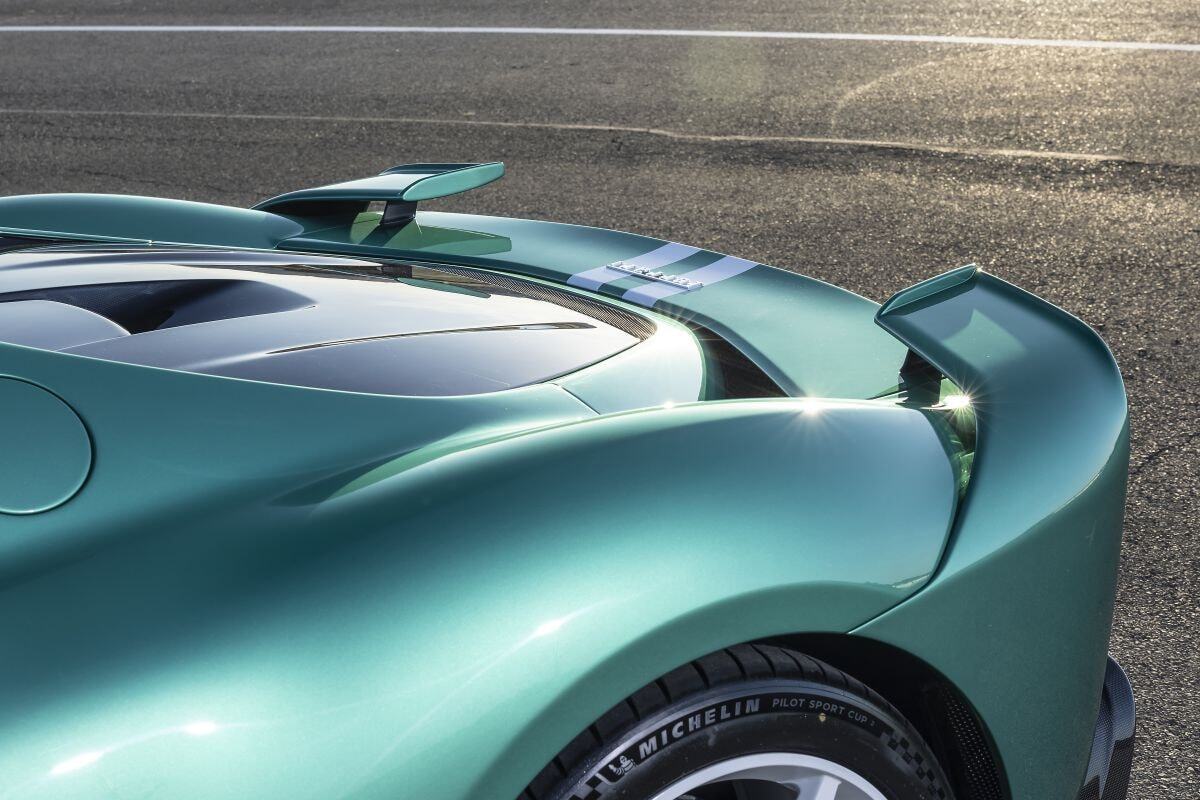
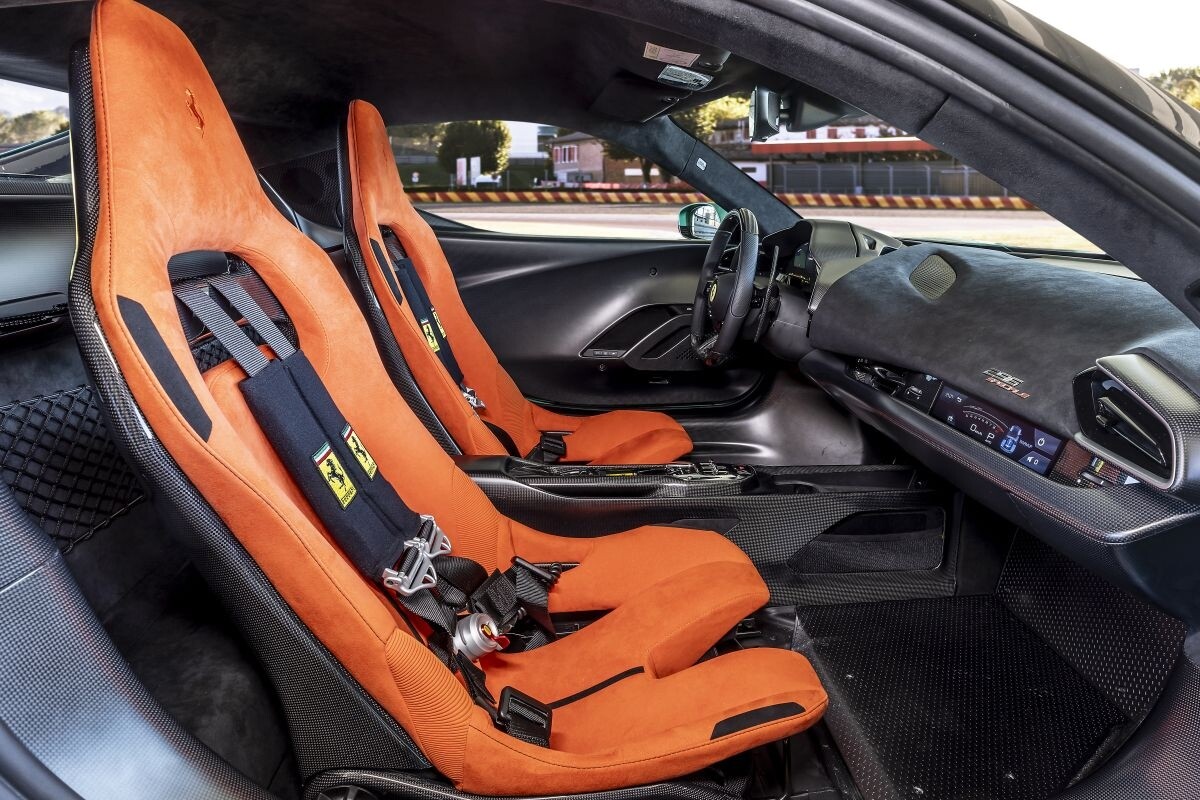
Weight reduction and improved aerodynamics are the pillars of the Ferrari 296 Speciale, along with the increased engine power. The weight has been reduced by 60 kg compared to the 296 GTB. The engine is 9 kg lighter. This was achieved by simply shaving off a bit of the block, but also by using titanium bolts. The lower connecting rod is made of the same material. Other applications of this lightweight metal are found in the exhaust, and even the coil springs of the front and rear suspension are made from it. Every little bit helps. Additionally, there’s plenty of carbon on the options list, such as the two small rear wings, the engine cover, the wheels, and parts of the interior.
What has changed in the aerodynamics?
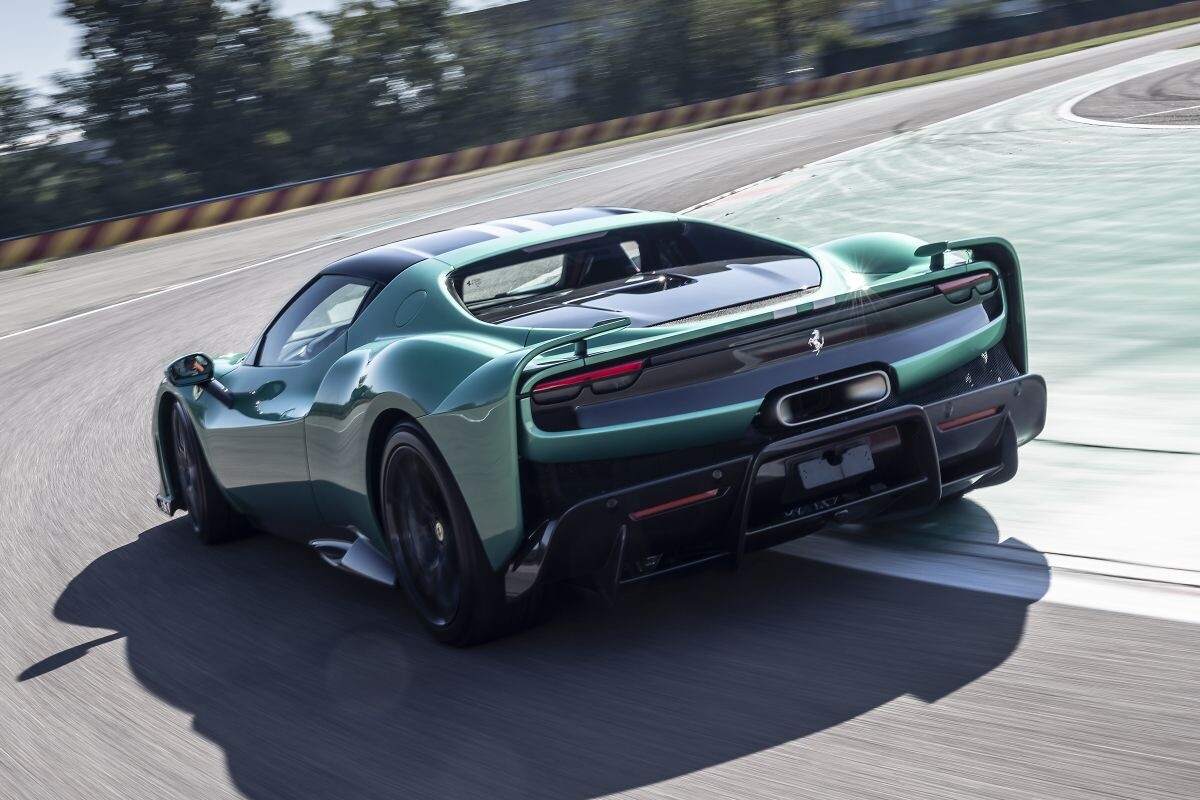
To clarify the improved aerodynamics, we receive a brief lecture on the subject using a 296 model at a 1:5 scale. This scale model was actually used for wind tunnel tests. The downforce increased by 75 kg to a total of 435 kg, whereas in Verstappen’s GT3, it’s an impressive 870 kg. In both cases, this is at a speed of 250 km/h. At the front, the so-called air ducts are particularly noticeable. The three louvers on each side channel the airflow from the wheel arches and are directly derived from the 296 GT3. The large slit in the black carbon part at the top allows air to pass through from an opening at the bottom. The underbody of the 296 Speciale requires a study in itself and plays a major role in creating downforce.
How does the V6 of the Ferrari 296 Speciale sound?
We begin the introduction with a route on public roads, in the area around Maranello. The seat can go back just far enough; the backrest is not adjustable. At the bottom of the steering wheel, there’s a touch button to activate all systems. The 296 doesn’t start yet. On the left side of the steering wheel, you can choose from different modes: e-mode, hybrid, performance, and qualifying. We choose the latter, and immediately the eager V6 comes to life with an exhilarating bark. Then, on the right side, there’s the familiar Manettino (rotary knob), with which you determine the characteristics of the drivetrain and ESP. If you choose ‘wet,’ you’re completely safe, but the power is significantly restricted. So, let’s go straight to ‘sport.’ The final step is the transmission.
The eight-speed dual-clutch automatic transmission can take all the work off your hands, and you can assume it does so sublimely. In heavy traffic, that proves quite pleasant, especially in combination with adaptive cruise control. The engine makes itself heard well, partly thanks to extra pipes that run from the engine bay directly behind the seats, amplifying the sounds of the six-cylinder symphony. Even though it sounds less raw and hysterical than the V8 of yesteryear, once it revs up, the V6 is enchanting. It really gets fun when the first mountain roads appear and there’s no other traffic. The 296 excels in everything: braking, steering, acceleration, and grip. The front wheels can’t even be forced into understeer on the damp asphalt, and if you go full throttle mid-corner, the rear only takes a small step sideways briefly.
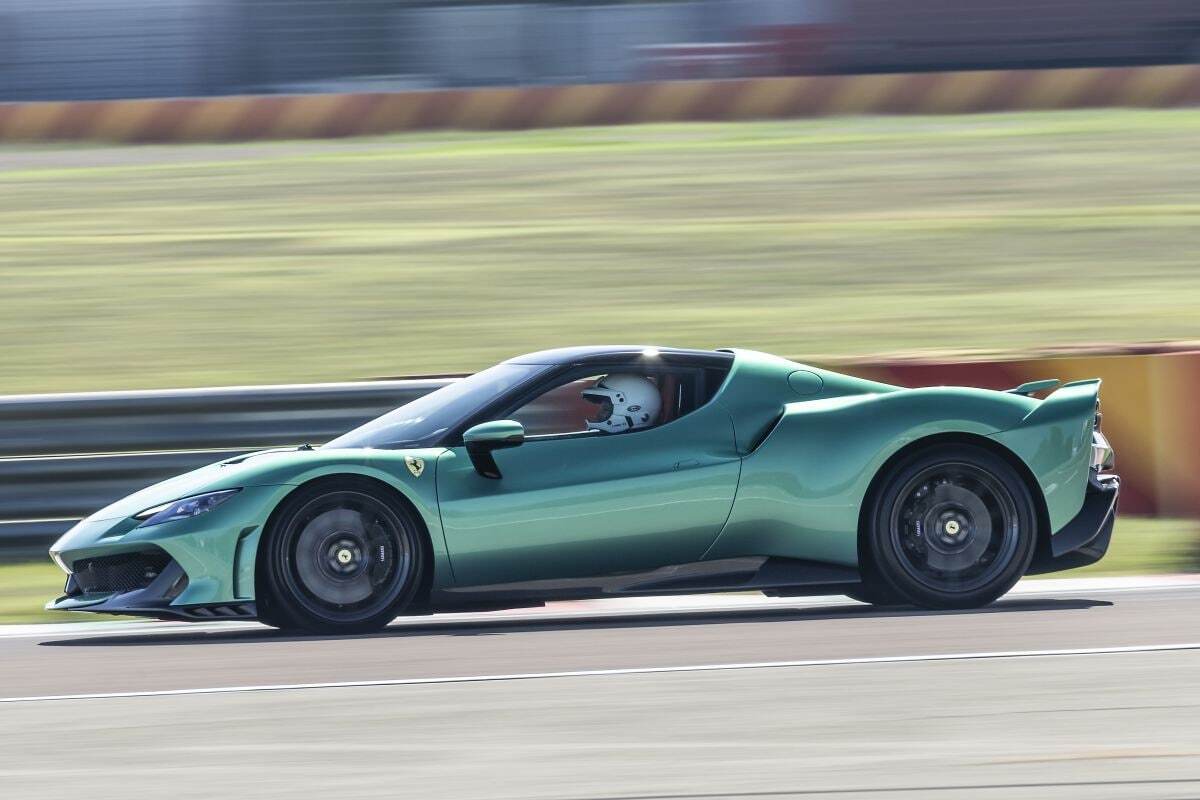
How does the Ferrari 296 Speciale drive on the track?
In the afternoon, a session awaits at Ferrari’s circuit in Fiorano. A fun track with plenty of corners and a not-too-long straight. We don’t get complete free rein, but the instructor leading in a 296 doesn’t spare the accelerator. The Manettino is now in ‘race’ mode, for even more engine noise and even faster shifting, which we now obviously do with the paddles on the steering wheel. It goes insanely fast, and lap after lap, the pace increases, but we’re still not at the limit.
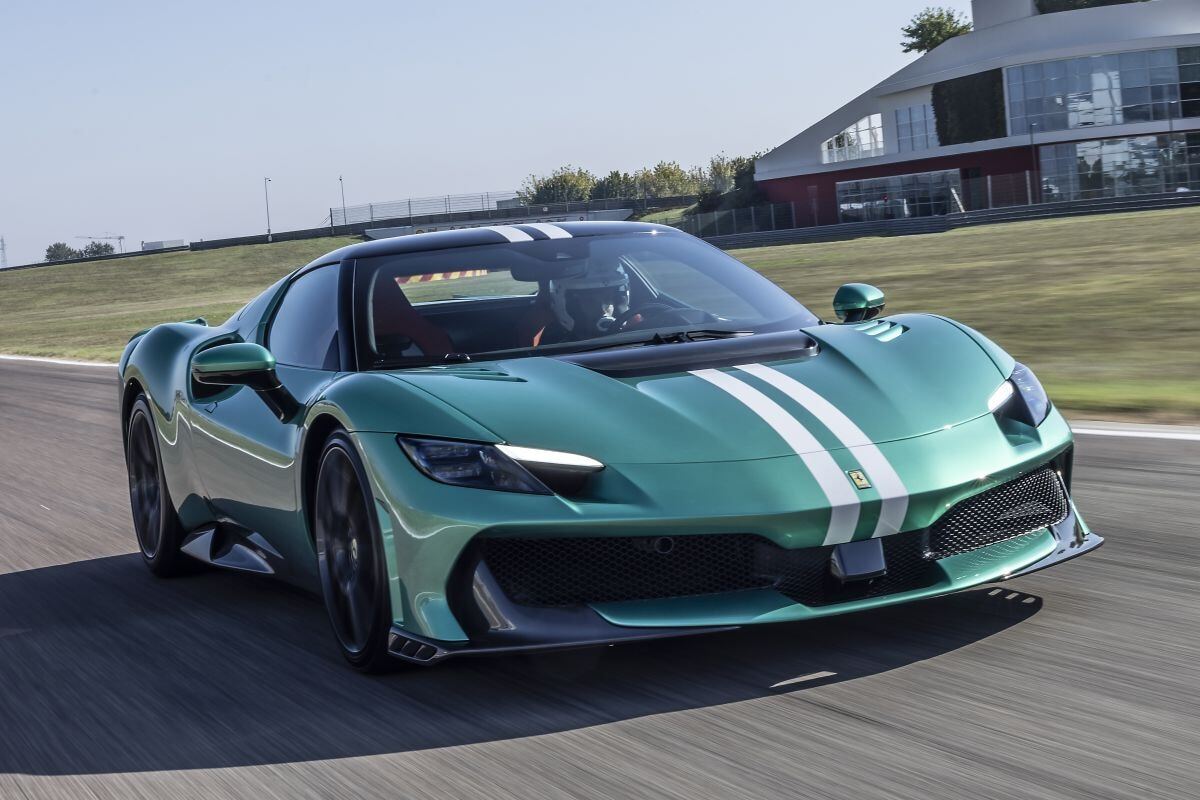
Every time you think it might be a bit too fast, the braking power and grip reassure you. Only now do we experience when a hint of understeer occurs, and sometimes it exits a corner with a slight drift. And then that steering. It couldn’t be more direct and precise. On the straight, the speed reaches about 240 km/h, and at the end, a sharp right-hand turn awaits. The ceramic brakes don’t flinch, and meanwhile, we downshift from ‘seven’ back to ‘three.’ This is where the 296 Speciale truly comes into its own, and you can utilize its full potential. We conclude that only Ferrari can build a car like this. Unfortunately, it’s only available to a select number of customers.