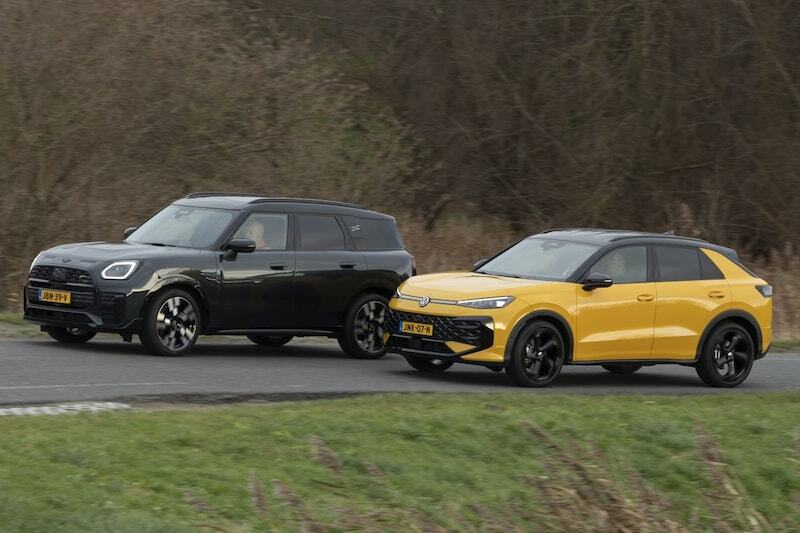
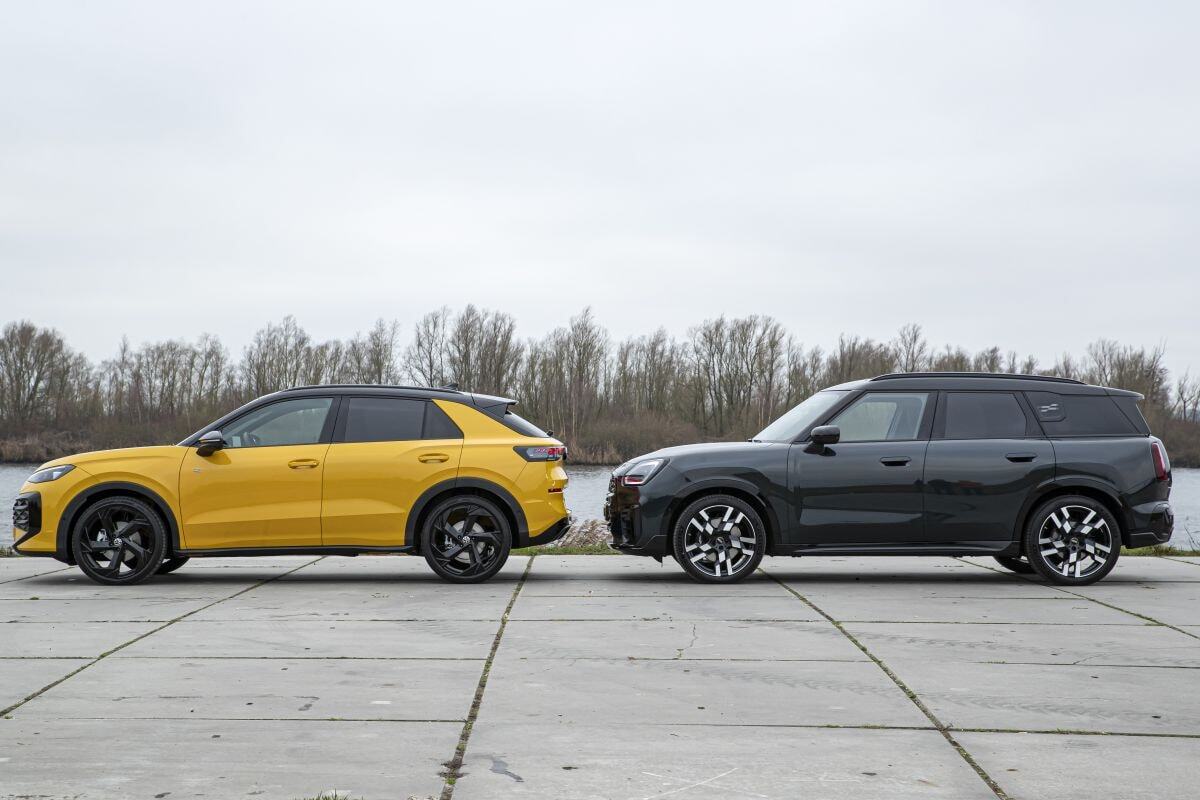
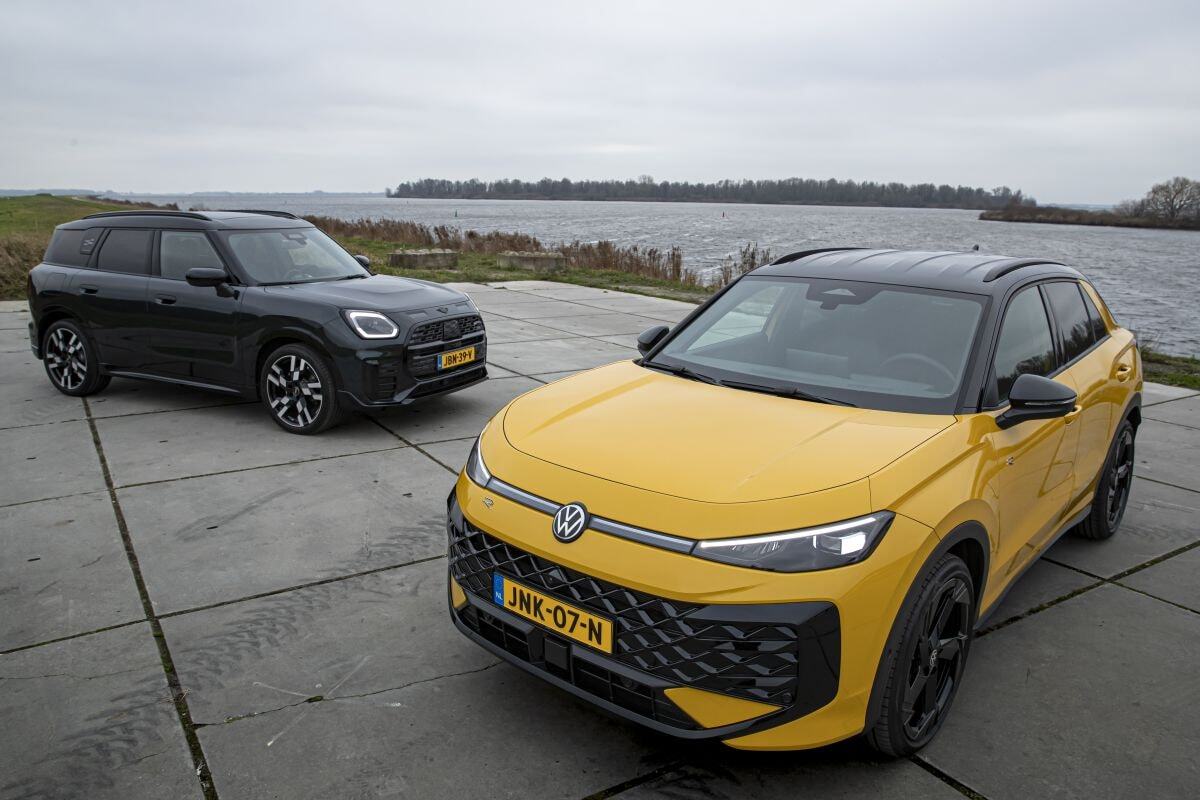
Last summer, Volkswagen unveiled the second T-Roc after 8 years. It has grown especially in length and is currently only available as a mild hybrid. The current, third generation Mini Countryman arrived in 2023 and is even a size larger than the T-Roc. Also a mild hybrid, also a 1.5-liter with a 7-speed automatic transmission, and just as steeply priced. We are finding out if there are still differences.
Regarding price, there is nothing mini or “folk” (referring to Volkswagen’s name) here. Almost 52 thousand for the T-Roc and just under 60 thousand for the Countryman. Both demo models are fully loaded with just about everything from the automotive candy store. But then again, these are not cars you buy on rational grounds, because in that case, a Dacia Duster or Suzuki S-Cross would be at your doorstep. Almost 30,000 Dutch people have bought or leased a new T-Roc since 2017. The Mini Countryman has found just under 16,500 enthusiasts in the Netherlands so far, but that’s since 2010. In both cases, parallel imports are added to that.
The fact that both the Volkswagen and the Mini are quite popular has everything to do with the segment they fall into. We are talking about cars with a high entry, drenched in an SUV sauce. That’s what the majority wants. Volkswagen sends you on your way with a 1.5-liter four-cylinder, the Mini has just as many cc’s, but one cylinder less and nevertheless more horsepower. Now that we’re talking about it: the electric motors of this duo – which are connected to the crankshaft by means of a belt and function as a starter motor, auxiliary motor, and alternator – are good for about 20 hp. We are talking about mild hybrid here; electric driving is not possible with this. A simple and effective solution to slightly reduce consumption and thus emissions.
For now, Volkswagen only supplies the T-Roc with this engine, optionally with 115 hp or 150 hp, and always in combination with an automatic transmission, which goes by the name DSG with this brand. In the previous model, the basic engine was a three-cylinder 1.0 TSI with 115 hp. The era of the diesel is over for this car anyway, but this year Volkswagen is expanding the range with a true hybrid, without a plug. That has a 2.0 TSI as an internal combustion engine. The system output is 136 hp (a version with around 170 hp will follow) and will undoubtedly be more favorable in terms of price due to lower emissions, whereas for the test car, this amounts to more than €7,000 in BPM (luxury tax). In addition, a T-Roc with all-wheel drive will appear in due course. A fast R with more than 300 hp is also in the pipeline, but that will not come to the Netherlands.
Mini offers the buyer of the Countryman, once built in the Netherlands, significantly more choice in terms of engines. If only because there is also an electric variant, either all-wheel drive or not, with power outputs ranging from 208 to 313 hp. If you prefer a petrol engine, there is this 1.5-liter three-cylinder, and in the S ALL4, it is a 2-liter in combination with all-wheel drive. The top model is the JCW with 300 hp, and if you tick a few more options, the price exceeds €85,000. Manual shifting is no longer available; just like the T-Roc, the Countryman with a petrol engine also has a 7-speed dual-clutch automatic transmission.
Playing with Light
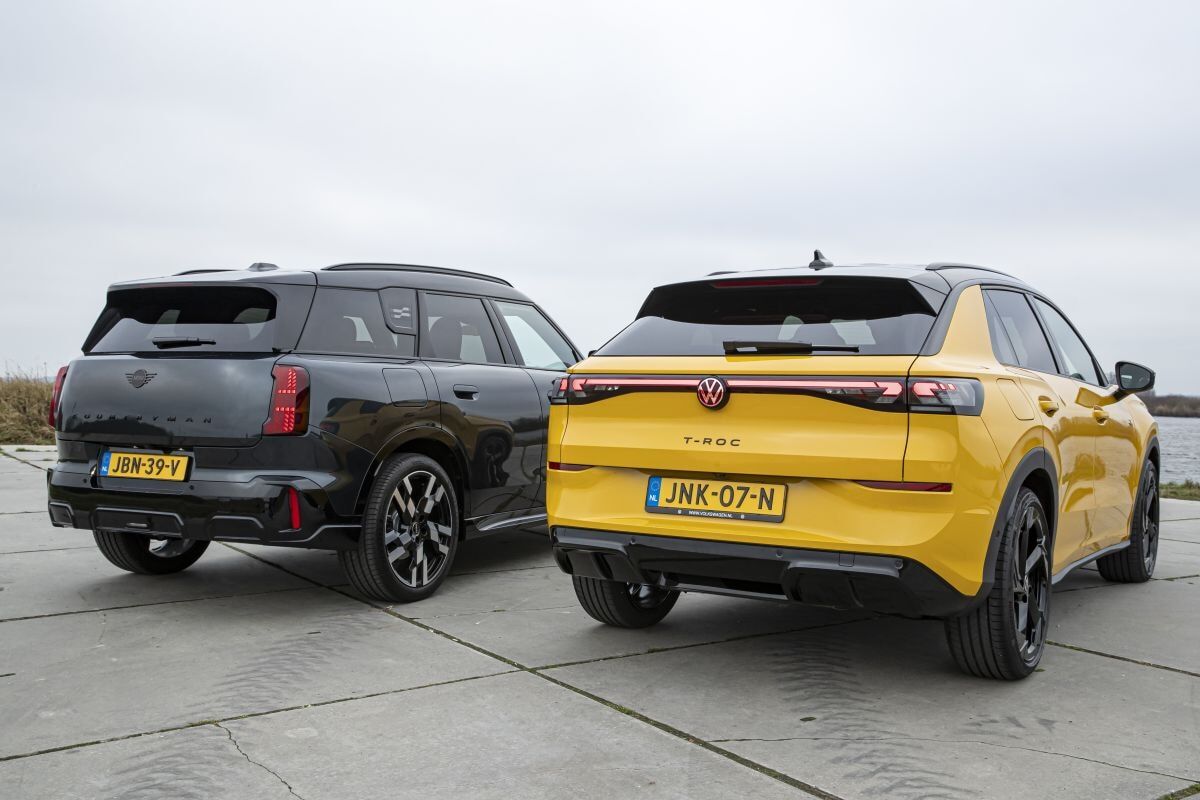
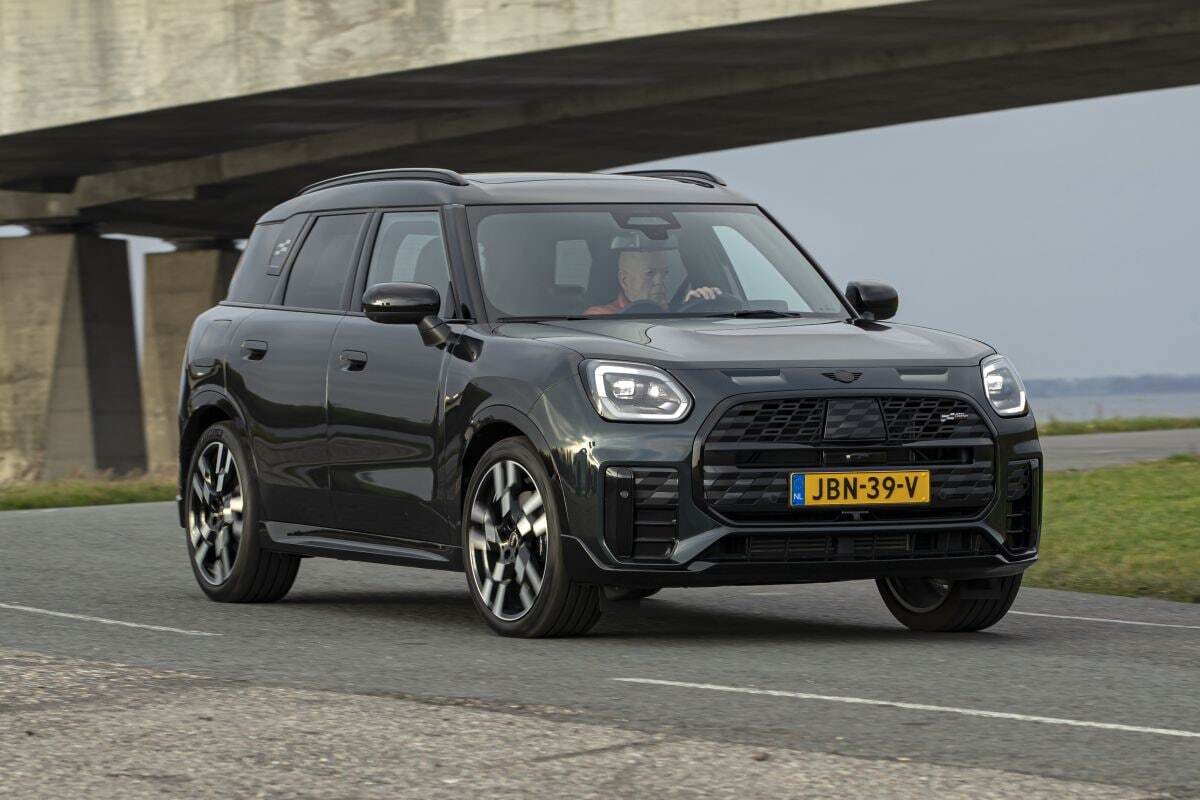
Although the current Countryman is still recognizable as such, it no longer has the somewhat mischievous and round shape of its two predecessors, although a cheerier color might help a bit. Nevertheless, this Mini still has enough character to distinguish itself from the crowd and evokes fewer SUV emotions than many of its counterparts. When approaching, you are greeted with a light show at the front and rear, and the doors unlock automatically, which we see in more cars.
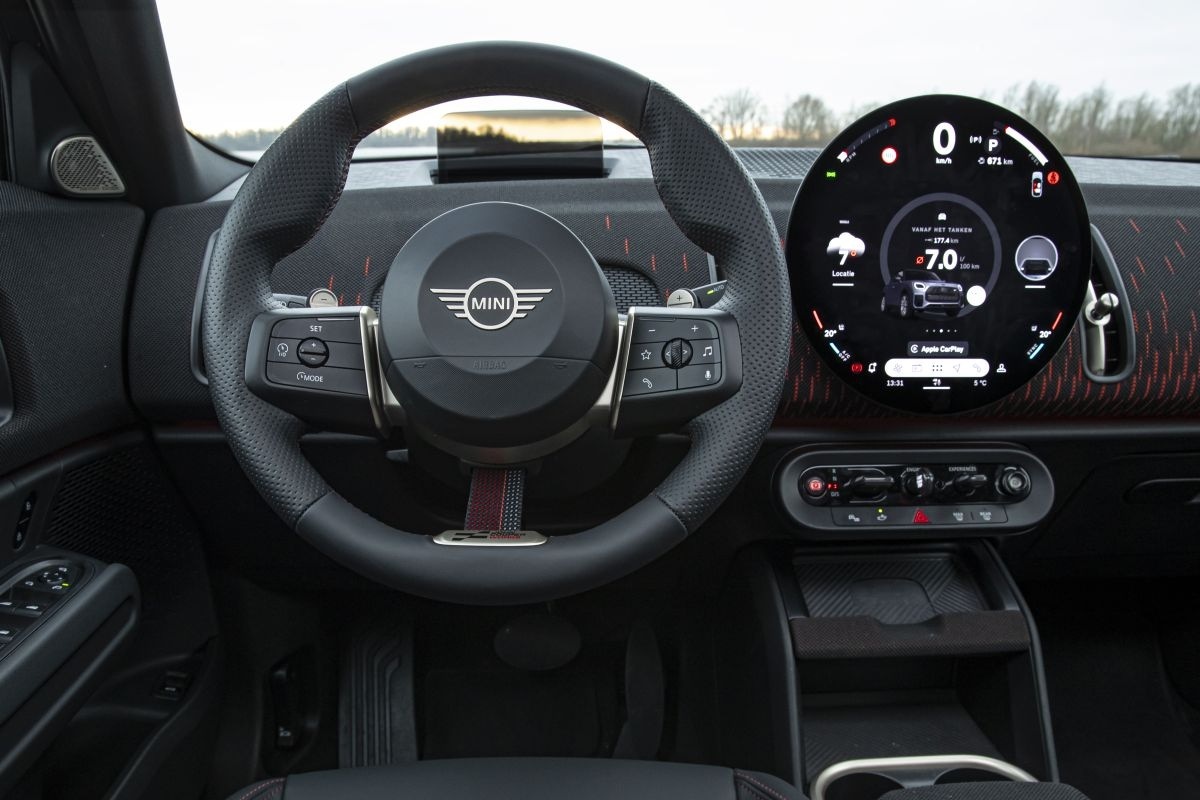
When you get in, your attention is automatically drawn to the large, round display of the infotainment system. From its very first hour, the Mini, which debuted in 1959 as the Austin Seven and Morris Mini-Minor, has had a large round clock in the center of the dashboard. Directly behind the steering wheel, there is also a sort of head-up display, but it is no higher than a Peugeot’s instrument panel. The dashboard is upholstered in fabric; the upper part is made of hard plastic, as are the lower parts.
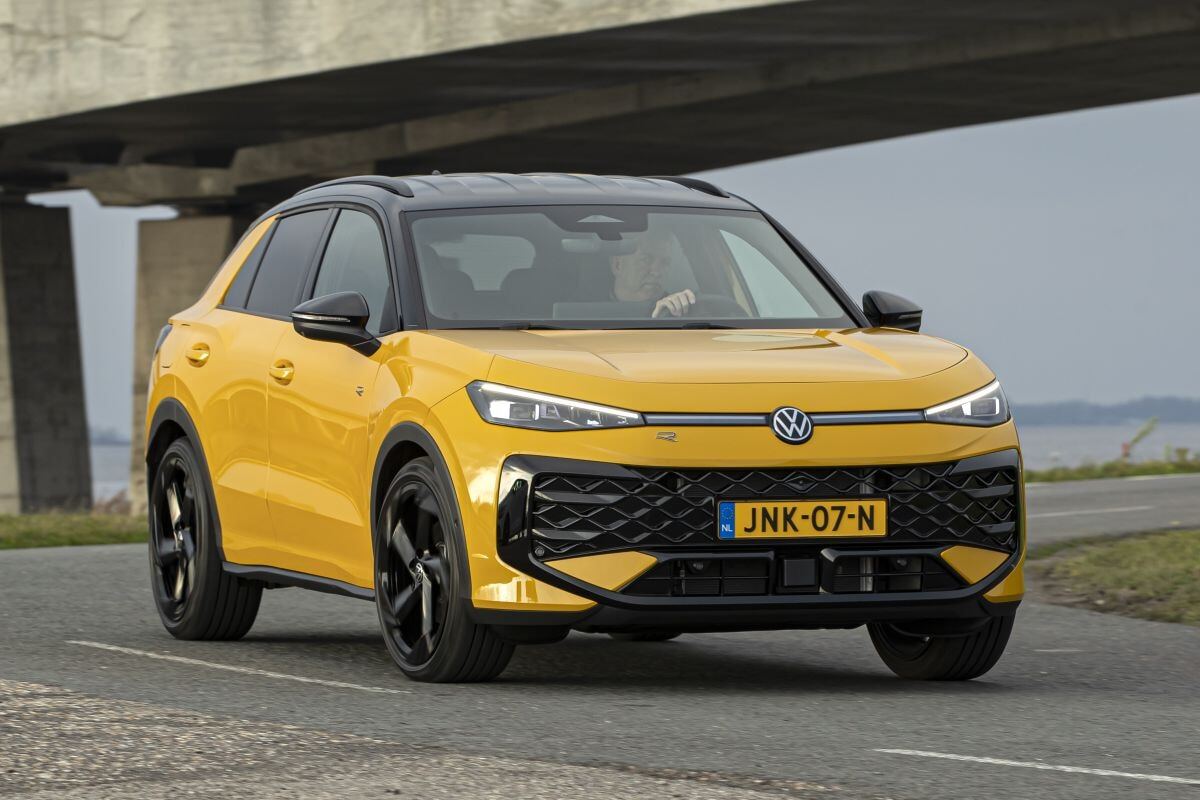
The new T-Roc is adorned with the front that characterizes more Volkswagens, including a light strip across the full width. It inherited a few stylistic features from the first generation, such as the curves above the rear wheels starting in the rear door and the C-pillar in the shape of a fin. But the T-Roc is not a style icon like the Golf, so designers could largely have their way. On the other hand, you don’t want to scare away loyal customers, so experimenting with flamboyant designs is not an option. Volkswagen drivers are not waiting for that, as recent history teaches us with, for example, the ID.3.
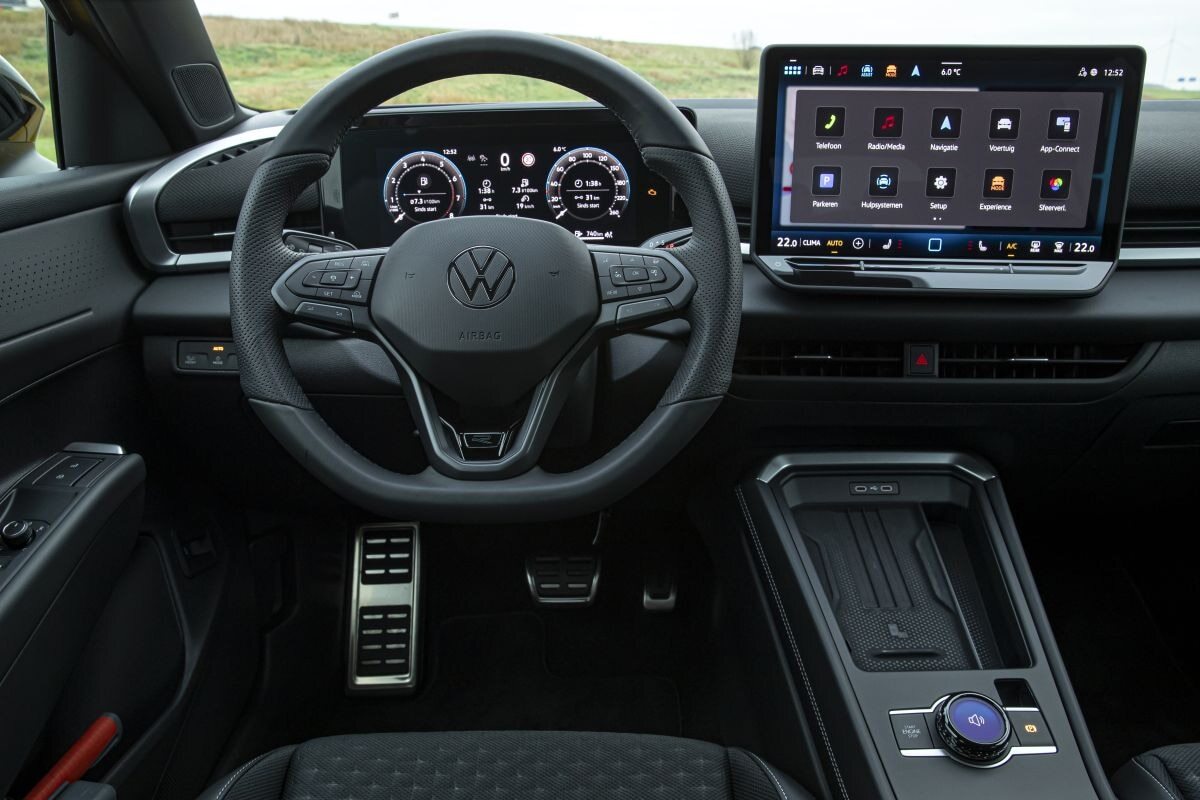
The rear also has a light bar, which the outgoing model does not have. For the avid T-Roc driver, the interior undoubtedly feels a bit like coming home. Although there is no longer a gear stick protruding from the center tunnel, there is a larger screen on the dashboard, and the familiar rotary knob for the lighting has disappeared, it is all very user-friendly. Buttons on the steering wheel, four window switches, and the digital instrument cluster are in many respects similar to those of the previous T-Roc and other Volkswagens.
Progressive Steering
With its yellow jacket, large black wheels, and black roof, the T-Roc R-Line raises certain expectations. The seat, and particularly the cushion, offers less support than that of the Mini due to the absence of a tilt function. Also in the Volkswagen, you imagine yourself behind the wheel of a larger car and have almost the entire hood in your field of vision. This provides a bit more of an SUV experience. The driving mode can be set from eco to sport, and there is the possibility to compose something yourself. In addition, the gear selector can be put in S for sportier shifting behavior. The test car has conventional shock absorbers; an adjustable system is available at an additional cost. The T-Roc is on slightly narrower tires than the Countryman, yet the braking distance is shorter.
You immediately notice that there’s a four-cylinder under the hood, but despite that, you have to work hard when merging. On the sprint to 100 km/h, the lighter Volkswagen is hardly slower than the Mini. The steering is progressive and feels slightly heavier after turning in than during straight-line driving. Suspension and damping are well-matched, and despite its rather firm character, the chassis, like the steering, exudes calmness. The infotainment system is quickly understood and easily customizable. Through a quickly accessible submenu, you have your favorite shortcuts, for example, to turn off the speed warning. On the center tunnel, there’s a large, multifunctional rotary/push knob for volume and driving modes, the buttons on the steering wheel are easy to operate, and the configurable instrument cluster offers a lot of information. For instance, in the heart of the left and right instruments, you can independently determine what information you see there, including coolant and engine oil temperatures.
If you say Mini, you say driving pleasure. With the first Mini, the comparison to a go-kart was often made. Under BMW’s wings, the first ‘New Mini’ impressed in 2001 with its cheerful steering character. Now we are in the new Countryman and we choose the ‘Go kart feeling’ mode. This sharpens the steering, throttle response, shifting behavior, and (optional) electronic shock absorbers, and you get all sorts of red instruments on the screen, including a G-force meter. The comparison to a go-kart is rather far-fetched; the Countryman is too big and heavy for that. The steering certainly works with enough feel and precision, and it can be pushed very hard around a cloverleaf on its 20-inch tires if desired, but this SUV lacks the nimbleness and playfulness of a small Mini.
The engine doesn’t help in this case either. Even with fairly normal acceleration, the three-cylinder quickly revs up and sounds quite breathless. As if it’s operating at its peak performance during acceleration, which you wouldn’t expect in a car with this price tag. According to the data, we have 170 hp and 280 Nm, the latter already at 1,500 rpm. With the paddle on the left side of the steering wheel, you can activate the boost function and get extra power for 10 seconds, but this is not reflected in the acceleration measurement.
The seating position is good, with the hood and the Mini-typical upright A-pillars in your field of vision. The infotainment system is easy to operate, although many functions are hidden in submenus, such as the distance control of the adaptive cruise control. The cruise control can also be used without distance control. Disabling assistance systems can be done partly via a physical button.
Countryman EV More Affordable
It should hardly be a surprise that you lack virtually nothing in these test cars. In both cases, we are talking about the top version, expanded with options and option packages. The T-Roc starts at €37,990, and then you’ll be sent home in a Volkswagen on – yes – steel wheels with hubcaps. The Life First Edition with 115 hp seems like a good option to us, costing €40,490, and if you add another €2,500, you get an extra 35 hp. Slightly less torque, but still at 1,500 rpm, so in practice almost just as quick. The maximum towing capacity in that case is 1,300 kg, whereas for the test car it is 1,500 kg.
The electric Countryman is more affordable than the internal combustion engine model. If you were to take the test car as an EV, that would save €4,000. The most affordable Countryman with a petrol engine starts from €44,090, and then you have the same three-cylinder with the same power as in the Mini we are driving. For the price of the test car (without options), you could also consider the most affordable S ALL4, then you would have a 2-liter engine and all-wheel drive. What stands out about the 1.5-liter is its high towing capacity: no less than 1,700 kg can be hitched, just like with the S ALL4.