Second facelift for nearly nine-year-old hatchback
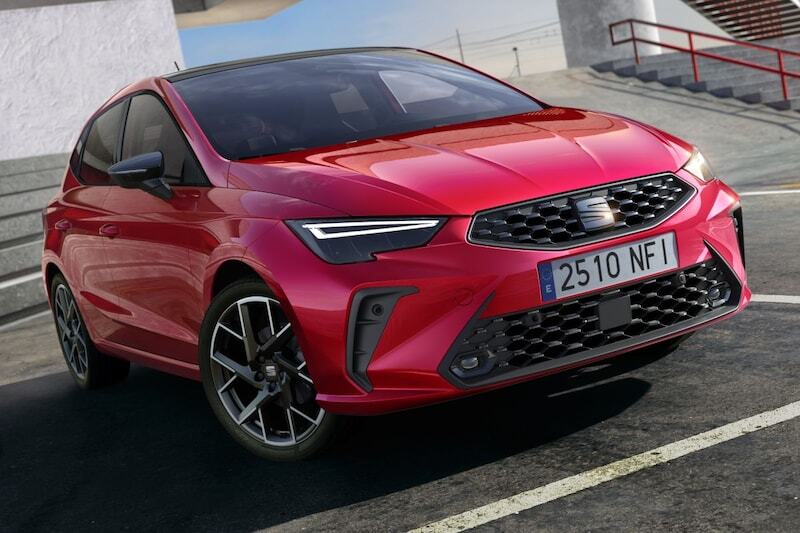
Just like its sibling model Volkswagen Polo, the Seat Ibiza has considerable endurance. The compact hatchback, now over eight years old, is undergoing its second facelift. This brings visual innovations but hardly any new technology.
Highlights of the renewed Seat Ibiza
Within the Volkswagen Group, there seems to be more attention going to Cupra than to Seat. This appears to be working, as Cupra is growing strongly and Seat is seeing its sales decline. That doesn’t mean top management is completely forgetting Seat. The Leon gets to stay for now and follows the fuel-powered Golf with a thorough update well into the 2030s, and the now aging Seat Ibiza and Arona are also getting a facelift to prepare them for the next few years. In this article, we focus on the first.
The current generation of the Seat Ibiza was presented in early 2017 and is thus almost nine years old. About four years ago, the Ibiza was subtly renewed, and now Seat is going more thoroughly under the knife. The Spanish cousin of the Volkswagen Polo is immediately recognizable as the Ibiza but has an almost completely new front end. There we see a new grille that is hexagonal instead of quadrangular like the previous version. The distance between the grille and the headlights is greater than before. While we’re on the subject of headlines: those are new too. A notch has been taken out at the bottom. The new ones remind us somewhat – helped by the signature of the LED daytime running lights – of the headlights that the Opel Insignia had until its 2020 facelift. More news is found lower on the front, where Seat is screwing on a new front bumper. Complete with vertical cooling slots on the sides.
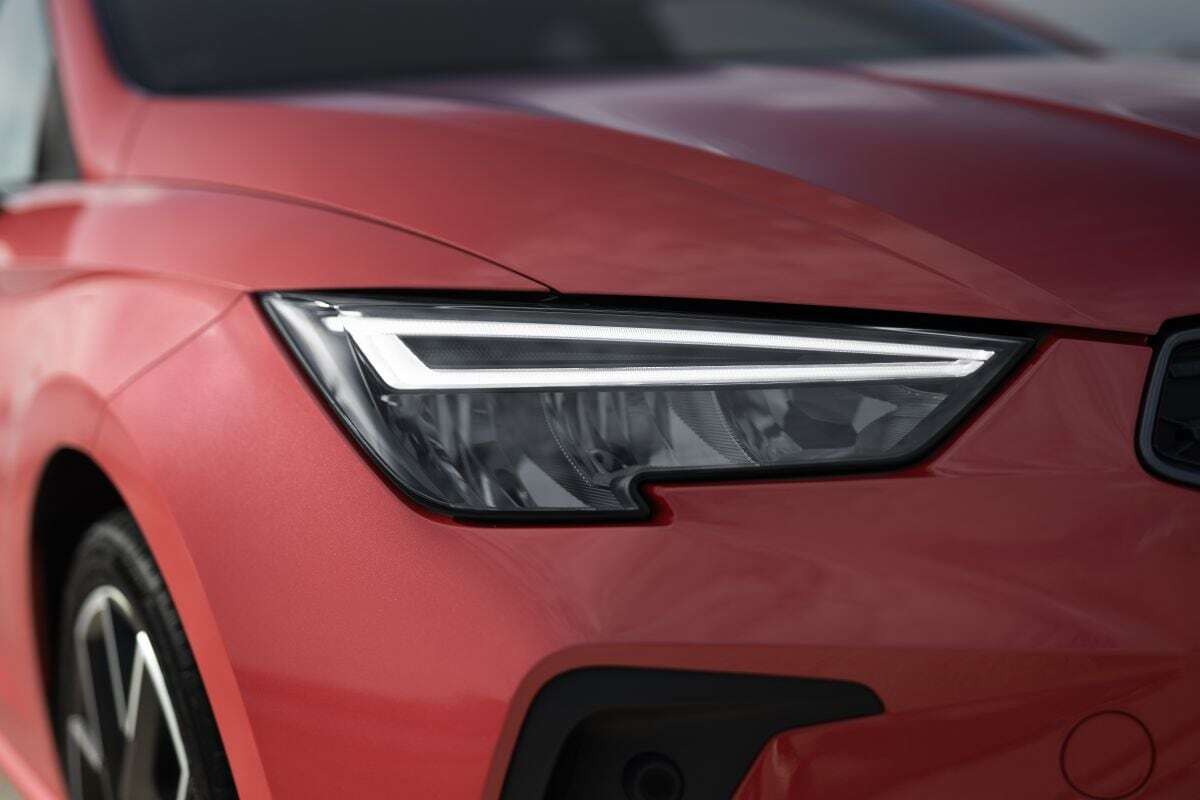
Don’t you agree: there’s a touch of Opel in this?
The visual news at the rear is narrower. The taillights are unchanged. What is new is the rear bumper. You’ll recognize the renewed model from the FR versions mainly by the large, black plastic element that acts as a mask around the license plate. Of course, a set of new wheels and color options can’t be missing. There are new alloy wheels, and the colors Liminal Red, Oniric Gray, and Hypnotic Yellow have been added to the paint booth.
There’s also news inside, but it’s considerably narrower in nature. As before, all versions come standard with an 8.25-inch infotainment screen. As an option, a larger screen with a 9.25-inch diagonal is available.
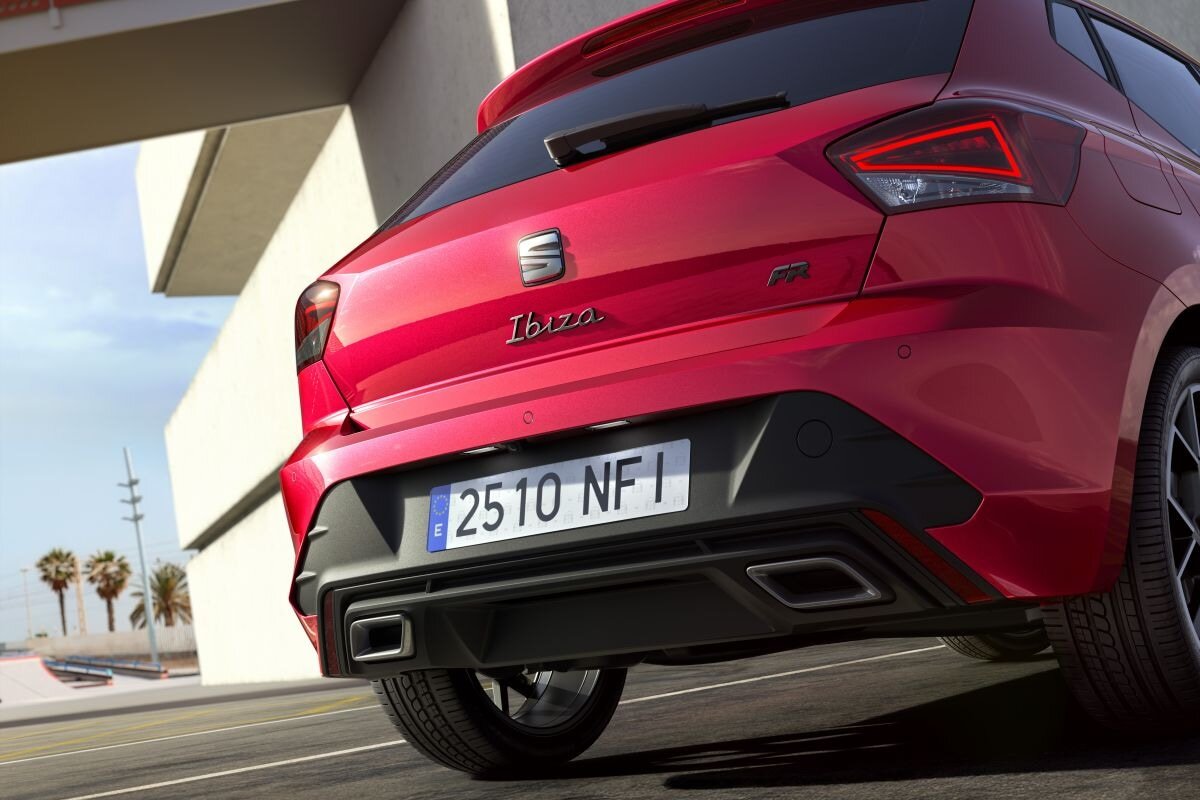
At the rear of the renewed Seat Ibiza, there are hardly any changes.
Engines: one less
The Seat Ibiza has been available until now with an 80 hp 1.0 MPI – a non-turbo engine – and with a 95 hp 1.0 EcoTSI. Both engines had a manual five-speed gearbox. Above that was a 115 hp 1.0 TSI that was paired with a DSG automatic. The 80 hp MPI seems to be discontinued in the Netherlands. That’s not so strange. That least powerful engine was available as the entry-level Reference version starting at €23,890, making it more expensive than the Ibiza with the 95 hp 1.0 TSI, which for €1,000 less was also equipped as the richer Style Plus. So in the Netherlands, the Ibiza can do very well without that 1.0 MPI. The other engine variants remain. The 1.0 TSI with 95 hp and manual transmission will for the first time also be available in Reference version. We’ll have to wait and see if that also results in a lower starting price for the car.
That Reference variant now brings more equipment to the Ibiza. For example, a Seat Ibiza Reference now comes standard with alloy wheels – previously standard from the Style/Style Plus – and even full LED headlights. Previously, only the most extensively equipped Ibiza (FR Business Connect) had these lights. Also new: cruise control is standard. Count your gains. Outside the Netherlands, the 80 hp 1.0 will continue to exist, as well as the 150 hp 1.5 TSI that’s not available here.
Prices for the renewed Seat Ibiza will follow soon.