Peugeot has thoroughly revised its 308. The exterior has been significantly refreshed, the technology has been upgraded here and there, and, perhaps most interestingly, the price list has become much more friendly.
What are the major changes?
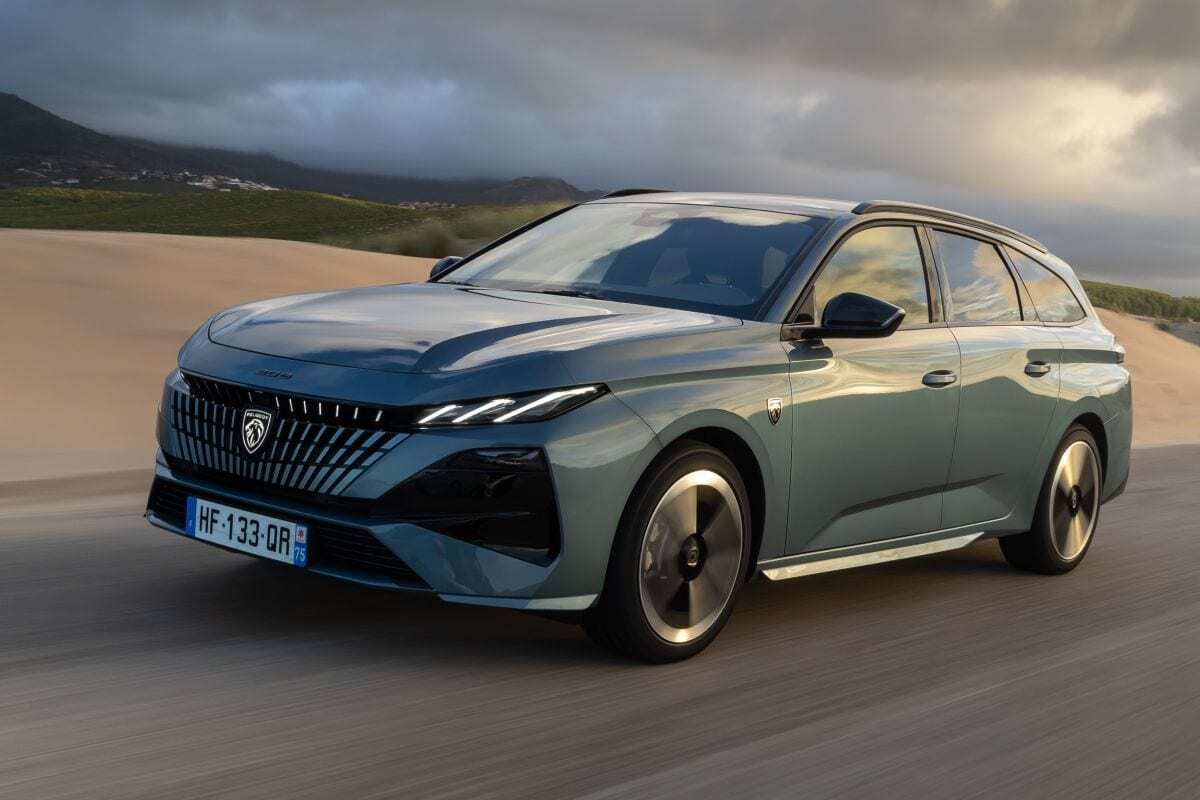
The front has been revamped. The upper light units are now daytime running lights in the shape of the familiar lion claws. In between is a row of dashes of cub badges, which optically blend nicely with the fan pattern of the grille. Those who choose the GT also get an illuminated Peugeot logo, which is a first for the brand. High and low beam are in two layers, above two large air intakes that open into the wheel arches, which should improve aerodynamics.
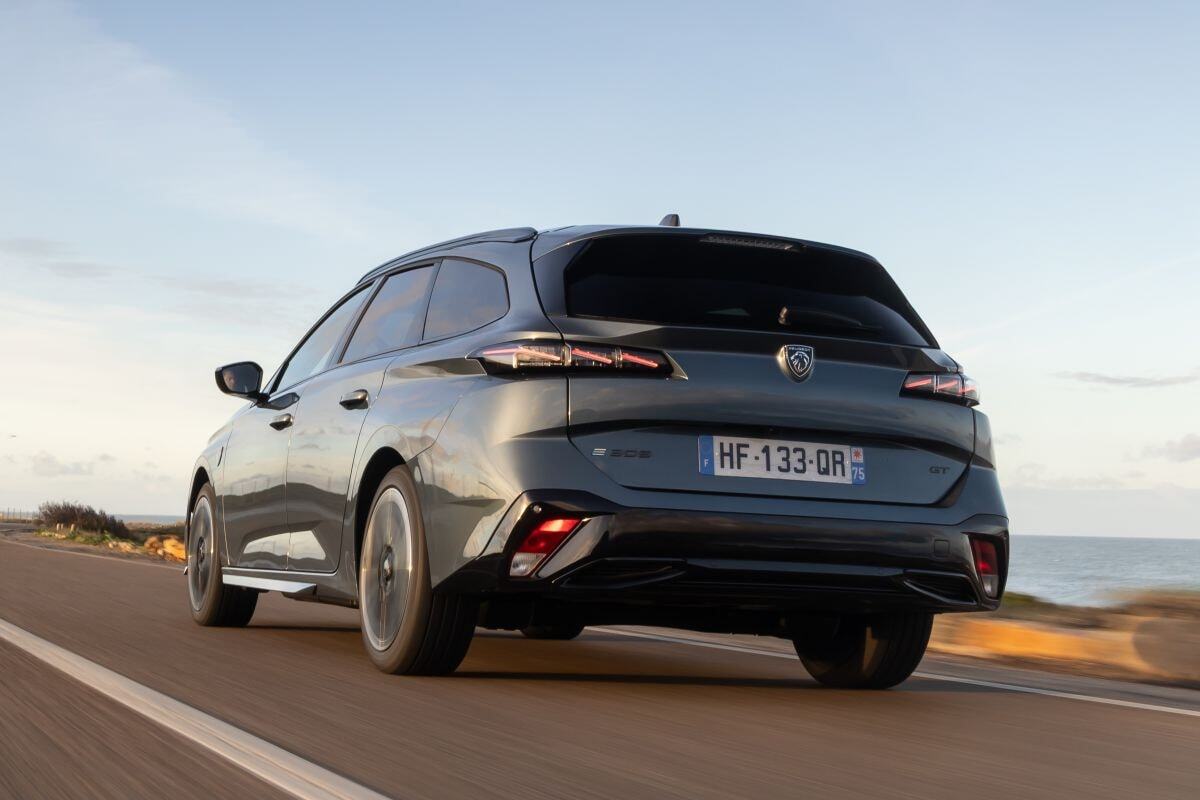
From the side, the new wheels, which are diamond-cut, are particularly noticeable. It just goes to show how much the order of two words can matter. At the rear, a different bumper and the taillights consisting of twice three diagonal dashes make the difference.
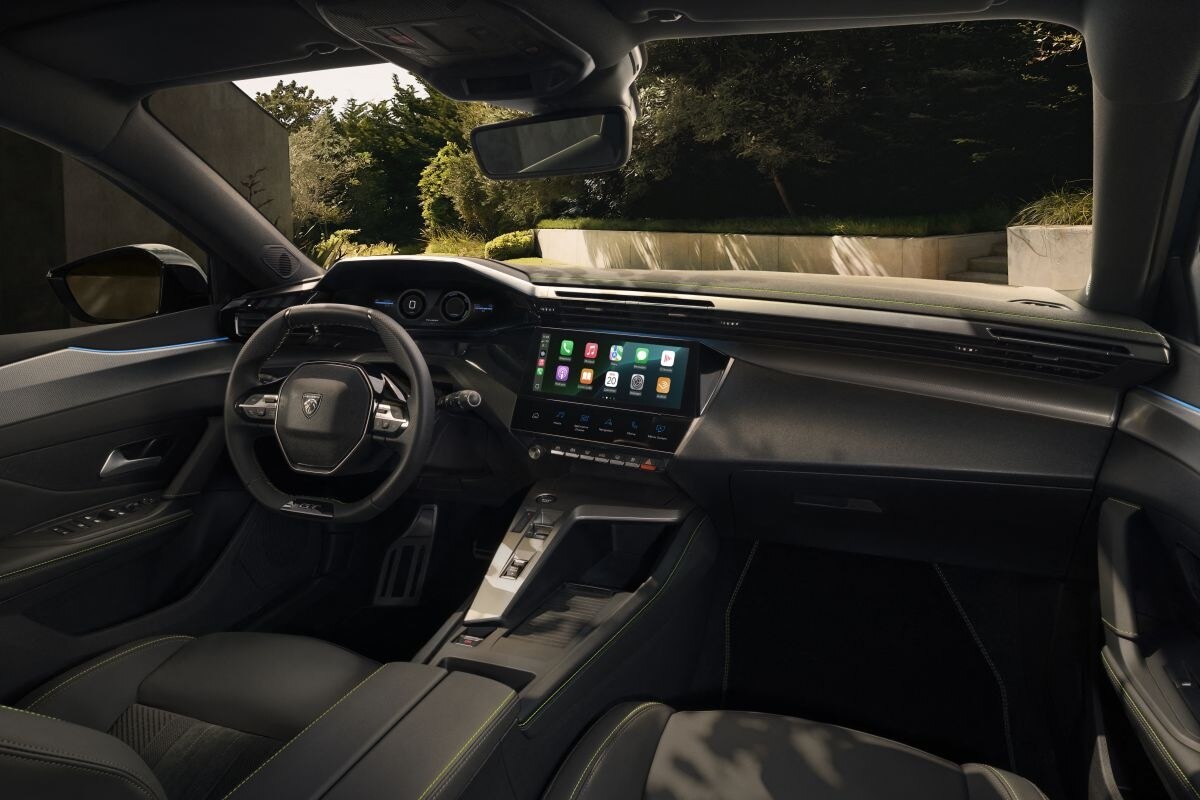
The interior has largely remained the same. The dashboard is beautifully and clearly constructed and naturally has the now-familiar i-Cockpit, where the instruments almost head-up protrude above the steering wheel. In the more expensive versions, you get a beautiful 3D layout of the clocks. In the back, it is still tight, especially for people with long legs. The trunk measures 548 liters, which with the backrest of the rear seat folded down comes to 1,487 liters.
Why did you choose the e-308 SW for this test? Isn’t the mild hybrid the most important?
Regarding the SW: currently, 70 percent of the 308s sold here are SWs, and the importer expects no change in that. However, the best-selling engine is indeed the mild hybrid, which accounts for just over half. Nevertheless, Peugeot Netherlands expects the balance to shift a long way towards plug-in and fully electric with the renewed model. This has to do with the price reductions (more on that below), but also the declining competitive field. In addition, the importer thinks that more and more service mechanics do not want a van, but a station wagon for the family, and if you have to drive electric, you will soon be with the e-308 SW (or blood brother Astra).
How does it drive?
With its 156 hp, the e-308 is quite tame for an EV, but you can equally ask why so many electric family cars nowadays have to be able to outrun sports cars at green lights. We make our test kilometers through a hilly landscape and also come uphill, even in Normal, little to nothing short. As long as it is flat, you are also well served with Eco. If you want more, the throttle response in Sport becomes nicely lively, with the steering also offering a little more resistance. In Normal, that is on the light side, but sharp enough. You set the degree of regeneration with the flippers behind the wheel in three gradations. The heaviest is good enough to leave the brake pedal virtually untouched.
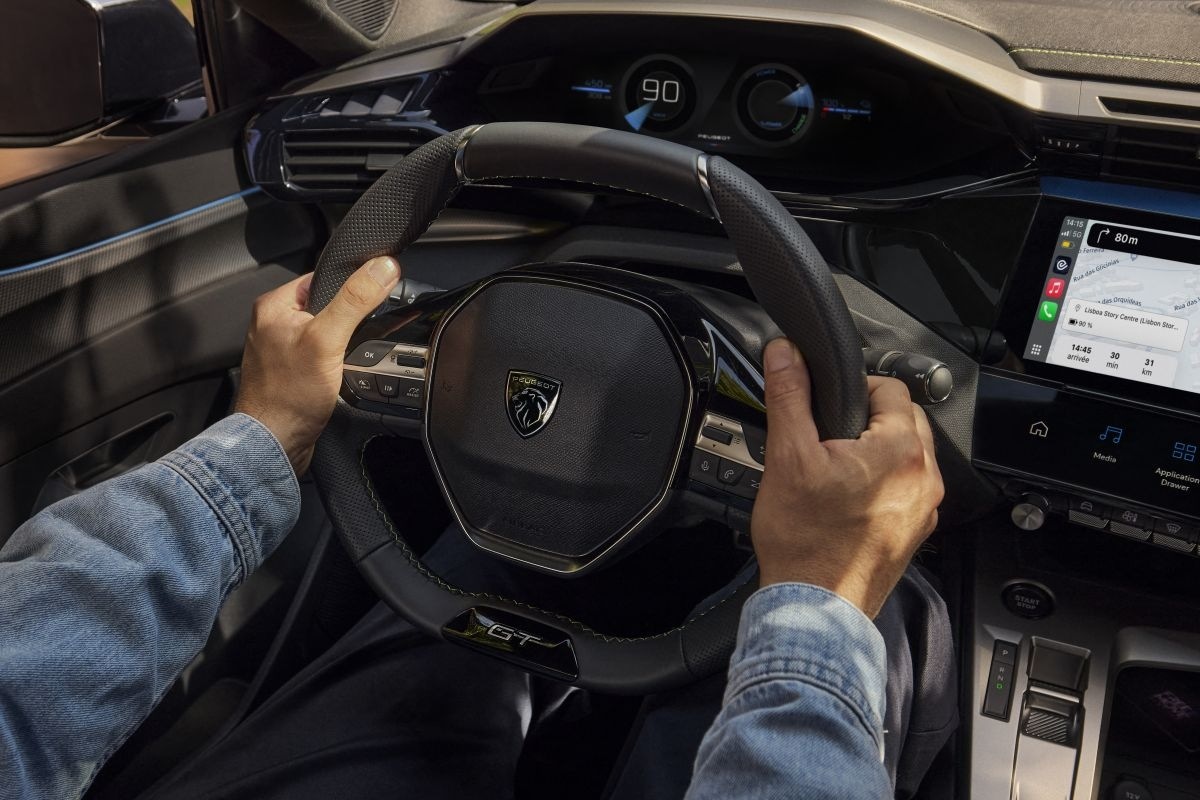
It is striking that the suspension and damping are on the hard side, which is extra noticeable on the often poorly maintained asphalt in these parts. That is not a mistake of Peugeot because, they assume, those who go for a hatchback or combi among all the crossovers and SUVs are looking for a low seat and therefore sportiness. You also want to find that in the driving characteristics. The small, thick steering wheel also contributes to that. Anyway, the 308 feels nicely neutral.
What other engines are available?
We drove the e-308 SW, but both the Berline and the SW are also available as mild hybrid (mild-plus, because it can drive fully electric for a maximum of half the time in city traffic under ideal conditions) with the e-DSC6 automatic transmission with double clutch and as plug-in hybrid with e-DSC7 transmission. This drives up to 85 km electrically. It is also worth mentioning that the e-308 is now standard ready for V2L bi-directional charging. And we emphatically say ready for, because the necessary adapter is an option.
Let’s conclude with good news: the 308 has been significantly reduced in price with the facelift, at least the plug-in versions. Peugeot Netherlands says on request that it does this ‘given the developments in the market’. We think they want to somewhat compensate for the declining incentives on these engines. Moreover, the pricing has been made clearer. The BEV is exactly 1,000 euros more expensive than the mild hybrid in every version, the PHEV always costs 2,000 euros more than the MHEV. Moreover, the PHEV is now also available in the less luxurious versions, which lowers the threshold.