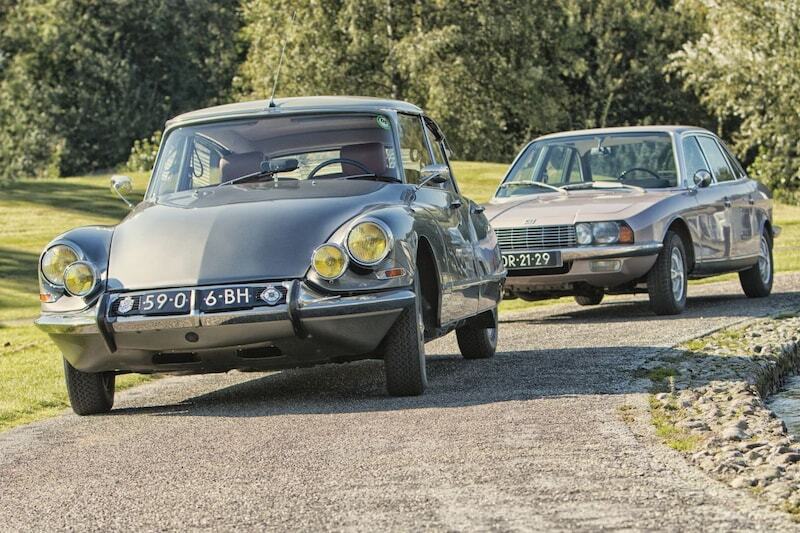
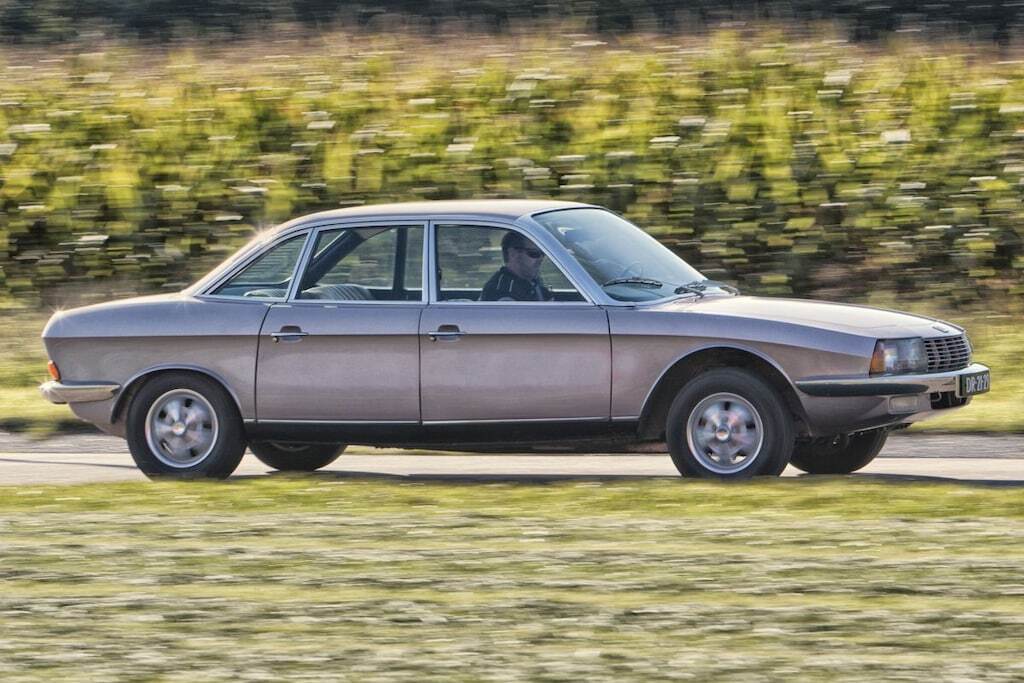
Take a good look at the Citroën ds and the nsu ro 80. It’s hard to believe that the former was Already on the Market in the 1950s, and the nsu (the brand that marrow Into Audi) in the 1960s. They Certainly Look particularly avant-garde when you place them back in that time. A double test with a ds 21 from 1966 and a ro 80 from 1968!
Visionary Minds Are Scarce Among Car Manufacturers. Usually, an existing model has to be successed, and at most five years are looked ahead. But if a management hens to tap into a new market segment and has ample budgets for it, the most beautiful things can arise. We compare two avant-garde models with a promising future behind them.
Limitless Optimism in the 1960S
Optimism Knows No Bounds in the 1960s. Reconstruction After the Second World War is complete, and Prosperity is Growing Rapidly. People can afford not only a car but even a good car with some luxury. Foreign Holidays are also coming Within Reach. Jet Aircraft are Becoming Commonplace, and Half The World is Glued to the Television to Watch The Hazy Images Of The First Moon Journeys Live. Man seems capable or almost anything. The Future is Malleyeable and Rosy. This optimism can be found in All Kinds of Areas, Such as Architecture and Infrastructure, Strikingly Depicted in The Netherlands in The Afsluitdijk, The Evoluon, The Euromast, The Zeeland Bridge, and the Delta Works.
Car Manufacturers are also infected with this optimism. Some of them commission the development of a car of the future, with the designers getting virtualy carte blanche. Some of Those Study Models Actual Go Into Production.
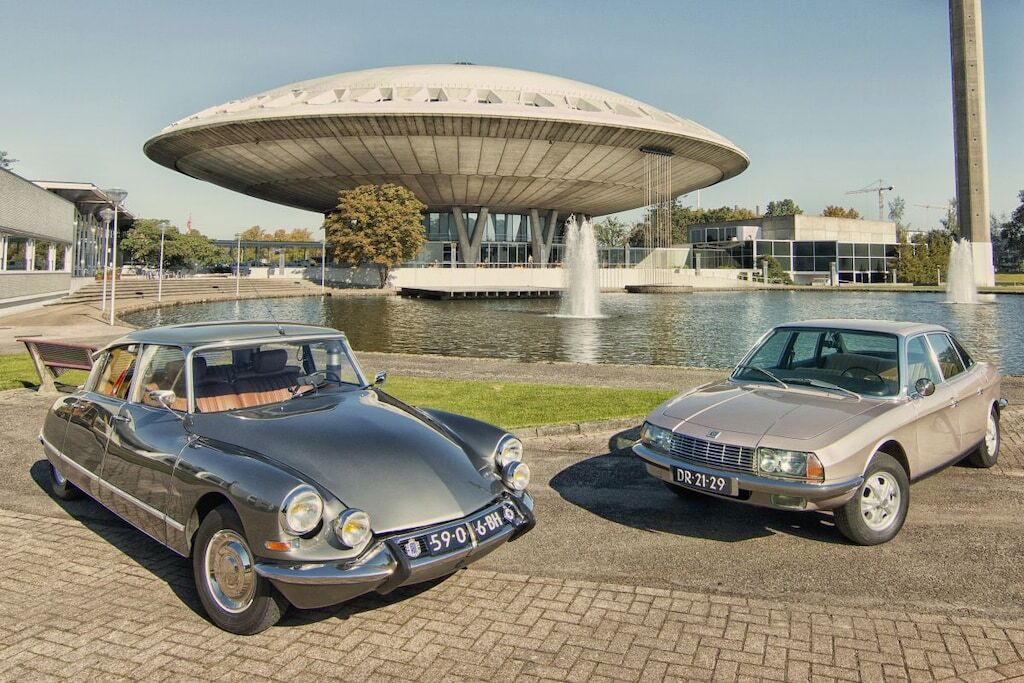
Citroën DS Seems Like A Flying Saucer on Wheels
The Most Striking Example Of This Is The Citroën DS, which Came On The Market in 1955 and Stunned the Public At Its Introduction. It looks like a flying saucer on wheels! The Technology is also revolutionary. Brakes, Clutch, Shifting, and Steering Are Supported by Hydraulic Power, and the Suspension Even Works Fully Hydropneumatically. Only the engine is not new. That is the familiar block from the traction avant 11cv, which dates from 1934. The intention was initially to develop a six-cylinder for the ds; That’s why the model has such a long hood. But Neinder the Existing Six-Cylinder in-Line Engine from the Traction Avant 15 Six, Nor the Air and Water-Cooled Boxer Versions with which Engine Designer Walter Becchia Experimented at the Bureau d’études, Proved to Lead to the Desired Driving Experience. That is why the reliable four-cylinder from the traction avant has leg made Suitable for Modern Times with Some Adjustments.
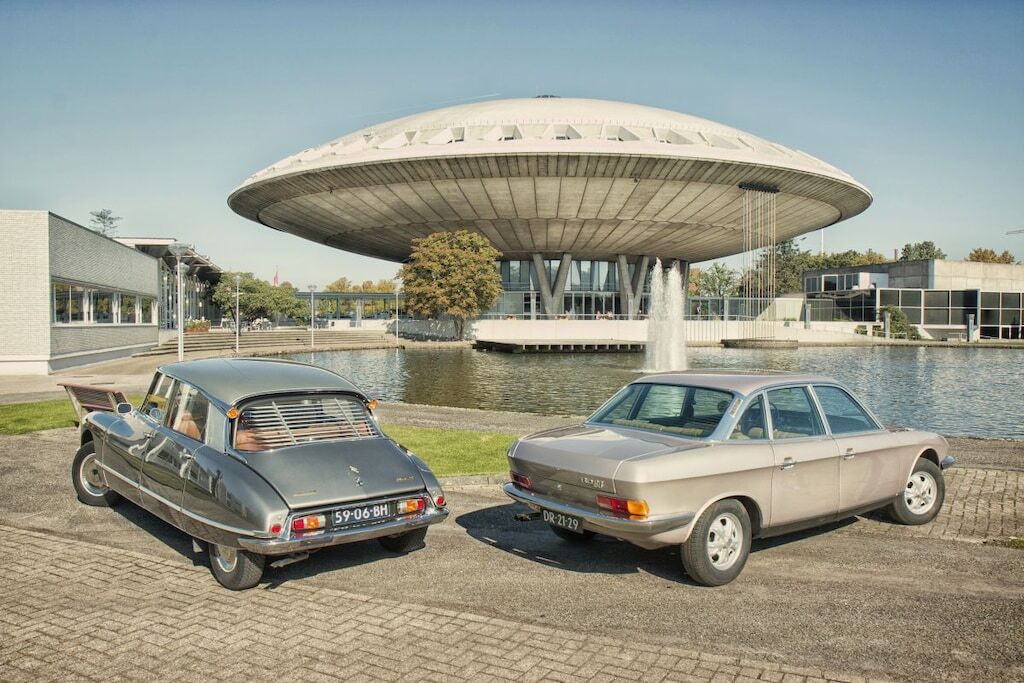
Further, Citroën Only has the 2CV
Citroën’s model Range at that time consisted only of the 2cv and the traction avant. The first sacrifices Cheap Basic Transport to Motorize the Population and Companies After the War. The Second is a pre-war model, the production of which was resumed after the second world war, as happened with so many brands. But in the 1950s, the need for a successor to this model has grown. The Styling with Volupes Fenders That Run Into Running Boards Looks Dated, Especial After Renault Released the Streamlined Frégate in That Class in 1951. House designer Flaminio Bertoni Has Been Given Virtualy Free Rein. And that is indeed what it has Become!
NSU Became Big With Motorcycles, First Car was the prinz
At NSU, Too, The Designers and Engineers Were Allowed to Indulge Themselves. The Manufacturer Has Become Big With the Production of Motorcycles and Has Then Stuck A in the Bathwater of the Car Market to Gauge the Temperature. That happened in the Form of Small Models, Especiate Various Generations of the Prinz. The Bathwater Has Proven to Be Pleasant, Because Those Cars Sell Well. Reason Enough to Dare to Produce a Larger Model in The Early 1960S. The Range in the Middle Class is Already Very Large, which is Why the Higher Middle Class is Chosen. To Have A Good Entrance Into That Prestigious Segment, The Model Should Preferential Set New Standards Immediately.
Chief Designer Claus Luthe Draws An Avant-Garde Body With An Aerodynamically Favorable Wedge Shape and Good Visibility Thanks To Slender Roof Pillars and A Third Side Window. With its independent suspension all Around, McPherson Struts, Long Wheelbase, and Power Steering, The Car Has Excellent Handling. MoreOover, it is equipped with disc brakes all around and other state-of-the-art safety features.
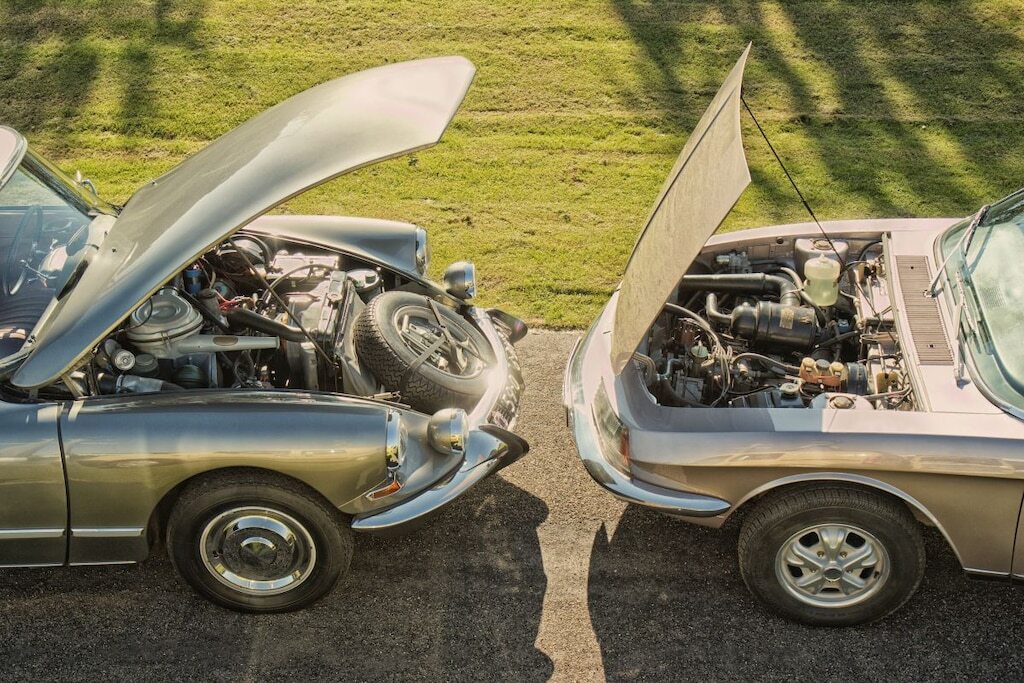
The drive technology must also be progressive, but nsu does not yet have a clear idea about that. When the head of the NSU Development Department, Walter Fröde, Runs Into The Inventor Felix Wankel, that piece of the puzzle also Falls Into Place. Wankel Has Been Working for Decades on the Development of a Type of Internal Combustion Engine in which Rotating Discs Take over the function of the pistons. After all, the up-and-down pistons change direction every time and stand still for a moment to then to get going again. That Wastes Energy. A rotating movement does not have such a dead spot. After many experiments, Wankel has just finished a well-functioning prototype when he meets fröde. He sees potential in it and decides to Equip the new model with such a wankel engine. But First, a single-disc version of the Wankel Engine is tested in the small nsu prinz spider. The Experiences with This Production Model Prove to Be Satisfactory, and NSU Decides to use a two-disc variant in the Large Model. This is how the model gets its type designation: ro stands for rotary engine. The suffix 80 refers to the initial plan to have the car have about 80 hp and cost around dm 8,000. That turns out differently. The Production Version has 115 HP and Costs Around DM 12,000. But there is no doubt that the ro 80 sets new standards. This is also evident from its election as European car of the year 1967 by the automotive press. And if this prize had Already existed in 1955, The Citroën Ds would have Certainly Have Been Awarded It As Well.
That brand is also flirting with the wankel engine, like many other brands. But Citroën Will later Actually Produce A Model with This Type of Engine, The GS Birotor. And it also intends a wankel engine for the successor to the ds.
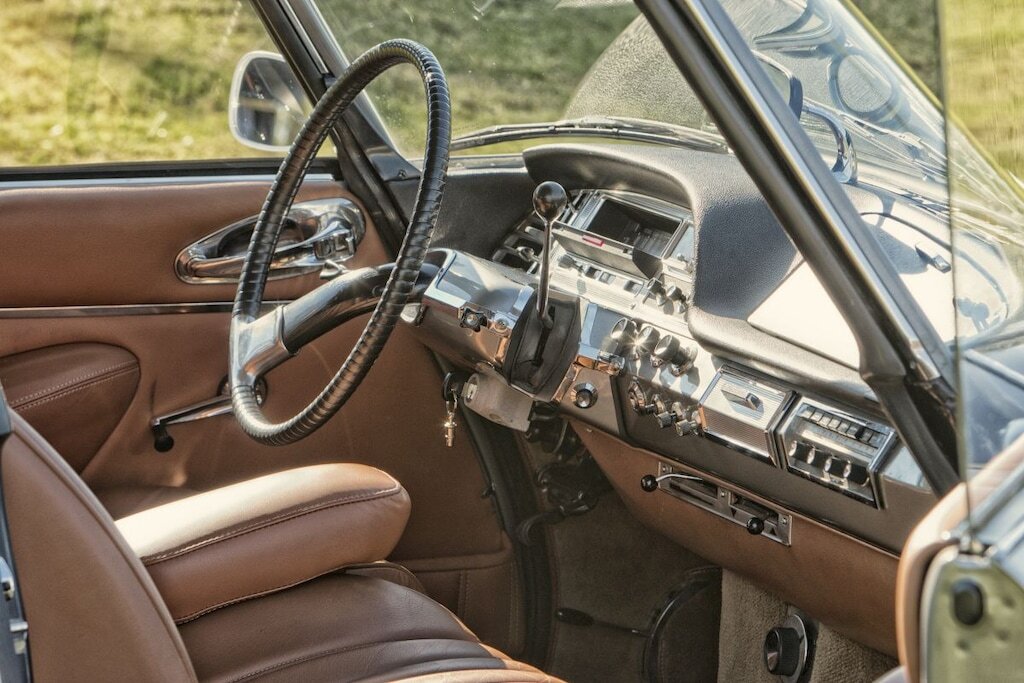
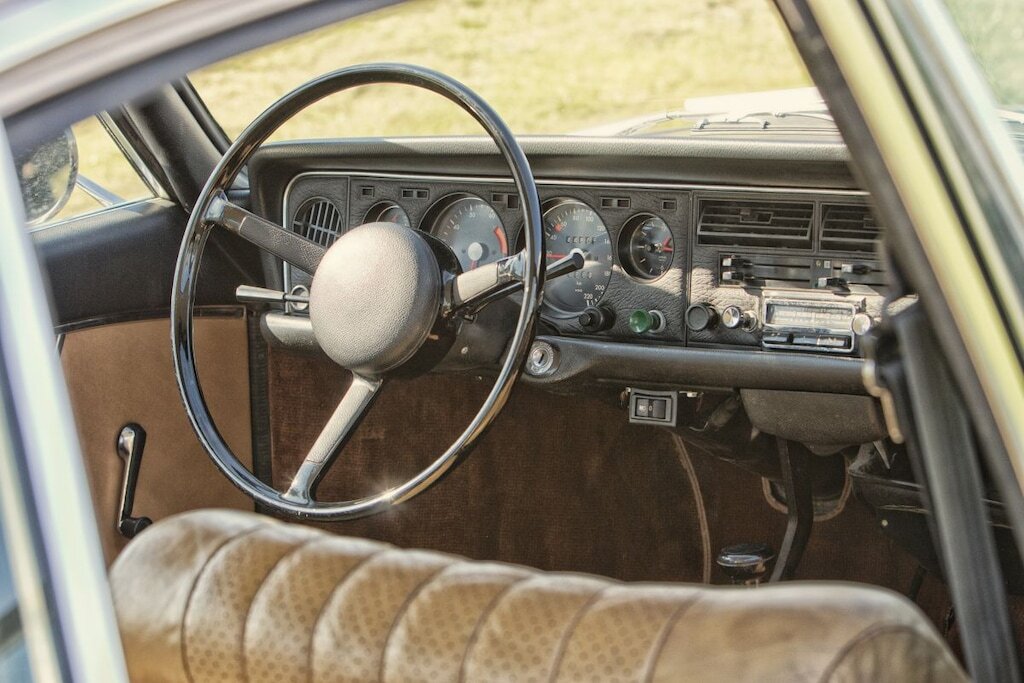
Wonderful soft seats in the ds
That you sit extremely comfortably in a ds is well known. You Sink Into A Wonderful Soft Seat, In This Case Covered With Leather. It is high in the car, so you immediately have the feeling that you are commands the car. In The NSU you sit on Slightly Firmer Seats in which you feel a bucket through the soft cushions. You also sit lower than in the ds; In The First Series, The Driver’s Seat is just Height-Adjustable.
In this ds with the old dashboard you will find a regiment of buttons that do not reveal their function. Completely Wrong According to Today’s Safety Dogmas, But We Think That Fits In With The Mystery That Is Called Ds. Not Everyone should be able to drive away with your car just like that. That’s also safety, but in a different way … in the ro. 80 it is indicated what the buttons are for, althegh not everything is crystal clear. Here you will find Far Feer Buttons, Partly because Combination Switches Have Been Used.
In The Back You Sit Generously in Both Cars, Both in Terms of Space and in Terms of the Flexibility of the Back Seat.
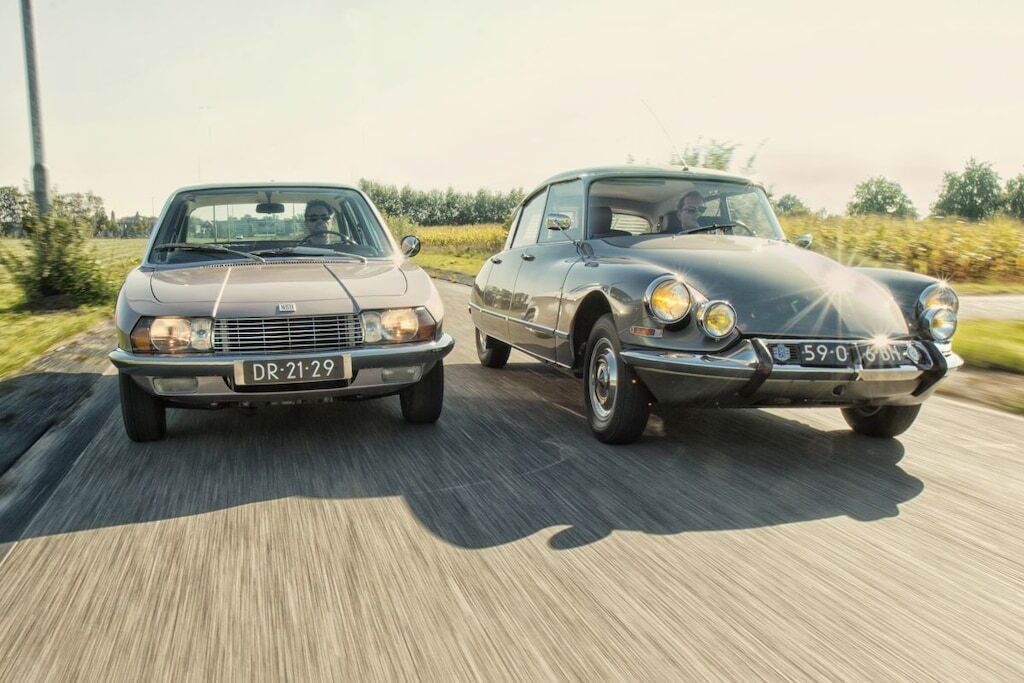
Waiting Until the Suspension Has Pumped the Car to Driving Height
If Starting the DS is Already An Experience with the Mandatory Waiting Until the Suspension Has Pumped the Car to Driving Height, Starting the Wankel Engine in the Ro 80 Is An Even More Special Experience. It’s just turning a key, but what happens then … a sporty, metallic crackling like a two-stroke engine rises from under the hood. What a Sound! A bit unparliamentary for such a car from the highher middle class. We play with the throttle a bit. The Disc Engine Climbs Very Easily in the Revs. The Semi-Automatic From Fichtel & Sachs with Three Gears Disengages The Thing As Soon As You Touch the Liver. The First Gear is Bottom Left, A Dogleg-First, So. You have to put the Gears in with Conviction. Because there is no liver guidance, it is somewhat guessing where the liver should be exactly. If you guess Wrong, that will cause cracking. The liver also makes a large stroke from left to right, where the second and third gear are.
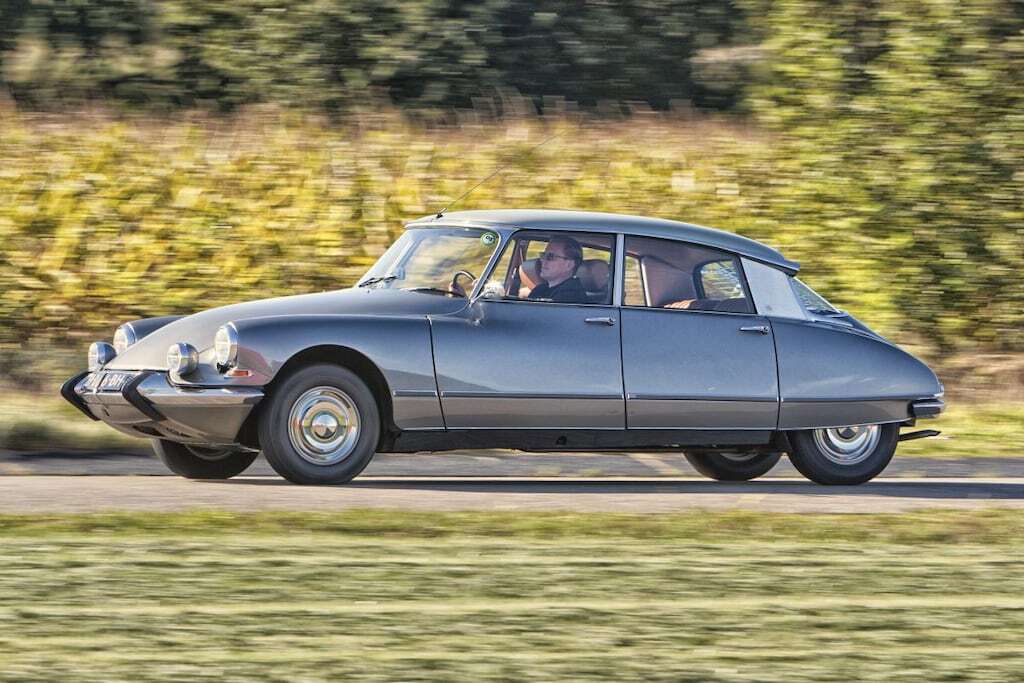
Semi-Automatic was also available in DS
The DS was initially only delivered with a semi-automatic. Later, a manual gearbox and a full -time automatic are added. The Test Copy is manually switched. Its clutch pedal goes extremely lightly, you hardly feel that you are doing anything, it goes almost intuitively. The Shift Lever Goes Somewhat Jerky Through The Gears, But That Is Because The Original Four-Speed Gearbox Has Been Replaced by A Five Speed. The Shift Slot Offers Just Too Little Space For The Extra Gear.
The Suspension Behavior of the DS is notorialy comfortable. Once on the road with both candidates, The Surprise Comes: the suspension comfort of the ro 80 is very similar to that of the ds! Due to the Long Wheelbase and Independent Suspension All Around, The Large NSU Bobs Comparable Slowly about Bumps and Due to the Soft Damping It Rolls around its Longitudinal Axis in Corners Just Like the Citroën. And that for a German car …
Engine NSU More lively than that of the ds
There is also a differentence: The Engine of the NSU Feels Significantly More lively than that of the ds. The Wankel Engine Already Starts to Pull Nicely Below 2,000 RPM. The Car Shoots Away Eagly. ITS 0-100 Time is not world-hatring, but the intermediate sprints feel very smooth. Unlike A Conventional Otto Engine, You Can, No, You must pull through to at Least 5000 RPM Before You Shift. Then the Engine Only Comes Into its Optimal Working Area and Gives You The Turbine Feeling. The New Driving is Nothing for a Rotary Engine.
With the ds, the acceleration is Slower and Less Direct. It seems as if the engine has some trouble with the weight of the car. Once Underway, The Goddess Accelerates with More Ease, But The Indirectness Remains. And in The Higher RPM Regions, The Engine, Like All Otto Engines, Produces More and More Noise. An important Difference with the Ro 80, which Becomes Quieter.
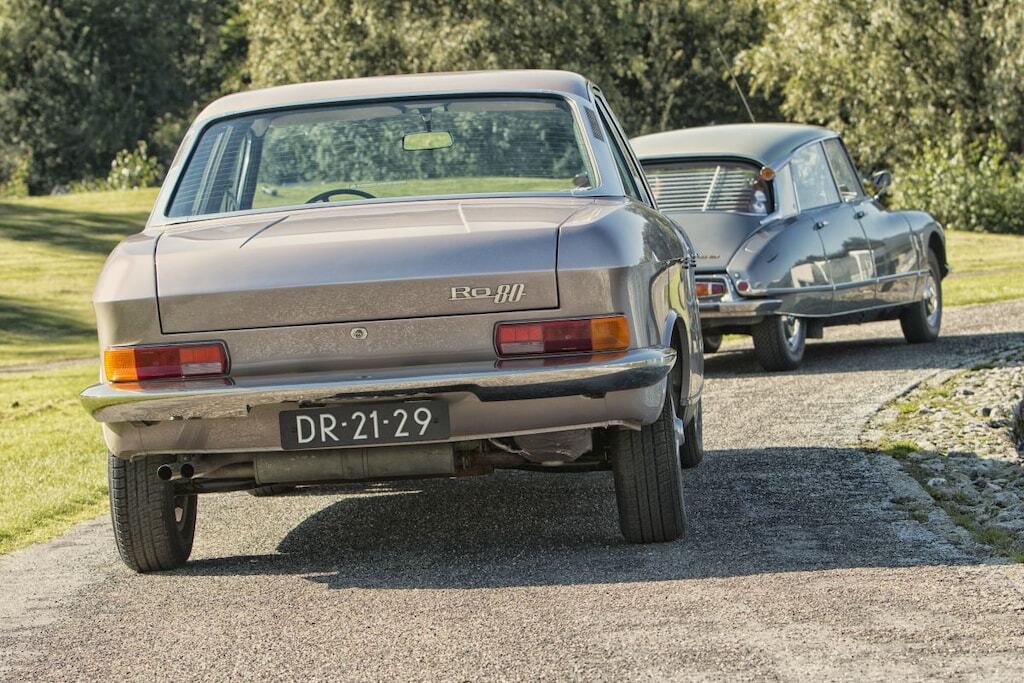
Power Steering in Both Cars
Steering is Lightly Power-Assisted in the RO 80; You Continue to Feel Well what the front Wheels Are Doing. Once at speed, the car seems to ride as if on rails and is diffress to get off the straight line. A Combination of the long wheelbase and a self-censing effect, we suspect. It feels very safe and solid. In The DS, The Steering, More Strongly Power-Assisted and also Variable is: At Low Speeds, The Power Assistance Helps More Than At High Speeds. It takes some getting used to, but then it is very pleasant. In The Straight-Ahead Position, The DS is also very stable. Unexpected is that he is also in corners. The Wheels React Slightly Later To Steering Commands Than You Expect, But Then Continue to Persist in That Course.
Don’t make the Mistake of Braking in the Ds in the Same Way As in Another Car, because you will fly through the windshield with your head. The Sensitive Brake Mushroom Only Needs A Gram of Agitation To Put The Disc Brakes Front And Drum Brakes Rear To Work. It gets used to quickly, and then it is nice that you have to use so little force. Needless to say, The Ds Brakes Very Well.
The NSU also Brakes Very Well. The Brake System With Disc Brakes All Around is from Ate. The Front Brake Discs Are Not In The Wheels, But Mounted Against the Differential. That saves in the unsprung weight. They are perfectly suiteed to their task and brake as in a contemporary car.
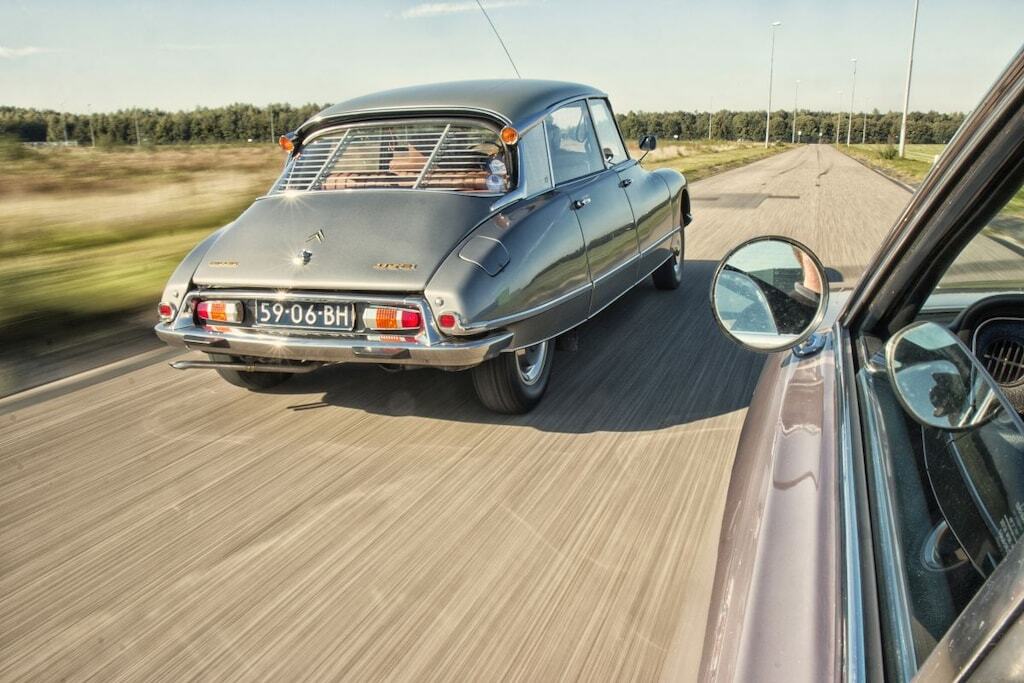
Citroën Sold Much More Than NSU
The DS has sold significantly better than the Ro 80. Of the Citroën in all its variants, 1,330,755 copies were produced from 1955 to 1975, of the NSU approximately 37,400 between 1967 and 1977. It differs by a factor of 36. Citroën has not become very rich from it, because the DS Was a complex, Expective Car to Produce, Especiate When Labor Costs Rose in the 1960S. The Low Number of RO 80’s is partly due to teething problems of the wankel engine, which have irreparly damaged its reputation. In Addition, NSU had no status; It was Known As A Producer of Compact Cars. You USUALLY DON’t Lure Buyers of Large Cars There, at Most a Single Avant-Gardist. And moreover, there was the oil crisis of 1973, which the not very economical ro 80 suffered more from than the ds, which was successed a year later.
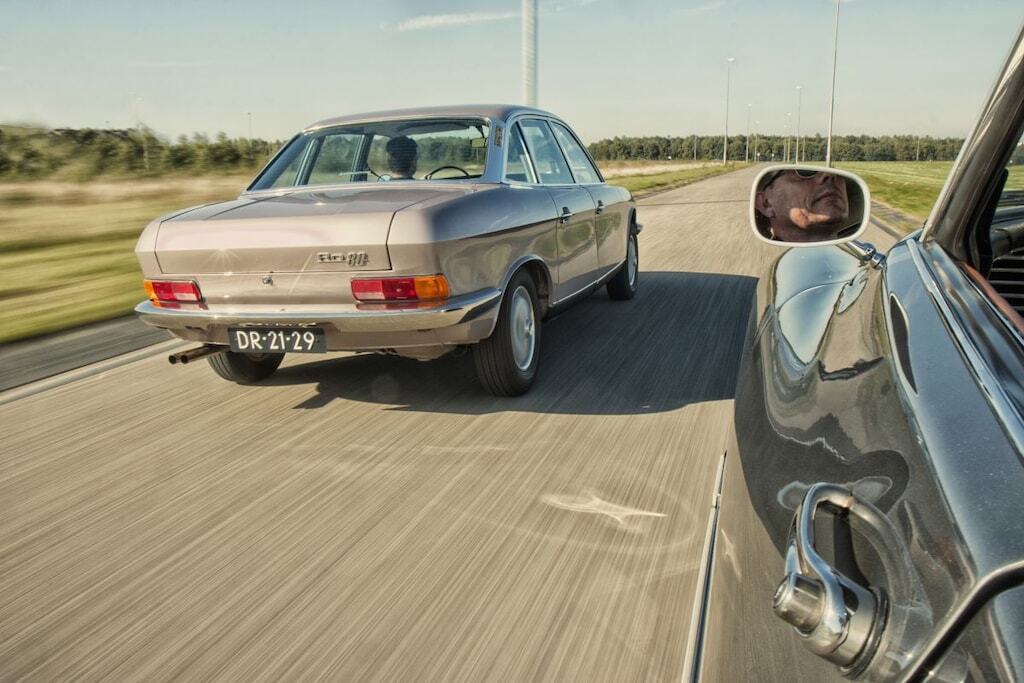
Although the hydraulics of the ds were also not free of teething problems (Oxidizing Oil in the Hydraulic System) and reputational Damage Due to the Complex Technology, Citroën Responded Adequately to this. NSU Bought Time by Generously Honoring the Not Always Justified Warranty Claims, But Got Into Financial Problems when it needed much time than expected to structurally solve the teething problems.
Also as a classic, the ds is many times more popular than the ro 80. But if we draw up the balance of this test, we come to the nsu as the winner. The German sacrifices Almost the Same Comfortable Driving Behavior As the Citroën, is Technicalally Less Complicated and Offers on top of that the lively engine character that we miss in the ds. In Addition, The Prices of the Ds Have Risen Sharply and Those of the Ro 80 Have Not. Clear case.
Citroën DS
The DS is launched in October 1955 and Causes a Sensation because of Futuristic Appearance and Features. The Exterior was designed in-house by Flaminio Bertoni in Collaboration with André Lefebvre, the hydropneumatic suspension system was developed by Paul Magès. Steering, Braking and Shifting are also Hydraulically assisted. To Save Weight, The Roof is made of polyester and the hood of Aluminum. In The Interior, Plastics Such As Nylon (Dashboard) and Rayon (Seat Upholstery) are used on a Large Scale for the first time. The d in ds and id probably refers to the series d engine that was mounted. That Four-Cylinder 1.9-liter Engine also Powered the Traction Avant from 1934 to 1957. If the ds is first delivered with semi-automatic transmission, a manual gearbox is also available at the end of 1956. that verion is called, galed the id, galed the id, galed, galed the id, galed the id, galed the ords, galed the ords. Hydraulically assisted, but is completely mechanical. From 1963, The Ds 19 Can also be ordered with a manual Gearbox. A year later, The Extremely Luxurious Pallas Version Appears, With More Sound Insulation and Thicker Seats, Optionally Covered With Leather.
Over the years, The Engine Capacity is increased to 2.0 liters, 2.1 liters and finally 2.3 liters. From Model Year 1970, Electronic Fuel Injection (Bosch D-Jetronic) is available. This Brings the Power of the DS 21 to 125 HP and the Top Speed to 188 km/h. In model year 1971, A Five-Speed Gearbox, a year later is also a three-speed full-range automatic borg-warner transmission for the ds models.
Citroën also supplies a station wagon, the break, and a convertible, the décapotable. In Addition, Various Coachbuilders Make Variations On The DS in Small Series, Including Chapron (Cabriolet, Berline, Coupé, Prestige) is the most important.
For Model Year 1962, A Slight Facelift is Carried Out, Including the Nose. That is then referred to as the second nose. For Model Year 1968, The Ds Gets A Much More Radical Facelift, Initiated by Bertoni and Completed by His Pupil Robert Opron. The Changes to the Nose Are The Most Striking: Double Headlights Behaind a Transparent Cover Plate. This is known as the third nose. Inside, the other dashboard stands out, with round clocks.
In 1974 The Successor CX Appears. 1,330,755 copies of the ds have bone builds.
NSU RO 80
The in Many Respects Progressive RO 80 Goes Into Production in October 1967. The Revolutionary Shaky Engine Has No Cylinders, Pistons, Valves or Camhafts. Instead, Triangular Discs Rotate in A Round Housing. The Crescent-Shaped Spaces Between Disc (Rotor) and Housing Form The Combustion Chamber, Where Spark Plugs Provide The Combustion. Teething Problems Soon Come to Light with the Seal between Rotor Tip and Housing. Initially, these are countered with a generous warranty or 30,000 km on the engine, and after a few years nsu has mastered the problems by manufacturing sealing strips from a harder material. The Engine is then reliable, but the reputation is damaged.
MoreOover, So Much Use (And Abuse: RO 80 Drivers Somtimes Overted Their Engine On Purpose When the 30000 KM CMAME Into Sight to Get A New One Under Warranty) Made of the Guarantee Scheme That NSU Has Run Into Financial Difficulties. Audi Takes over the brand, but does not seem to be willing to invest in NSU. Two years later, Volkswagen Takes about Audi-NSU in Turn.
In 1975 The Model is Slightly Facelifted, Externally Recognizable by the More Robust Taillights and Rubber Strips on the Bumpers. Something also changes internally. For Example, The Engine Gets One Instead of Two Spark Plugs per Disc. The Dashboard Gets Slightly Larger Numbers and Letters and the Levers on the Steering Column Become More Robust. The Height Adjustment of the Driver’s Seat is Canceled.
The Model is Produced Until 1977 and GETS No Successor. It immediately mean the end of the nsu brand. More Than 37,400 Copies of the Ro 80 Have Then Been Built. Buyer’s are expected to switch to an audi 100. The Almost Production-ready NSU K70, which was thought of under the Ro 80, Comes on the Market as the Volkswagen K70.