Quick Warm-up and Quick Discharge
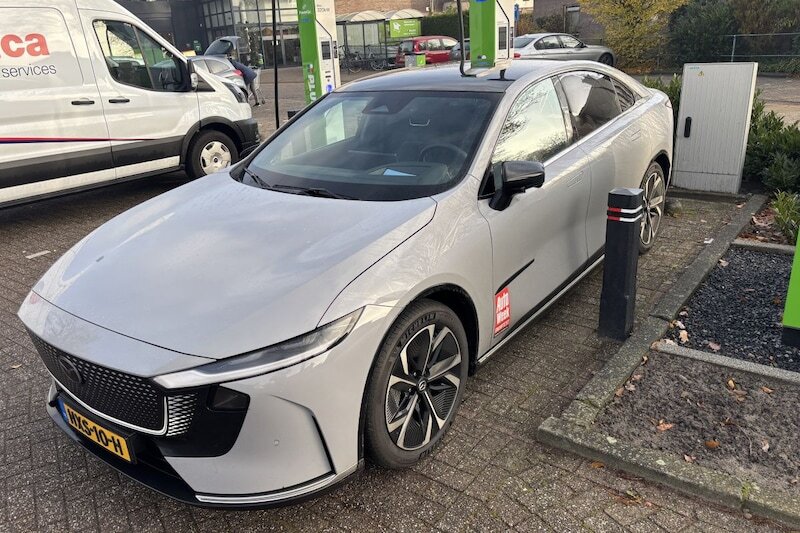
In endurance tests with electric cars, it’s always good to drive them in both warmer and colder periods. Only then can you really say something about the long-term real-world consumption. In the summer, we got into the Volkswagen ID7 Tourer with the largest battery pack: 86 kWh. In the fall, the Mazda 6e followed. How do both electric mid-size cars handle the first ‘winter chill’ of the past few weeks?
Winter chill, well, let’s just call it normal conditions for an average Dutch winter. Those nights when it’s just around freezing and a layer of frost forms on your car’s windshield. Last Tuesday, we still had to get used to it. That’s why we didn’t think about the preheating function on Monday, which you can set via the app or in the car to a departure time. Yet, the thin layer disappeared within 20 seconds after activating the windshield heating of the ID7 Tourer Pro S Limited Edition. Luckily, because we hadn’t taken the ice scraper out of the meter cupboard either. Just turn on the seat and steering wheel heating and drive. After five minutes, even the air conditioning can be turned off, because it quickly becomes pleasantly warm in the ID7. And the consumption for such an early, cold start without preheating?
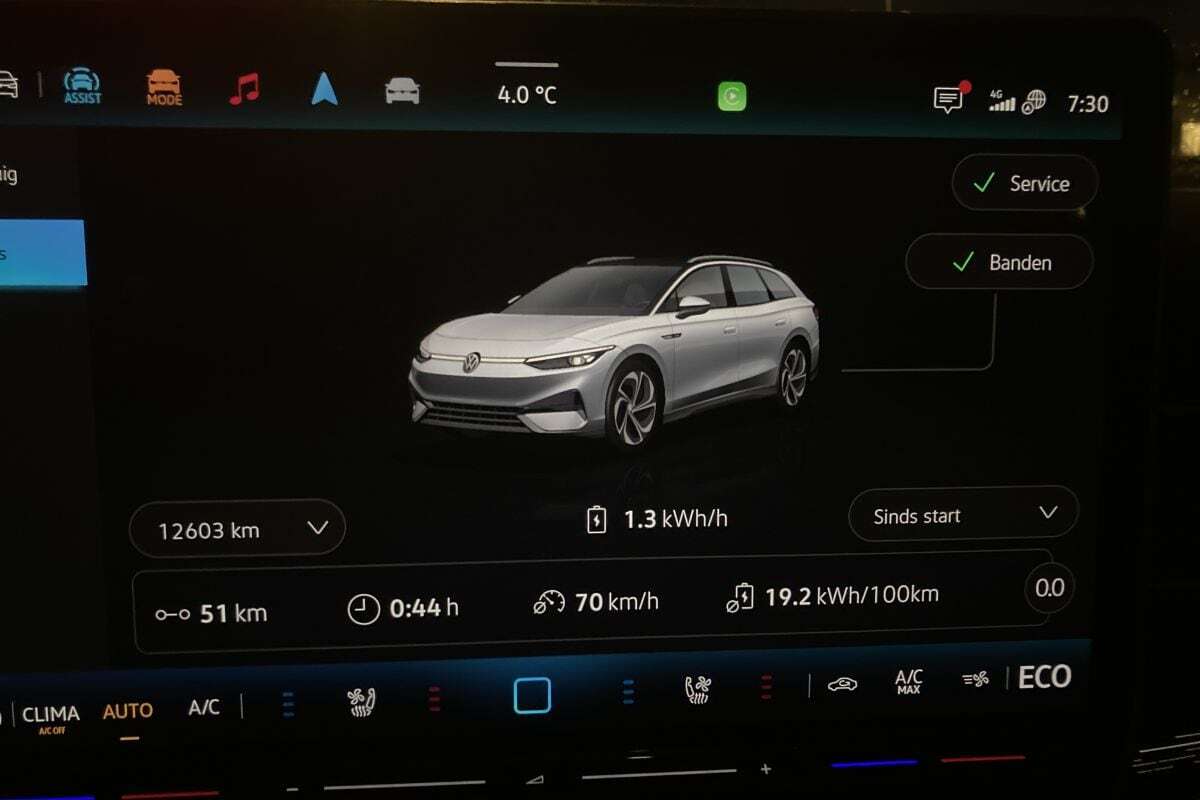
During the normal rush hour drive with occasional stop-and-go traffic, the on-board computer indicates 19.2 kWh/100 kilometers. With preheating and especially when the Volkswagen had also been on the charger, it would have been lower of course, but we are certainly not dissatisfied.
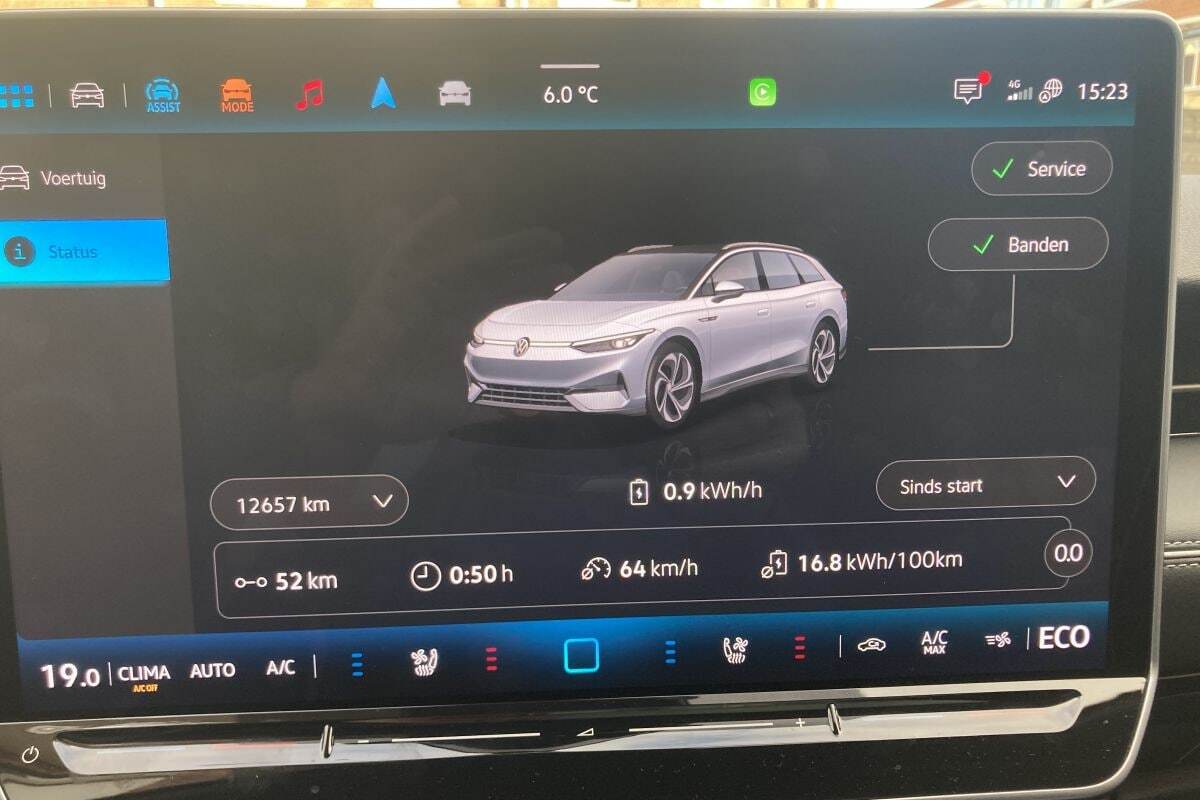
Upon arrival in Amsterdam, the temperature was 4 degrees Celsius, it did not get warmer during the morning drive. What cold does to consumption can be seen well during the afternoon drive when leaving a parking garage. At 6 degrees Celsius, without temperatures around freezing, we end up at 16.9 kWh/100 km. Of course, the wind was slightly different, but the traffic was just as busy as in the morning. Over a longer period, including the trip through seven countries, the consumption of the ID7 Tourer is now at 18.4 kWh/100 kilometers. That will increase quickly, especially now that winter tires are going under the electric Volkswagen. That is necessary, because there are some trips to Germany and Italy on the program.
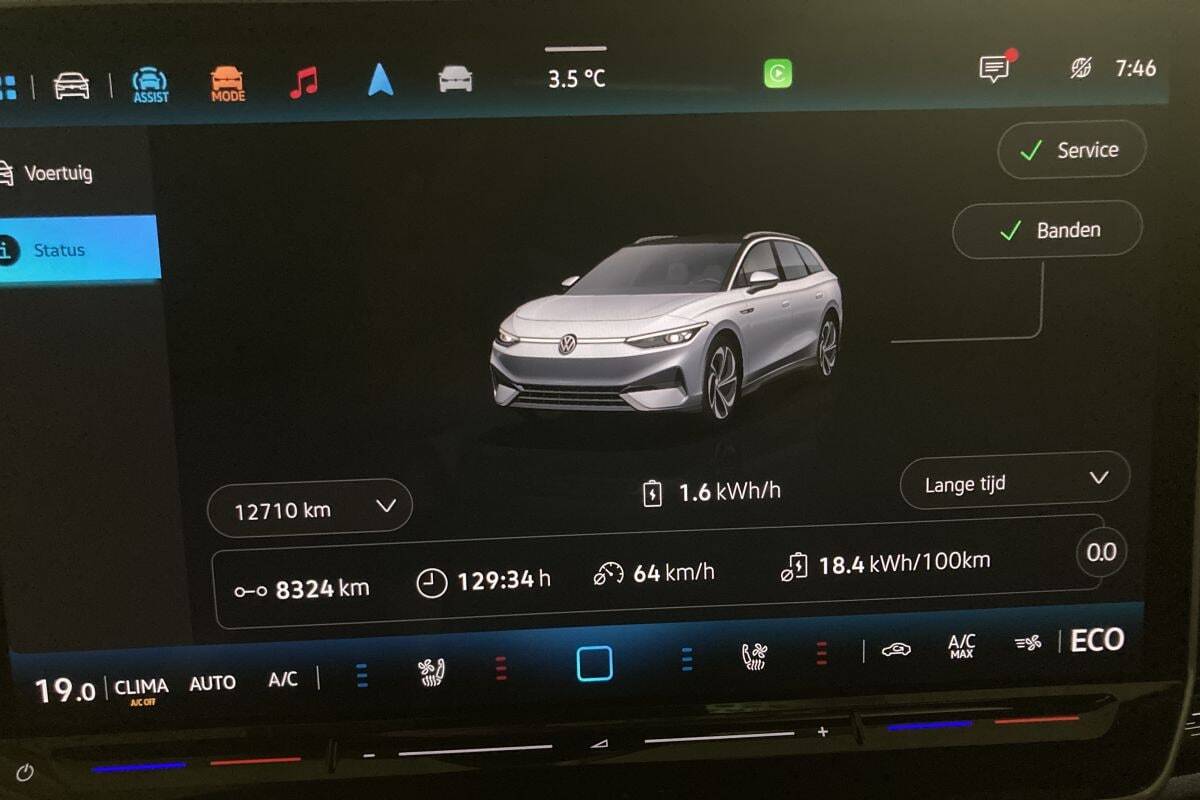
This is the consumption including the long trip to the Balkans.
Near Death Experience
The first confrontation with a cold ride in the Mazda 6e 258 hp 68.8 kWh Takumi turned into an adventure with some sweat forming in the butt crack. On a weekday evening, around 8:30 PM, we get behind the wheel at P3 Schiphol for a ride to Urk, which is 93 kilometers. There should still be 141 kilometers in the battery, so plenty of margin. You would think. Once on the A6, past Almere, the pace can increase to 130 km/h, while the climate control is on ‘auto’ and 21 degrees. Every now and then we take a look at the range and, as expected, it no longer keeps pace with the number of kilometers to be driven.
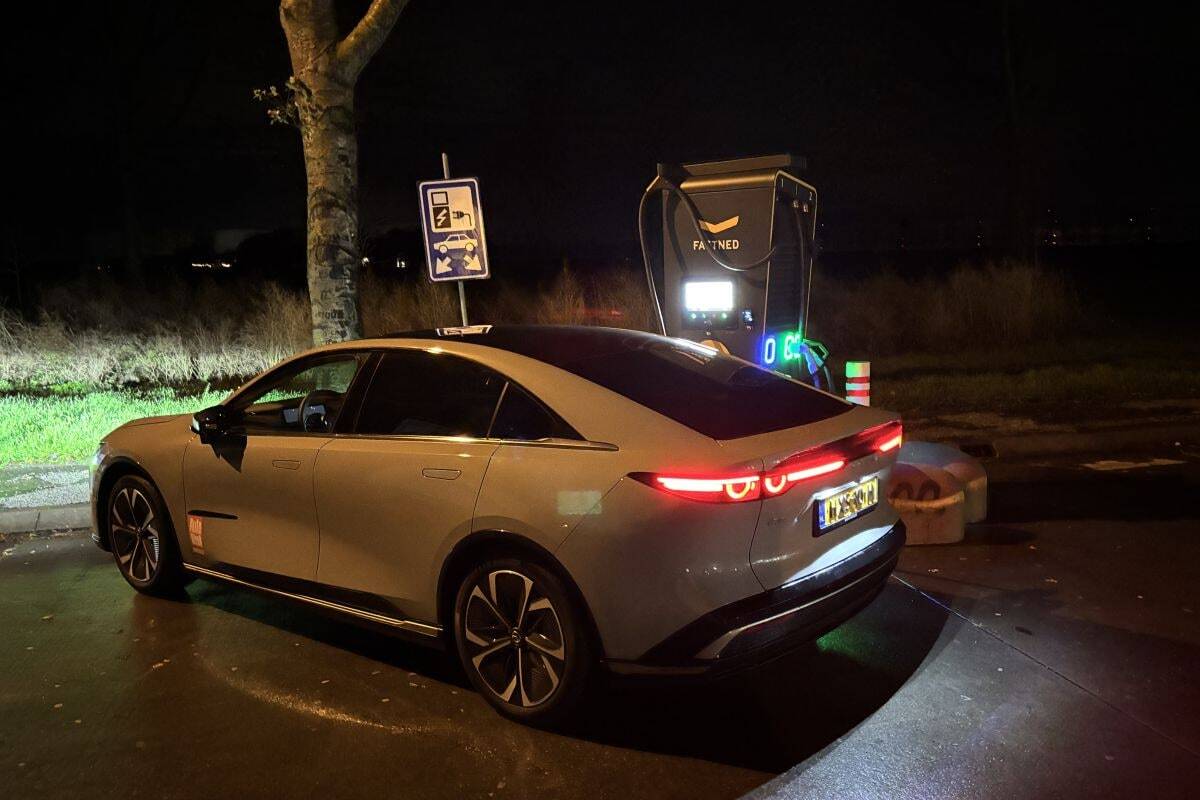
But still no reason for alarm and from experience we know that if it really becomes critical, you can always slow down a bit and lower the heating a few degrees to gain kilometers. Yes, we could also make a short fast charging stop, but at this hour of the day, with this outside temperature and after two days of travel, you prefer to go home. There, the Mazda can be on the charging station all night, the ideal scenario. That’s how the experienced EV driver rolls: many have driven onto the driveway with 1%.
Unexpectedly Fast from 10% to Zero
But then suddenly there is the message that the battery percentage is only 10%, which went faster than expected. Okay, then just calmly hang behind that truck and turn off the heating completely. With the expectation that the range will increase again, as we are used to in an EV. Unfortunately, that strategy does not work and the percentage plummets at the same rate as a Tesla Model S Plaid accelerates. This is going completely the wrong way. In the darkness, the Ketelbrug looms, along with a small sigh of relief. Because immediately after that crossing there is gas station De Abt with a fast charger from Fastned. Indeed, a single pole with two plugs.
BMS Not Yet Working Optimally
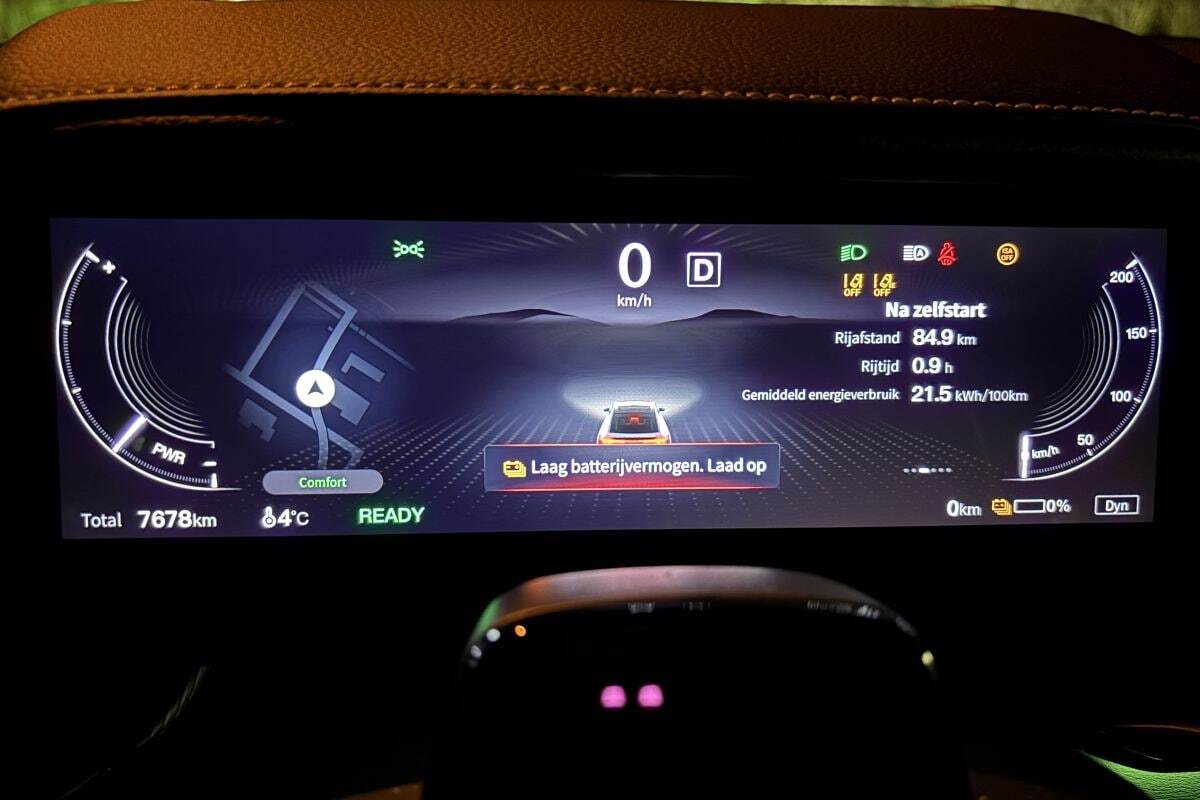
The battery percentage is now zero. Nada. Nothing, which does not always mean zero kilometer range and fortunately the Mazda keeps driving. Until we start climbing upwards and the truck suddenly runs up on us. The speed decreases further and it does not help to kick the accelerator pedal to the floor. It seems to be over. But we get to the top, there is fortunately no traffic behind us and during the descent the speed even increases slightly again and we reach the pole with an increased heart rate and a great feeling of relief.
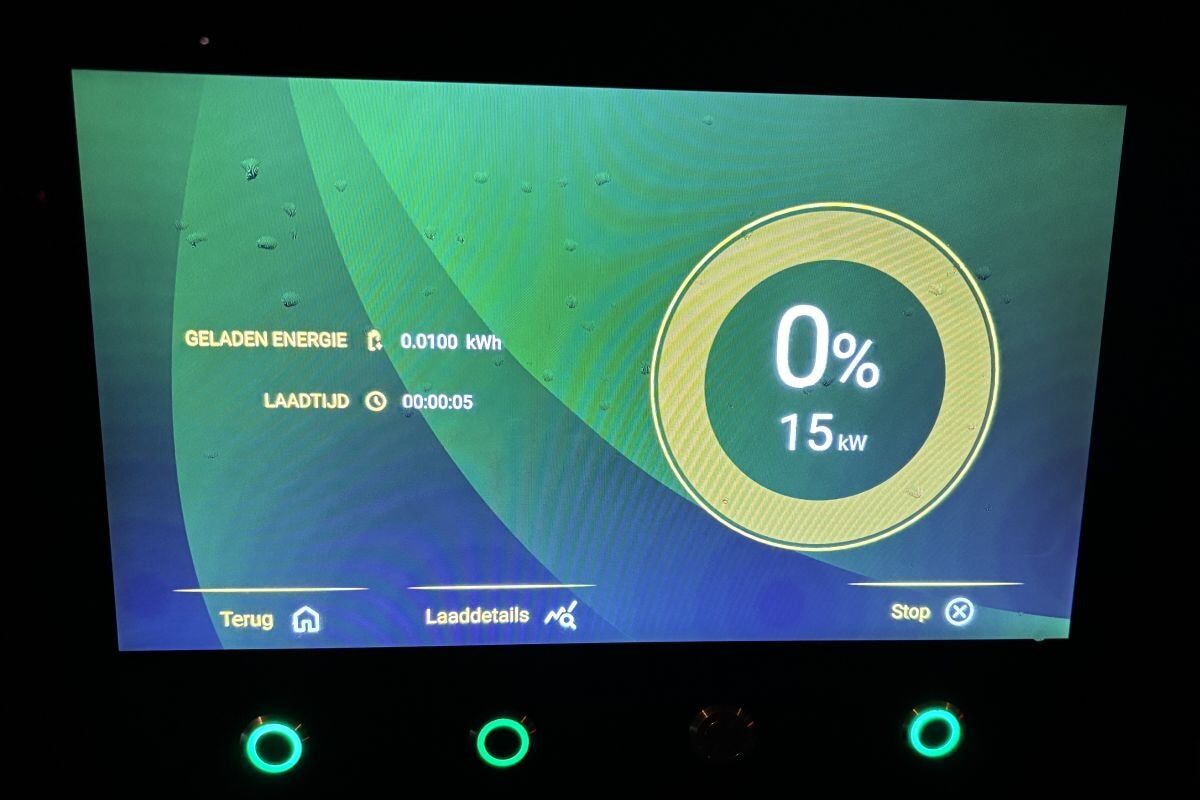
Plug it in and charge. The display on the pole also indicates zero percent SOC. Charging starts extremely difficult and remains at only 15 kW, even after almost 30 minutes. But there is enough power for the last eight kilometers, so we continue. We gambled and almost lost. Lesson learned and we now know that the BMS (battery management system) of the Mazda does not yet work optimally. Hopefully it is self-learning and with normal battery percentages, the displayed range of the 6e is usually quite accurate, is our experience. Very nice after a night of frost: while you are busy storing the charging cable, the windshield is almost completely thawed!
There are now just over 8,000 km on the odometer and according to the on-board computer, the consumption over that distance is an average of 17.2 kWh/100 km. In a double test against a Tesla Model 3, we recorded 14.3 kWh/100 km on average, at an outside temperature of around twenty degrees. Now that it is getting colder, we often see a value between 18 and 20 kWh/100 km on longer trips, especially after an early start.