Too much focus on Euro NCAP
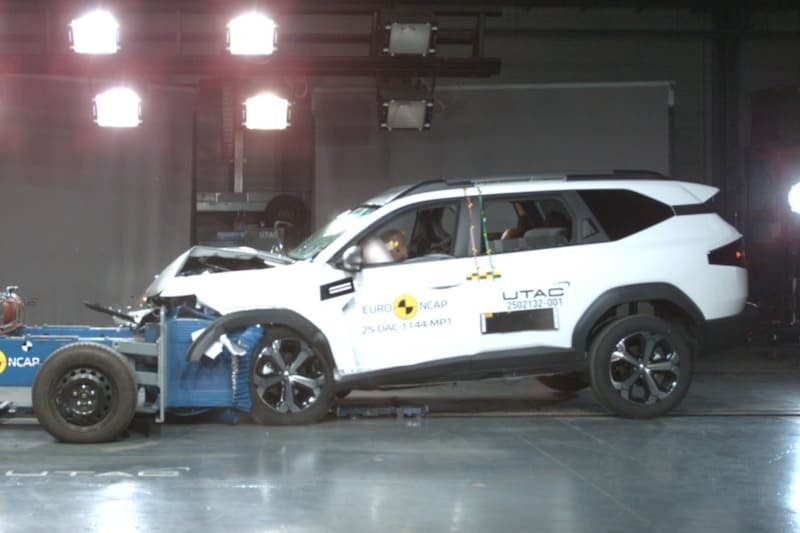
A collision while driving at 35 kilometers per hour turns out to be more dangerous than a collision at higher speeds. This illogical phenomenon is the fault of the automotive industry, according to ADAC, the German counterpart of the ANWB.
The lower the speed in a traffic accident, the lower the risk of injury. That is a message we have heard since time immemorial. But new crash tests by the German automobile association ADAC show that this is not correct.
It turns out that a collision at just 35 kilometers per hour (km/h) can be more dangerous than a collision at 50 km/h.
The discovery may seem illogical and paradoxical. But it is because many car safety systems are tuned to a speed of 50 km/h, the standard measurement speed in many crash tests, such as Euro NCAP.
When ADAC employees carried out tests, they discovered that the crash test dummy sustained more serious injuries at 35 km/h than at 50 km/h.
Tension force limiter not activated
In crash tests, the chest is compressed significantly more at 35 km/h, it turned out. This leads to a greater risk of injury, especially in older people who are less resistant to impacts on the body. ADAC has found an explanation for this paradoxical result.
Although the seat belt pretensioner releases part of the belt in a 50 km/h collision to relieve the upper body, this system – the so-called tension force limiter – is not activated at 35 km/h.
As a result, passengers fall into the seat belt without any damping. According to ADAC researchers, the forces on the body therefore increase.
Test procedures as the standard
According to ADAC, the discovery shows how manufacturers optimize their cars for the scenarios previously requested by NCAP and other test institutes, while paying less attention to other – perhaps more common – scenarios.
This is why Euro NCAP is developing new tests this year in which cars will also be tested for crash safety at lower speeds.
In addition, the increasingly popular, but potentially life-threatening, electric door handles must now also function flawlessly after an accident to achieve a good NCAP score.