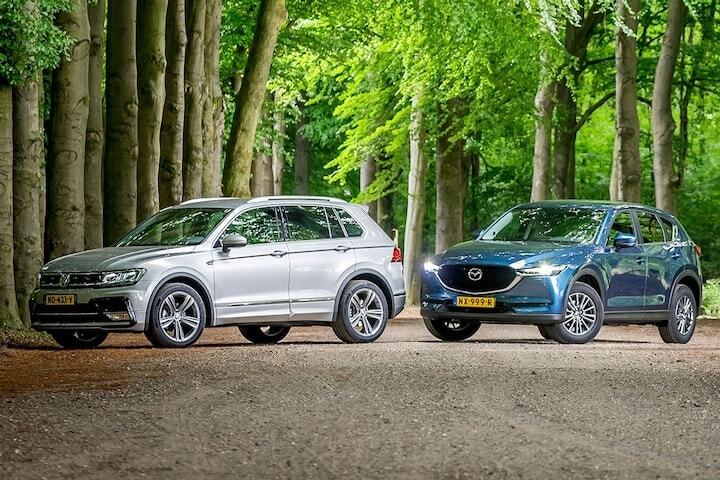
The Volkswagen Tiguan has proven itself as a mainstay in the SUV segment in recent years. With its combination of versatility, comfort and a wide range of engines, it offers an attractive option for a variety of users. In this review you can read what the second generation Tiguan and the spacious Allspace variant have to offer, and what to look out for as a buyer.
The Volkswagen Tiguan has developed into a mainstay within the SUV segment since its introduction in 2007. The second generation, launched in 2016 and facelifted in 2020, is fully committed to versatility and comfort. The extended Tiguan Allspace (model code BW2/BJ2) is striking, with which Volkswagen is responding to the demand for extra space and an optional third row of seats, suitable for both families and business drivers.
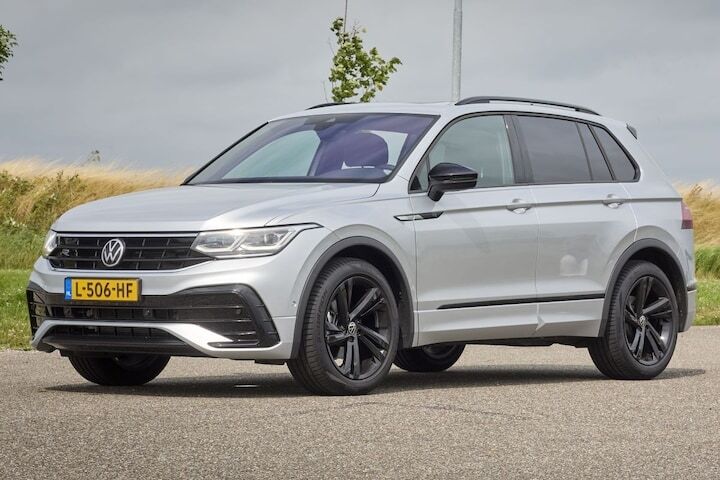
In terms of design, the Tiguan looks typically German: clean lines and a timeless profile dominate the exterior image. With the 2020 facelift, the car was given a more modern look, thanks to redesigned headlights and a sharper front. Inside, high-quality materials and a clear layout have been chosen. Please note: after the facelift, some touch controls were added, which some users find less pleasant.
The Tiguan does not disappoint in terms of comfort and space. Both the standard version and the Allspace offer generous legroom and a flexible layout. Those who opt for the optional ‘ErgoActive’ seats benefit from extra seating comfort. The driving experience excels in a good balance between comfort and control, although the dynamic character remains within limits – sportiness is subordinate to ease of use here. The Allspace offers extra space, but can feel a bit stiffer on bumps.
In terms of engine, there is plenty of choice, ranging from the efficient 1.4 and 1.5 TSI petrol engines to more powerful 2.0 TSI and 2.0 TDI variants. The plug-in hybrid (eHybrid) with 245 hp has been available since 2021. The DSG automatic transmission is often praised for its smooth shifting, although acceleration is sometimes a bit slow.
In terms of technology, the Tiguan distinguishes itself with modern driving assistance systems such as adaptive cruise control and lane assist. The infotainment system scores points with its speed and logical design, although operation via touch can cause more distraction.
For those looking for an all-round SUV with a choice of various engines and equipment levels, including the practical Trendline and the sporty R-Line, the Tiguan is a widely applicable option. The Tiguan remains very popular as a used car, partly thanks to its solid reputation, spacious interior and value retention.
The second generation Volkswagen Tiguan offers a choice of petrol, diesel and plug-in hybrid engines. Before the facelift (until 2020), the range was wide: the petrol engines range from the 1.4 TSI with 125 hp and 150 hp to the 1.5 TSI with 130 hp and the powerful 2.0 TSI variants with 180, 190, 220 and even 230 hp. All 2.0-liter petrol models are standard equipped with 4Motion, Volkswagen’s four-wheel drive system.
Diesel enthusiasts can choose from three 2.0 TDI variants: 115 hp, 150 hp (available with front-wheel or four-wheel drive) and a powerful 240 hp version, which is always equipped with four-wheel drive.
After the facelift (from 2020), the engine range is limited to the 1.5 TSI petrol engines with 130 or 150 hp. Those who want to drive diesel get into the 2.0 TDI with 150 hp, which is also supplied with four-wheel drive.
From 2021, Volkswagen will add a plug-in hybrid Tiguan to the price list: the 1.4 TSI PHEV with an output of 245 hp. This is equipped with a rechargeable battery pack, with which you can drive fully electrically for up to 129 kilometers after charging according to WLTP standards.
The Volkswagen Tiguan is known for its spacious and practical interior. Both the standard version and the extended Tiguan Allspace offer a striking amount of legroom for passengers, while the rear seat is flexible. In the Allspace version, users also benefit from extra space and the possibility of a third row of seats, allowing seven people to sit. That also makes the Tiguan a good family car.
The trunk space of the Tiguan is also generous. The standard Tiguan offers 615 liters of luggage space, which can be expanded to a maximum of 1,655 liters when the rear seat is folded down. The Allspace variant adds even more, with 760 liters to a maximum of 1,920 liters of loading space. If you opt for the Allspace with seven seats, there will still be 230 liters left with the third row of seats in use, enough for a few weekend bags or groceries.
In terms of reliability, there are mainly complaints about high oil consumption and malfunctions of the panoramic roof in older years of construction. Tiguans with a panoramic roof also sometimes suffer from water leakage. This is usually due to clogged water drains or bad rubbers. Are you going to look at a used Volkswagen Tiguan with a panoramic roof? Then check carefully whether you see moisture marks anywhere in the interior and whether the floor mats are dry.
Another point of attention is the emergency braking system, although this has largely been addressed in later versions. Some models know the so-called ‘ghost braking’ or ‘phantom braking’, in which the emergency braking system intervenes unjustly. Recalibrating the system and cleaning the sensors seems to reduce this problem in some cases.