More cars sold, best-selling models in multiple segments, successful new cars launched, and more turnover: enough reason for Renault to be happy. However, a dark cloud hangs over these figures with the name ‘Nissan’, although a large part of this negativity seems to be a one-time occurrence.
2.5 percent more turnover, more cars sold at almost all brands and yet a large loss: Renault Group manages to achieve this in the first half of the 2025 financial year. The operating profit decreases from around 1.9 billion euros in the first half of 2024 to minus (negative!) 8.4 billion euros in the past half year. How is that possible? The answer is short: ‘Nissan’.
Throughout the reporting, Renault makes a striking effort to show that Nissan is responsible for the lion’s share of the financial setbacks, and spells out this fact in every possible way. For example, the “contribution” of the brand is mentioned separately as minus 11.6 billion, we learn already at the top of the press release that Renault without Nissan actually made half a billion profit and we learn that Nissan’s contribution when it comes to financial income and expenses is even greater than the contribution of all associated companies together.
Yet there is also good news. Although it has been clear for a long time that things are not going well at Nissan, the negative impact on Renault’s finances is largely a one-time paper tiger. Renault has valued its shrinking share in Nissan in a different way, and this is reflected in the past half year in a one-time loss of 9.5 billion that in practice has no financial consequences according to Renault.
If we focus on Renault itself, it is noticeable that not everything is positive there either. The operating profit is decreasing compared to the first half of 2024, for which Renault has a number of explanations. Exchange rates play a role, but also the fact that Renault sold fewer commercial vehicles and more EVs. There is simply more to earn on ‘vans’. In addition, Renault states that in 2024 there were one-time revenues from the R&D department due to assignments from other companies, so that the comparison material is actually too positive.
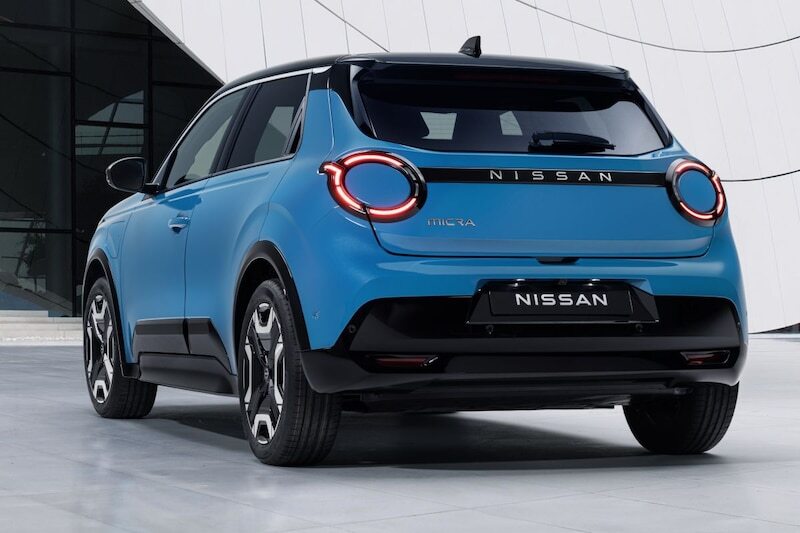
In many ways, things look good for Renault. The brand (now not the Group) can call itself the number 2 in Europe and the number 1 in France, while Dacia takes the throne when it comes to ‘retail sales’. Dacia focuses entirely on consumer sales and that is once again paying off. The Sandero is Dacia’s bestseller and Europe’s darling, but the Duster can call itself Europe’s most popular SUV among private individuals. Meanwhile, Alpine is well on track to also make a significant contribution, because in the past half year the first models of the brand with volume potential have been launched. Even at Nissan there is some reason for hope, because after the new Micra a new Leaf follows and a new, small and cheap EV based on the Twingo to be launched is still on the planning. The order book at the brands together is filled for the next two months, so the new CEO François Provost is looking forward to the second half of 2025 with good courage.