The new Porsche 911 Turbo S picks up where the previous model left off. That one became much sharper and more sporty. The new one is too, and the Porsche 911 Turbo S is now also a hybrid. Like a Toyota Prius. But just a bit different.
Once the 911 Turbo was the undisputed alpha male, thanks to the transfer of racing technology to the public road. That position came under pressure. First by the purist GT models, and later because even the standard Carrera models got turbos. This caused the Turbo to suffer an identity crisis. For the current generation, Porsche therefore makes the car not only faster but also much sportier. With the latest facelift, the brand goes a step further: the 911 Turbo becomes a T-Hybrid and is, for now, always an S.
How does the T-Hybrid system work in the 911 Turbo S?
Anyone fearing a sort of Prius with the engine in the back can rest easy. This is a performance hybrid. The basis is a new 3.6-liter boxer engine, combined with not one, but three electric motors. Two of these are integrated into the two (smaller) turbos. These e-turbos therefore spool up lightning fast; the electric motors make them spin before the exhaust gases do. A third, 81 hp strong electric motor is incorporated into the PDK transmission for direct power. The result is, ironically, the most ‘atmospheric’ 911 outside of the GT3: the response to the accelerator pedal is direct and smooth, without turbo lag.
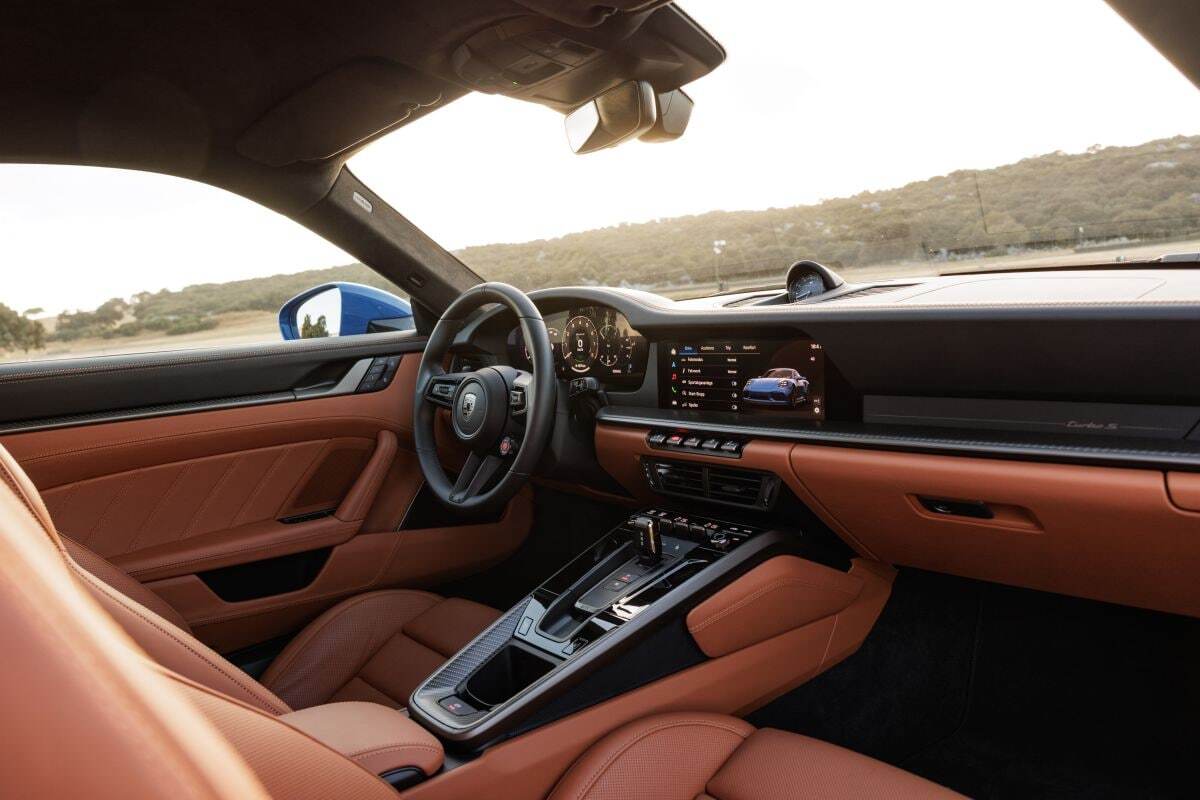
The interior of the Porsche 911 Turbo S is beautiful. Just like that of a Carrera.
What are the performance figures of the hybrid 911 Turbo S?
The combination of the 3.6-liter six-cylinder and the three electric motors delivers stunning numbers. The system power increases from 640 hp and 760 Nm to a total of 711 hp and 800 Nm. Combined with launch control and all-wheel drive, this results in a 0-100 km/h sprint in just 2.5 seconds – and Porsche admits that in practice this is often even faster. The top speed is 322 km/h, a fraction lower than before. According to Porsche, due to smart energy management (the e-turbos and brakes regenerate energy), it is practically impossible to drain the 1.9 kWh battery.
How does the extra weight affect the driving experience?
The hybrid technology adds 85 kilograms, bringing the total weight to 1,725 kilograms. However, thanks to the new 400 Volt system, crucial components like the active stabilizers and the nose lift system work much faster than before. On the track, you therefore hardly notice the extra weight. The systems (all-wheel drive, rear-axle steering, adaptive dampers) calculate what they need to do 200 times per second. This doesn’t feel artificial, but rather natural and homogeneous. The 911 Turbo S drives with magical ease, is certainly not sterile, but offers a bit less theater than a pure supercar.
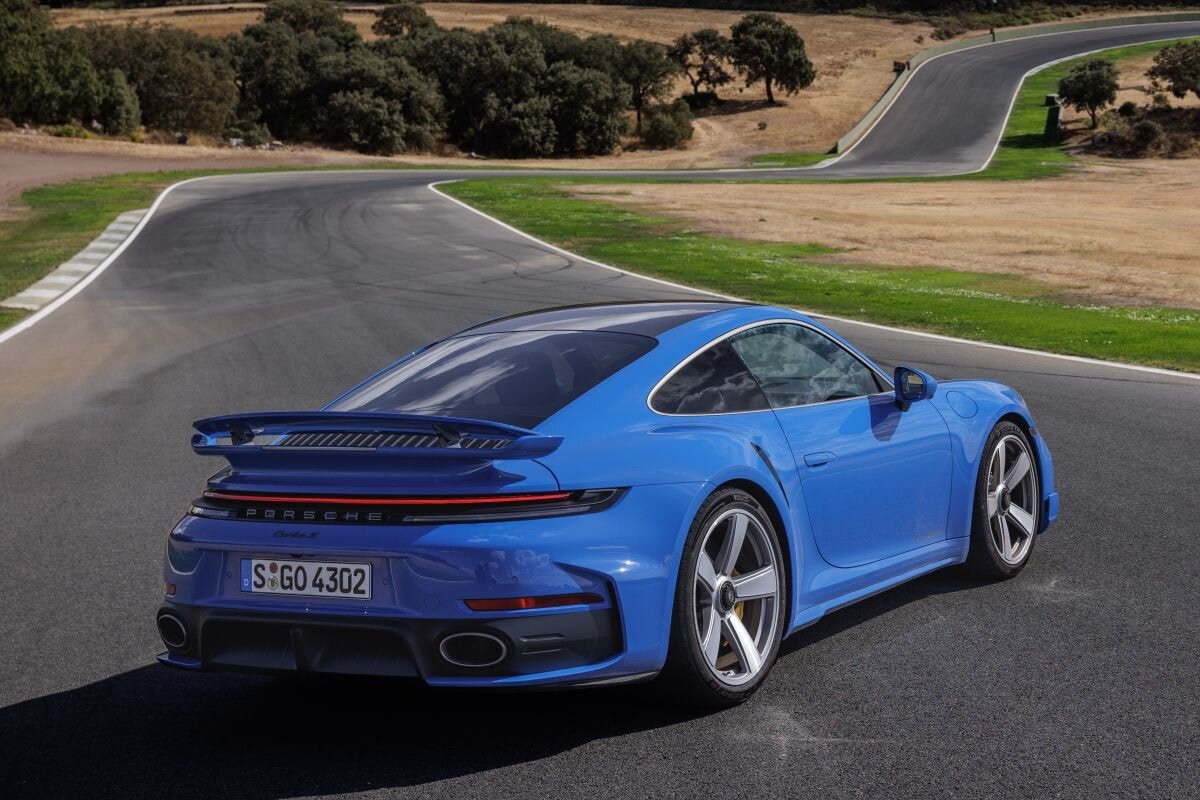
The rear of the Porsche 911 Turbo S is nicely wide.
What does the Porsche 911 Turbo S cost and who are its competitors?
The Porsche 911 Turbo S starts in the Netherlands at €352,300, excluding options. And those options are numerous and expensive, such as a 40 percent stiffer sports chassis or a leather package costing €11,000. This places the alpha-911 in the realm of supercars like the Ferrari 296 GTB and McLaren Artura, which are lighter and more exotic. The advantage of the Porsche is its unparallel daily usability. The comfort is high, the finish is beautiful, and you can even have the rear seats reinstalled (for free).