The current Renault Clio was still doing quite well thanks to sharp pricing. Yet here is generation number six already, because Renault understands that standing still is going backwards.
Yes, we think so too, and the rest of the Netherlands as well, judging by the good sales figures. But Renault clearly wants to prevent the car from falling behind and wants to maintain its high position in the statistics. A look at the car shows that this is more than a facelift, because in no way does it resemble its predecessor. It was even a bit of a shock when the cover came off. Renault itself claims to want to achieve ‘love at first sight’ with the new design, but the first comments were more of horror than affection. But as is often the case, the new look is settling in and on the road it gives the car a somewhat more mature appearance than the Clio V.
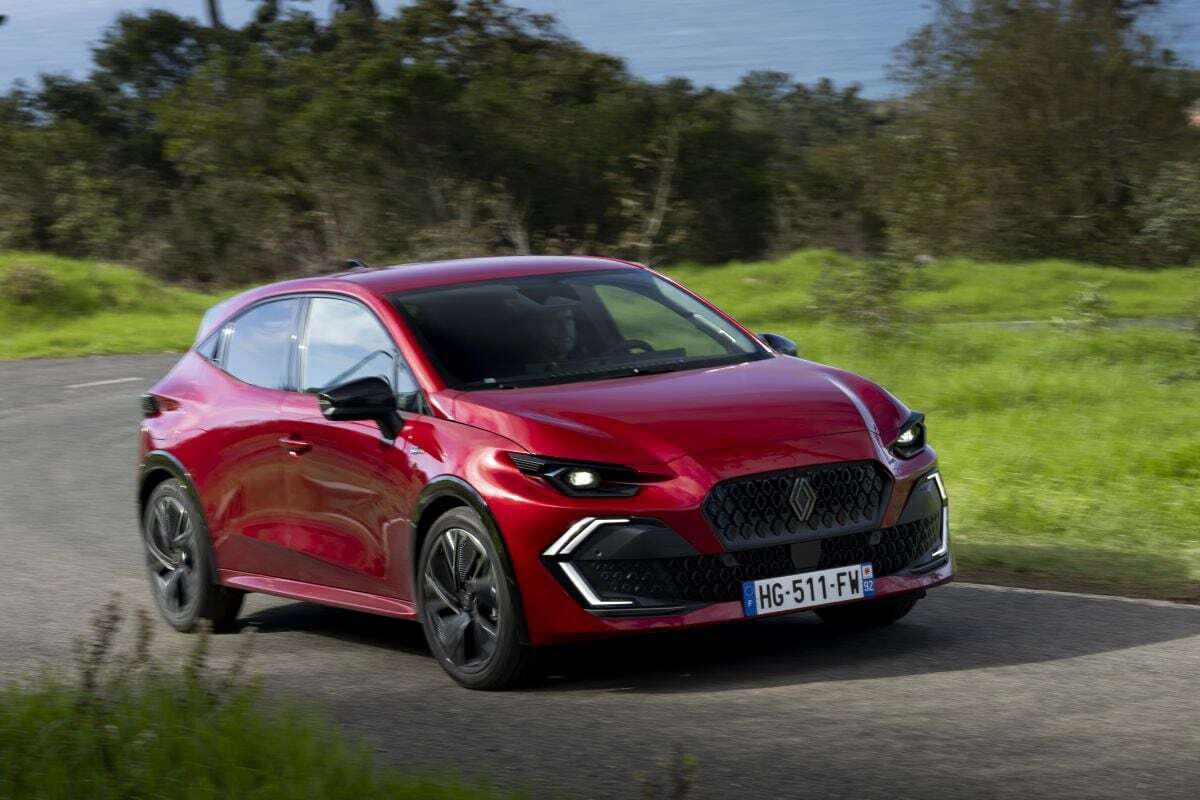
The design of the car takes some getting used to.
Yes, takes some getting used to. But is it completely new then?
Well…. secretly not really. The car stands on the same CMF-B platform as its predecessor, which means that the basic characteristics in driving behavior are retained. However, the body is longer, higher and wider and the wheelbase has also been slightly increased. Inside, surprisingly enough, there is not much to notice. The car is 6.7 cm longer, but the wheelbase only grew by 0.8 cm. So mainly a lot of extra overhang. The extra space mainly benefited passive safety and also to create space for the new hybrid powertrain. As a result, the space in the back seat is no better than in the previous generation. Now the Frenchman is still more spacious than tight competitors such as the Peugeot 208 and the Opel Corsa, but strong opponents such as the Volkswagen Polo and Seat Ibiza are a lot more versatile. The trunk is large with 390 liters, but in the hybrid it is a lot smaller again: just over 300 liters.
The new Renault Clio looks beautiful inside!
The cockpit is also completely new. The design style of the Renault 5 found its way to the Clio and the car has the same two screens. In front of you a large screen that you can set in different ways, all the necessary information is readily available. The Google software of the multimedia system is more than fine and even above average for this class. Even the entry-level model has Apple Carplay and Android Auto. Also nice: still a row of physical buttons for climate control and volume control. Unfortunately, as in other Renaults, we find the very difficult to operate lever for the gearbox on the steering wheel. The placement is too high and the haptic feedback is poor, which means you repeat your movement too often. Renault does score points with its ‘My safety switch’ with which you can, as the brand says: “personalize the safety systems”. In practice, this mainly means that you can quickly silence the mandatory meddling. Incidentally, Renault’s ADAS systems are a lot less annoying than average and the autopilot even stands out positively due to the smooth way in which it guides the Clio over the highway. We drove both the Alpine Esprit and the Techno version and the interior quality of this Clio is really high quality. Renault wanted to position its Renault 5 high in the market and the Clio noticeably benefits from this.
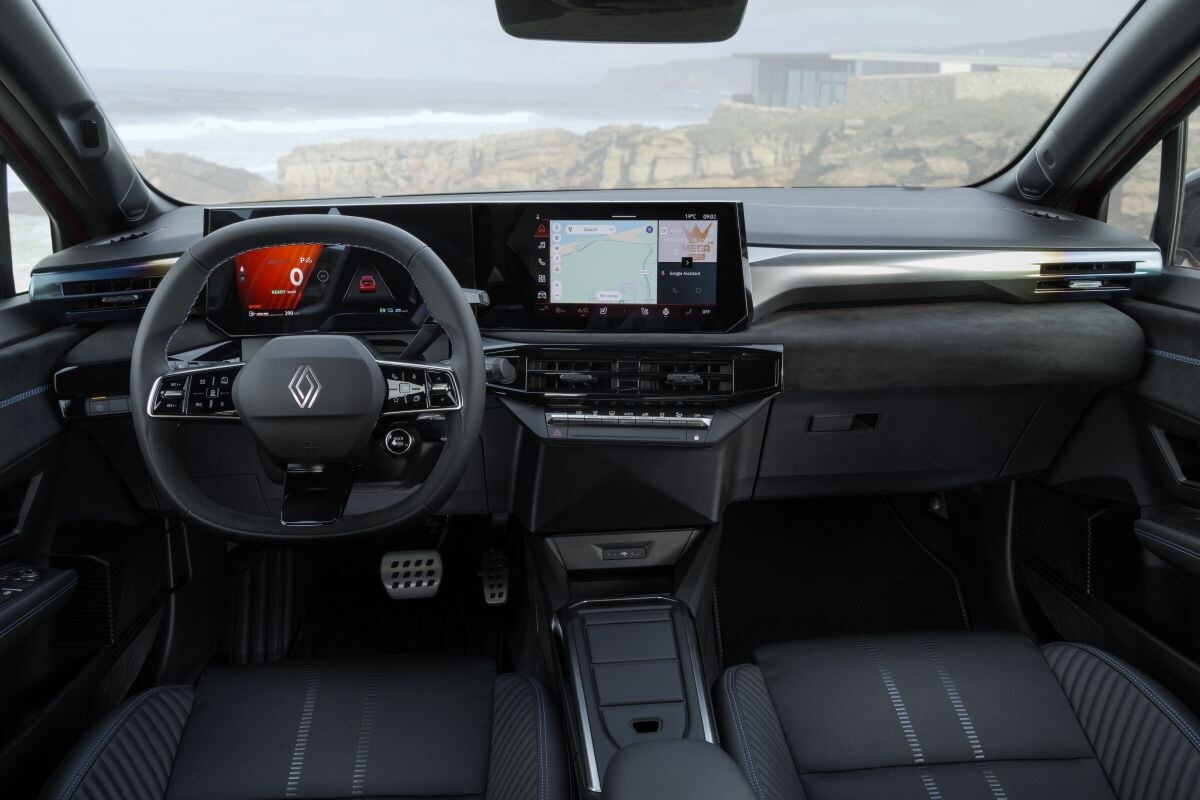
A high-quality cockpit, we know a lot from the Renault 5.
Are there any new engines?
The entry-level model received the familiar 1.2 TCE three-cylinder engine with 115 hp and a manual gearbox. LPG is available again elsewhere, but the Dutch importer has decided to mainly market Dacia as an LPG brand and does not supply this powertrain for the new Clio. Much more important for our market is the new Clio hybrid. This powertrain debuted earlier this year in the Dacia Bigster and we also saw it in the renewed Renault Symbioz. It has a 1.8-four-cylinder engine instead of the 1.6 in the current Clio. In addition, a four-speed automatic transmission is again coupled to it, but with an extra actuator. Then there are two electric motors that provide you with full power up to roughly 60 km/h. The gasoline engine then only serves to generate power. Above that speed, gasoline power also goes directly to the wheels in series-hybrid style. It remains strange to feel the power increase during that transition. The two-speed automatic transmission of the electric motors works together with the four-speed automatic transmission to choose the most ideal combination of gears. As in all Renault hybrids, this is completely outside the driver’s control. As long as you bravely dawdle from A to B, it doesn’t matter much, but when the roads become more fun, you suddenly notice that some gas response is missing. The good thing is that the power of 160 hp in the 1,150 kilo Clio is more than enough and that, unlike in the aforementioned Dacia, you don’t have to rev it up as often. But on fun roads you still WANT to do that and then you notice that you sometimes have less control over the power output than you would like. The reward is low consumption. The factory specification is now so low that 1,000 kilometers on one tank is achievable and our practical scores in larger models with this system are exceptionally good. So that also promises neat scores for the new Clio.
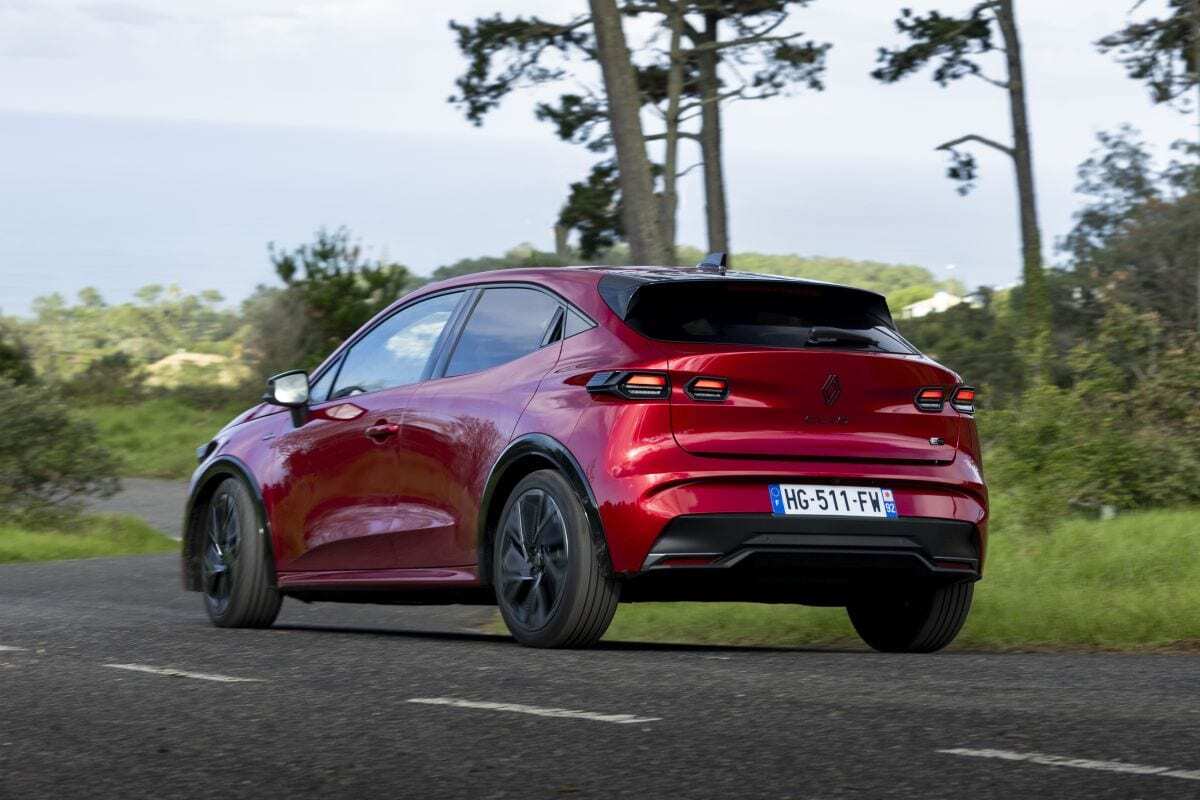
The driving behavior is mature and dynamic.
But how does the Renault Clio drive now?
The chassis has improved. The Clio V already drove very well and with (among other things) adjustments to the front stabilizer bar and the damping, the French have further refined things. In practice, the refinement in particular has noticeably improved, while the driving pleasure has remained or even become a little better. It steers just a touch more directly, while the traction on slippery roads was fine during our first ride. The car has become more mature in its driving behavior in all areas, which may attract some die-hard Mégane drivers who until now were dependent on an EV or an SUV from Renault. The Clio has also become quieter, making it even more suitable as a first car.
The low consumption of the new Clio keeps it affordable and Renault is also not afraid to equip the car very richly for a small additional cost. The hybrid is 2,000 euros more expensive than the three-cylinder in every version and you have to really want a manual gearbox to not put down that extra money. The power difference is significant and the practical consumption is a lot lower. On the Techno versions, the brand is also temporarily offering a free Premiere Pack, in which 18-inch wheels, parking sensors and a winter pack with seat heating and even more extras are added to the car free of charge to entice early buyers.
Given the maturity of the car, the Clio VI has every chance of continuing the success of its predecessors. We urge anyone who absolutely wants to drive in a compact crossover because of the ‘high seating position’ to also look at an old-fashioned hatchback. This Clio is the ultimate proof that lower is rarely worse.

The car is longer, but you don’t really notice that in the back.
“`