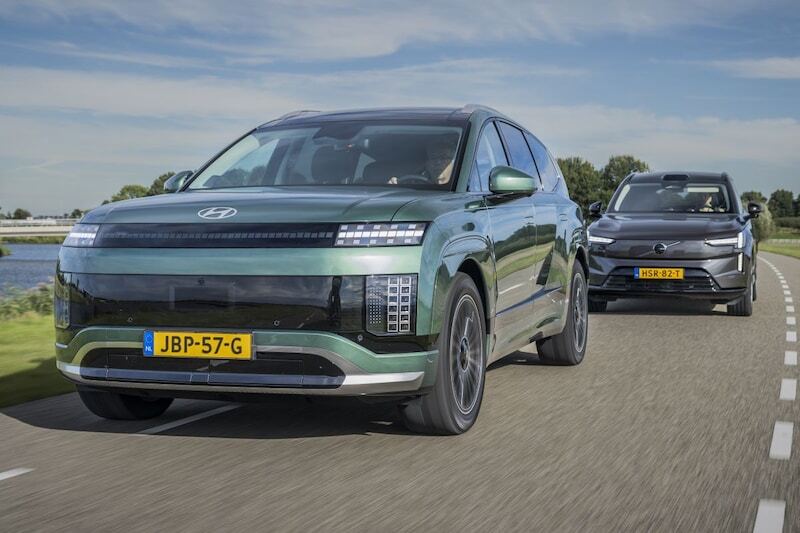
Annoyances in the large Volvo cost it the victory
After the large Kia EV9, the wait was on for the identical twins from sister company Hyundai. The large equally Ioniq 9 also has seven seats but aims at a slightly different part of the market. Our EX90 long-term test car from Volvo can show how realistic the Koreans’ expectations are.
It is particularly difficult for a car brand to move higher in the market if you weren’t already there. There have been plenty of attempts by volume brands to grab a slice of the premium market with a fancy model, but these attempts almost always fail. Because the louder you shout that you are premium…. But the rapid electrification of the market suddenly offers opportunities that didn’t exist before. A brand like Tesla could never have become a real competitor to BMW and Audi if it hadn’t had its electric lead. And Kia’s EV6 suddenly reaches sales managers and real estate agents who previously really didn’t want to be seen in a Korean car. And look at Hyundai. With the Ioniq 5, the brand already distanced itself from models like the Elantra and Sonata, but with the Ioniq 9 they are going a step further. It is a house of a car, and with its third row of seats, it taps into a segment where there isn’t much to get yet. Because there aren’t that many large electric SUVs at the top of the market, and the number that can also accommodate six or seven people is even narrower. For example, the BMW iX drops out, and Audi hasn’t been making its E-Tron for a while. Mercedes still has the EQS-SUV on the price list as an electric counterpart to the GL-class. But this has a lot of EQS technology on board and Mercedes prices it accordingly. As a result, it is extremely much more expensive than the Hyundai. Sister company Kia naturally has the EV9, which has the same technology under the skin. But that makes a comparison less interesting, of course. Fortunately, there is also Volvo that also offers its EX90 with three rows of seats. And that is the wonderful truth that an electric Hyundai can suddenly compete against an established premium brand.
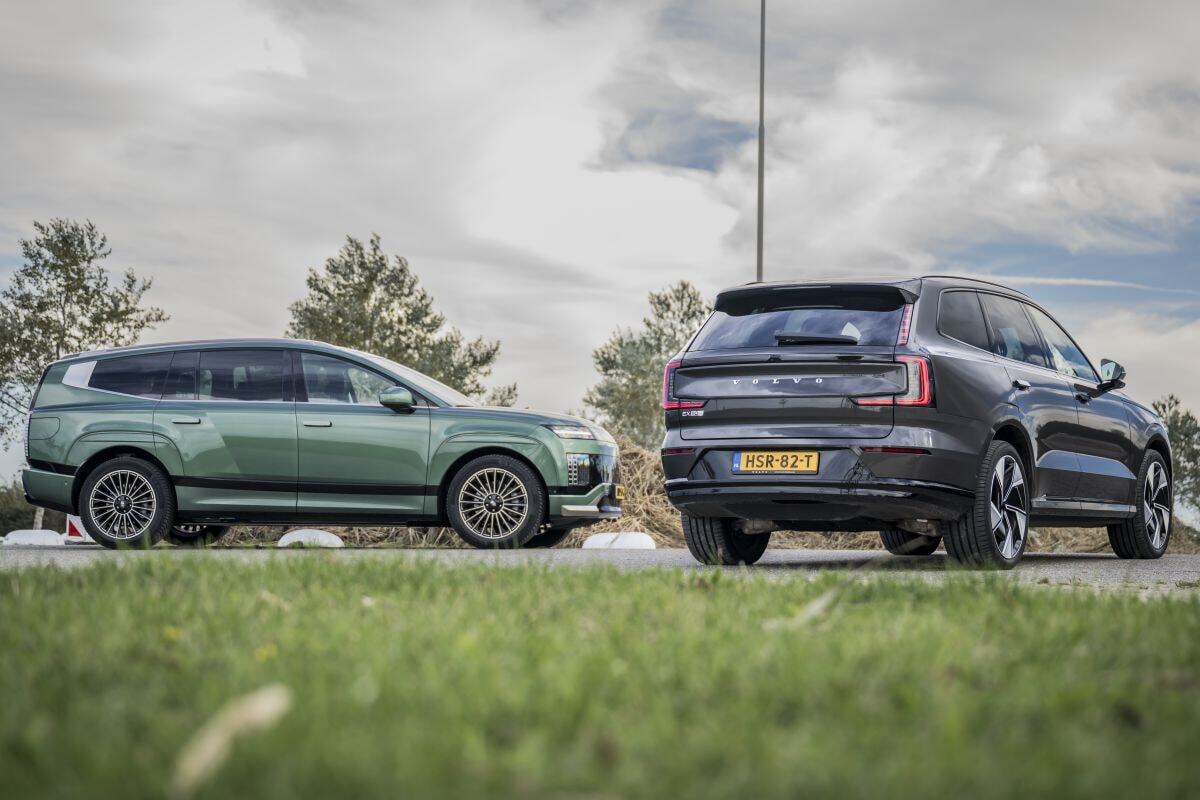
Are the Hyundai Ioniq 9 and the Volvo EX90 a bit comparable in terms of specifications?
Technically speaking, the Ioniq 9 doesn’t exactly start with a disadvantage. Building on the technology of the Ioniq 5, the car has impressive electrical qualities. It also has 800 volts, which ensures excellent charging times and good thermal management. The new battery has no less than 110 kWh, so you won’t run out of power quickly. The ‘entry level’ has rear-wheel drive and one electric motor, good for 218 hp. The 4WD versions with two motors have 308 hp, except for the AWD+ version we are testing now. This peaks at 429 hp. Quite a lot for a Hyundai!
It may be overkill, but that way it can compete well against the Volvo EX90 that we have in-house. This long-term test car has undergone a number of changes, but we end up with a peak where the car has 517 hp thanks to two electric motors and a battery that has 111 kWh. Charging is possible with 250 kW which is very neat for a 400 volt system. But the reality is different. While we were doing this test, the car received the update that everyone saw coming since the ES90 was announced: there was an 800 volt system with which the maximum fast charging power has been increased from 250 kW to 350 kW. In addition, all versions get (even) more power. The Performance version that we are testing today is 517 hp strong, but has no less than 680 hp in the new version. The 0-100 time drops from 4.9 seconds to 4.2. Impressive figures. The most important change is what we think is the fast charging. That extra power is not necessary at all: the car is already more than fast enough and also (like every new Volvo) limited to 180 km/h so what is the point? It is different with the power increase of the car with only one engine, which goes from 279 to 333 hp. A proportionally larger increase that you actually benefit from. But okay, we are still talking about the old version today. It is our burden to bear that EVs sometimes get an upgrade so quickly that we can’t test against it. We assume the car as it is, not as it will be in the near future.
For the EX90, that means it is fast enough in any case. The power is excessive and feels smooth, but the chassis sometimes struggles with it. Interestingly enough, the car drives better at higher speeds (such as long highway trips) than at low speeds. It is not quite calm enough at residential area bumps and roads full of traffic lights and roundabouts. The body sways and moves a little too long during speed changes, as if the damping cannot quite handle the weight of the car. This detracts somewhat from the smoothness you do with the power. The Hyundai is also not exactly a lightweight and, like the Volvo, weighs more than 2,600 kilos. Here you notice that the considerable power still has to drag it, so there is no nimbleness at all. But it sits like a block on the road and keeps everything well balanced. It aims more at comfort than at any form of dynamics (that’s what sister Kia EV9 is for), but is certainly not weak. Solid and accurate, but also well-behaved. There is more of a vibe, the Volvo certainly doesn’t have that despite its size and weight. It is nice that you can adjust the degree of regeneration in the Korean car with the flippers. The steering is fine in both cars. In the Volvo perhaps even a little too light, while the Hyundai is a little too heavy to fake communication. Count more on comfort and smooth steering and you won’t be disappointed.
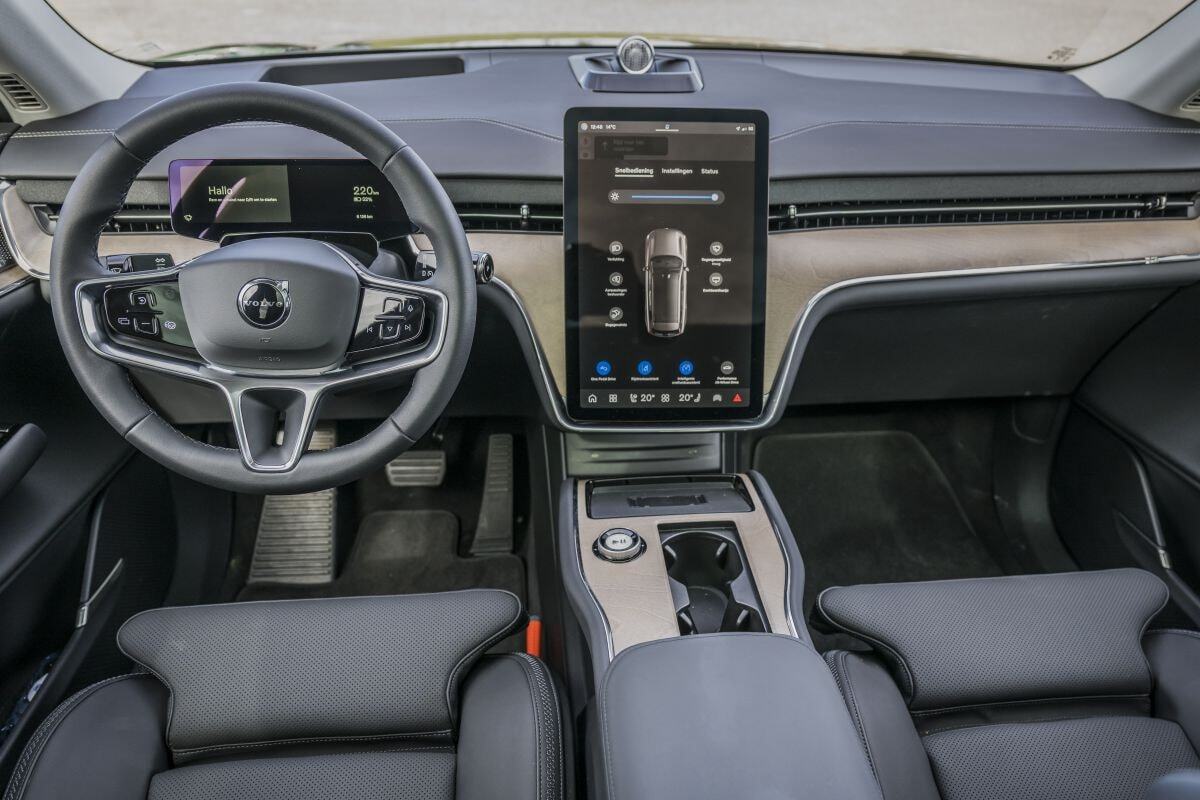
No buttons in the Volvo, everything is in the screen.
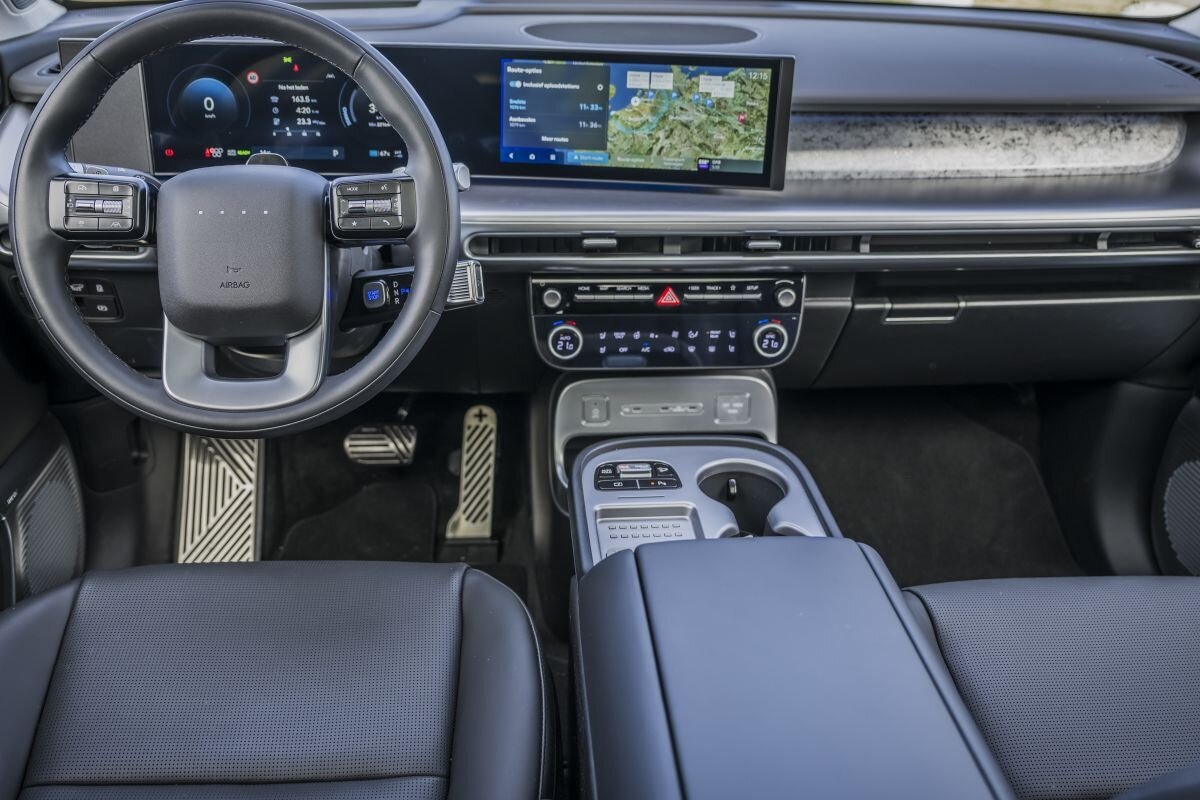
The Hyundai Ioniq 9 has many physical buttons in addition to the touchscreen: it benefits the ergonomics.
Does the Hyundai Ioniq 9 have six or seven seats?
The car is delivered as a seven-seater as standard, but on the Lounge version you can optionally choose six seats. In that case, you get two luxurious seats in the second row that you can rotate. Our test car had the normal seven seats. Here you have a huge amount of space in the second row of seats. On the third row you can take place as an adult in a kind of normal way, which is already above average for a seven-seater. The use of materials, also further back, is above average for a Hyundai. You can tell that the Koreans really want to take a step with this Ioniq 9 and they do their best to create a lounge atmosphere. The overall layout is similar to what we know from other models of the brand: a touchscreen supplemented with physical buttons for ease of use. The ergonomics are excellent and all controls are in the place where you expect them to be. The multimedia system itself is modern, but also not as progressive as we see with some other expensive EVs, both from the old and the new world. Between the front seats is a large center console with plenty of storage space, the car is well endowed with compartments and storage spaces anyway.
The Volvo looks a bit more high-quality than the Hyundai when we purely look at the use of materials, but the cockpit is also a lot less… well, special? The large screen dominates the cockpit a little too much and the fact that almost all operations are hidden in it does not benefit the ergonomics. Also because the system itself does not work ideally. Too many options are hidden too deep in the menu. And strange choices such as splitting the buttons of the window controls cause unnecessary annoyance. The screen in front of you is also a bit economical with the information. It feels just a little too much like a cost saving instead of ‘clean’ design: this detracts from the appearance that Volvo wants to have. It is of higher quality than the Ioniq 9, which car pretends less. The seat of the EX90 is very pleasant, fortunately the Swedes remain true to their image there. In the back, the space is slightly less than in the Ioniq, but still excellent for large adults. The third row of seats shows the difference between a large SUV and a very large MPV: here you can really only put small children if you don’t want to hear complaints. The trunk is 670 liters large with two rows in use. Well in order, but it still loses out to the gigantic Ioniq 9 that offers 900 liters. Both models have a large frunk in the nose that offers around 50 liters of extra space.

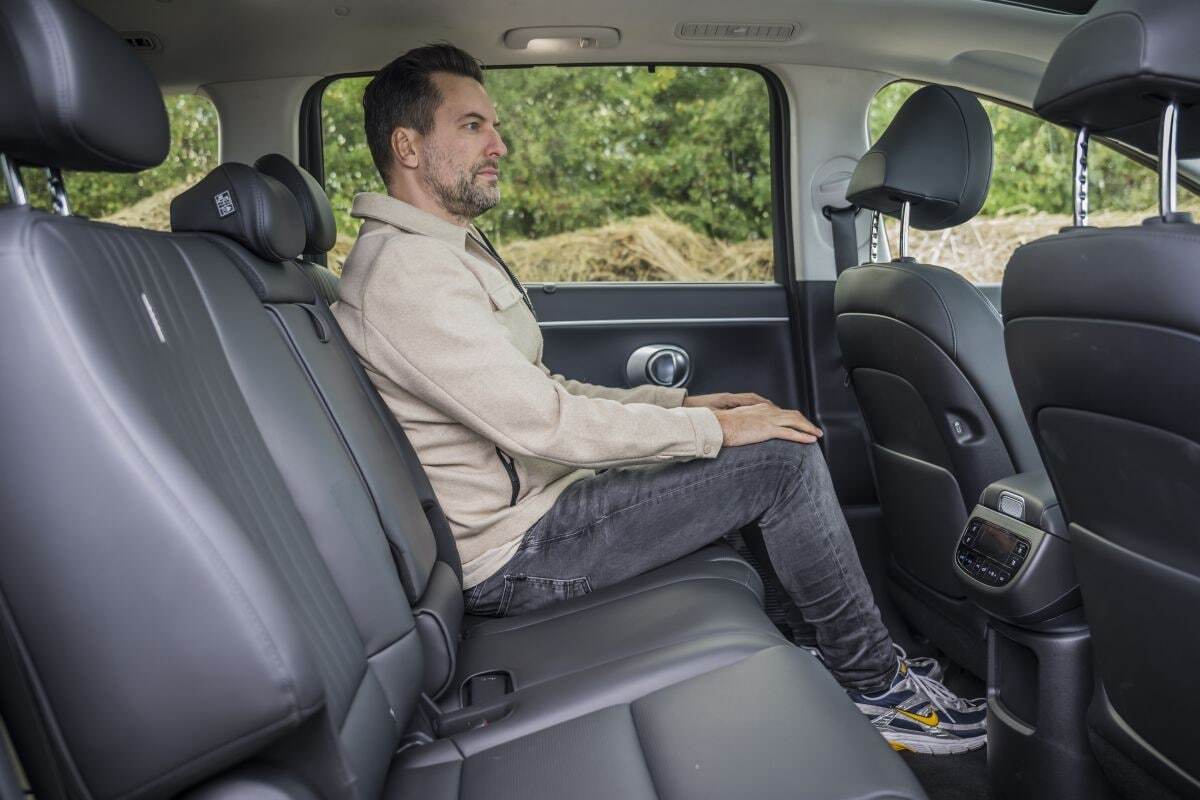
In both cars you sit very spacious, but the Hyundai is clearly even more spacious. The seat in the Volvo, on the other hand, is a bit better.
Third row


You shouldn’t come as an adult in the Volvo on the third row, but in the Hyundai it still works a little.
There was some news about the lidar from Volvo, right?
The passive Lidar that Volvo has made a lot of noise about will indeed soon disappear from both the EX90 and ES90. That is a disappointment insofar as the car, helped by the Lidar on top, should just stand out far above the competition. In practice, both cars do not go beyond reasonable when it comes to autonomous options. The Hyundai follows orders a little more bravely, but is also very careful when it comes to further development. The cars are on par, but you may wonder if that is enough if you spend so much money. However, the annoyance that we have in so many new models about meddling is hardly present in these cars. We quickly count ourselves rich in that area nowadays. Unfortunately, the Volvo has another constant annoyance: the small key often needs to be charged, but the induction place for this does not work well. Fortunately, you can also enter the car via your phone, because this is not very reliable. It is these kinds of small things that make you feel that the EX90 was not completely finished at its launch, we are curious how the update will turn out.