 Here is the processed and translated content:
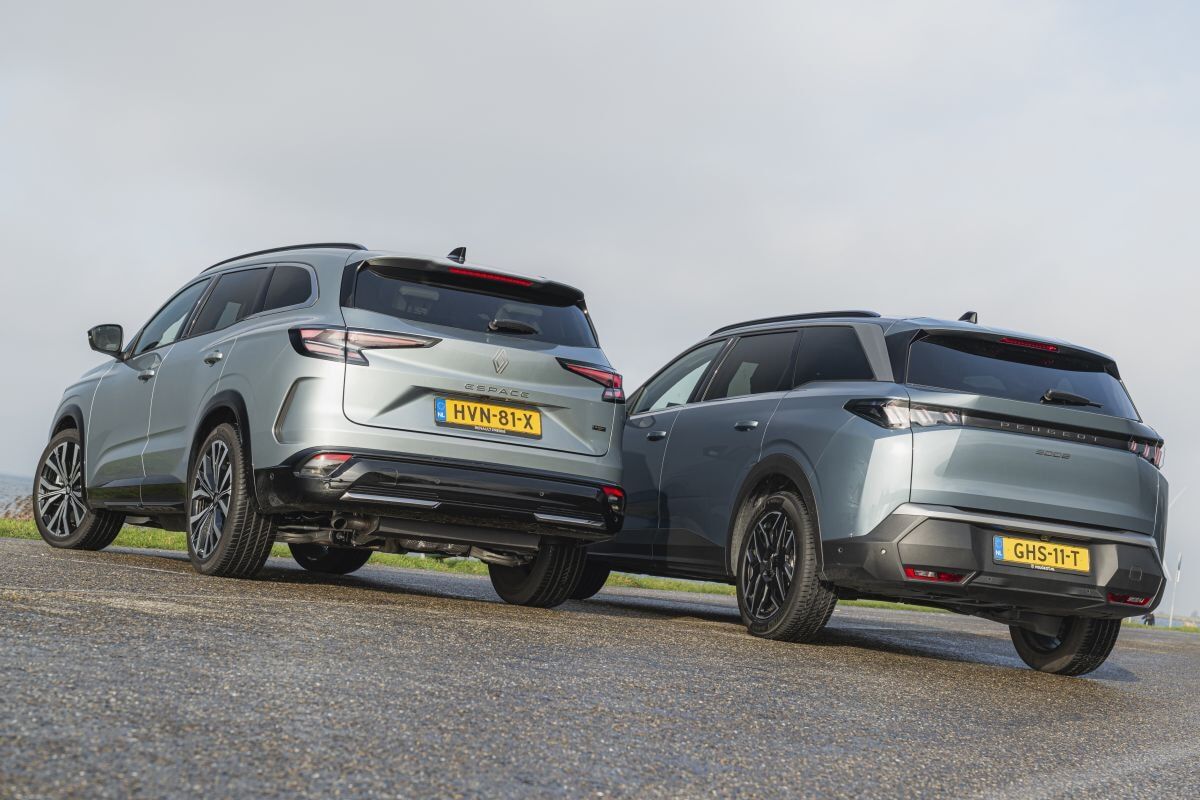
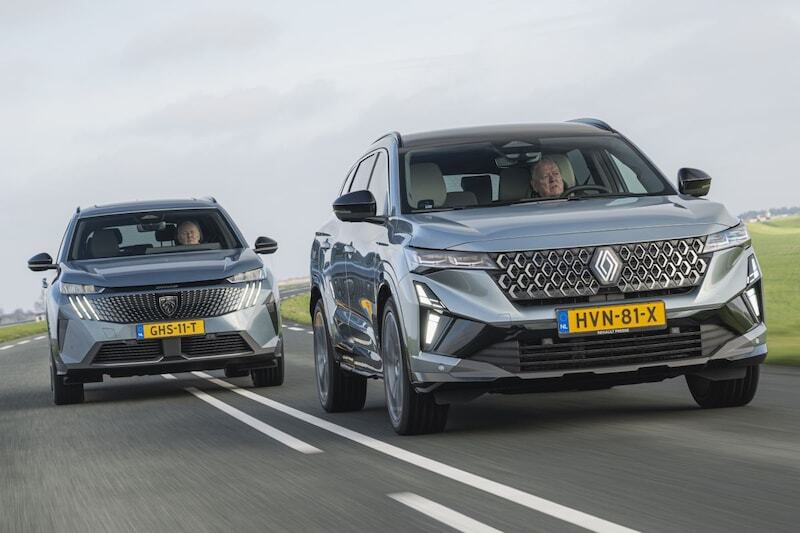
To offer seating for seven people, a car usually has to be quite large. The fuel consumption is then also usually considerable. Yet it can be different. The renewed Renault Espace and the still fresh Peugeot 5008 promise seven seats and consumption of no more than 1 in 17.5.
Not so long ago, a seven-seater was often an enormous SUV, an MPV, or a converted van. Quite disparate bases, yet they always had something in common: the fuel consumption was sky-high. With the rise of the (mild) hybrid powertrain, that has changed fundamentally. Instead of settling for at most 1 in 10, you can now go one and a half to two times further on a liter of petrol. Moreover, the traditional MPV and converted vans have pretty much died out. The SUV has survived, but it doesn’t necessarily have to be enormous these days.
Space for persons six and seven is disappointing
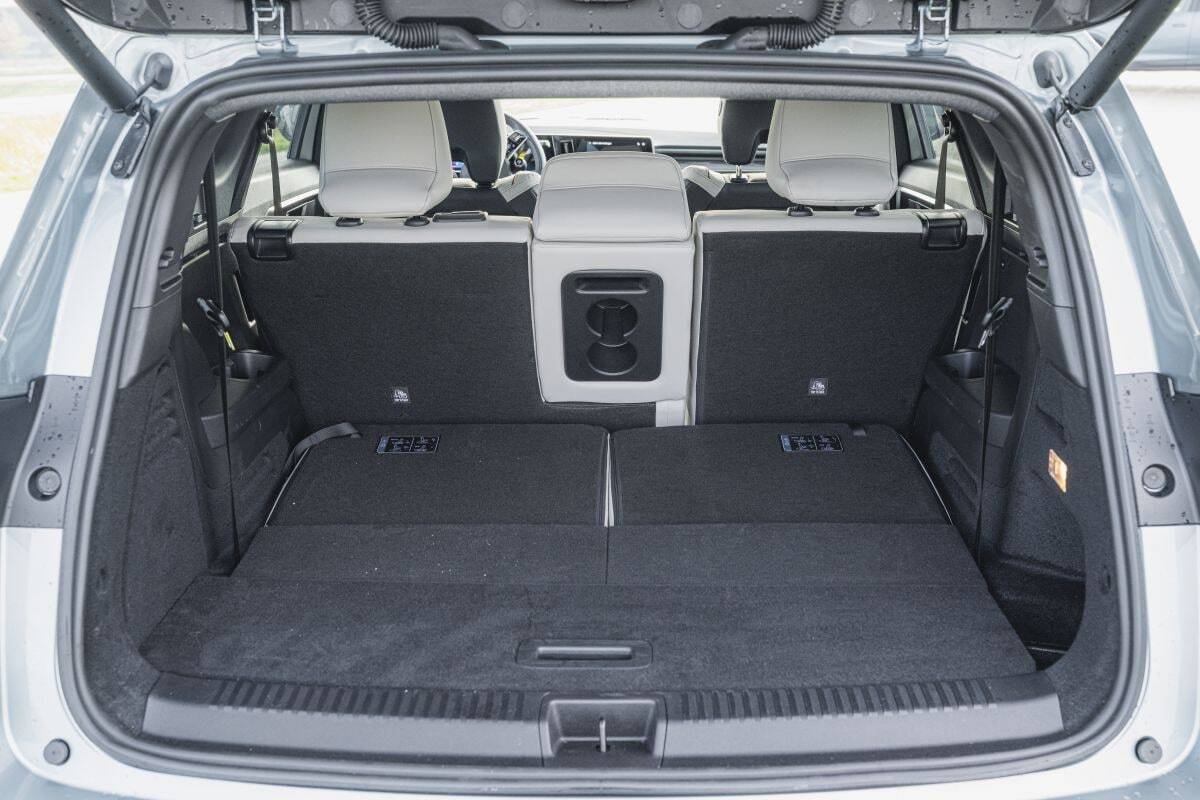
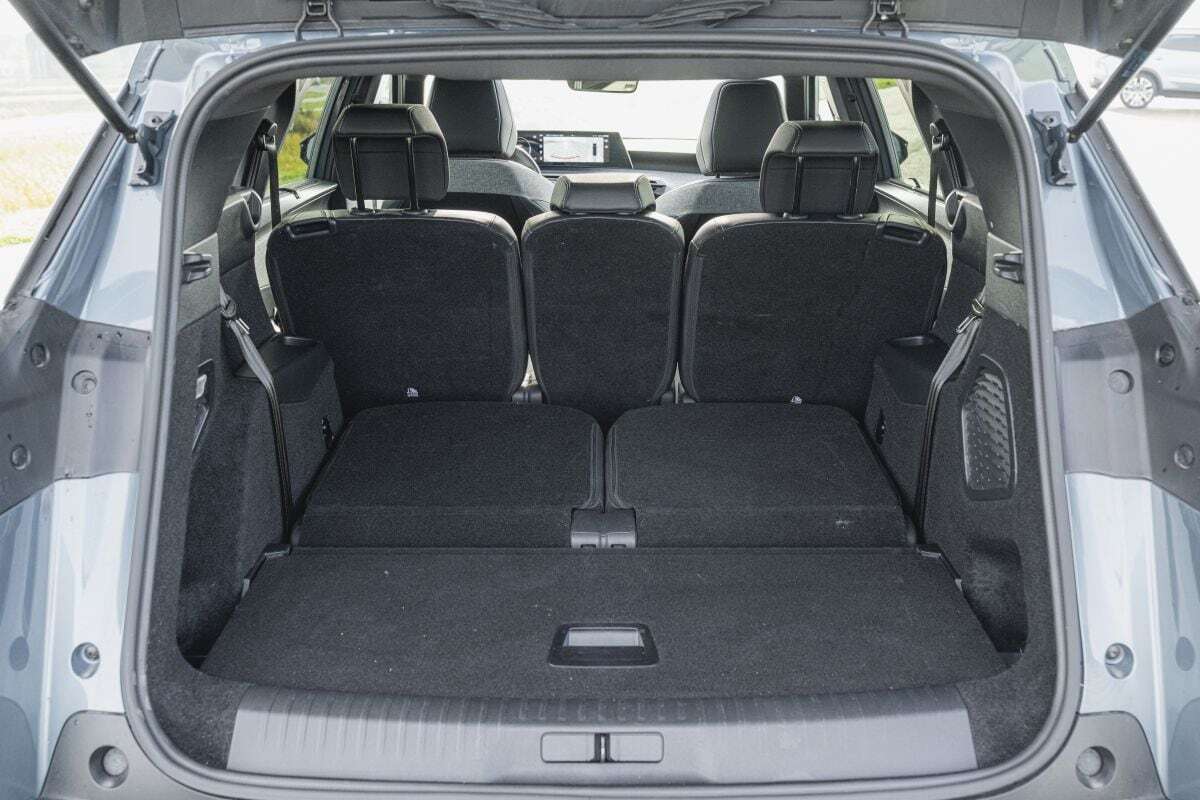
Although, if you stand next to the renewed Espace and the still fresh 5008, they are indeed cars of considerable size. Especially the 5008, which extends a few more centimeters in every dimension than the Espace. This also translates into more interior space. For both the Espace and the 5008, you should primarily view them as a five-seater with two emergency benches rather than a full-fledged seven-seater. On the third row, adults are quite cramped, and taking a seat in that third row also requires an exercise in flexibility.
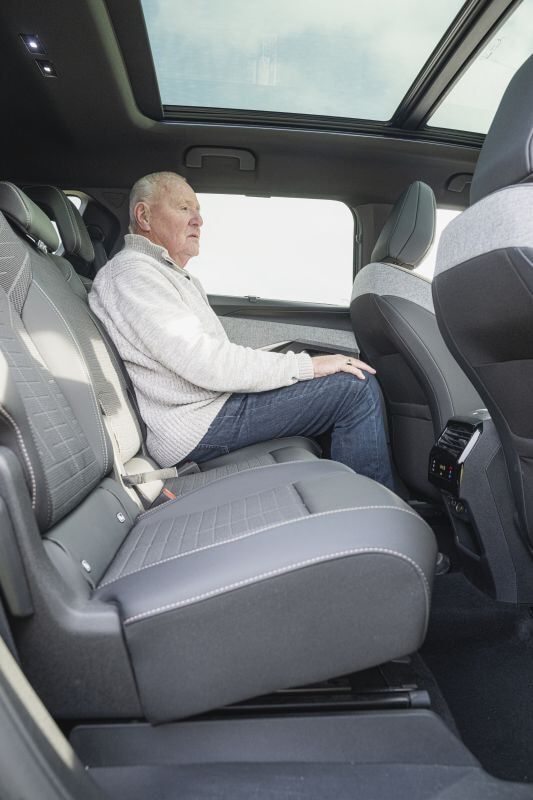
Nevertheless, it’s more feasible in the 5008 than in many competitors in this category. Especially if the passengers in the second row cooperate a bit. That second row can be slid in two parts, and the backrest even has three elements that are independently adjustable. A touch of MPV, then, on board the 5008. The second row offers plenty of space, so you can easily move the bench forward a bit to somewhat relieve the two rearmost persons. This way, you can travel comfortably with seven people for a longer period.
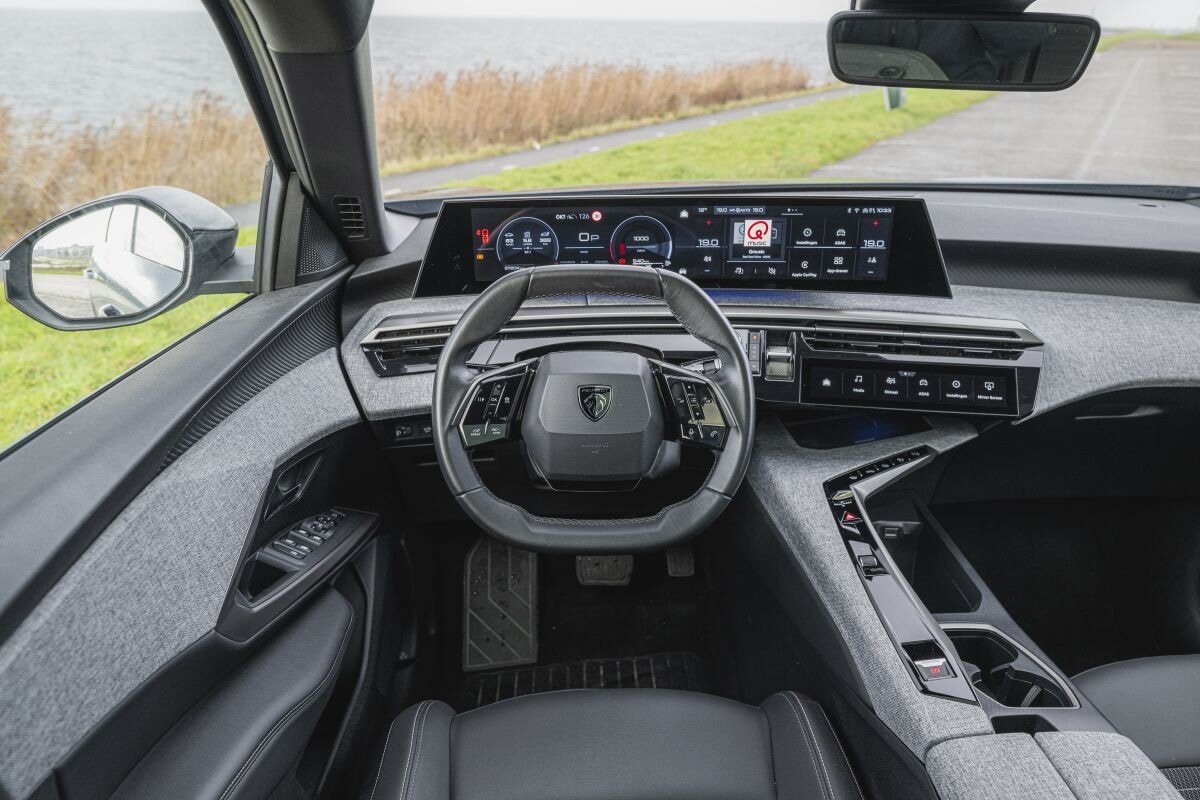
Up front, Peugeot has paid a lot of attention to designing and building the interior. The materials are well above average for this segment, and it all looks fresh and beautiful. Unfortunately, the ergonomics are not of the same level. You can set a lot of things yourself in the multimedia system, which saves a lot of hassle, but it all functions too slowly for a modern car. Moreover, the physical buttons that are present often don’t work directly on the first touch. In addition, you should definitely sit in it thoroughly before making a purchase. For some people, a comfortable seating position is easily found; others incessantly adjust the very small steering wheel.
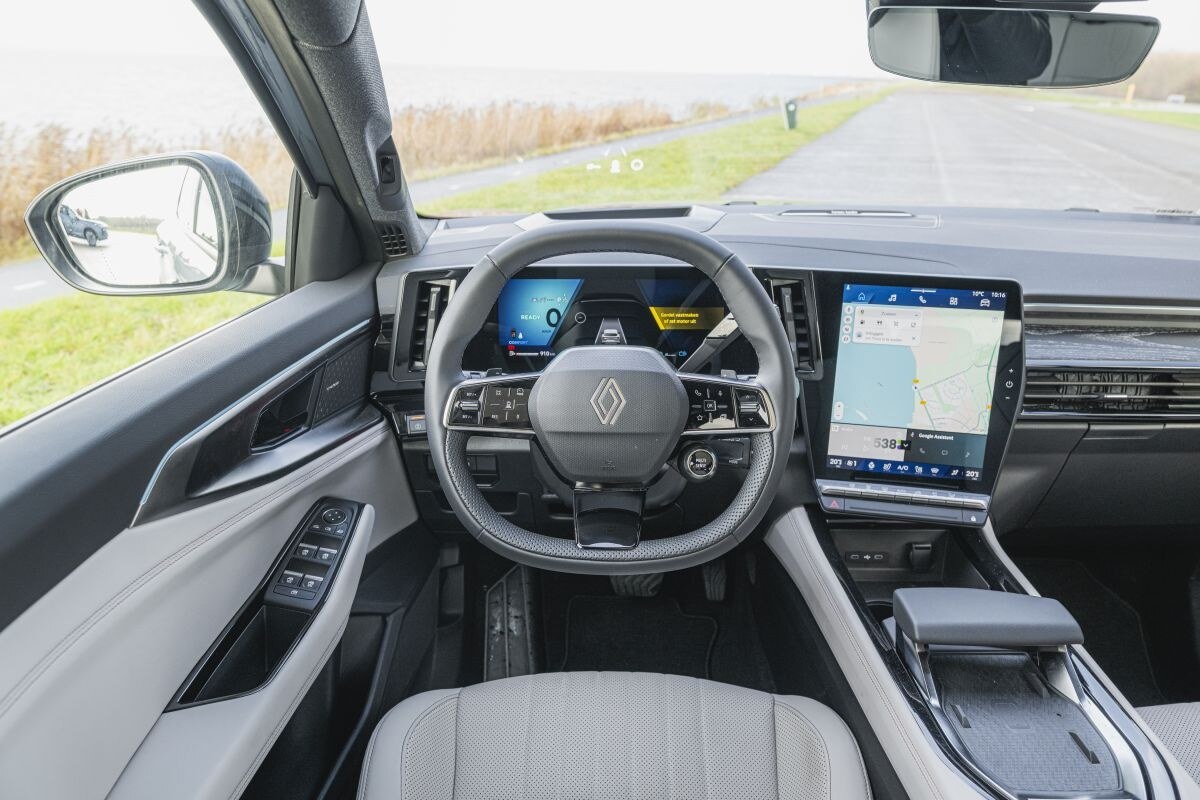
In that respect, the Espace is a relief. Google is responsible for the infotainment system, and although you might have reservations about it from a privacy perspective, the Americans certainly know what a user interface should look like. You can set little yourself, but it has far fewer layers and works considerably faster. That’s much less frustrating. However, you occasionally grab the wrong lever because it’s quite crowded to the right of the steering wheel. Especially if you want to quickly turn around in a street, the windshield wipers often turn on unintentionally, and the transmission is still in D.
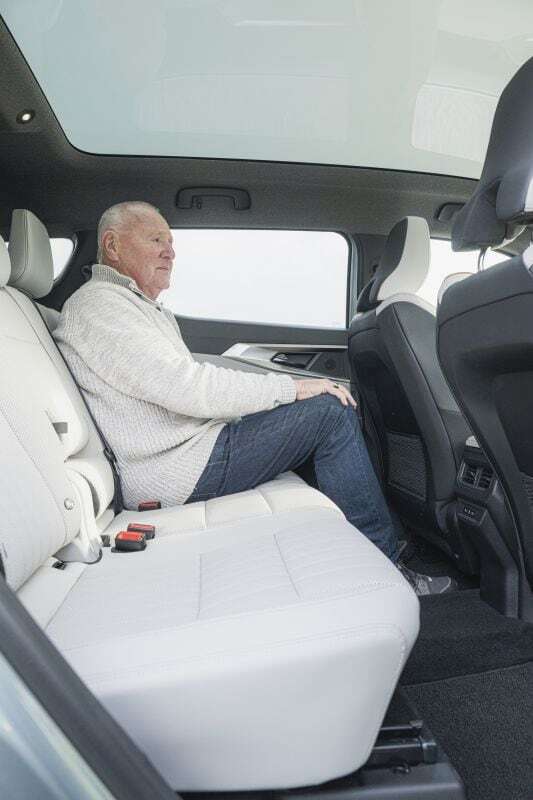
Like the Peugeot, the Renault has a sliding rear bench, but due to its smaller external dimensions, everything is a bit more cramped. That doesn’t make much difference for passengers in row two, but for the sixth and seventh occupants, the space is very limited. Moreover, with all rows in use, even less space remains than in the Peugeot. Fortunately, the Renault has a handy recess under the cargo floor to accommodate the parcel shelf. Still, it doesn’t seem to us that it should have almost as much space as the passengers in the rear row.
Not all hybrids are created equal
We already mentioned the rise of the (mild) hybrid powertrain, and it now comes in many shapes and sizes. In the case of the Renault Espace, it concerns the rather complicated full-hybrid powertrain found in more Renault products. In principle, every hybrid is naturally two powertrains in one, but Renault takes that very literally. On one side, there is a 130 hp 1.2 three-cylinder turbo with a four-speed gearbox that shifts by having a small electric motor relieve the tension from the powertrain. On the other side is a larger, 69 hp electric motor that has its own two-speed gearbox. As long as you take it easy, the two powertrains can complement each other perfectly, and the Espace is economical and smooth. At the same time, you have a system output of 200 hp, so if it really has to, the Espace is quite brisk for a rolling apartment.
Unfortunately, the powertrain then no longer feels so beautifully homogeneous. For example, you hear the combustion engine revving while you feel the electric motor shifting. It also happens that the 1.2 generates energy for the electric motor. It does so at such a high rpm that your passengers wonder if it isn’t time to shift up. In short: take it easy, and you have an excellent companion. Thanks to the paddles behind the steering wheel, you can also make maximum use of the recuperation of the large electric motor, and then the Espace can be truly very economical with almost 1 in 18.
Nevertheless, the Peugeot 5008 with its more conventional powertrain comes close. Here too, a 130 hp 1.2 lies in the front, but it receives support from a 29 hp electric motor that drives the front wheels through the same seven-speed dual-clutch automatic transmission. The system output is 145 hp. Very attentive readers will notice that the car in the photos still has an ‘old’ version of this powertrain with a stated system output of 136 hp. Since that makes no difference according to the brochure, we assume the figures of the new version.
In essence, the Peugeot strikes a balance between a ‘real’ hybrid and a mild hybrid, where the electric motor only serves as a starter motor and light support. So you can drive it electrically less often and for shorter periods than in the Espace. Still, the combustion engine does indeed completely shut off occasionally up to a speed of 60 km/h. In practice, the 5008 is only slightly less economical than the Espace. However, the performance is of a distinctly different caliber. An output of 145 (or 136) hp is very modest for a car of this size. Even without cargo, the 0-100 sprint is very leisurely, let alone if the car actually carries six people and/or some luggage. At full throttle, it’s all less confusing than in the Espace, but the 5008 is also considerably slower.
Both Peugeot and Renault aim for comfort
Quite a shame, because the Peugeot chassis is remarkably good. On board the 5008, you won’t find adaptive dampers, four-wheel steering, or air suspension, yet it’s by no means a makeshift solution. In fact, it drives really well. Comfortable and supple in the springs and sufficiently damped to ensure that the mass doesn’t drive you instead of the other way around. The only discordant note in the whole is the steering. Due to the combination of quite a lot of power assistance and a very small radius, you lack some accuracy. As a result, you sometimes have to correct a bit in a bend, which makes it harder to get through smoothly.
You have the same ‘problem’ for a different reason on board the Espace. While it does have a normal-sized steering wheel, the rear axle steers along here. Or against, depending on the speed. This benefits maneuverability. But it also contributes to occasionally turning a bit more to the left or right than you initially intended. Fortunately, you can set the system in a dozen positions, so you can significantly mitigate the effect. Once you’ve found the setting you like, the Espace drives even slightly better than the Peugeot. The comfort is at the same level, but the Espace is a bit more agile and, thanks to the four-wheel steering, manages to push its substantial size more effectively into the background.
The Espace’s four-wheel steering is on every trim, except for the cheapest. That one is called Techno, and above it is a somewhat sportier version called Esprit Alpine, and a more luxurious variant called Iconic. We are dealing with the latter here, and it costs €53,990 without further options. In the case of our test car, quite a bit is added. A gray paint job for €900, a package with an extensive audio system, and the special electrochromatic panoramic roof, which lets sunlight in or out at the push of a button. Then there’s another package with adaptive lighting and a head-up display, and then you have an extremely complete Espace, which also costs €58,390. That’s serious money.
Even more serious than the Peugeot 5008, which, including options, is registered for €51,529. It hardly makes any significant omissions when it comes to its equipment either. Okay, you have 19-inch instead of 20-inch wheels, the panoramic roof is conventional instead of electrochromatic, you don’t have seat heating but only steering wheel heating, and you have to do without a real head-up display. But to say that the 5008 is bare: no. You can also look at it this way: it fits seven people. If you calculate the cost per person, it’s not too bad at all. Because, of course, the intention was to be economical with seven people.