Good morning dear reader, and by this means also the very best wishes for 2026. And of course also the emphatic wish that you arrive safely at work today, although this morning I got the idea that for most of you it will be a work-from-home day today.
I simply made it from my South Holland hometown to the capital’s editorial office in roughly an hour, fairly consistent with expectations for a Monday morning without snow. I made the trip in a Skoda Elroq on all-season tires, so in that respect, we start 2026 like many others. The Skoda performed admirably and plowed its way, pre-heated and all, through the heavily falling snow, without causing me any anxiety.
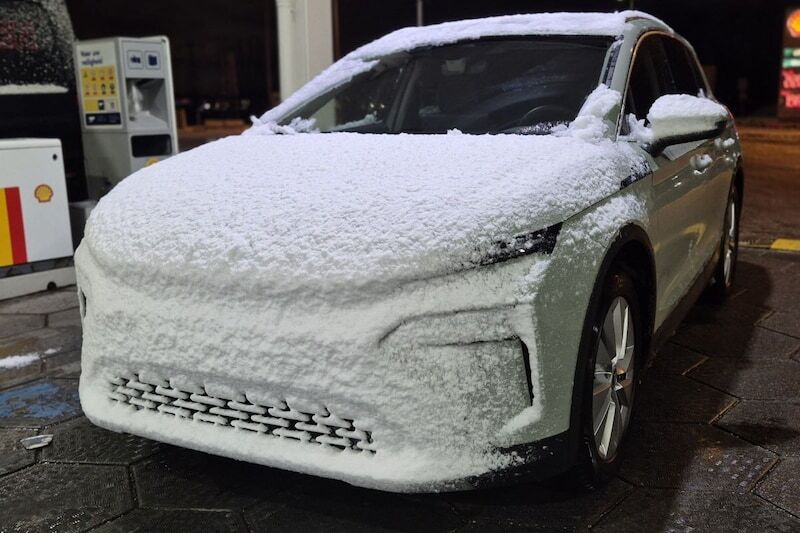
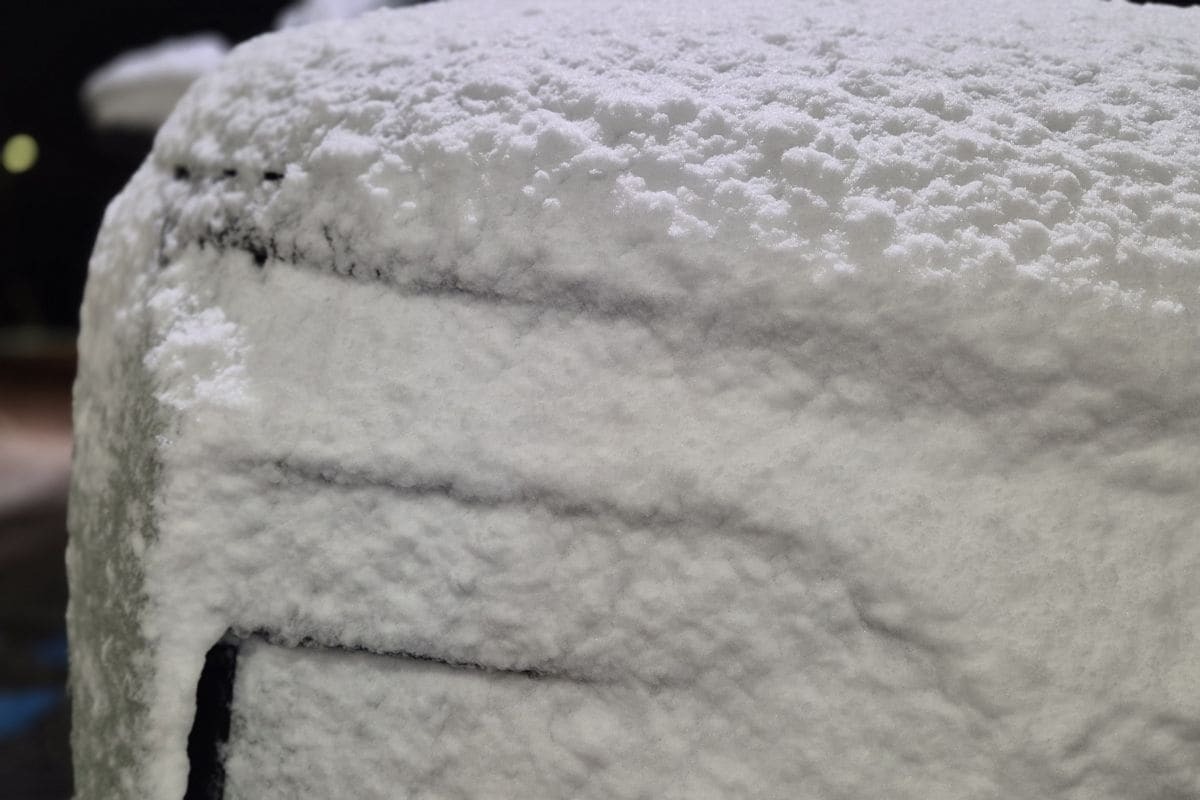
However, when the streetlights around Woerden briefly failed, I was started for a moment. For the Skoda, it simply remained dark, as if I were one of those ‘idiots’ driving through the winter landscape without lights. However, this turned out not to be the case, and a quick stop at the petrol station confirmed what I secretly already suspected: the headlights were covered under a thick layer of snow, just like the rest of the nose. This is one of the few disadvantages of modern LED lighting, which, unlike halogen (and to a lesser extent xenon), hardly gets warm, and is therefore unable to melt snow and ice off the headlight glass. For the driver, the headlights in this condition are actually useless, and for bystanders, their effectiveness also greatly diminishes, as the beam only partially penetrates the centimeter-thick layer of snow.
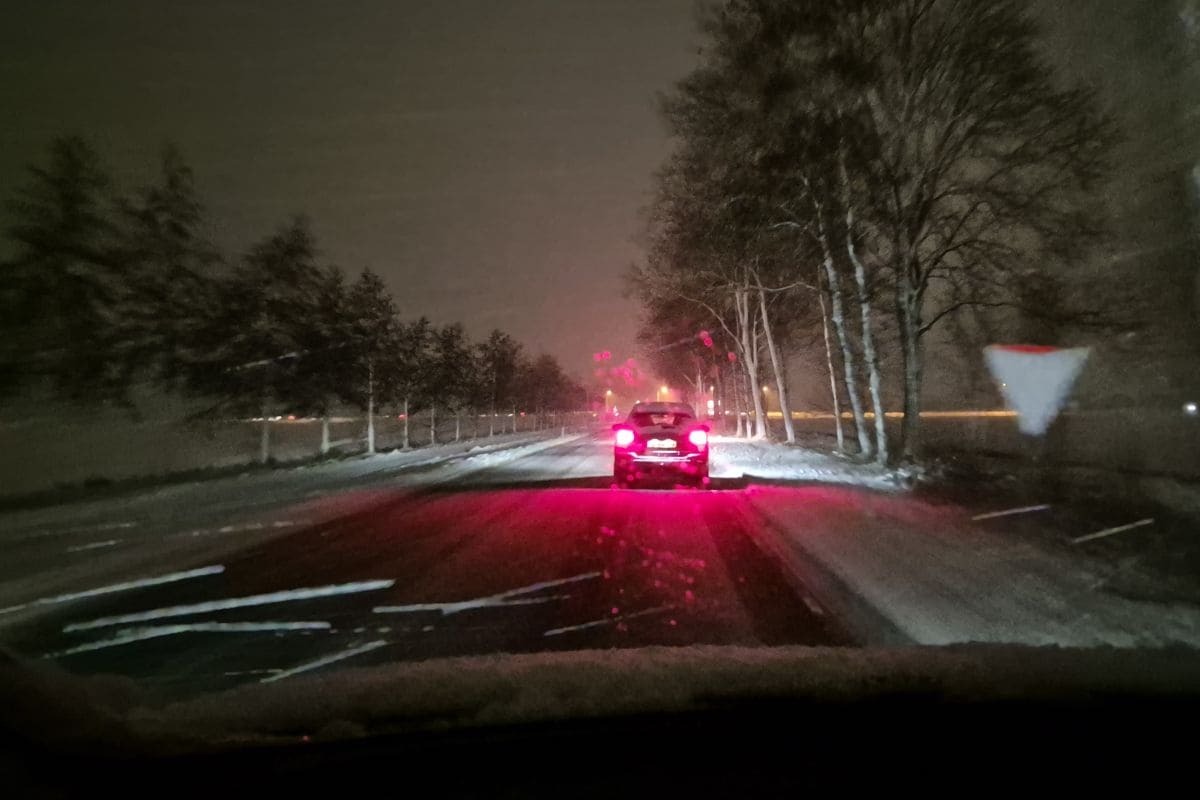
Of course, this problem is very manageable in a country like the Netherlands. It rarely snows here, and when it does, the roads are well lit in most places. If I lived in a country where this weather pattern occurred more frequently, however, I would find this quite annoying. Driving in a snowstorm, I rarely feel like manually removing snow from my headlights, as it is also a very temporary solution. Wouldn’t it be an idea to develop headlight heating for such cases, whether or not linked to rear window heating, exterior temperature, light sensor, and rain sensor?
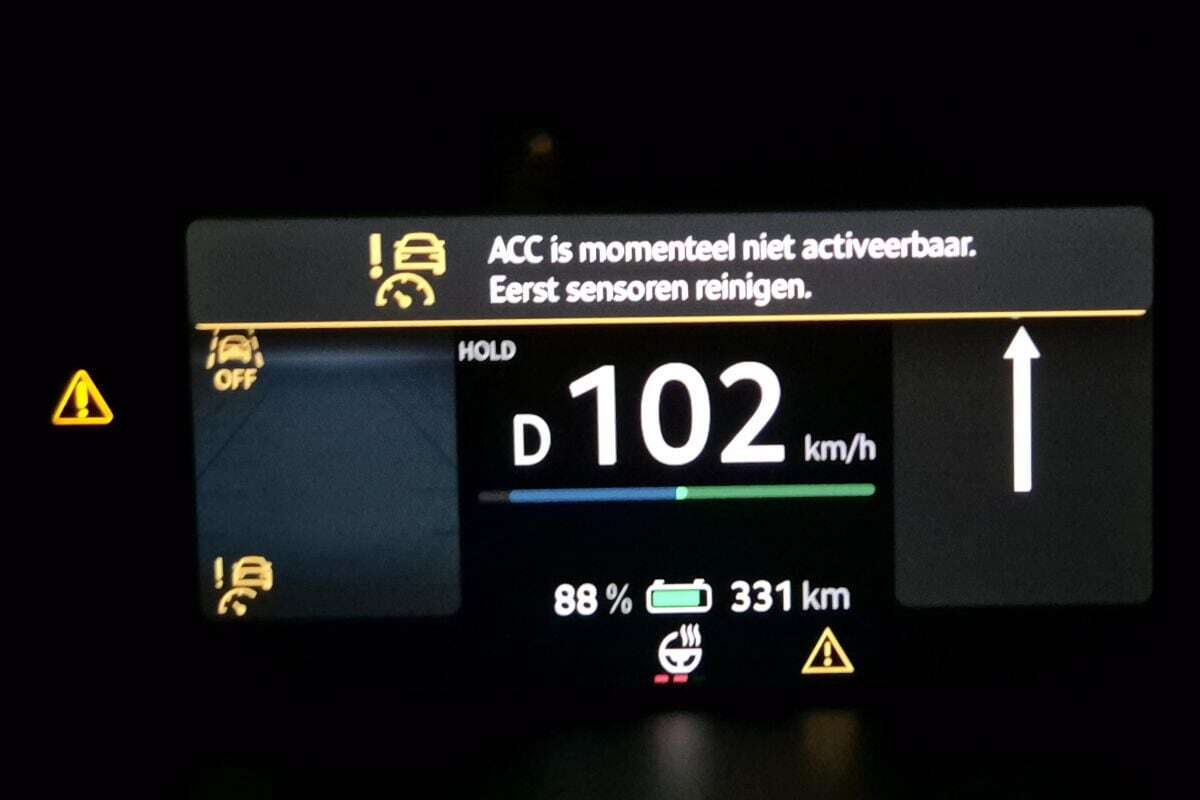
Moreover, in such a snowstorm, it becomes clear in more areas that modern technology does not always go hand in hand with winter weather. During the drive, more and more orange warning lights illuminated on the dashboard, indicating that the car could no longer ‘see’, which also meant that adaptive cruise control stopped working, and Skoda unfortunately does not offer an option to then use regular, non-distance-keeping cruise control.
Now, it may seem like I’m complaining, but I actually find such a snowy drive fantastic. Staring at the flakes alone in your cozy, warm little car, isn’t that wonderfully snug? Even more than in such a modern EV, I’d rather do that in a wonderfully steaming petrol car, which initially leaves you in the cold but slowly warming up feels much more ‘alive’ than such a warm, yet chilly electric car. Rationally, this is of course inexplicable, but cars are simply not just rational. Or am I crazy?