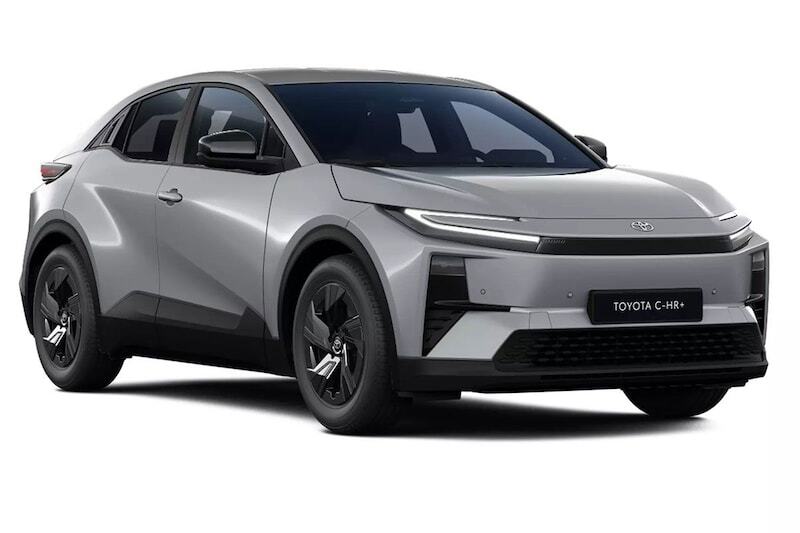
The Toyota C-HR+ has a significantly higher starting price than a Skoda Elroq, but purely in terms of performance, price, and equipment, it often turns out to be a better deal.
If the success of the Skoda Elroq were a guarantee for cars produced according to the same recipe, Toyota dealers might as well start brewing coffee for C-HR+ customers. The Japanese model is available from €37,995, but should you go for it?
Toyota C-HR+ Dynamic Limited Edition – €37,995
Take an existing model, make it roughly 15 centimeters shorter, adjust the design slightly, and ask significantly less money for it. This recipe was unknown in the automotive world until recently, but the Skoda Elroq shows that it can work very well. The difference between an Elroq and an Enyaq is largely limited to luggage space and price, with the former being an acceptable sacrifice for many, and the latter saving thousands of euros. The Toyota C-HR+ was created using more or less the same recipe, as it is essentially a shortened bZ4X. At the same time, the body was rounded off a bit more, and the C-HR+ – which has nothing to do with the regular C-HR, by the way – got a differently designed rear.
The price difference here is less significant than with Skoda, where the cheapest Elroq is a good €8,000 cheaper than the cheapest Enyaq, and for versions with the same battery pack, you still save €5,000 by opting for the shorter variant. Toyota keeps the difference at €2.00, meaning the starting price of the C-HR+ is just under €2,000. With the C-HR+, you immediately get a version called ‘Dynamic Limited Edition’, a promising name when you consider that a bZ4X in Dynamic trim is significantly more expensive. Let’s see if those high expectations are justified.
Limited Choice
The Toyota C-HR+ is currently available in three trim levels. The second trim level, at €43,995, is much more expensive than the Dynamic, which makes it quite striking that the two are barely distinguishable from the outside. They have the same dark wheels, the same standard gray color, and the same lights and bumpers, with privacy glass for the First Edition as the only visible difference. The main trick of the First Edition is not in its equipment (although there are small differences), but in its powertrain. Those who want a larger 77-kWh battery and 607 kilometers of range must switch to this more expensive version.
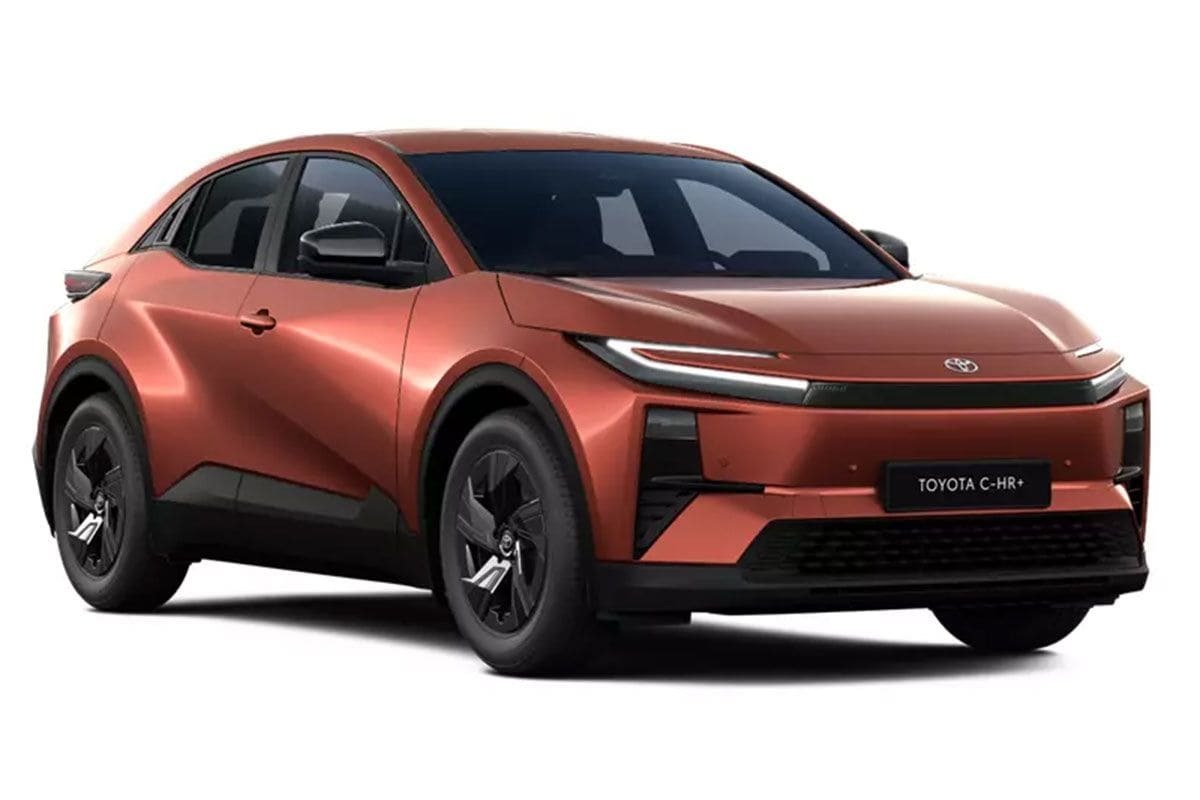
The even more expensive Executive is again the only version exclusively linked to a dual-motor all-wheel-drive system, which somewhat limits C-HR+ buyers’ freedom of choice for now. This also applies to colors: besides the standard gray, there is black, pearl white, the greenish ‘Mineral’, and ‘Metal Oxide’, an orange-like hue. The options list, true to Japanese custom, is already very short and essentially only includes paint colors and accessories. This makes the standard equipment all the more interesting, as further customization is simply not possible.
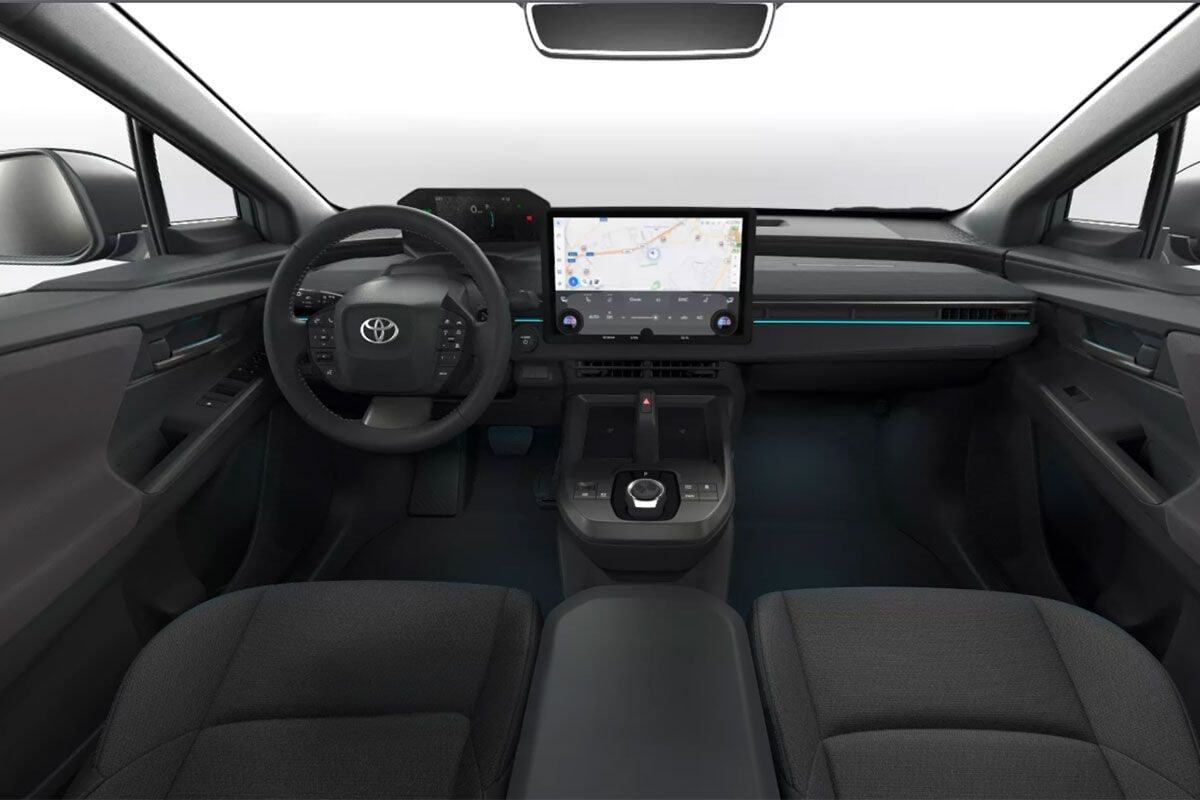
Fortunately, things look good in that regard for the cheapest C-HR+. While the Dynamic Limited Edition does without an electric tailgate, it otherwise essentially has all the necessary and less necessary luxuries on board. LED lighting all around, keyless entry, adaptive cruise control, dual-zone climate control, seat heating, steering wheel heating, two wireless phone chargers, a whole battery of safety systems, a 14-inch touchscreen with navigation, and even a heat pump make the C-HR+ a complete car as standard, where you might only miss pure luxuries like electric seat adjustment, a thicker audio system, and a panoramic roof. With this equipment, the C-HR+, despite its higher starting price, is still a good offer alongside the Skoda Elroq, which costs €39,990 for comparable performance and equipment (Elroq 60 Business Edition) and, on paper, consumes more energy, has less range, and no heat pump. But it does offer more luggage space, despite that truncated rear.
The Author’s Choice
Given the large price difference and good equipment, I would definitely go for the basic version of the C-HR, which, with a promised 13.5 kWh per 100 kilometers, also offers more than decent consumption, weighs less than the other versions, and with 456 WLTP kilometers, provides more than enough range for most situations.
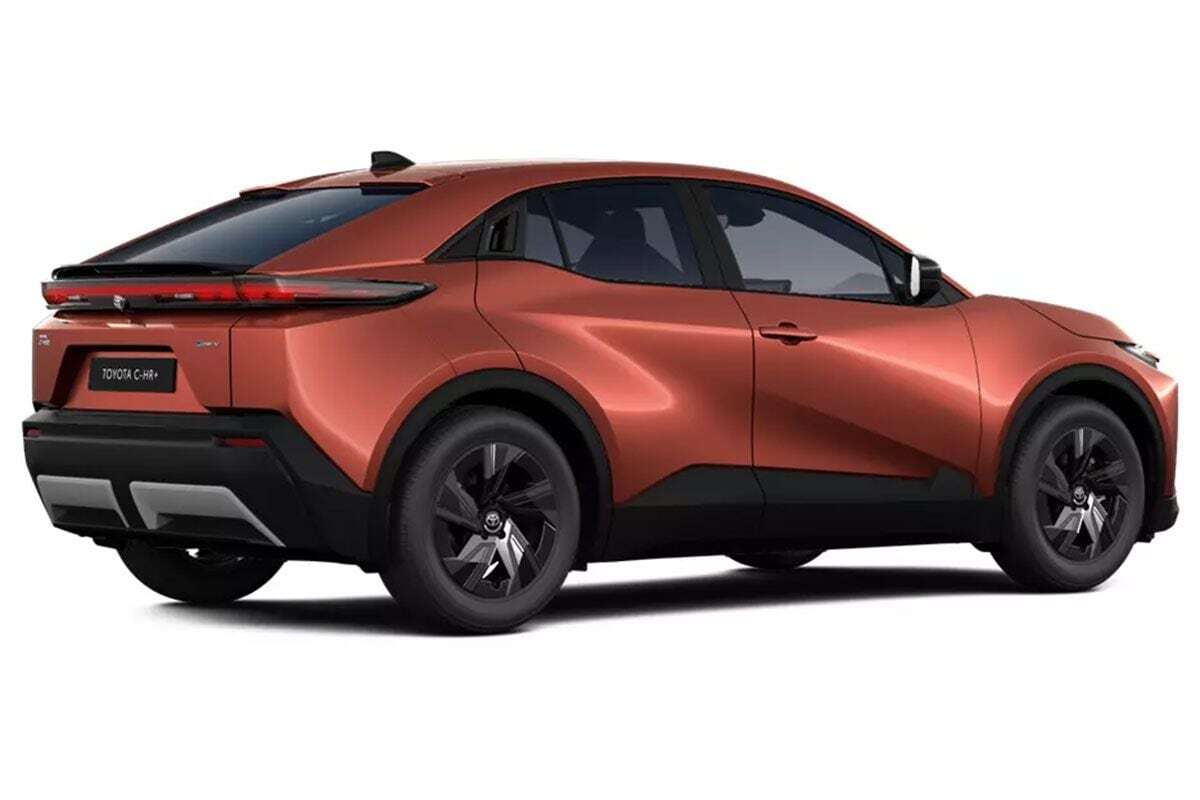
I will opt for the most striking color – Metal Oxide, €1,350, ouch! – and out of curiosity, I’ll take a look at the accessories list, where the subtle mud flaps are selected for €221, and I look with amazement at the option of a sticker warning that the car can go a maximum of 160 km/h. The price for that completely useless sticker: €77, and that for a car that, in its basic form, only reaches a maximum of 140 km/h…