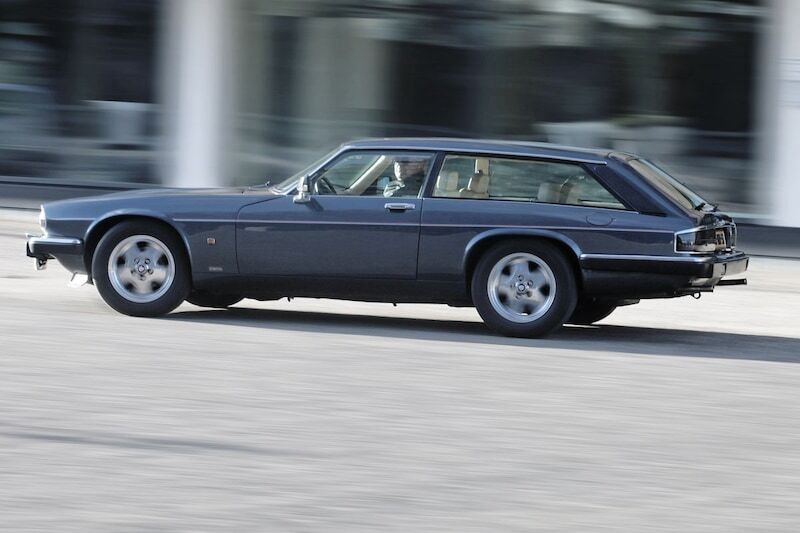
Of the 115,000 XJSs, 67 were built as shooting brakes, or 0.00058 percent. The car, dubbed the XJS Eventer after the substantial cosmetic intervention, is equally visible on Dutch territory.
The XJ-S can be seen as a cat with nine lives. No one thought that the successor to the famous E-type would remain in production for so long. From the moment it was unveiled in 1975 until its glorious end in 1996, there were always moments when Jaguar threatened to pull the plug. But each time, the XJ-S surprised friend and foe alike with yet another update, whether in the form of a facelift, a convertible, a new engine, or fresh technology. Even the name was modernized, albeit very subtle: the hyphae between the J and the S disappeared. It polarized back then, and even almost thirty years after production stopped, it still does. The only difference is that it is now widely appreciated as a classic. During its extended career, the XJ-S repeatedly fell prey to enthusiasts who either brewed a convertible or used an example as the basis for a concept study. But no conversion could match that of Lynx: it astonished friend, foe, and then-Jaguar CEO Sir John Egan with the Eventer.
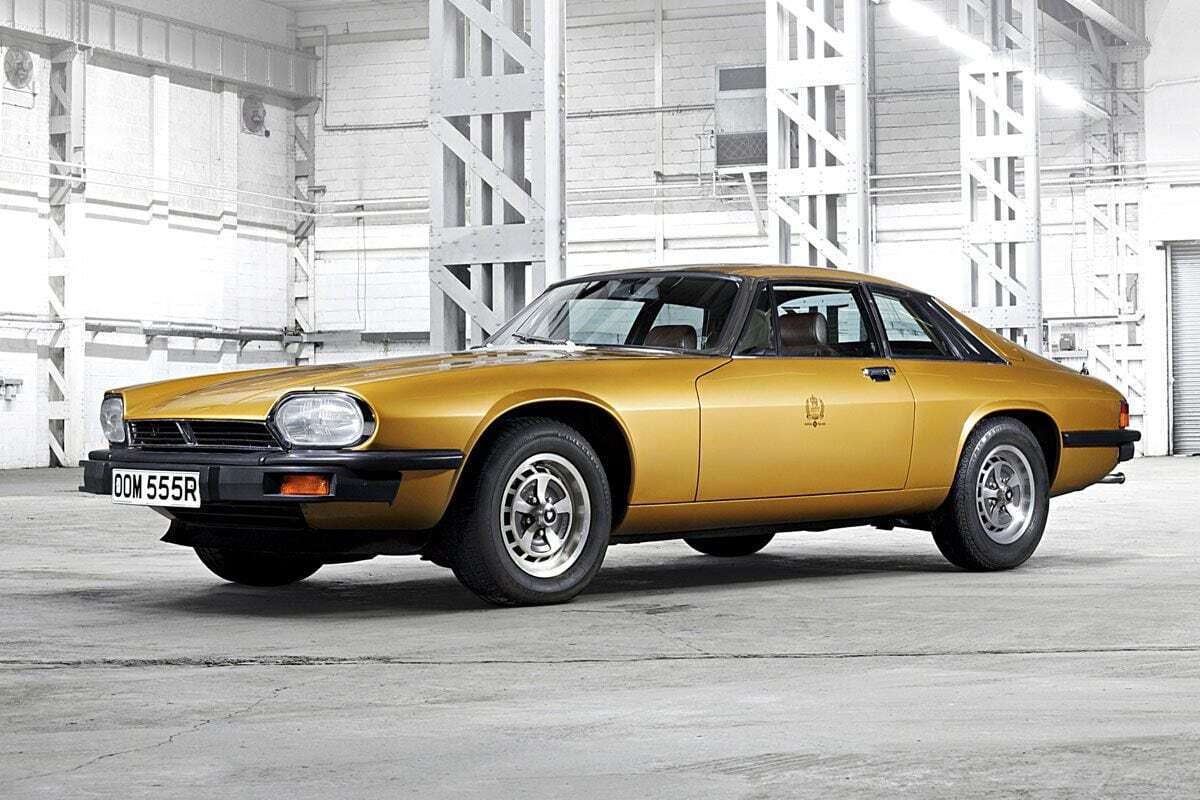
Press was not amused about XJ-S
The Jaguar XJ-S was born under a bad sign. In the midst of the oil crisis and plagued by numerous strikes, William Lyons and his people had to come up with a successor to the already defunct E-type. All that delay made it a long time coming, but in 1975 it was finally presented. The fact that the XJ-S was not a pure sports car but a Gran Turismo did not sit well with the press. The C-pillar, the black bumpers, and the lack of embellishment in the interior also failed to garner approval. The public hesitated too, but gradually gave in. Not in large numbers, but it was worth keeping the XJ-S alive for a long time, even when only a thousand or so left the old factory halls each year. Every time sales threatened to stall, Jaguar made another update. The XJ-S received a number of facelifts, a convertible was introduced, the bumpers were changed three or four times, and even the C-pillar underwent surgery. The powertrain was also upgraded with an improved V12, and a six-cylinder in-line engine was added to the range. Halfway through its long career, something remarkable happened. In 1982, particularly on the sacred ground of Brown’s Lane, the Lynx Eventer, a shooting brake avant la lettre, was unveiled. The press fell head over heels for the bold appearance and at the same time wondered why Jaguar had not picked up this obvious gauntlet itself. Among the audience was the man who could have made a decision about this. It was then-Jaguar CEO Sir John Egan. But he, of all people, was not amused with the shooting brake. Was it because he himself did not have the resources to develop such a derivative? The point was that at that time only 1000 XJS’s were being built per year. A shooting brake conversion would be impossible to cover the costs.
Jaguar XJ-S has n ine lives
The timeline of Lynx, like that of Jaguar, shows peaks and deep valleys. Lynx has become known for restorations of classic Jaguar racers, ‘recreations’ of C- and D-types, and conversions of production models, such as the XJ-S. But the company, founded in 1968 in the south of England, started with maintenance and repairs to Jaguar’s circuit cars, such as the C- and D-type. Under its own management, the small company built a ‘recreation’ of the D-type, based on the E-type. It took three years to complete this project, and during the presentation at a trade fair, it attracted the attention of Jaguar. The brand was particularly charmed by the way Lynx gave shape to the recreation: no rivet, switch, or bolt was in a different place compared to the original. This would become Lynx’s trademark. The recreations were true to nature in every detail. It is not for nothing that classic Lynx models now fetch a fortune. Jaguar gave assignments to Lynx. These were usually unique conversion assignments from customers based on existing models, but also the construction of pre-production cars. In short, Lynx and Jaguar had a good relationship. Yet the blood crept in Lynx where it could not go. With the Lynx XKSS – a recreation of one of Jaguar’s most famous state racers XK-SS – the company made a name for itself. It built no fewer than sixteen pieces with leftover D-type parts. From the mid-1970s, a few dozen XJ-C Convertibles also emerged, based on the Coupé version of the XJ. From 1990, the emphasis was on modifications and conversions of the XJ-S, mainly thanks to customer requests. Long before Jaguar itself took up production of the convertible, Lynx offered the Spyder. These were so successful that dozens were ordered in the US but also from the home country. Lynx has changed owners and locations several times, but miraculously the company still exists, as if it also has nine lives. On order, it rebuilds a C-type, a D-type, an E-type or, if desired, even the XKSS again.
Very low, as Lynx he looks even lower
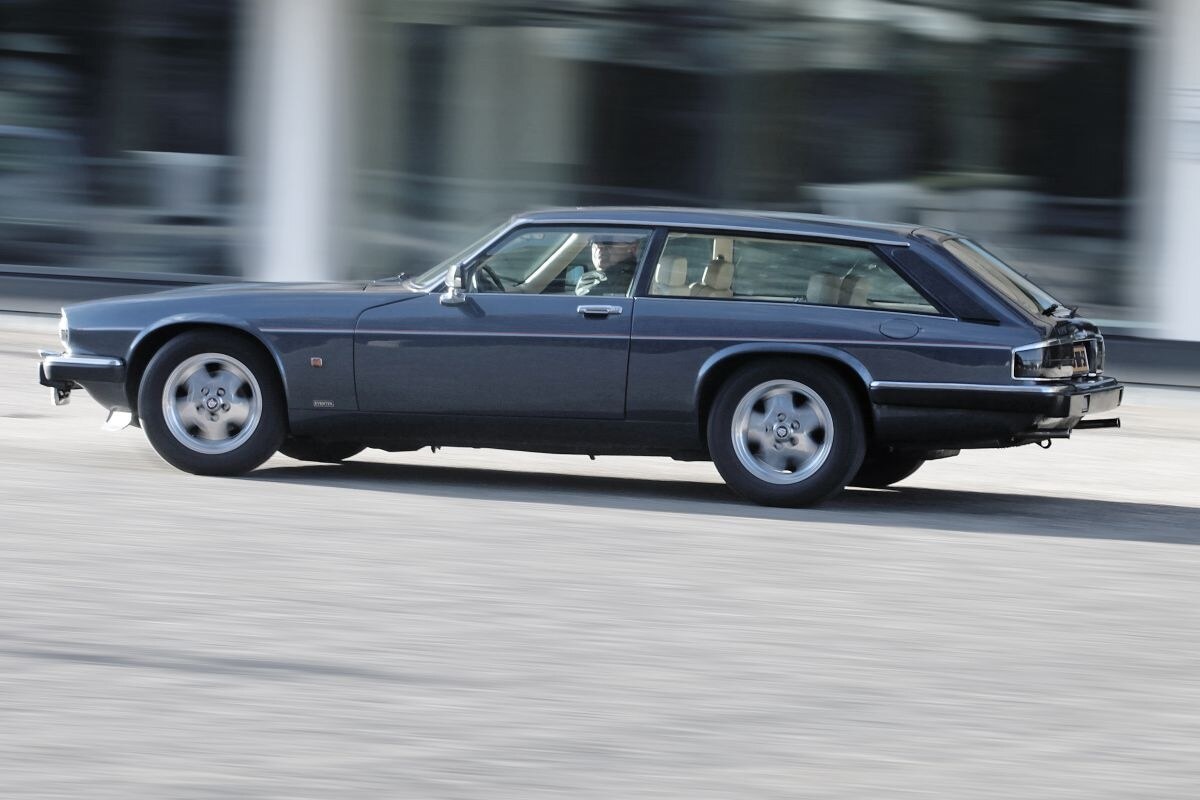
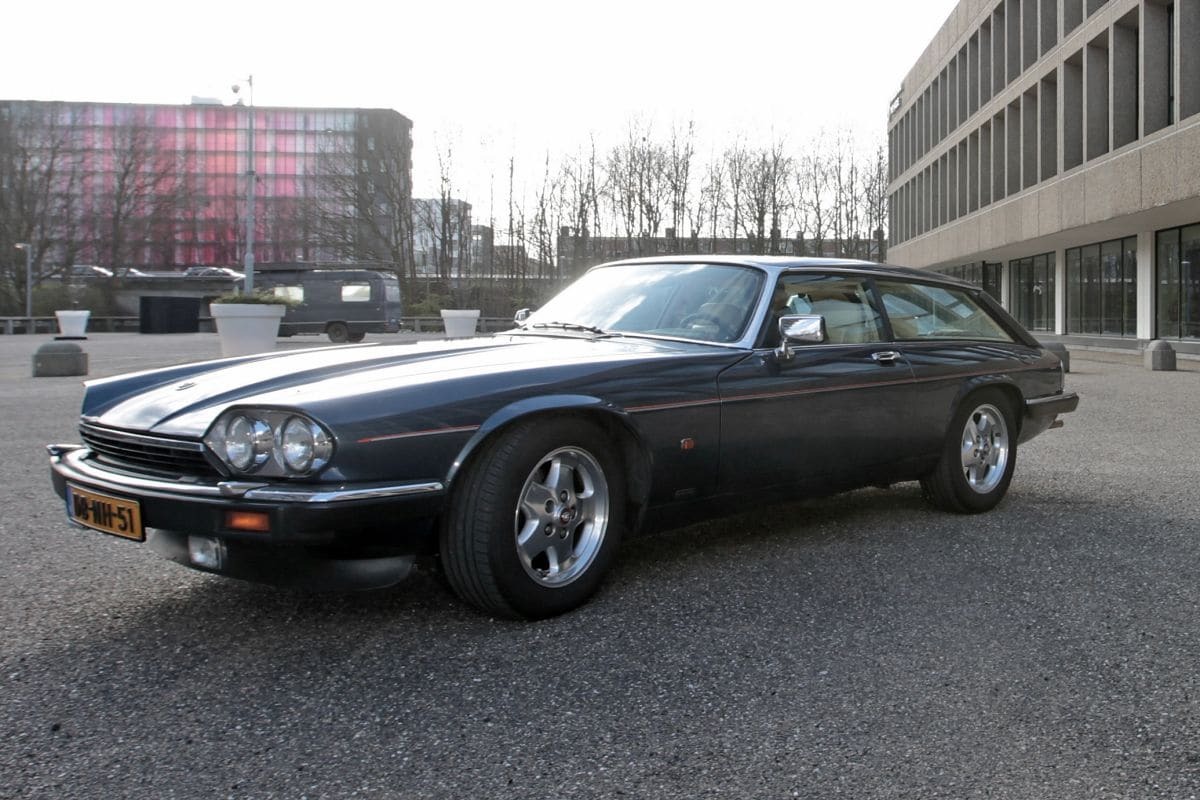
The name alone: Lynx Eventer shooting brake makes your heart beat faster and when the Solent Blue painted car turns onto the parking deck of the Ramada hotel in Amsterdam, I am surprised by the dimensions. In my experience, the XJ-S is a sizable car: wide, low and elongated, just the way a Jag should be. But Lynx has managed to eliminate the bulky posture, without shaving off even a millimeter of the width, height or length. The trick lies in the much longer roofline in combination with the extended side windows that bend down above the rear fenders and the total height of only 1250 millimeters, which makes the Lynx optically shrink compared to the regular coupé and convertible. Now Jags were never known for their height, but as Lynx, an XJS seems to have turned out even lower, like a cat sliding his belly over the ground approaching his prey frighteningly slowly.
Story goes that glass is borrowed from the Citroën Ami 8
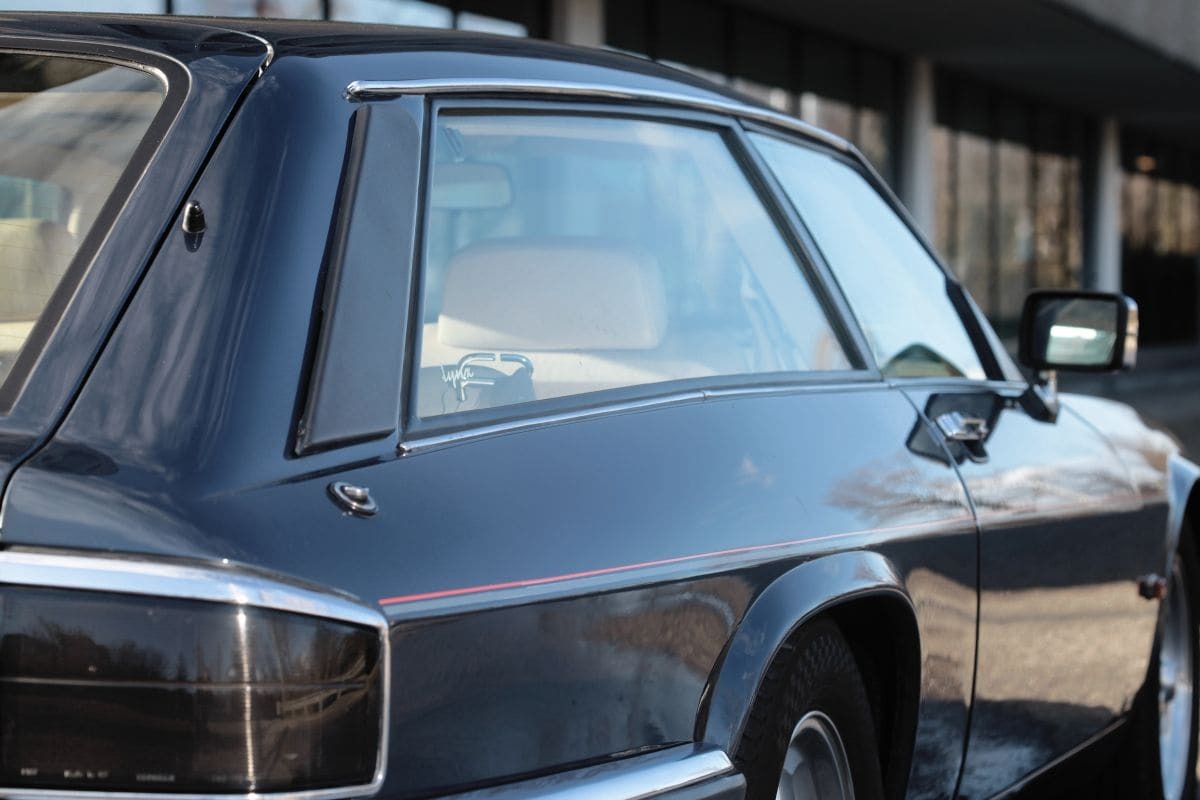
Lynx has never revealed from which other car it borrowed the tailgate, but the story goes that the window in it is borrowed from the Citroën Ami 8. It is striking how beautifully the car is finished, as if it were a factory conversion. Craftsmanship drips from it. Like Lynx has managed to transform the much criticized C-pillar including ‘buttresses’ into a smoothly lined stern. There was even room for the plastic cladding on the C-pillar (which serves as an air outlet) that makes it optically narrower. Because in reality it is a whopper of a C-pillar. Class. A small hiatus with the earlier Eventers are the exterior chrome hinges.
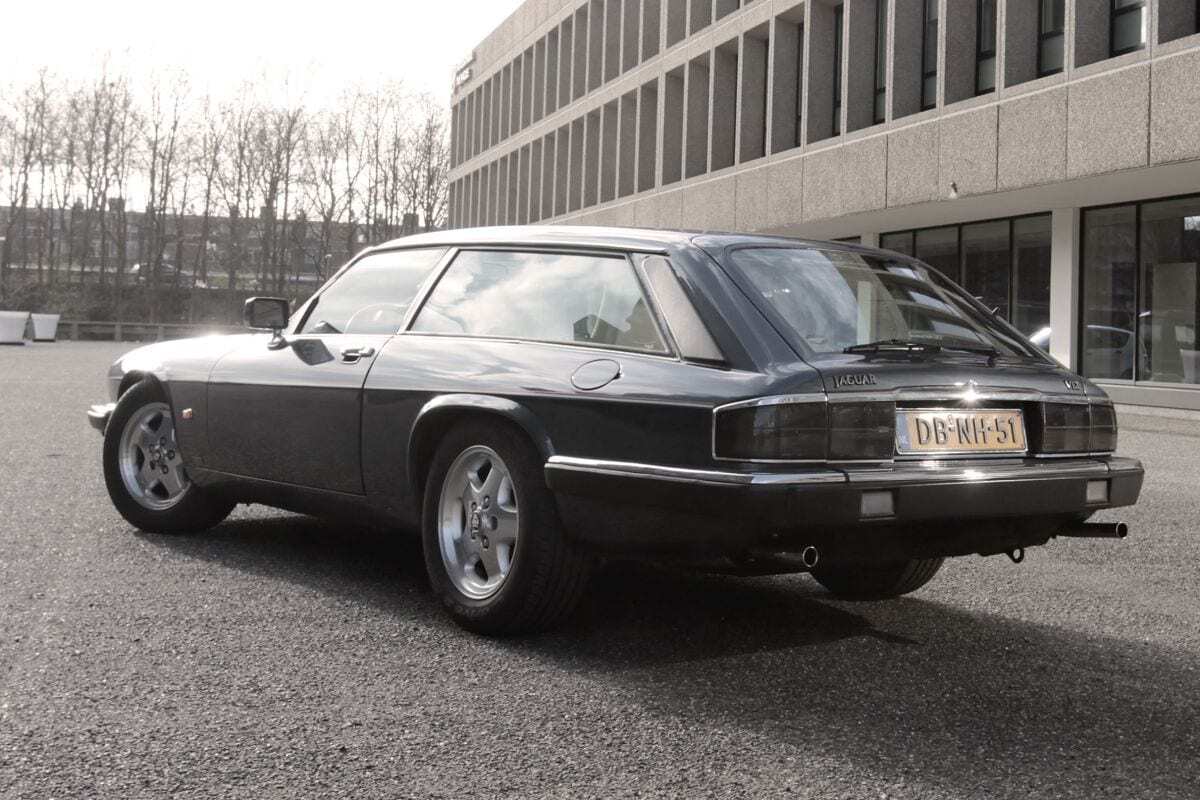
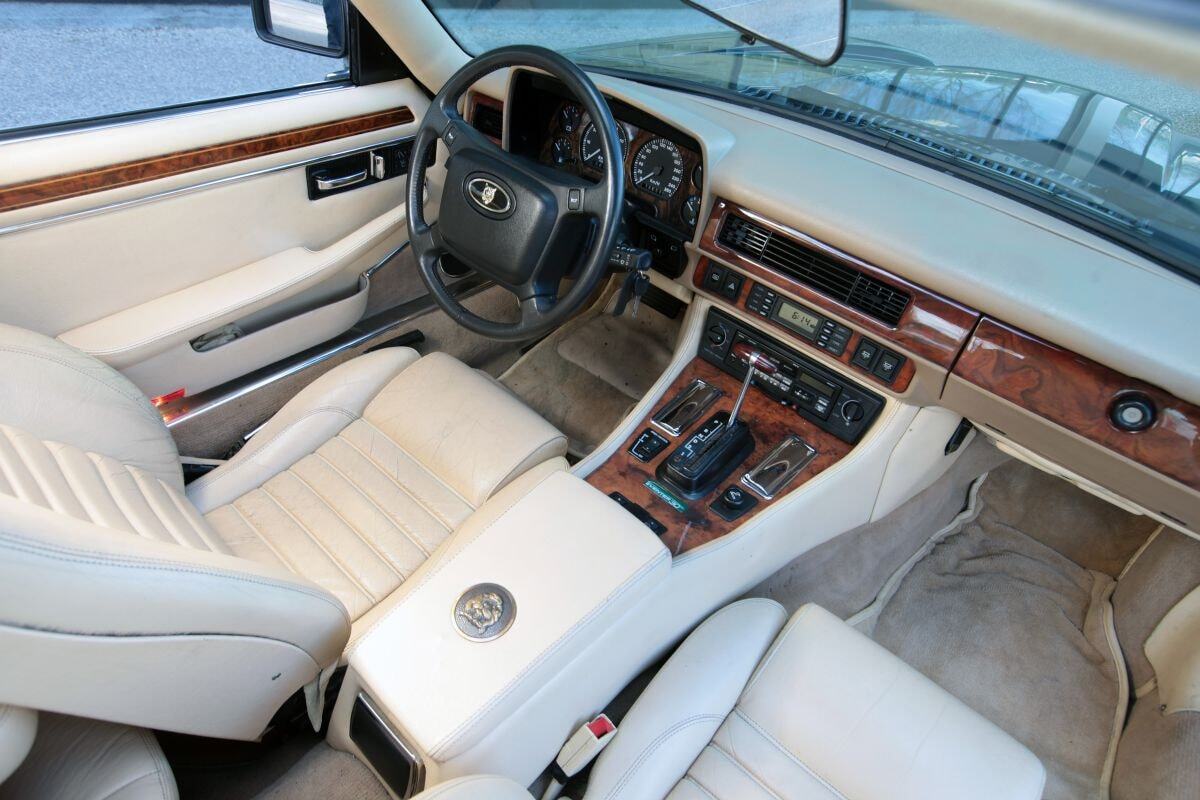
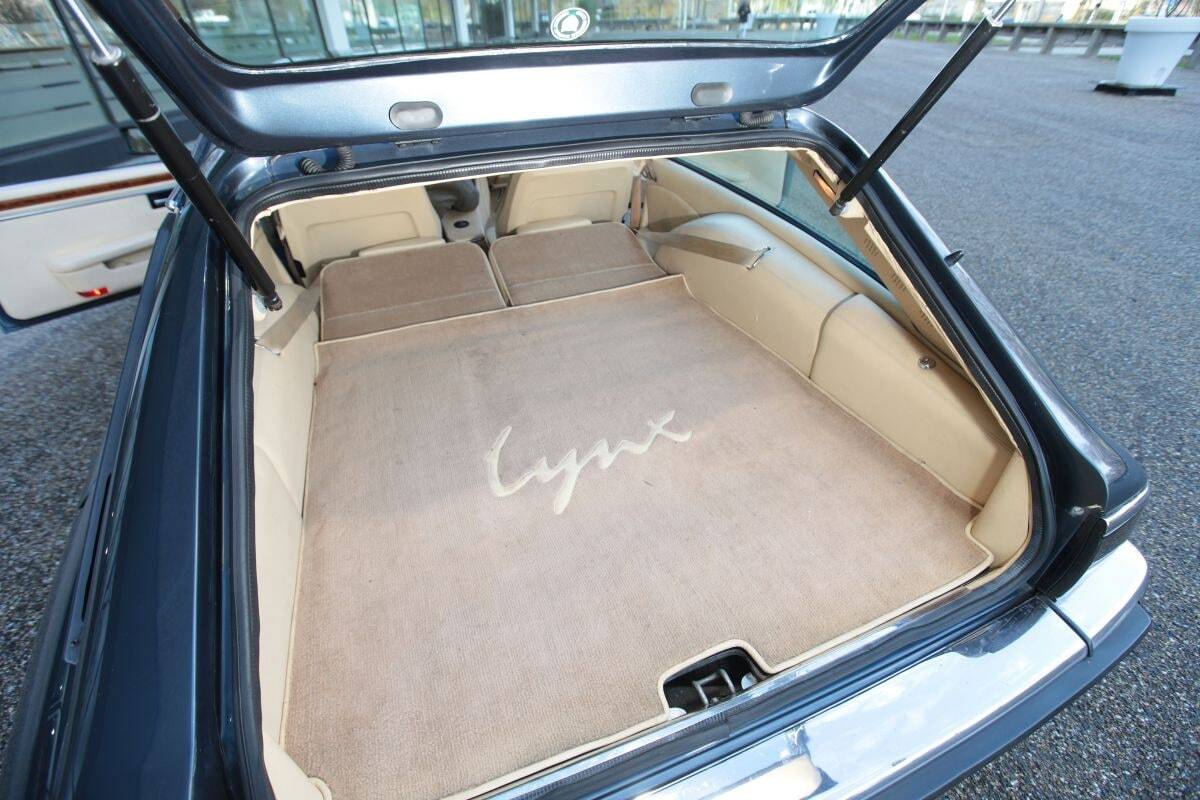
With this 95-er they are neatly concealed in the roof rabbet. The side windows are specially produced for the Eventer. They are made of laminated glass to increase torsional stiffness. Furthermore, the rear seat -actually two separate coupe seats- is placed a decimeter backwards for more legroom, but that is a farce, because a child of five cannot get rid of his stilts yet. For that, the tank had to give way to a place under the cargo space. Good for the center of gravity, but bad for the content and therefore the range: the content is only forty liters. All adjustments require a limited weight toll: plus 60 kg. Thanks to an improved streamline, the extended roof would yield a 5 km/h higher top speed.
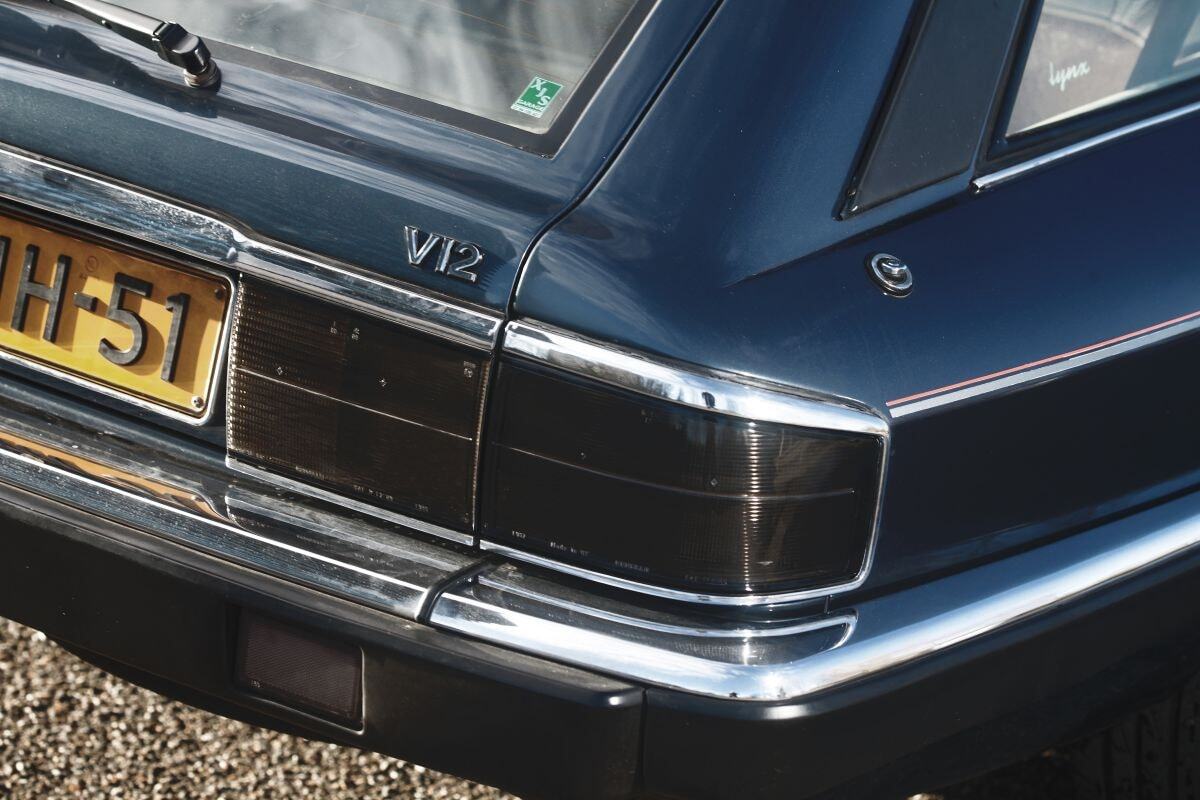
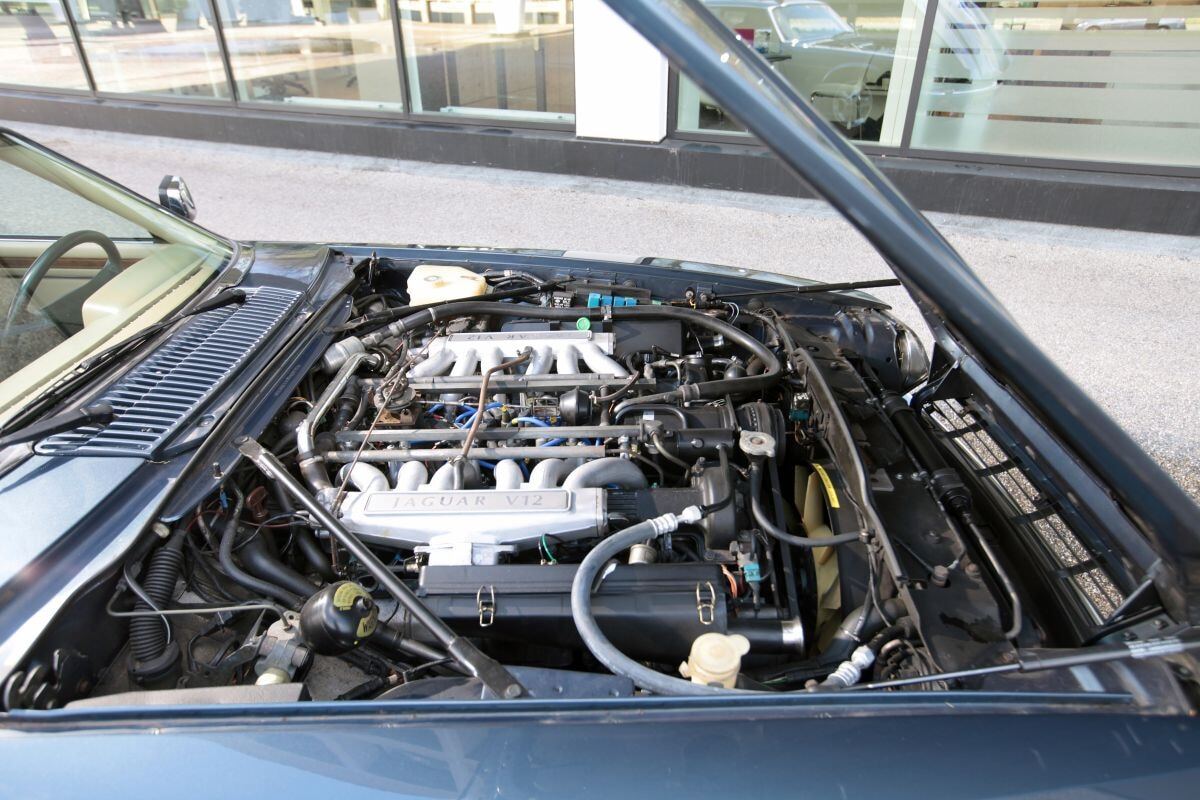
This XJS, delivered new in the Netherlands in 1991, was converted in 1995. This copy also underwent a thorough overhaul and restoration by KWE Engineering in England, an authority in the field of XJ and XJ-S. The Eventer lies tighter on the road than other copies I drove of the XJS. In addition to the body, the engine, the interior, KWE has also adjusted the chassis. Tighter bushings, shock absorbers and slightly stiffer springs do wonders. I have driven quite a few XJ-S’s, but never one that steers as nicely as this one. Because with the V12 a normal copy, especially if no revision has ever taken place, is at its mildest said ‘vague’ in the steering. This V12 is agile and light-footed as a young foal. Everywhere we turn, turn around, turn around and accelerate, we get thumbs from enthusiastic enthusiasts. The Eventer can apparently do no harm. Number 62 was converted to Eventer in 1995. After this car, Lynx built five more in a period of seven years. That in itself is remarkable, because the successor XK8 had already gone into production in 1996. The last five were therefore always used cars. It is not known whether all 67 Eventers are still intact.
Cross pollination
Shooting brake: originally a carriage for hunting. The name first appears at the beginning of the nineteenth century. As the name suggests, the carriage was used for hunting. The term shooting brake evolved from a purely hunting carriage into a two-door cross between a coupé and an estate car. Well-known examples are the Rolls Royce Silver Ghost Shooting Brake from 1910, Volvo 1800 ES and later the 480 and later the C30, Reliant Scimitar, Saab 99 Combi Coupé, BMW Z3 and Z4 Coupé, Ferrari FF and the Mercedes CLS Shooting Brake. You could also consider the Jaguar XF Sport Brake as a shooting brake. The latter two break with the law that it must be a two-door. Over the years, many brands have shown an interesting shooting brake, although these were mostly prototypes. Think of the Aston Martin DB5, DB6, Audi TT, Fisker Surff. Not only Lynx converted XJ-S’s into shooting brake, but also the German Arden was tempted, as well as Ateliers Réunis from France. This last version, of which reportedly a dozen were built, is considered the summit among connoisseurs. Not least because of the upgraded equipment and quality. The last firm that put its reputation at stake was Royal Motors, which simply ordered an Eventer from Lynx and equipped it even more luxuriously. Lynx itself built the last Eventer at the beginning of this decade.
Lynx Eventer (1982-2002)
3.6 6-in-line 3 (2 manual, 1 automatic)
“`