The second generation Porsche Macan is always a fully electric car. A decision about which there are now considerable doubts in Germany; a petrol version now seems to be on its way. But would we in our EV-loving Netherlands want more than just electricity? The top model, in the form of a Macan Turbo, gets to show what it’s capable of.
Why is the Porsche Macan actually only an EV?
Well, the answer to that question occupies many drivers… We at the editorial office would not want to be in the shoes of a major car manufacturer’s CEO. Because which course should you choose? Continue with petrol as long as possible? Go fully electric? Or offer a bit of everything with the risk of not being satisfied anywhere? The political wind blows from a different direction every time, just like buyer sentiment. How can you make long-term policy like that? You cannot blame Porsche for now having some doubts about the decision to develop the second generation Macan only as a fully electric car. Yes, it was a gamble. But EV was experiencing an enormous boom, governments were falling over each other with fiscal incentives for EV buyers, and petrol seemed outdated.
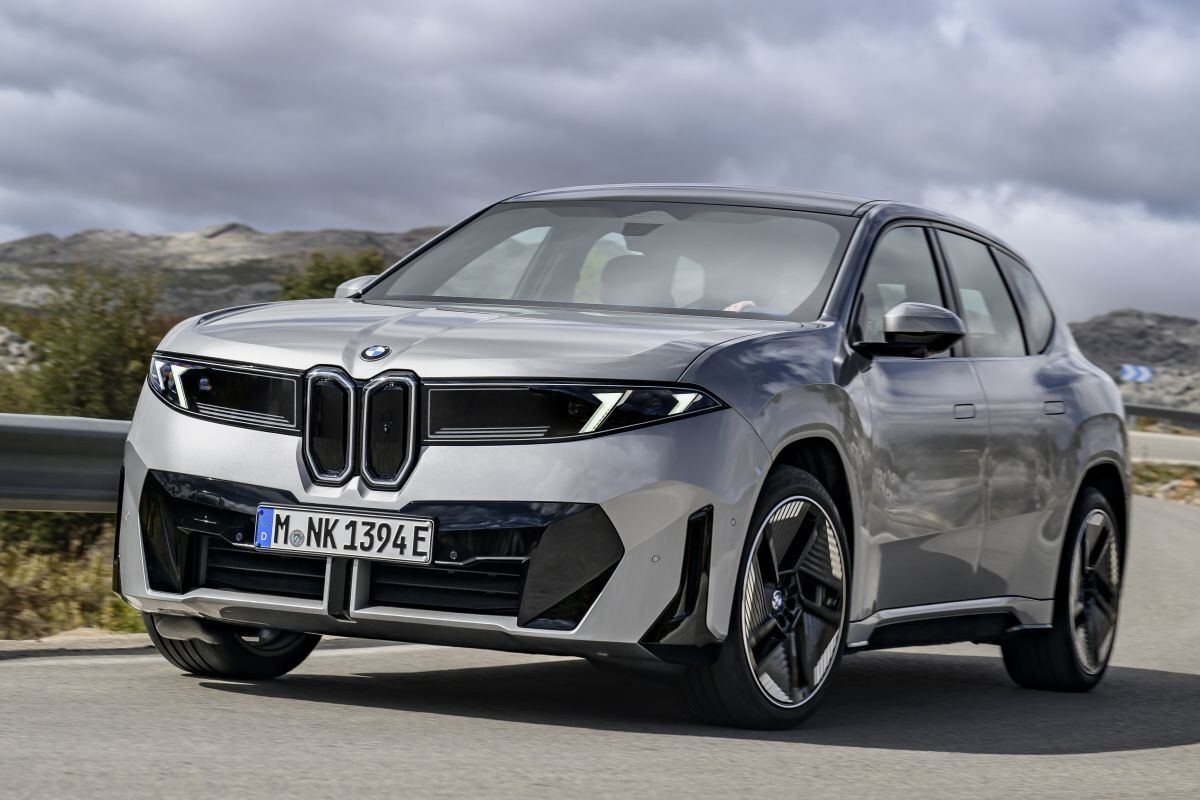
But the shift in sentiment came quickly, fiscal support disappeared, and in Southern European countries, for example, the demand for EVs is not yet incredibly high. For an important car market like Italy, this could cost Porsche an extreme amount of market share. And so there are now plans to still come out with a petrol-engined Macan. Or at least a successor to the petrol Macan if they don’t want to give it the same name as the EV. The technical basis is not difficult, as Audi has just launched a new Q5, and the first Macan also shared its platform with this SUV. Something that wasn’t noticeable while driving the car, by the way; Porsche’s technical wizards had ensured that. Expect mainly plug-in hybrids, but in any case with a petrol tank.
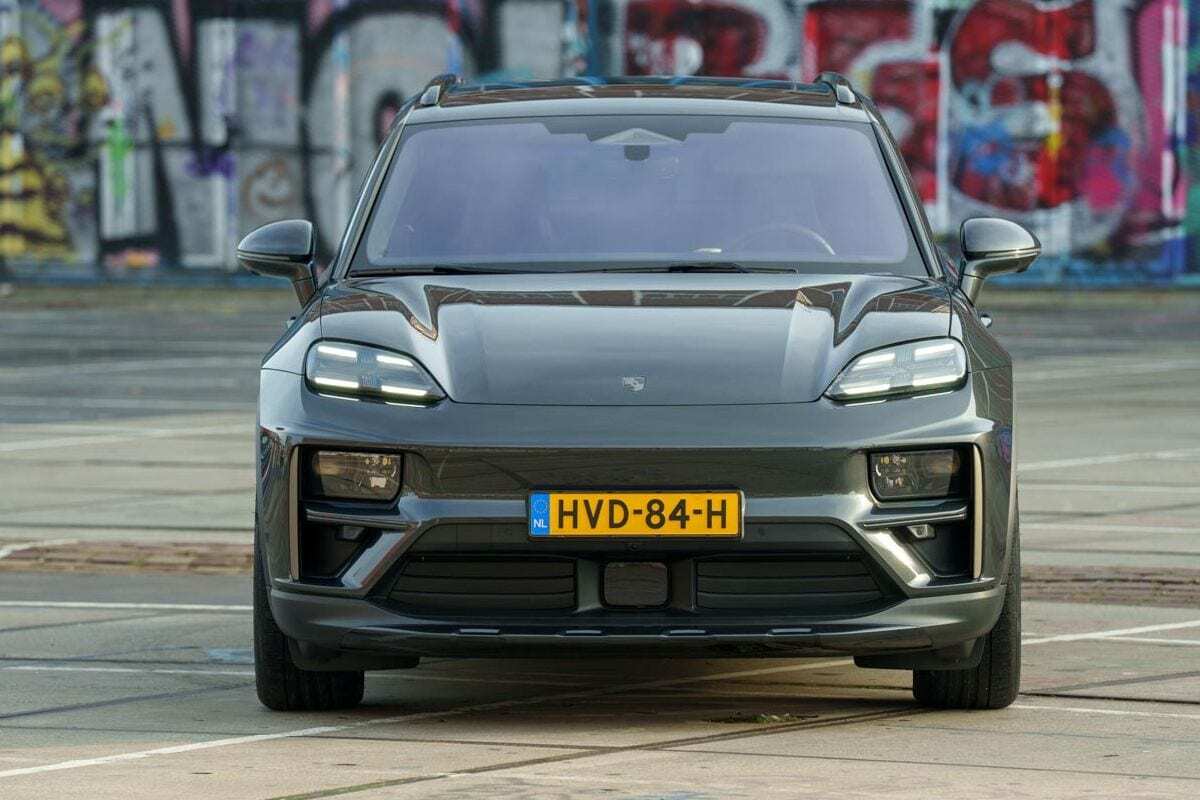
Porsche Macan: for now, always an EV.
But a petrol-engined Porsche Macan will be more expensive here…
But the Netherlands is not exactly an average car market. Electric cars are gaining traction, and this will not diminish in the coming years due to government policy. The carrot in the form of tax breaks has now been replaced by a stick with the pseudo-final levy and even higher excise duties, but the result will be no less. If we look at the sales figures, the electric Macan also sells much better than the petrol version ever did! Last year, no fewer than 1,000 Macans were registered in the Netherlands; the peak for the petrol version was 445 units in 2017. So Porsche is not exactly losing market share. But it could, of course, be that the brand would do even better if there was also a petrol version. Are we lacking something with only electricity? We’re testing it with the top model, the Macan Turbo.
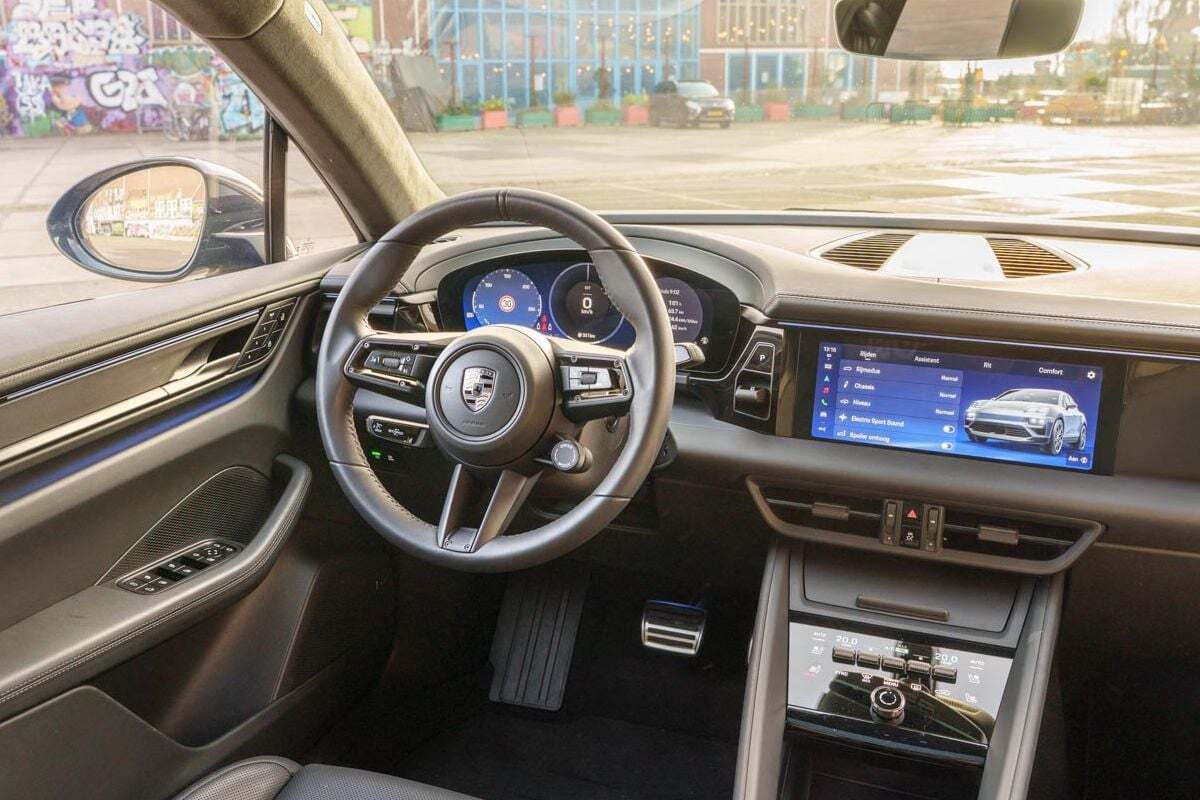
High-quality interior, with a good seating position.
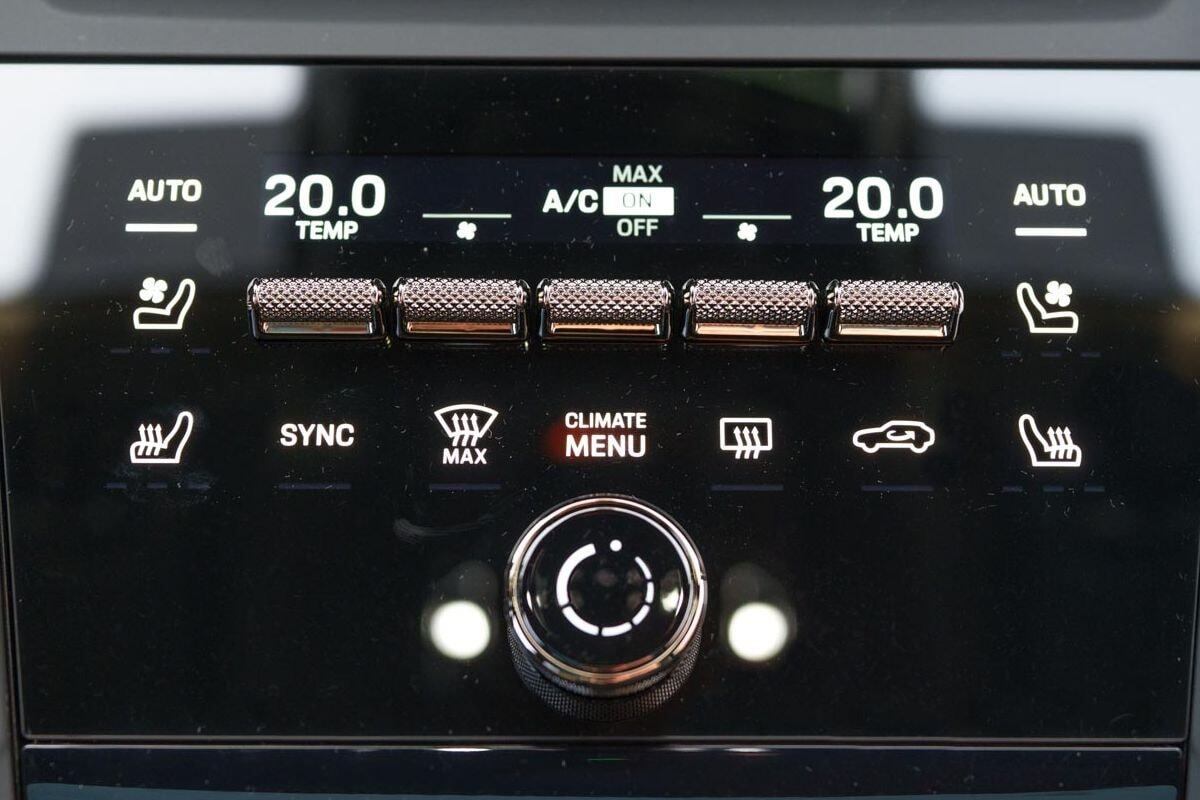
But the ‘buttons’ on the screen move the entire surface, which feels a bit cheap.
Strange, such a Turbo name for an EV. Is it fast?
Yes, of course! Ever since the arrival of the first electric Porsche in the form of the Taycan, it became clear that the power aspect is certainly not a problem. Tesla taught us how easily power and electric driving go hand in hand, and the Macan is no exception. The Turbo version has 639 hp, at least during launch control. In normal driving, you have to make do with a ‘mere’ 584 hp. For comparison, the old petrol Macan Turbo had a turbo-V6 with 440 hp. We thought that was fast back then. The electric version sprints to 100 km/h in 3.3 seconds. Unlike the Taycan, it has a single gear, meaning it peaks at 260 km/h. Less than 270 km/h+ of the fastest petrol Macan: power is not everything in this case. But at any moment, you have power to spare, no shifting moments or hesitation, just excellently dosable power.
And not just in a straight line. The Turbo has some differences from the less expensive versions, including a limited-slip differential on the rear with a larger electric motor. That brings us to driving. The Macan is a car with a story. Where the Taycan felt almost as familiar as a 911 within a kilometer, it’s different with this SUV. The steering is remarkably direct, and the air suspension stabilizes less quickly than you would think. You also feel how the wheel alignment is geared towards sporty driving, with squealing rubber if you drive out of a parking space with full steering lock. Like a 1.65m man who spends all day at the gym to compensate for his height, the Macan feels firm and squat.
The four-wheel steering also plays a role here, ensuring that the body changes course extremely with steering input. This direct steering combined with the hypersensitive damping makes it a bit nervous, especially for the first few hours. Precisely because Porsches, regardless of the model, often feel like coming home, this is different from usual. But it wears off, and faster than we think. On long distances, it’s noticeable how quiet the car is, and how much comfort there actually is despite its hyperactive chassis. Turn the selection knob on the steering wheel to sport, and suddenly you notice how Porsche distinguishes itself from all those other electric SUVs with insanely much power. Purely on power, the rear takes a big step sideways. Despite the relatively short wheelbase, you can then instinctively catch the car. The enormously direct steering helps with this; no repositioning of hands is needed. Then you suddenly notice how the Macan falls into place. You never feel like sacrifices have been made for daily commutes, although on bad roads the large wheels can hit hard. All in all, it is hyper-dynamic and undoubtedly the best-handling SUV in its segment. At most, as a Turbo, it is a bit more restless than we are used to from most Porsches, and especially the SUVs. The 4S does that a little differently, and the entry-level models on steel springs even more so.
Soon we will also be able to get behind the wheel of the GTS; it will be interesting to see if, as its power and price suggest, it sits between the 4S and Turbo, or if it surpasses the Turbo in terms of sportiness. In any case, Porsche has undoubtedly proven with the full top model that it doesn’t just stick its logo on any car, electric or not. The skill of the engineers oozes through the car. It remains remarkable that the degree of regeneration cannot be adjusted. Yes, in sport mode it’s a little more, but here there are no paddles or other options to adjust it. Porsche is too dedicated to its cars to call that a mistake; it is (just like in the Taycan!) clearly a conscious decision: braking is done with your brake pedal. For sporty driving, you have more control, but for daily commutes, it is still nice to have the choice yourself. Compare it to downshifting before a bend for just that little bit of extra deceleration and control.
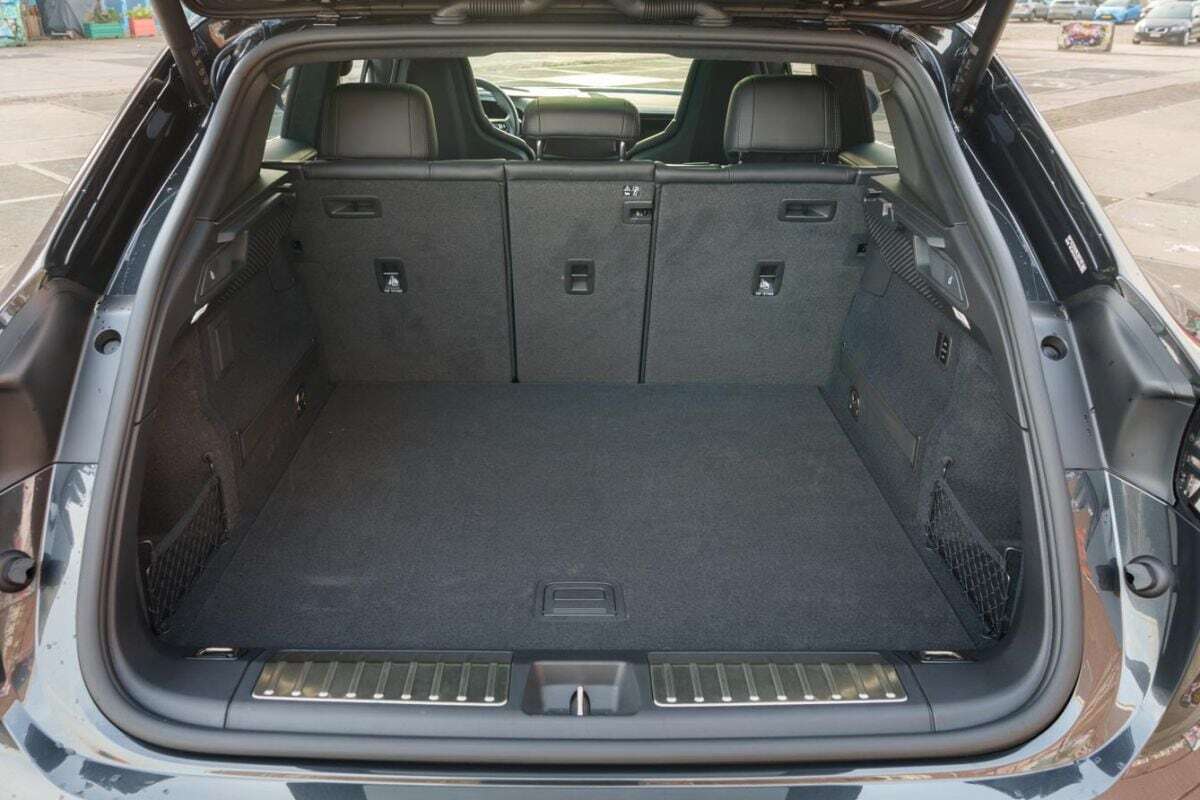
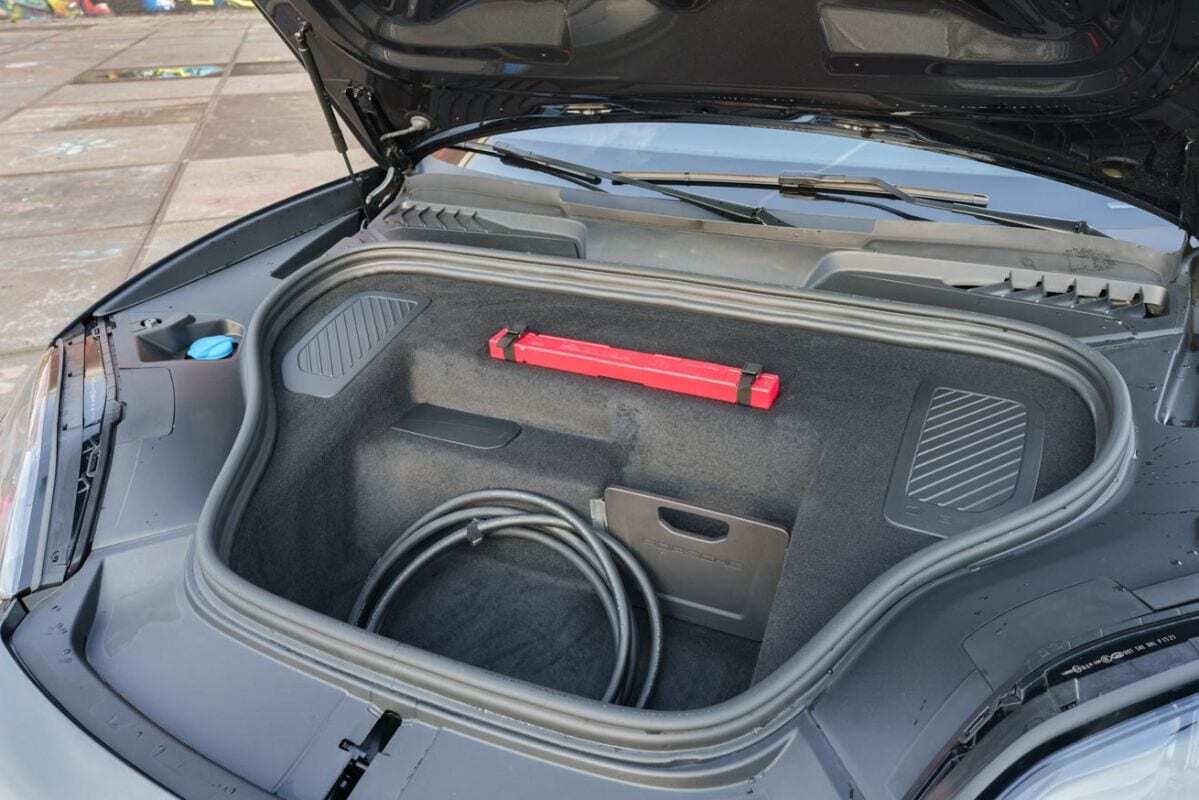
This frunk with 85 liters is also included.
But how far can you get in such an electric Porsche Macan?
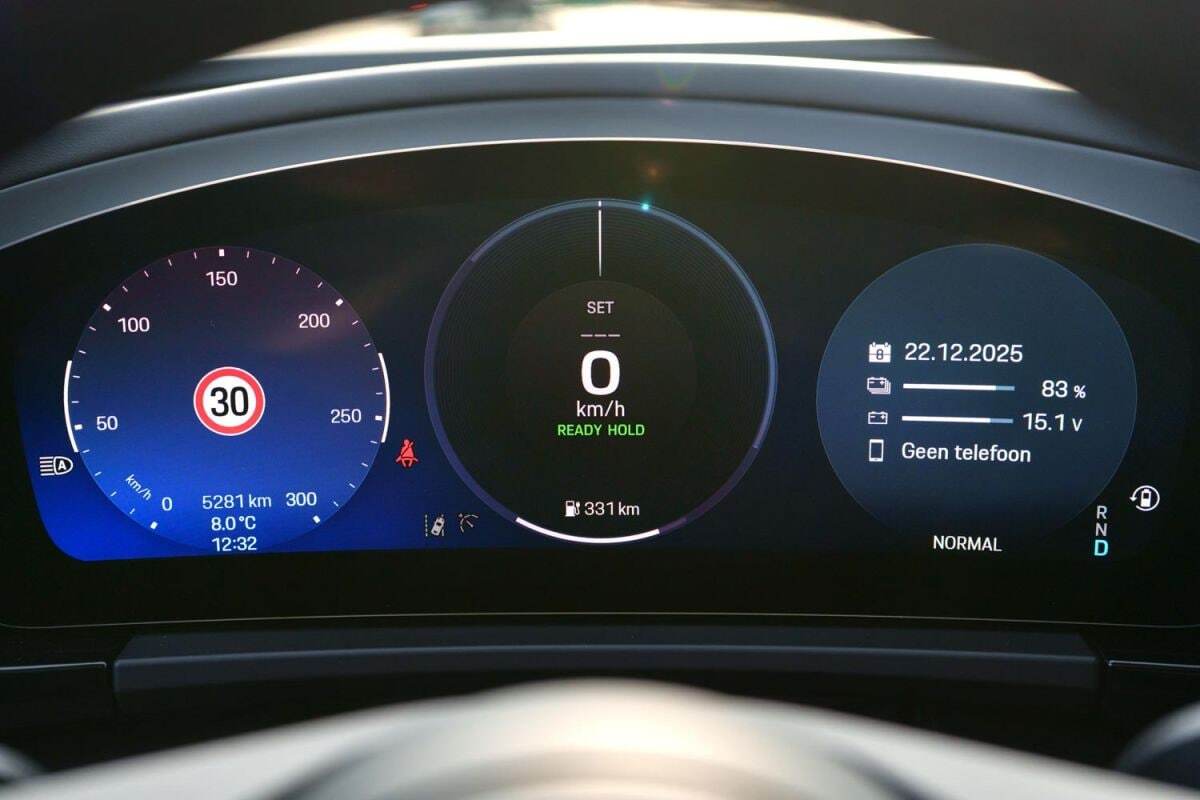
All that power doesn’t come without a price. The Turbo noticeably consumes power less efficiently than weaker siblings we previously had in a comparative test. Temperatures around freezing naturally didn’t help, but even then, it was somewhat disappointing given the brand-new technology of the PPE platform, which Porsche shares with, among others, the Audi Q6. Our score of barely 24 kWh/100 km was truly the maximum we could squeeze out of it during normal driving. If we increased speed in the cold evening hours, it quickly went towards 30 kWh. Fortunately, like every electric Macan, the car has a 95-kWh battery, so we still covered about 400 kilometers. If you want to go further, thanks to its 800-volt system, you can fast charge well over 250 kW. Also handy: the car has (like the Taycan) charging ports on two sides for AC charging, so you don’t have to fiddle unnecessarily with your cable. A convenience not to be underestimated.
The interior is high-quality, and you don’t see anywhere that you are driving a brother of the Audi Q6. The seats are superb, the seating position for an SUV is excellent, and the ergonomics, despite the touchscreen, are well-focused on the driver. Only the peculiar touch buttons on the center tunnel feel cheap because the entire surface moves when you operate something. Moreover, you cannot feel if your finger is in the right place, so you have to take your eyes off the road for a moment. The multimedia system is modern and fast, but the other major German three are noticeably more comprehensive and versatile. The car is not spacious. Yes, you can sit in the back, and everything is beautifully finished, but for taller people, it’s a tight squeeze. Also in terms of headroom, which is noticeably affected by the car’s shape. The trunk is fine for this segment, with 480 liters. In addition, there is a sizable frunk (old news for a 911 but new for a Macan) that provides an extra 84 liters.
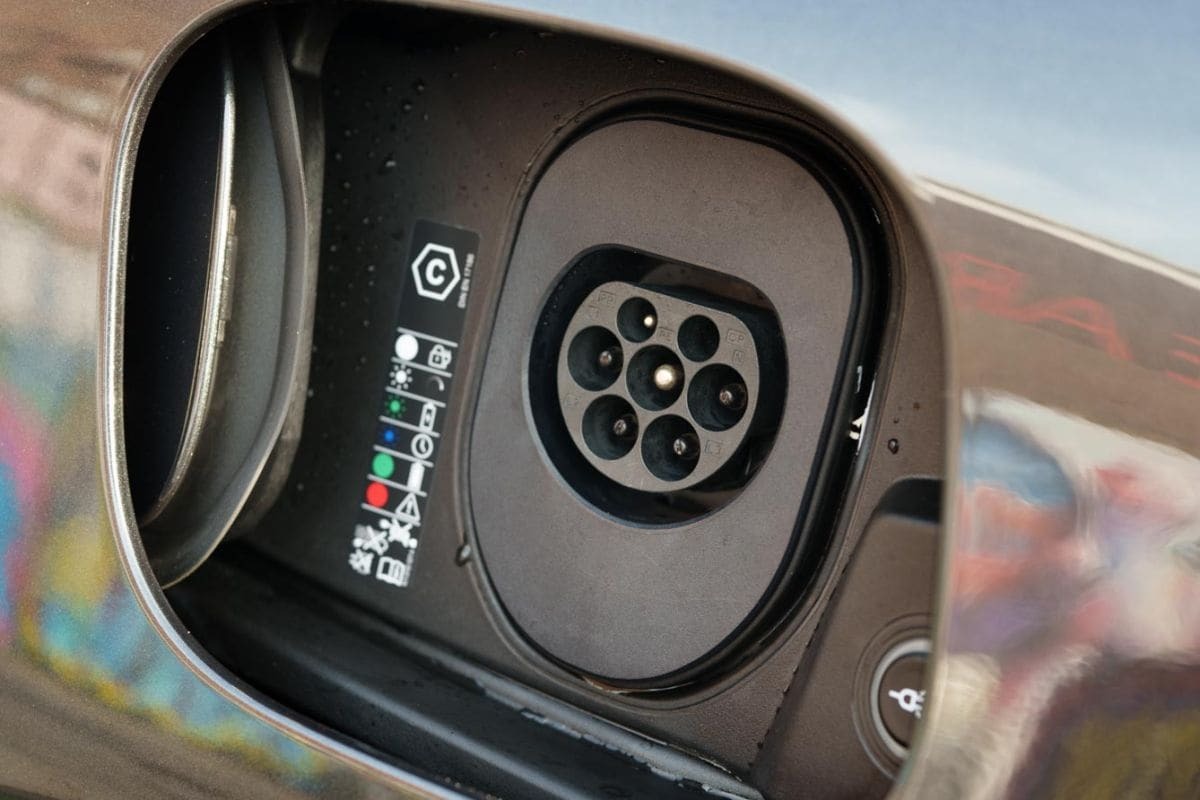
You can charge AC on two sides. Fast charging goes up to over 250 kW.
With all that tax advantage, is the Porsche Macan affordable then?
With any Porsche, there is never talk of ‘affordable’. But in the Netherlands, with this Macan, you at least have the advantage that it is almost completely free of BPM (Dutch purchase tax). A possible future petrol version, plug-in hybrid or not, will be much more expensive due to the tax burden. That already speaks for this EV version here. Apart from that, you can save money by not opting for the Turbo but an entry-level model or possibly a 4S. The latter does not necessarily sacrifice an extreme amount of sportiness compared to the Turbo, especially since we are still talking about an SUV here. The basic variant with rear-wheel drive also offers a lot in return for the power reduction due to its lower weight and a somewhat purer chassis. And as a bonus, you keep a considerable amount of money in your pocket: naked, the entry-level model is €35,000 cheaper than the Macan Turbo, which costs €120,000. Without options, mind you, because Porsches don’t exist naked. Our demo in these photos costs a pretty penny of €144,000. But we have seen worse with this brand.
But do we miss petrol now or not? Not really. In a 911, the story will be very different, but in a compact SUV, the sound of a V6 (or even a four-cylinder in the entry-level models) is not something that makes or breaks the car. Not even in a Porsche SUV. With a 911 or soon the electric 718, that question becomes much more relevant, but the record sales of the electric Macan last year actually already showed what this test confirms: we don’t necessarily need more than an electric Macan in the Netherlands.