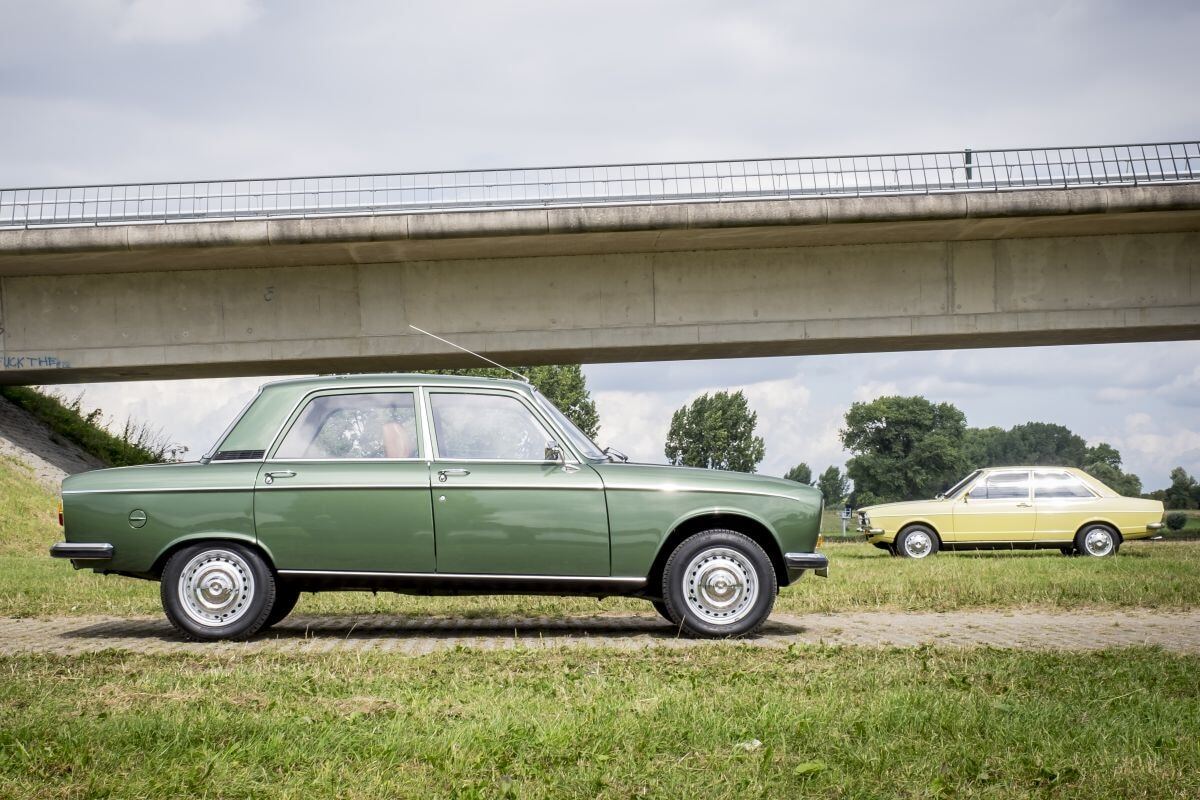
‘German cars have stiff suspensions and are sparsely equipped. French cars are more relaxed and excel in comfort.’ The origin of these persistent prejudices is unknown, but the Audi 80 and the Peugeot 304 from the early 70s confirm them with full conviction.
Nowadays, we know better when it comes to these prejudices. Especially regarding suspension characteristics, there has been a reversal. Many German cars have a softer ride than a comparable French model.
Audi 80 and Peugeot 304 more expensive than competitors
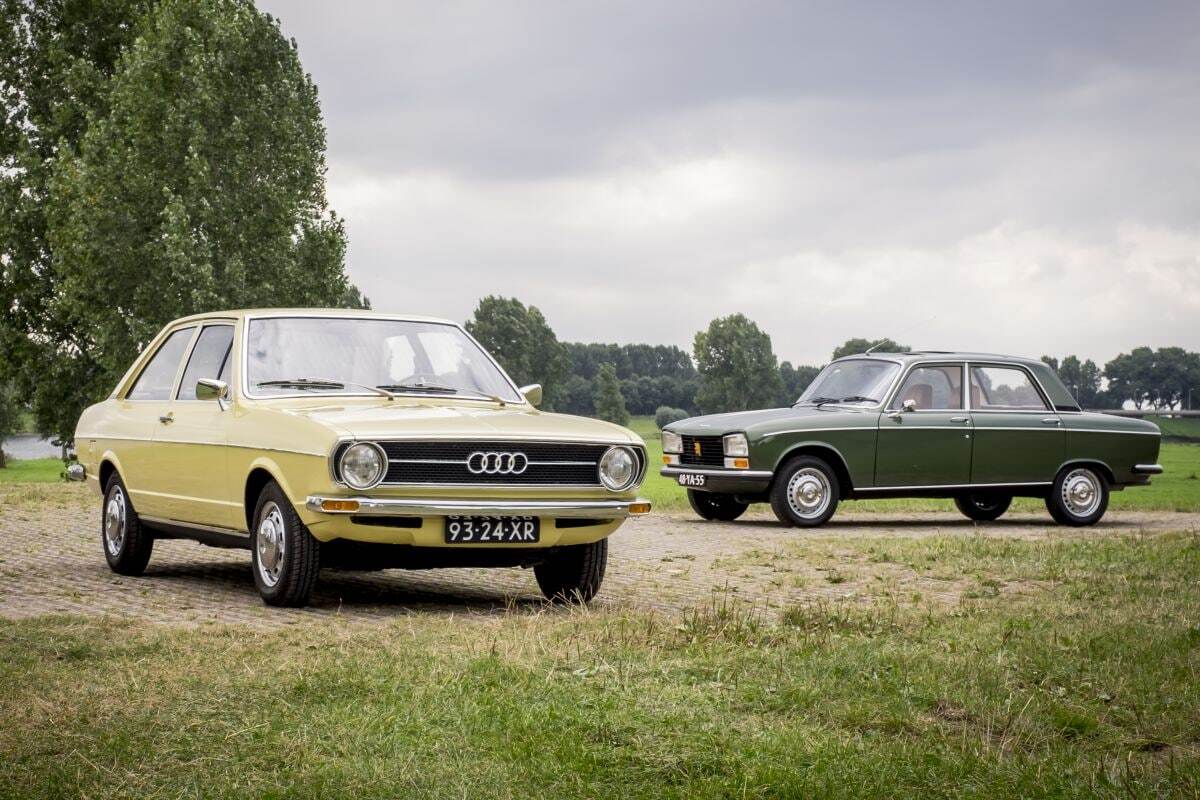
For this test, we have gathered two beautiful, compact mid-range cars from the early 70s. Studying the price lists of that time, one can conclude that both the Audi and the Peugeot were slightly more expensive than some of their similarly sized counterparts, such as the Opel Ascona, the Ford Taunus, and the Renault 12. Translating this to the present, we can consider both candidates as premium cars. We are accustomed to this positioning from Audi, less so from Peugeot. Yet, Peugeot, compared to its compatriots Citroën, Renault, and Simca, was for a long time the brand with the somewhat more expensive and especially very reliable cars.
Peugeot did not build cheap economy cars
The brand from Alsace was the only one of the four that did not build cheap economy cars; the 204, presented in 1965, a spacious four-door sedan, was their smallest model until the arrival of the 104 in 1971. And that was a different story than the 2CV from Citroën, the R4 from Renault, and the 1000 from Simca. This aspect of expensiveness also applied to the 304, which joined the range alongside the 204 in 1969. With a bit more luxury and a larger engine on board, it was allowed to cost a bit more.
Audi 80 arrived in 1972
Its opponent in this story is an Audi 80 of the first generation. A somewhat younger design, as the South German car came on the market in 1972. After the Audi 100, it was the second model from this brand that heralded a new era. The former still dated from the sixties and was a cheap but equivalent alternative to the supreme Mercedes-Benz 200 series, while the 80 moved into the mid-range class. There, it competed against the BMW 02 models, among others. Unlike the Peugeot 304, the Audi 80 was not derived from another model; it was a completely new development, which, due to its progressive construction and positive characteristics, was promptly proclaimed Car of the Year 1972.
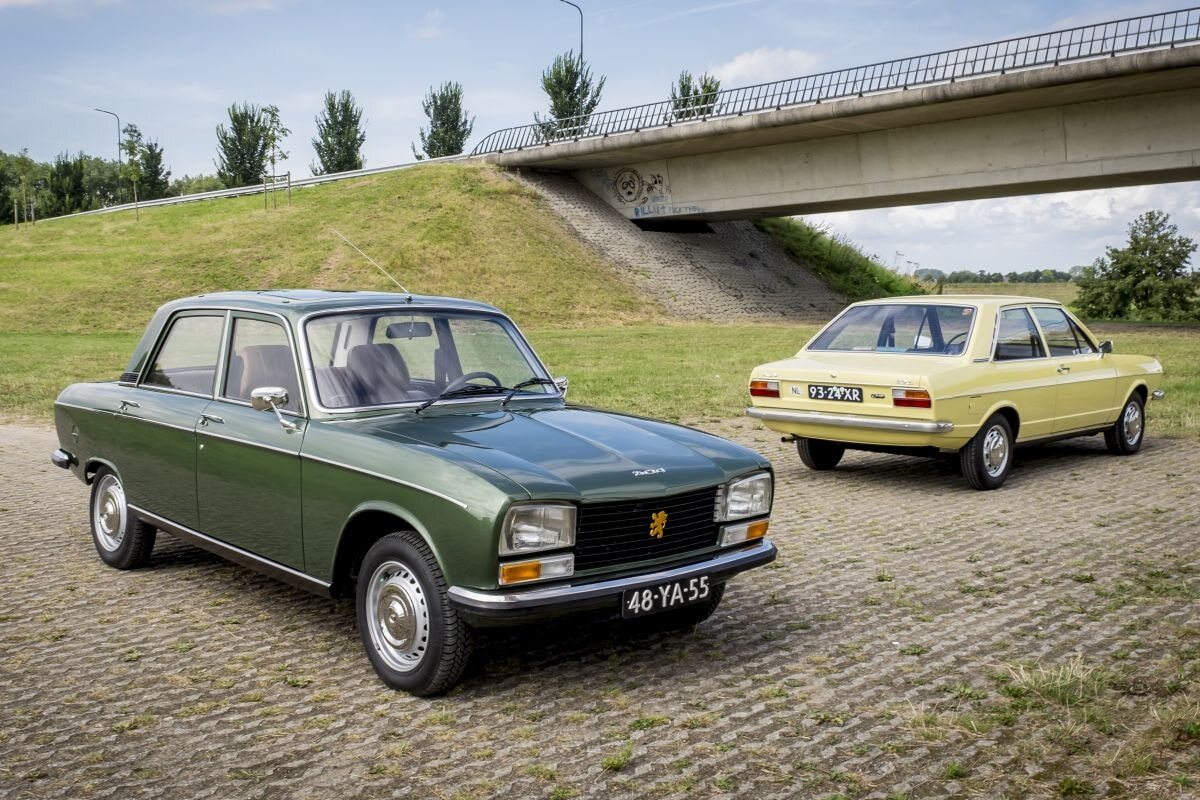
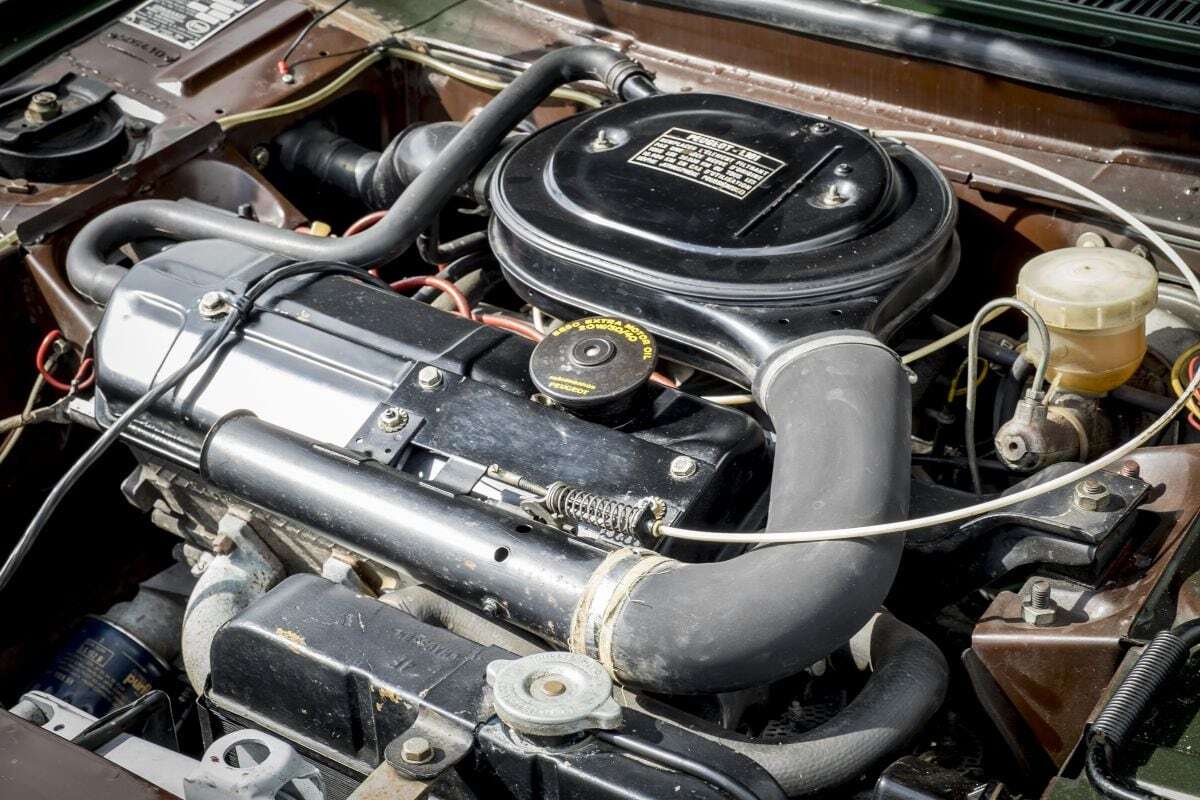
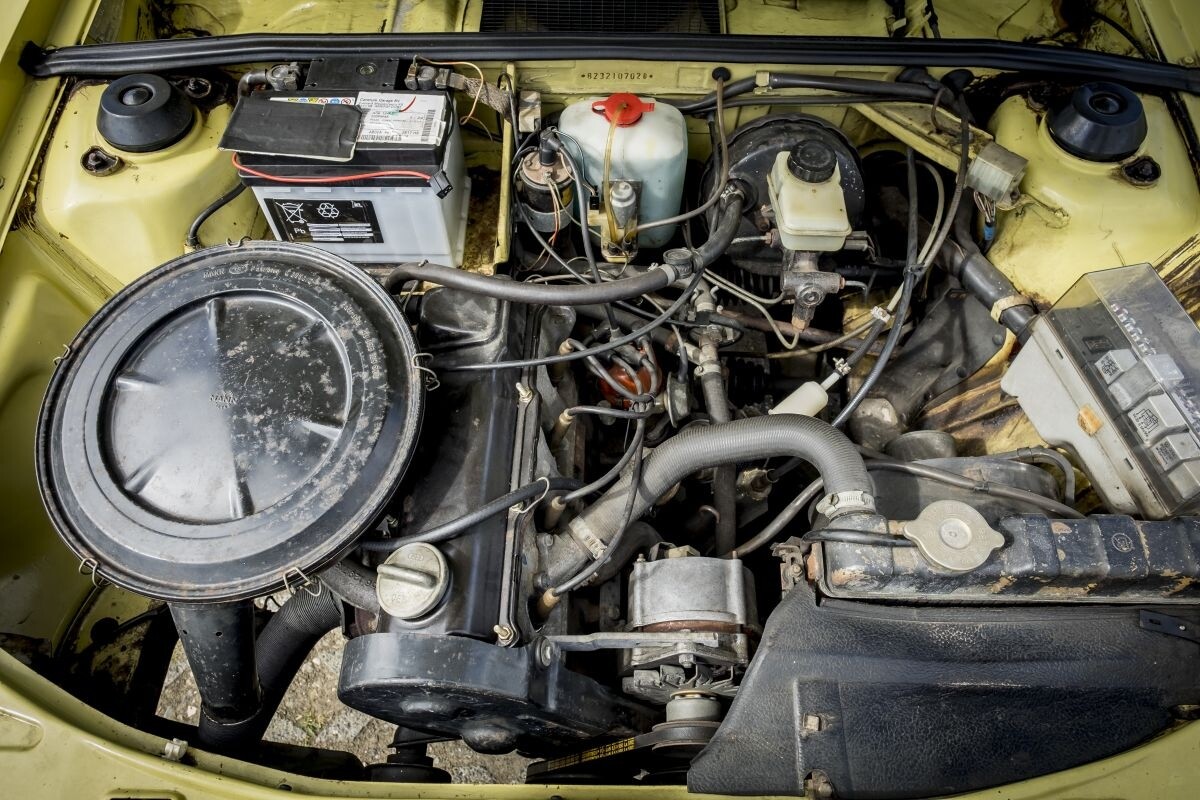
It is striking how closely the specifications of the Audi and the Peugeot match. For this, we must choose the lightest engine variant of the 80, so that both cars have a 1.3-liter capacity. The then brand-new Audi engine, which with different cylinder volumes was soon adopted for the new front-wheel-drive Volkswagens of the early 70s, delivered 60 hp in the basic version, while the Peugeot had 70 hp as standard.
304 S, thus with double carburetor
In this test, we have a 304 S, which with its double carburetor and a different exhaust system was the somewhat faster, 80 hp strong top version in the range. An unfair comparison? It may seem so, but practice proves otherwise. We could hardly believe that the driven Audi 80 L had enough with 60 hp to perform as smoothly as it did; it is really a – relatively – quite peppy car that can still easily keep up in daily traffic. The engine makes a lot of noise, so you initially shift quickly to the fourth (and highest) gear. However, if you keep going a little further each time, the Audi immediately shows its sportiest side and encourages you to drive away. It is not really very fast, but ‘pleasantly smooth’ is a qualification that this basic 80 certainly deserves. The cause must mainly be sought in the low mass of the car: it weighs only 850 kg. And that for a fully-fledged mid-range car with five seats and a large trunk!
Audi made light cars
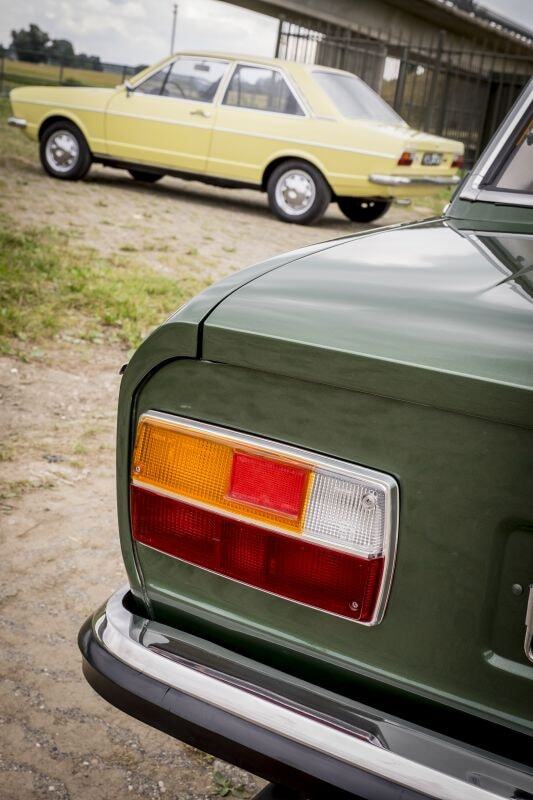
Audi already made a name for itself at the time by having managed to construct the 80 so lightly, while there was certainly no saving on the use of materials and build quality. The Peugeot, at 930 kg, is not even that much heavier than the Audi, but it seems to be when you go out with it. We didn’t do any sprints, but the 304 feels a bit calmer from its place. This experience may also be flattered by both the calm nature of the car and its smooth suspension; with the Peugeot, a much larger part of the engine energy is spent on the graceful movement of the body. In other words: the Audi feels more alert, sportier and more purposeful to get from A to B, the Peugeot clearly emphasizes comfort and a comfortable way to make the journey. An open door perhaps, but the way these two cars make you feel the difference between them speaks volumes. Take, for example, shifting gears; quite large strokes and a bit stiff in the 304, with short strokes, very effective and light in the Audi. The steering is also a separate story. Unassisted in both cars, so quite heavy, but in the 304 so much calmer than in the – again – alert-feeling Audi.
Comfort with a capital C
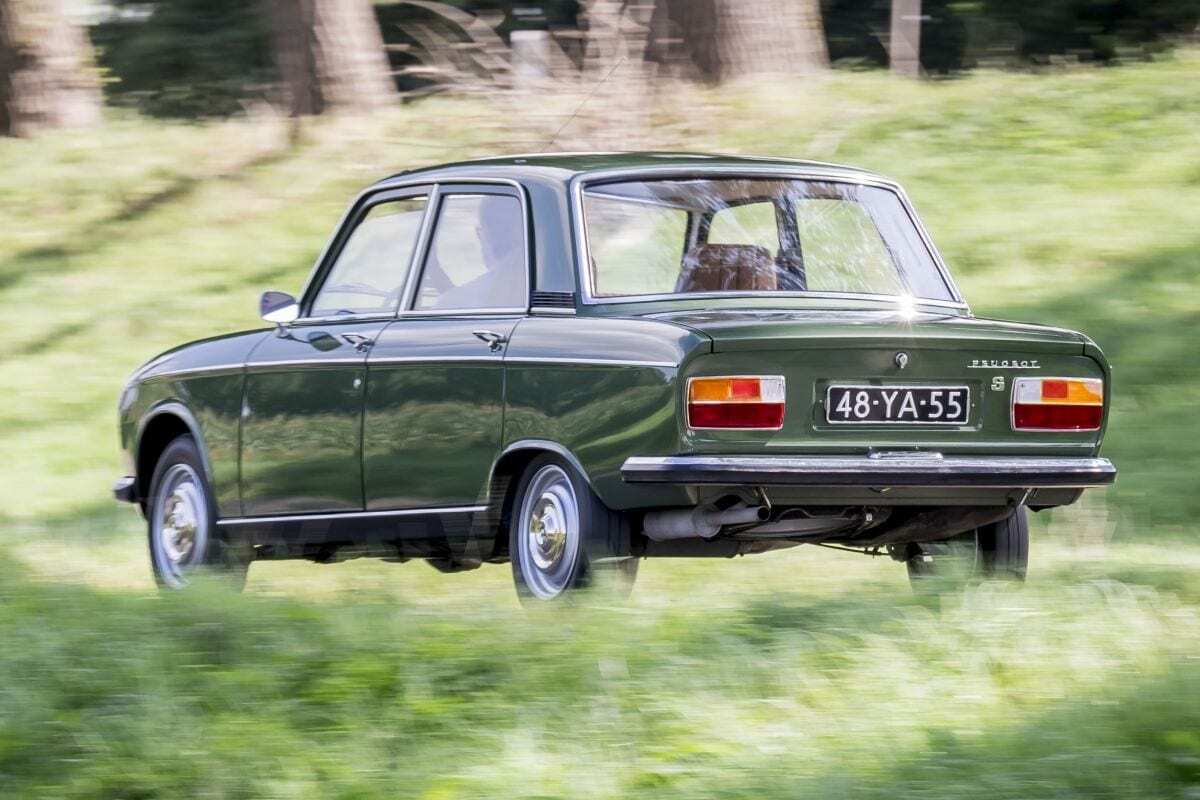
The Peugeot 304 stands for comfort with a capital C. This is evident from more aspects than the smooth tuning of the chassis. Peugeot used to understand the art of making their models both extremely forgiving when it came to overcoming poor road surfaces and sturdy enough to prevent the body from getting into a nauseating heave. You do see bumps and potholes coming, you hear them go under the wheels, but you hardly feel them at all sometimes. A wonderful property. The 304 does lean – it is the change you pay with the French chassis, of which the wheels are independently suspended all around, for its absorption capacity.
Audi also quite comfortable
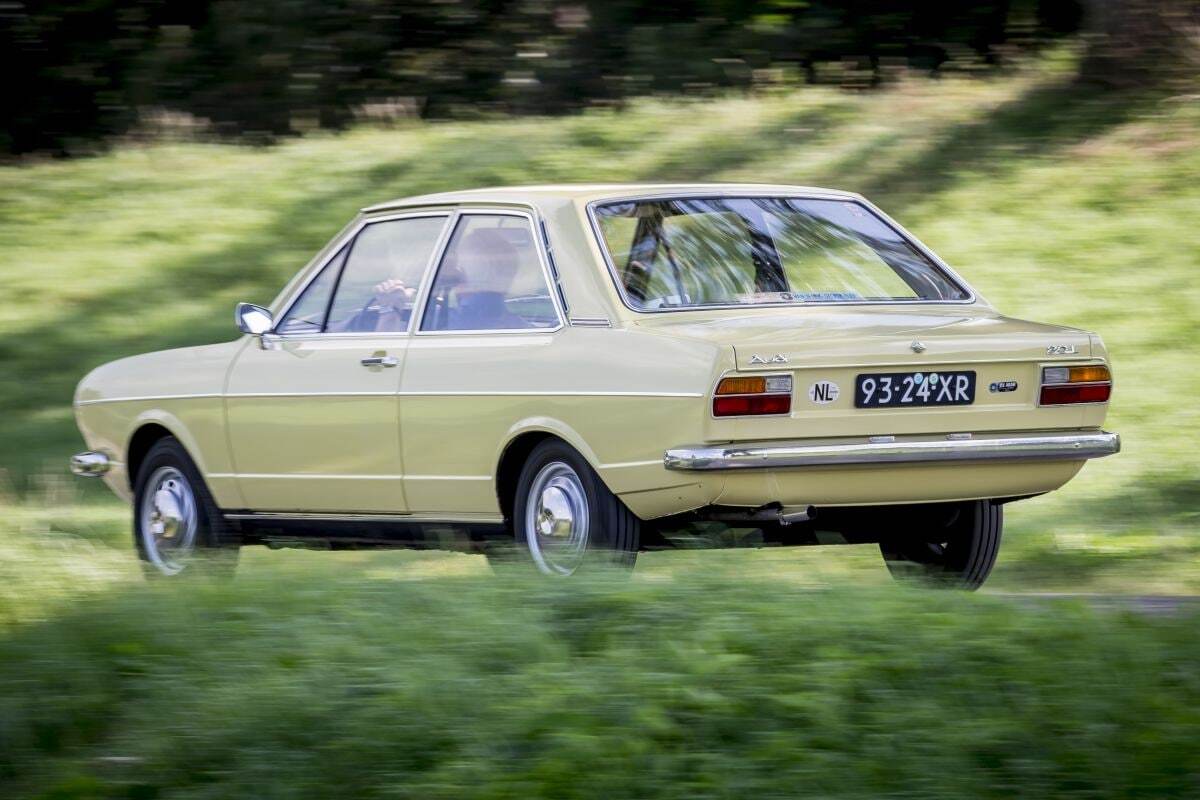
With the Audi, the comfort is also of a reasonably high level. The front-wheel drive gave the designers room for the smart semi-independent rear axle, which is much lighter than rigid (driven) axles that the direct competition had at the time. The chassis of the 80 clearly reacts more strongly to unevenness than that of the 304, but it never becomes annoying. The directional stability of both cars is also excellent; they naturally have a clear understeer character. As far as driving is concerned, you could still manage well in both mid-range cars nowadays.
Audi hard and cold inside, Peugeot inviting
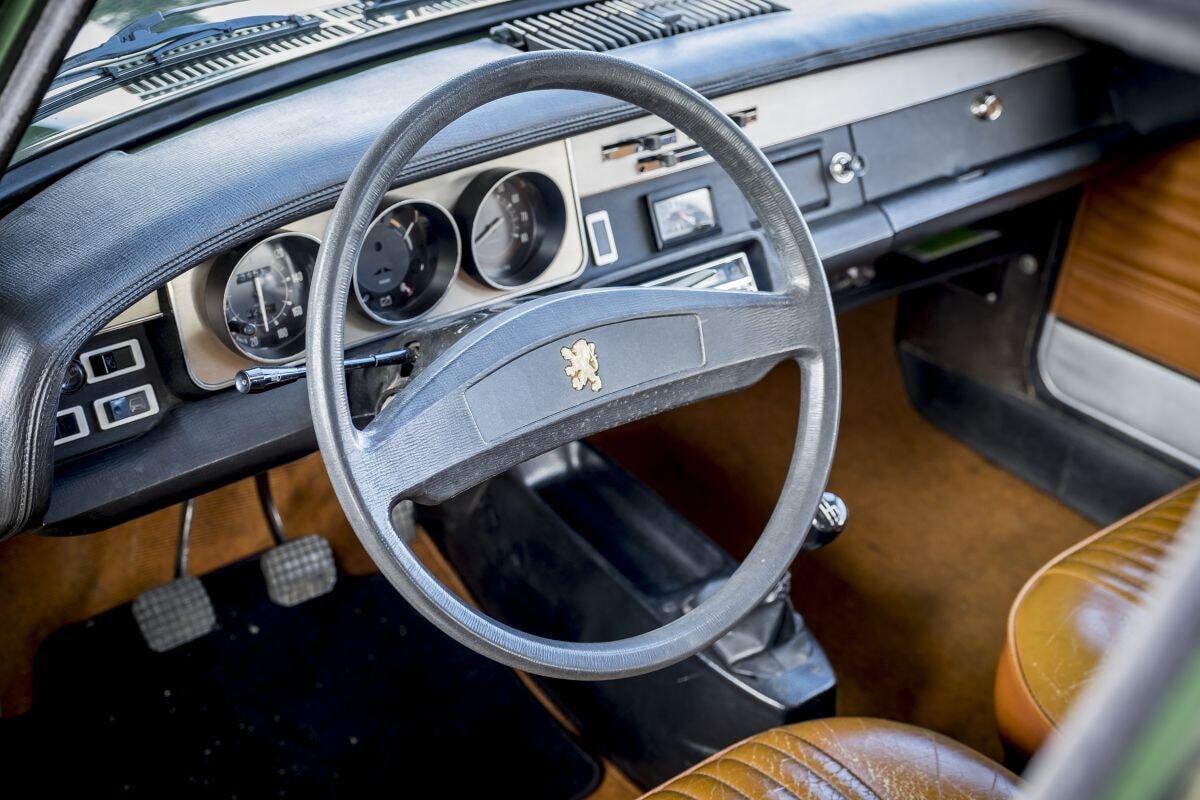
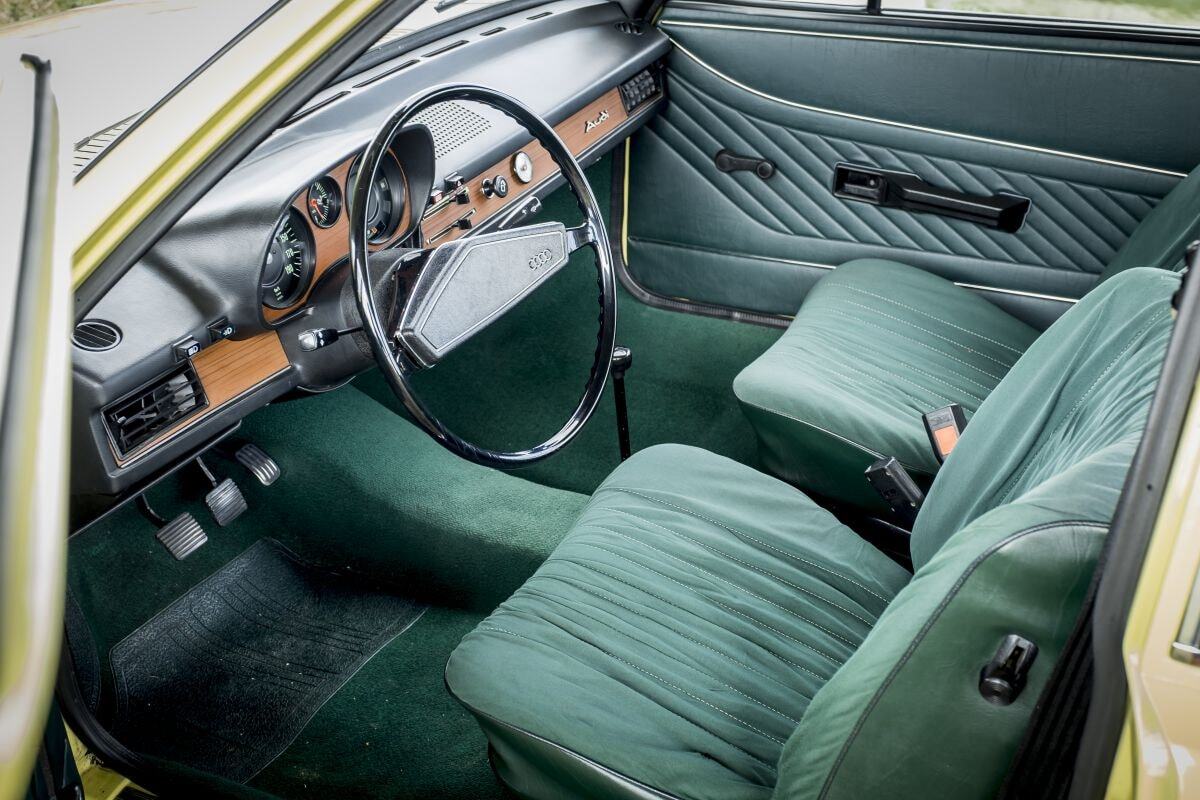
For a description of the interior of both cars, we go back to the beginning of this story, in which we stated that the Peugeot 304 and the Audi 80 would be promoters of the prejudices about their country of origin. Inside the cars, that certainly comes out clearly. First of all, the color scheme, which simply cannot be denied: the toffee-brown leatherette and the matching floor covering give the 304 a much more inviting character than the somewhat cold, hard green in which the Audi is shrouded. The combinations with the exterior color are also counting; the brown of the 304 fits wonderfully with the dark green metallic of the outside, while the hard green contrasts rather strangely with the cheerful, pale yellow skin of the 80. Anyway, it apparently fits in with preferences from bygone times. The wood veneer on the dashboard of the German definitely enhances the atmosphere. The Peugeot is already a bit cozier for the occupants, because it is significantly narrower inside; you almost sit shoulder to shoulder.
Peugeot had four doors as standard, Audi offered it as an option
The Audi offers more space in width. The entry in the back is of course better with the 304, because it is the only one with four doors. With the Audi, a set of rear doors was an option. In its two-door form, the 80 looks quite sporty and dynamic; you could therefore call it a distant predecessor of the current A5. The instrumentation of the 304 S is the only one with a tachometer – a reference to the sporty character of this top model. The steering wheel is covered with a soft, thick edge, just like the top of the dashboard. The Audi is much more businesslike, while the ergonomics are better; from the all-round visibility to the easy findability of all buttons and switches. With the seats there is a big difference: remarkably soft and inviting in the 304 and hard on the side in the 80.
Audi too loud from 80 km/h
Finally the sound; these cars come from a time when you could still distinguish brands and types with your eyes closed … both the civilized hum of the 304 engine and the cheerful whistling of the transmission are inextricably linked to Peugeot. The same applies to the driven hum of the Audi, although its sound could of course also be heard with many Volkswagens. Inside, the 304 is by far the quietest in terms of engine noise, the sunroof is the only major source of noise. In the 80 that is the engine anyway, which is already dominantly present from 80 km/h. Partly because of this, the Peugeot easily qualifies as the finest car for long distances, while the Audi is the finest for shorter trips over the nice ‘country roads’.
Nature of the country
Not every Frenchman wears striped shirts and constantly strolls home with a baguette under his arm, just as not every German is dressed in lederhosen and only drinks large quantities of beer. It does not alter the fact that the Peugeot 304 and the Audi 80 confirm everything that mankind could rattle off about French and German cars as prejudices. As long as this does not concern the finish, because that is very well cared for in these two cars in both cases. Although their dimensions and specifications are quite similar, their characters differ as strongly as the national character of their countries of origin. We note the much younger and strikingly lively Audi as the best of the two, but not without praising the Peugeot for its unusually friendly character and boundless comfort.