With nearly 300,000 units sold and even a top 5 listing in Europe last year, the Volkswagen T-Roc has proven to be a true success. The new generation, therefore, has big shoes to fill. Our first impression is positive.
The Volkswagen T-Roc, where does it stand in the range?
It’s quite delicate in which corner of the market you operate with a crossover, and to what extent the model can grow into a smashing success. The B-segment was indeed a hefty cash cow, but manufacturers no longer think in such fixed frameworks. With the T-Roc, Volkswagen proved that there is also life between the B and C segments. Even stronger, there is a lot to gain if you approach it right. Toyota, for example, also succeeds with the C-HR.
For those for whom the Tiguan is too expensive or large and the Golf is too low a model, the T-Roc offers a solution. At the beginning of its career, we caught the T-Roc with some characteristics that brought it closer to the Polo than the Golf, such as the somewhat cheap-looking materials in the interior, but after the facelift, that was much better. The brand-new second generation even comes with the promise that elements from higher segments are present. Moreover, the starting price remains approximately the same as that of the outgoing model. The new T-Roc, therefore, not only has big shoes to fill but also creates high expectations upon its appearance.
What is different about the exterior of the T-Roc?
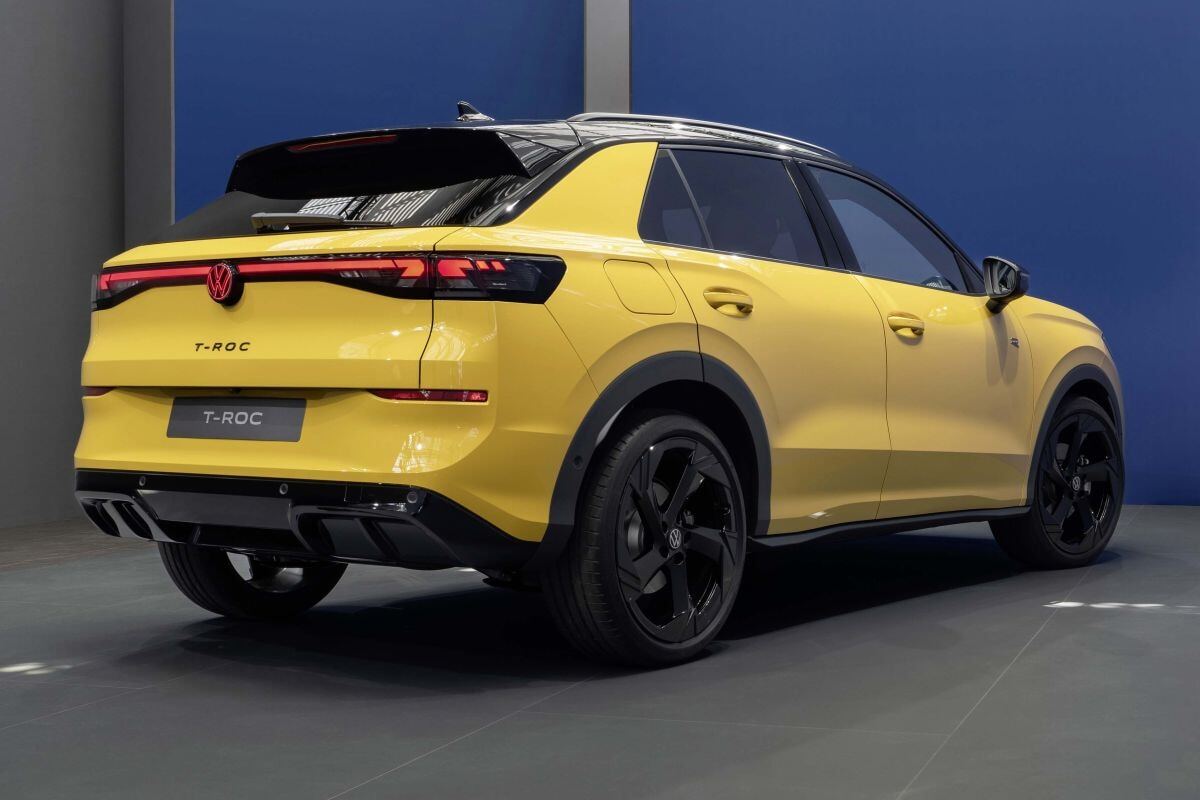
When a successful model undergoes a generation change, it’s generally a good idea to leave the recipe largely unchanged. Volkswagen understands that better than anyone, so it’s not exactly surprising that the new T-Roc is immediately recognizable as such. It owes that in part to the ‘hockey stick’ C-pillar and largely the same proportions.
Yet, there are certainly some changes. For example, it now has a front that is clearly inspired by that of its big brother Tiguan and models like the ID.7 and Passat. The visual distance to the T-Cross is thus becoming a bit larger, and that’s exactly what Volkswagen naturally wants to achieve. Nowadays, almost no new model generation comes out that is not larger than the previous one, and the T-Roc is also growing. The wheelbase increases by just under 3 cm, but in total, the car is about 12 cm longer. You can definitely see that in the T-Roc. The nose is slightly longer, and because it also slopes a bit more at the front, the Volkswagen has a somewhat more dynamic appearance than before.
As always, the R-Line trim adds another layer to that. For example, what about the whopping 20-inch wheels that sit under our test car. An extra prominent grille with large cutouts in it is also part of the package, as is an (obvious) imitation diffuser at the bottom of the rear bumper. You have to like it, but it seems somewhat as if the T-Roc was mainly designed with this trim in mind. If you have a simpler version, it explicitly becomes a more anonymous model. It just depends on what you like.
Any surprises in the interior of the Volkswagen T-Roc?
Also in the interior, regardless of the version, minimalism is the key word. Here, Volkswagen has gone significantly further from the path paved by the first T-Roc. The still quite frivolous dashboard of the outgoing generation makes way for a particularly uncluttered-looking interior. Here, the T-Roc even follows the ID models a bit, albeit with a somewhat larger instrumentation.
We already know the infotainment screen from, among others, the Tiguan and Golf, and it is up to 12.9 inches in size. The ease of use is well done, and it all looks slick. However, here too, you must not be averse to touchscreen operation. Physical shortcut keys are missing, and even for the climate control, you are dependent on the now-familiar ‘sliders’. These take some getting used to but usually respond well. Positive is that you will find normal buttons on the steering wheel again, instead of the generally criticized touch-sensitive keys. The operation of the T-Roc is a bit on two minds, with which Volkswagen hopes to appeal to both the conservative and progressive customer.
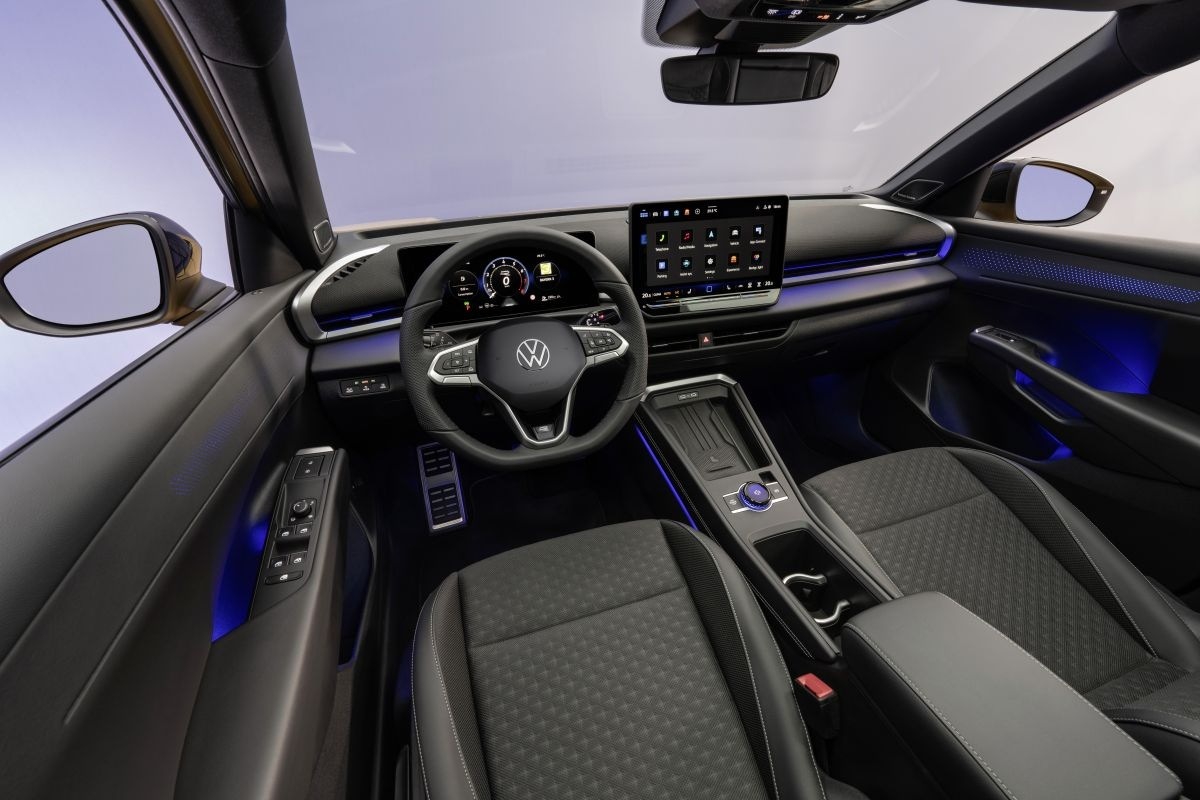
Some conflict between reason and emotion also seems to be present when we talk about the atmosphere on board. On the one hand, it mainly looks businesslike, on the other hand, there is the striking and quite flashy rotary knob for volume and driving mode control. We already know that from, for example, the Tiguan. In the cooling slots of the wireless phone charger, you see a competition pool with a swimming figure on it. A joke that somewhat breaks the prevailing sobriety. The use of materials is considerably better than at the start of the previous generation. You don’t necessarily have to be with the R-Line for that. In the lower places in the interior, it feels a bit cheaper again, but it is not unworthy of its class.
The luggage compartment makes a leap forward thanks to its extra centimeters. According to the latest figures, there are now 475 liters to be used with the rear seats up, 30 liters more than before.
How do you sit in the Volkswagen T-Roc?
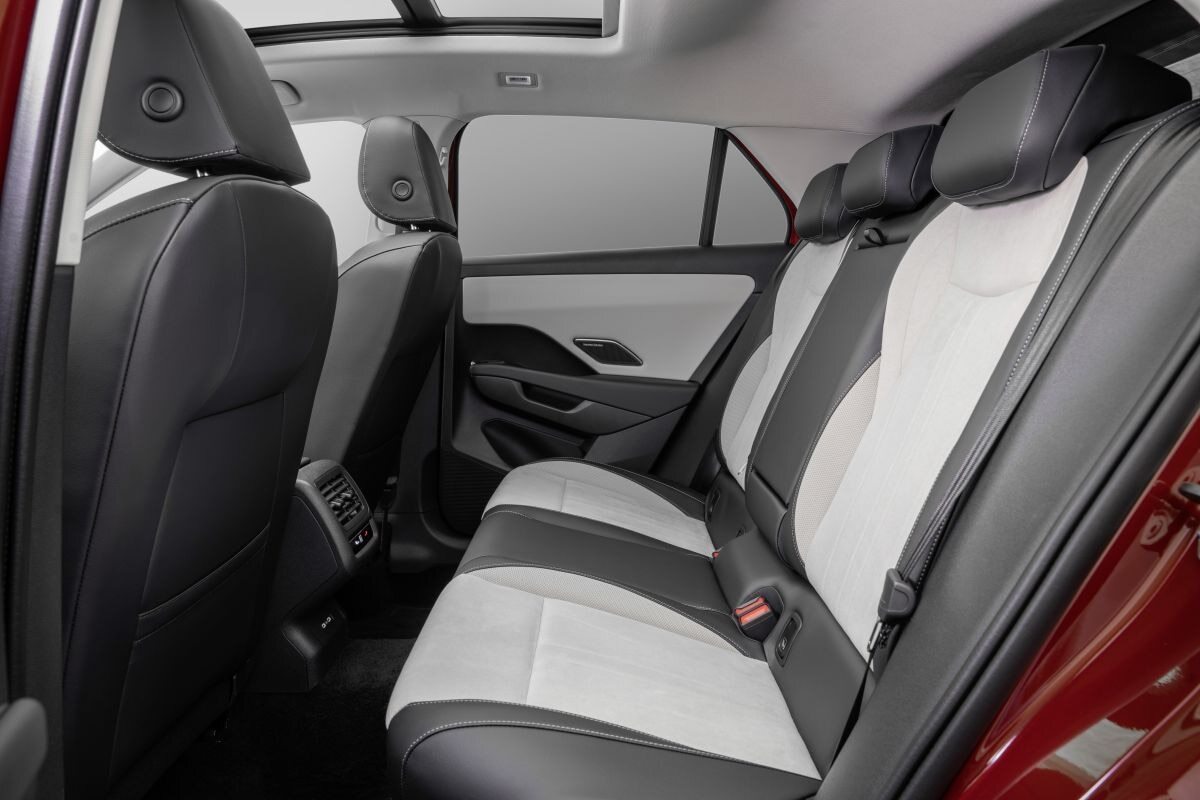
Passengers in the back should not expect seas of space, but the legroom is just a bit better than before. For sufficient headroom, you should not be taller than roughly 1.85 m. In the front, you are well seated regardless of your height. As we may expect from a Volkswagen, the seating position can be adjusted well to your liking. If you like to sit low, you would almost forget that you are dealing with a crossover.
How does the Volkswagen T-Roc drive?
Like a true Volkswagen, the new T-Roc is neither very dynamic nor explicitly comfort-oriented. The damping is quite firm, and therefore it tends a bit more towards a dynamically tuned car, although the large wheels with low-profile tires around them play a recognizable role here. Large bumps and unevenness come through reasonably firmly and make the T-Roc a bit bouncy. For a good balance, we would go for smaller wheels, and then the T-Roc should be comfortable enough. If you want to steer firmly, you don’t have to ignore it. Due to the stiff edge of the chassis, the body remains quite calm in corners. Understeer only comes around the corner reasonably late during our ride in a soaking wet Portugal. You are not surprised by it, the understeer comes in gradually and gives you enough opportunity to anticipate.
We can imagine that the T-Roc R (yes, that will come again) with 4Motion four-wheel drive is a fun driver’s car. The chassis can certainly handle more power than the 150 hp with which we have been on the road in Portugal. That is currently the strongest option for the time being. The other option at the moment is a 115 hp version of this 1.5 eTSI baptized mild-hybrid power source with a 48V system. In both cases, manual shifting is not included; a 7-speed DSG is standard with the new T-Roc. It performs completely as expected. In combination with the 150 hp 1.5, the crossover is well endowed with it, smooth enough and especially in the Sport mode sufficiently alert. The less powerful version is undoubtedly adequate, but 150 hp probably suits it better. The interaction between the four-cylinder and the starter generator is seamless. When you release the gas, it picks up electrically to ‘sail’ and thus reduces fuel consumption, but you don’t notice that. At most, you hear a slight hum when you depress the accelerator pedal that the gasoline engine is participating again. Later, fully hybrid powertrains with up to 170 hp of power will follow and, as mentioned, the even stronger R. Diesels are no longer included and a plug-in hybrid is not planned either.
What does the new Volkswagen T-Roc cost?
The Volkswagen T-Roc is already available to order, with a provisional starting price of €37,990. Just a fraction cheaper than the previous one, which for that money had a 1.0 TSI and a manual gearbox. The 150 hp T-Roc is available from just under 43 thousand, as R-Line it costs €46,990.
Verdict
The new Volkswagen T-Roc has big shoes to fill, but it looks like Volkswagen has a strong offering in its hands again. You don’t have to count on surprises, and that is more positive than it may sound.
“`