Ferrari Elettrica
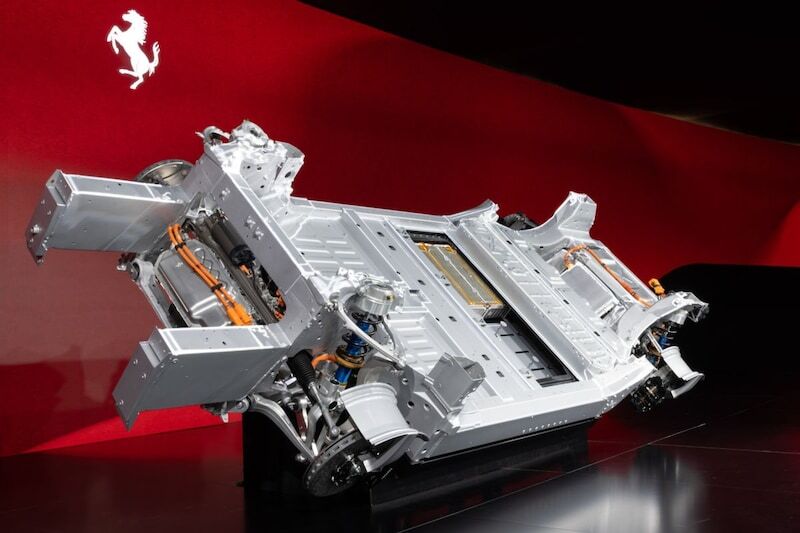
Ferrari realizes that many customers see nothing in electric supercars and is therefore hitting the brakes when it comes to electric driving. In the new factory costing 200 million euros, it will initially build only one model: the Elettrica.
The first electric Ferrari will be unveiled in several phases: the technological heart was first shown in October, the design and interior will be presented in early 2026, and the final version will be visible in the spring of that year. The first deliveries are scheduled for October 2026. To support this step, Ferrari built a new production facility of 42,500 square meters in Maranello, specifically for electric motors, inverters and batteries. The investment in this ‘e-Building’ amounted to 198 million euros.
All this is possible because the manufacturer is doing well financially: in 2024, Ferrari recorded a net profit of 1.56 billion euros, an increase of 21 percent compared to the previous year. But behind these impressive figures, doubts about the transition to EVs are growing at the Italian brand. The electric Ferrari, with a price above €500,000, remains an exclusive niche model. Some insiders even speak of a production of only ‘a few hundred units’.
Originally, a second electric model was planned for the end of 2026, with a production of 5,000 to 6,000 units over five years. However, this project, intended as a real step into the electric age, has been postponed until at least 2028. Ferrari itself thinks that only one in five models will be purely electric in 2030.
Little interest in electric supercars
The reason is clear: the market shows little interest in electric supercars. Wealthy customers remain attached to combustion engines, because of the sound, the raw power and the intense driving experience they offer. Ferrari is not alone in this. Lamborghini has postponed the introduction of its first electric model from 2028 to 2029. Maserati scrapped the electric version of the MC20 completely and Porsche is also slowing down the launch of its electric sports cars. The same objections are heard everywhere: batteries make cars too heavy, performance is difficult to maintain and the driving experience feels artificial.
Nevertheless, Ferrari is proceeding with the introduction of the Elettrica, but the brand is keeping tight-lipped about what kind of car it will be. It will be a four-seater, that much is certain, but that’s it. What is certain is that the design of the electric model has been entrusted to Jony Ive, former design director of Apple, to create a clear break in style. The technology is largely developed internally, including motors, inverters and software.
Despite the electric drive, Ferrari has done a lot to maintain driving pleasure. The car gets an 800 volt on-board network, four independent electric motors, rear-wheel steering and a 48-volt active suspension that makes the classic stabilizer bars superfluous. The weight is considerable: at 2,300 kilos, the Elettrica is 300 kilos heavier than the large SUV Purosangue.

Impressive performances
Each wheel is controlled separately when it comes to power, damping and steering angle. Thanks to this technology, the system can, for example, automatically drive the rear inner wheel extra in corners or slightly adjust the rear wheels at high speed. Even drifting remains possible, because the front electric motors can be disconnected.
The performances are impressive: from standstill to 100 km/h in 2.5 seconds and a top speed of 310 km/h. The 122 kWh battery should offer a WLTP range of more than 530 kilometers. Charging is possible with up to 350 kW, good for 70 kWh in 20 minutes. Ferrari does a lot itself in the new factory in Maranello, but the batteries, for example, come from South Korea.
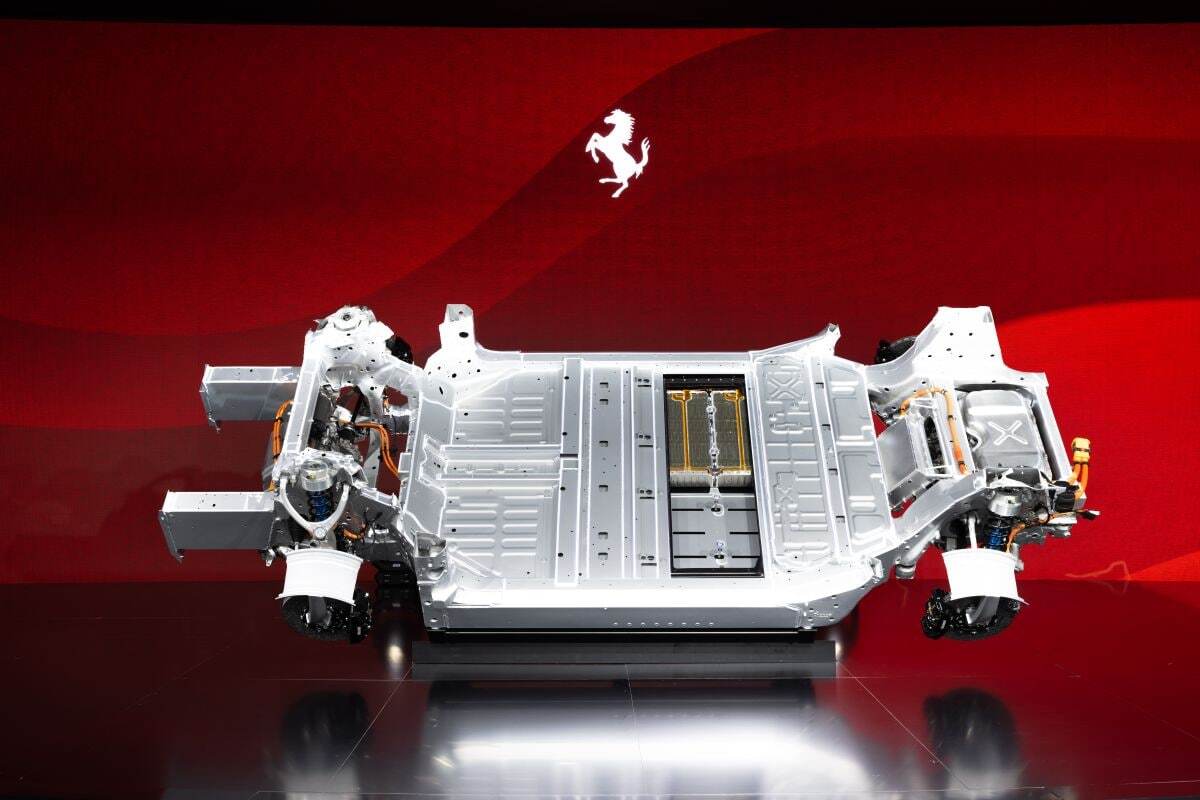
According to the Italian brand, the focus at the Elettrica is on driving pleasure, performance under extreme conditions and a long lifespan. The battery is made up of fifteen replaceable modules, so that new and better batteries can be installed later. As a result, the car could theoretically last for decades.
Experience has also been considered. A shift simulation distributes the power over five ‘gears’ that you have to operate with paddles. The sound also adapts. Ferrari does not use synthetic engine sounds for this model, but says it amplifies the natural vibrations of the electric motor via a special algorithm. We also have to wait and see what that sounds like.
Rimac sold barely 50 copies of Nevera
Yet the market remains cautious. The electrification of luxury brands is stalling because their target group adheres to traditional sensations. The demand for electric supercars is negligible. For example, Rimac managed to sell barely fifty copies of the Rimac Nevera, launched in 2021, despite the promise of groundbreaking performances. An electric Bugatti has also been postponed.
Due to this difficult acceptance of electric sports cars, Ferrari’s first electric car will therefore serve more as a demonstration of technical expertise than as a commercial breakthrough. The manufacturer is taking a cautious step towards electrification, but the real transition to profitable electric models is still a long way off.
“`