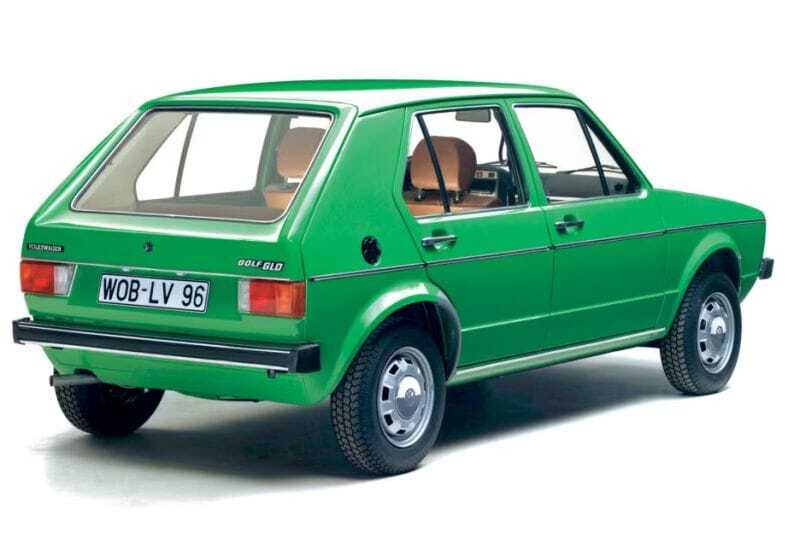
In 2023 we celebrated fifty years of Passat, in 2024 fifty years of Golf, in 2025 fifty years of Polo, and in 2026 it’s fifty years of Golf GTI. But wait a minute: isn’t there another important milestone? Exactly, fifty years of Golf diesel! In 1976, the German hatchback with its spirited diesel engine garnered rave reviews. Yet, it remains eerily quiet from Volkswagen on that front, and we have a hunch why. All the more reason to celebrate VW’s diesel history ourselves and put it in the spotlight.
For Volkswagen, the Golf was truly the savior and, in its time, a groundbreaking concept. A compact hatchback with front-wheel drive and a sharply styled body, designed by Giugiaro. Its introduction marked the beginning of a long and successful career. As early as October 1976, the millionth example rolled off the production line in Wolfsburg. The shortage of labor was solved by attracting thousands of Italians, among others, to the growing automotive city in Lower Saxony since the 1960s. With success, to then assemble a car designed by an Italian. Actually, the Golf should have been the best-selling car in Germany for more than fifty years, were it not for the Mercedes-Benz W123 throwing a wrench in the works in 1980. But after that, it remained the undisputed number 1 among our eastern neighbors, to this day.
Only a handful of diesels
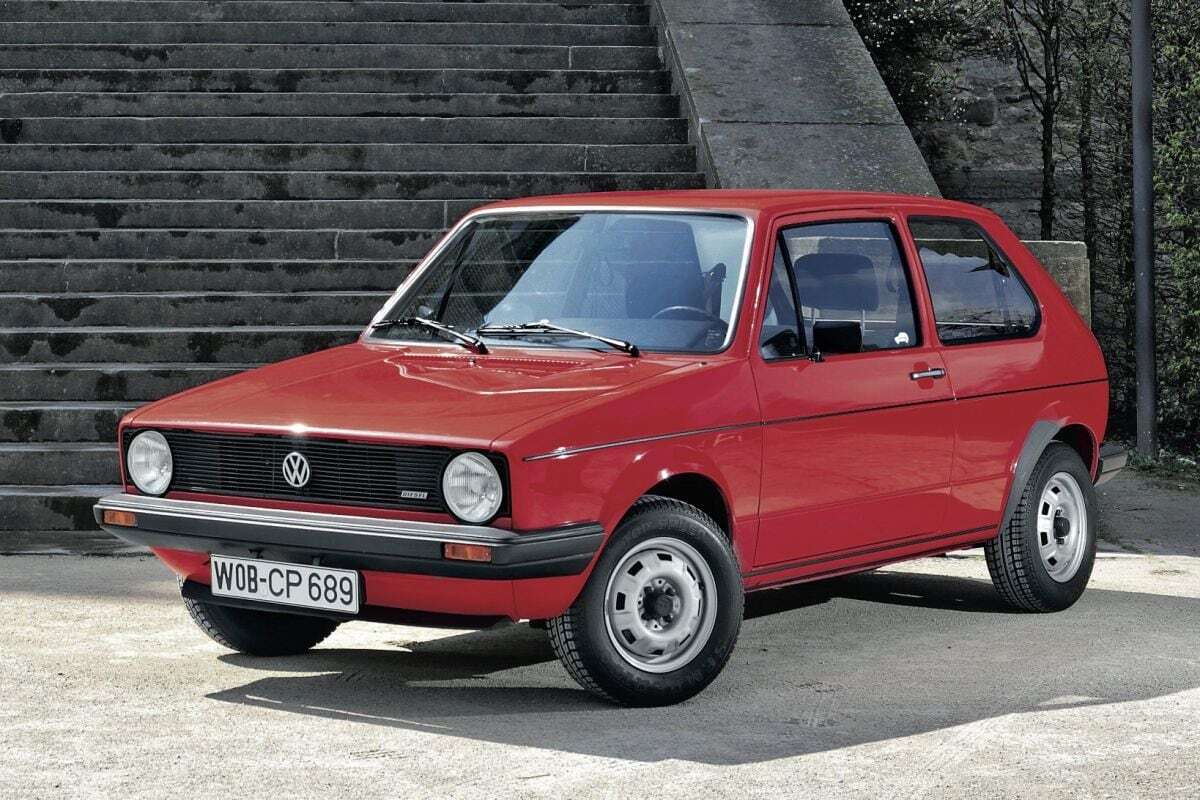
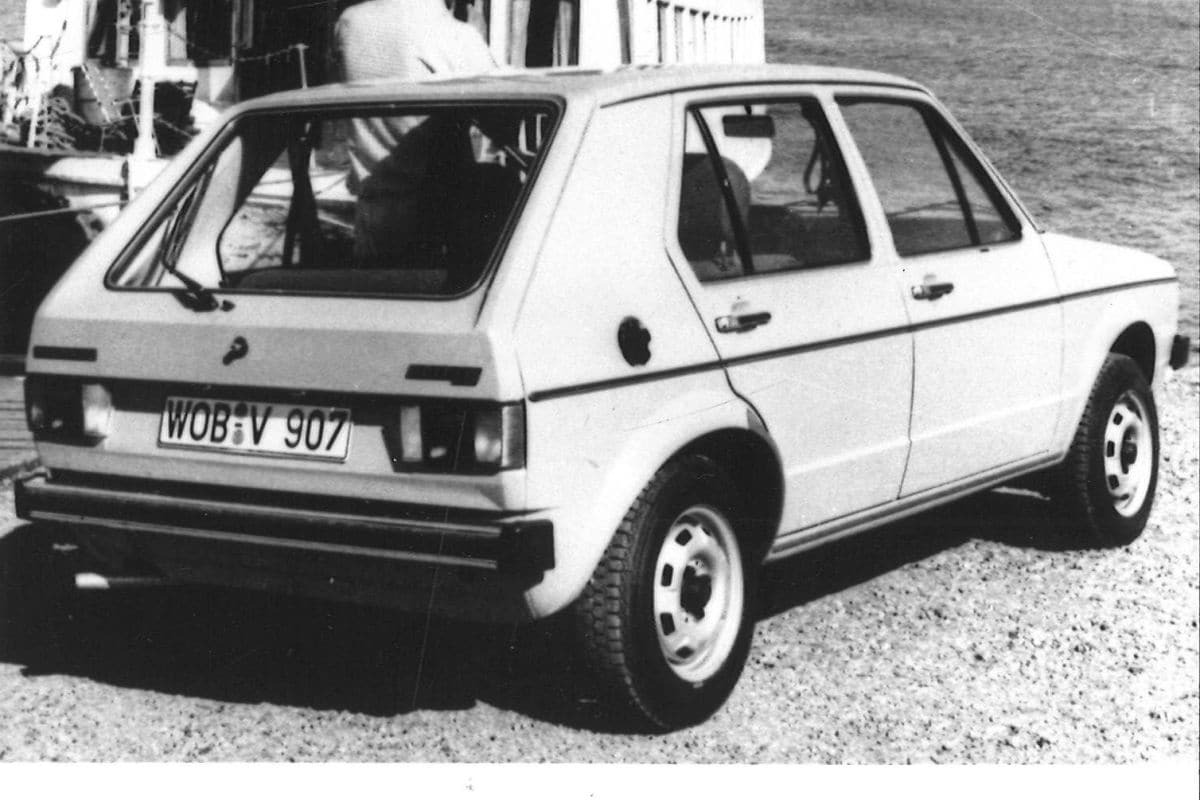
Back to 1976, the year Volkswagen introduced the Golf with a diesel engine. They boasted of having the smallest diesel car in the world, but let’s not forget the Peugeot 204, which already had a 1.3-liter diesel in 1968. The last 204 diesel had a 1,357 cc four-cylinder with 45 hp. Nevertheless, the diesel engine was certainly not common for passenger cars at that time, except for the taxi industry and business drivers. A diesel was synonymous with slow, noisy, and smoky. How rare diesel was then can be seen in a 1977 car yearbook, the first sales year of the Golf D. The meager offering of cars with a self-igniter for the Dutch market: Citroen CX (2.2, 66 hp), Mercedes-Benz (eg, 200D, 55 hp), Opel Rekord 2.1 (60 hp), Peugeot 304 (1.4, 45 hp) and 504 (2.3, 70 hp).
Same performance as the 1.1 petrol
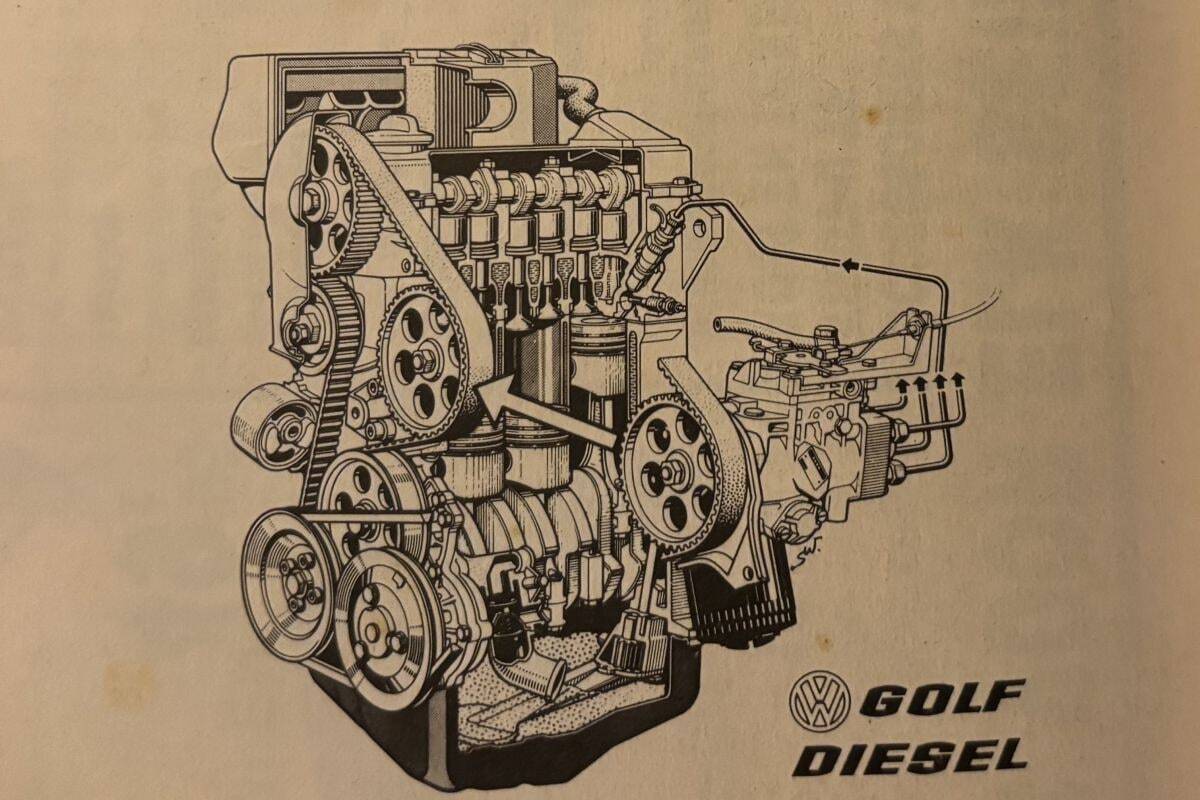
From that perspective, it’s especially remarkable that Volkswagen decided to put a diesel engine in the popular Golf. And then again, not so much, since it could only generate additional sales. The Audi-developed, 1,471 cc four-cylinder petrol engine (the EA827) served as the basis. What made the Golf diesel so special for its time was that with its 50 hp, it had the same power as the 1.1 petrol. And where many diesels delivered their power at a maximum of 4,500 rpm, the lively Golf engine happily continued up to 5,000 rpm. With a top and cruising speed of 140 km/h, the 1.5 diesel was on the same level as the 1.1 petrol. But with lower fuel consumption. In practice, that should have been around 1 in 16 (or 6.25 L/100km), compared to 1 in 11.8 (or 8.47 L/100km) for the smallest petrol engine. With the oil crisis still fresh in memory and increasing concern for the environment, the Golf diesel proved to be the dream answer.
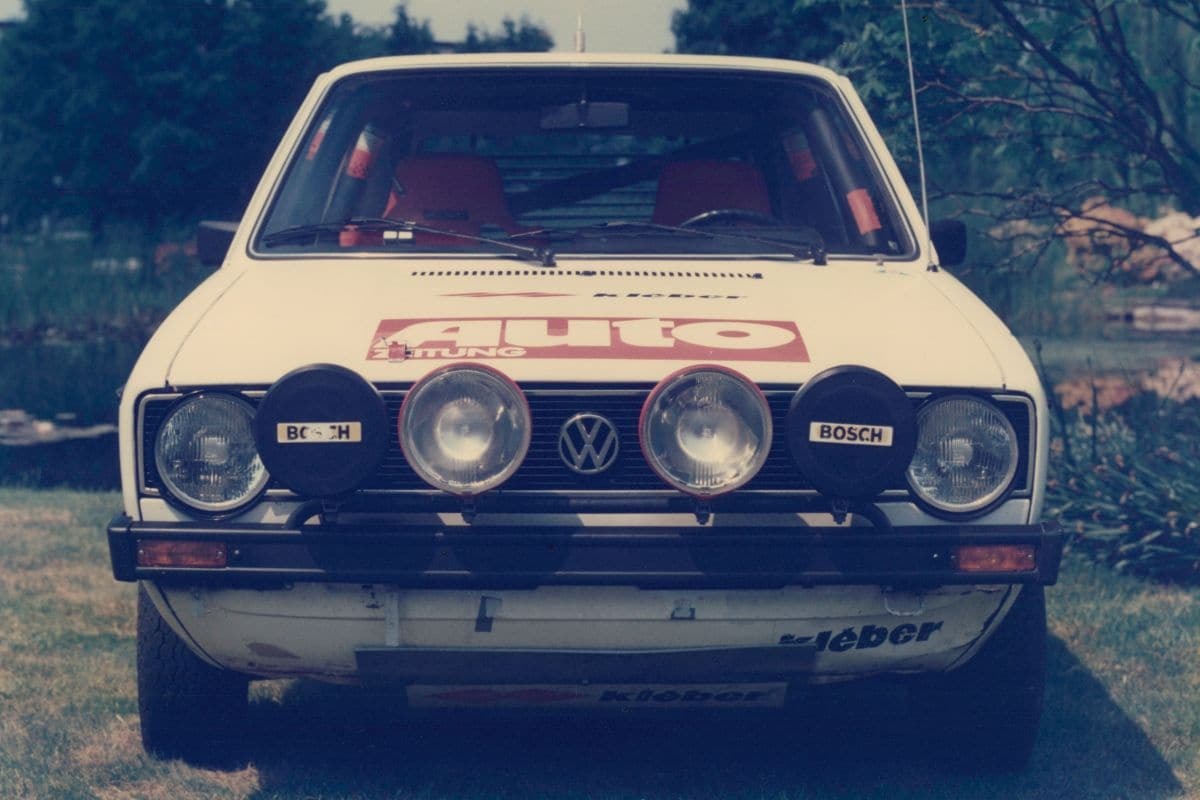
This Golf Diesel drove 9,971 laps on the Kleber test track Miramas. That was exactly 50,000 kilometers in 393 hours, 34 minutes, and 13 seconds. After that, the Golf went to the USA via Emden. It completed the last 23,000 km on its way to 100,000 km in Europe. On July 28, 1977, at 6:46 PM, it was accomplished, with an average consumption of 6.6 l/100 km.
Extra cost quickly recovered
That the Golf diesel was enthusiastically received by the press was obvious. Of all diesels on the market, the Golf was the liveliest. In the sprint from standstill to 100 km/h, it even kept up with a Mercedes 300D. The diesel clatter was especially noticeable at idle, but once on the road, it proved no noisier than its petrol brother. Starting is simple with the ignition key, and after a night of hard freezing, it could take almost a minute before the glow plug light went out. To the left of the steering wheel is a lever that resembles a choke, something you wouldn’t expect in a diesel. What you actually do with it is advance the injection timing. If you do that during startup, there is less smoke. The extra cost of about 1,900 guilders compared to the 1.1 petrol could be recouped fairly quickly at that time due to the low consumption and a diesel price that was half that of a liter of petrol. You paid an extra 14 guilders per month in road tax.
The diesel gaining momentum: TDI
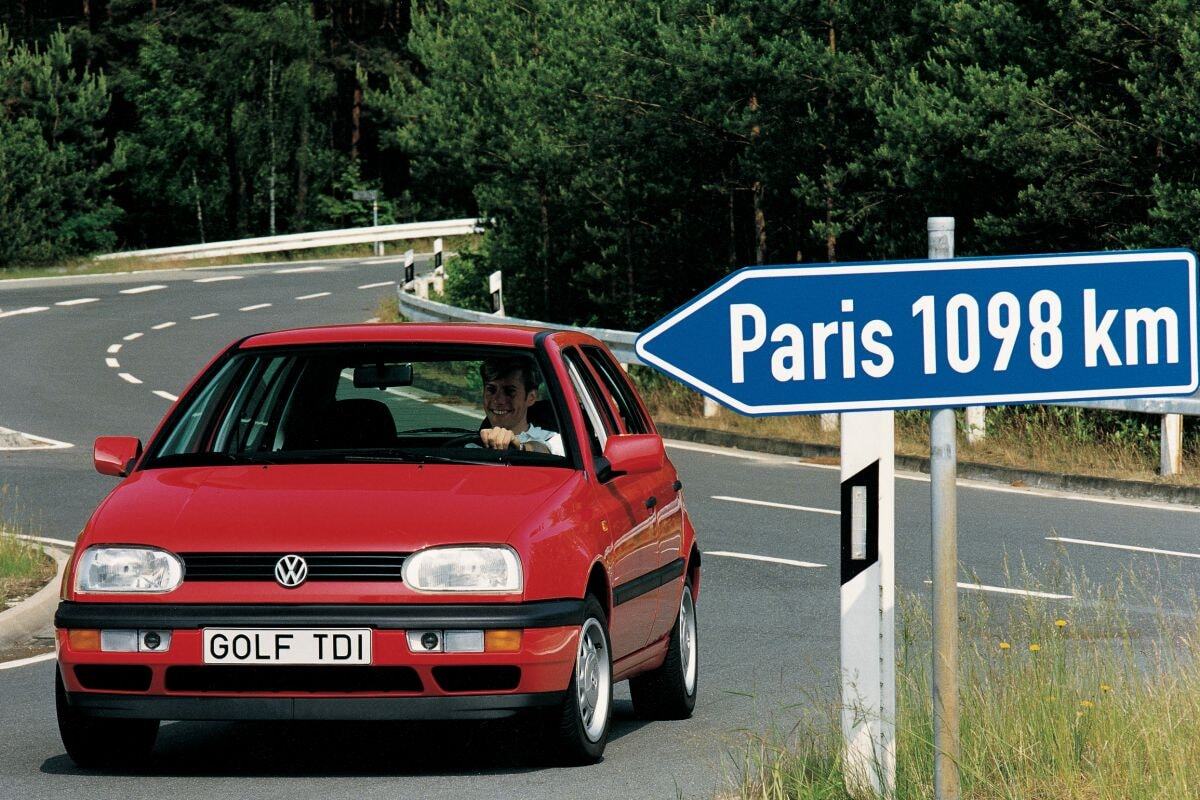
From that moment on, the diesel became a permanent fixture in VW’s range. The cylinder capacity grew to 1,588 cc in 1980, and power increased to 55 hp. In 1982, the turbodiesel with 70 hp arrived, and the second-generation Golf had an 80 hp version from 1989. But the true sensation came in 1993, with the introduction of the TDI. Once again, VW was able to benefit from Audi’s technological lead. After the first five-cylinder 2.5 TDI in 1989, the brand introduced the 80 TDI in 1992, which had a 1.9-liter diesel with 90 hp. A year later, that engine found its way into, among others, the Golf and proved to be a robust piece of engineering with unprecedented low fuel consumption. The era of the direct-injection turbodiesel with its powerful torque began, almost all brands followed, but VW was the trendsetter (although Fiat with the Croma had preceded them in 1987).
The death of diesel: dieselgate (and electrification)
Why is it now deafeningly silent at VW regarding the diesel theme? After many decades of success, dark clouds suddenly gathered over Wolfsburg in 2015. The brand turned out to have tampered with the software, causing NOx emissions during mandatory measurements to be significantly lower than in practice. Note: this has nothing to do with consumption and CO2 emissions. Anyway, about 11 million diesels with the EA189 engine had to return to the dealer for a software update. It became an industrial scandal unprecedented in scope, and many people had to go through a lot of diesel dust.
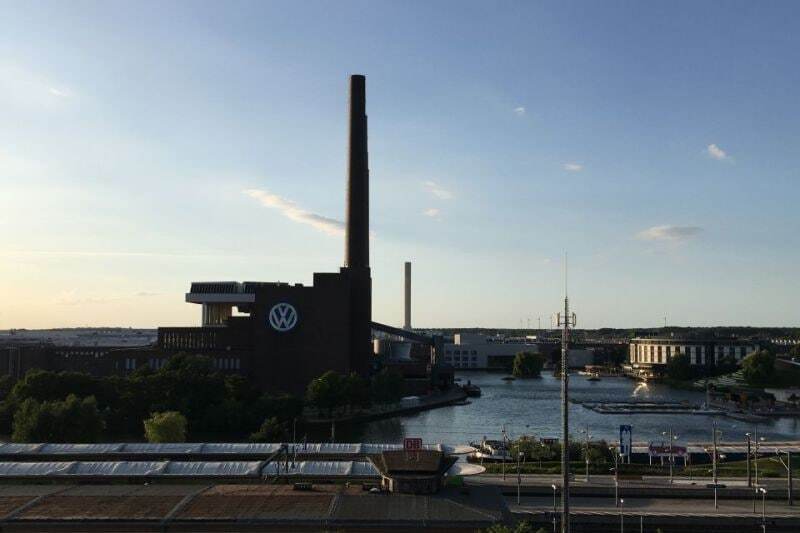
The fact that ultimately more brands had indulged in such practices was perhaps a small balm for VW’s wounds. But the damage was already done; diesel was given the blame, and in combination with increasing electrification, the sale of diesels went into freefall. We often look back with nostalgia at that wonderful diesel torque and the enormous range, only to realize at the same time that this chapter is as good as closed. Nevertheless, we are very quietly celebrating fifty years of Golf diesel, just as it will most likely also happen somewhere behind the scenes at VW. And for those who are still loyal to the Golf Diesel: there are still plenty of used cars to be found!
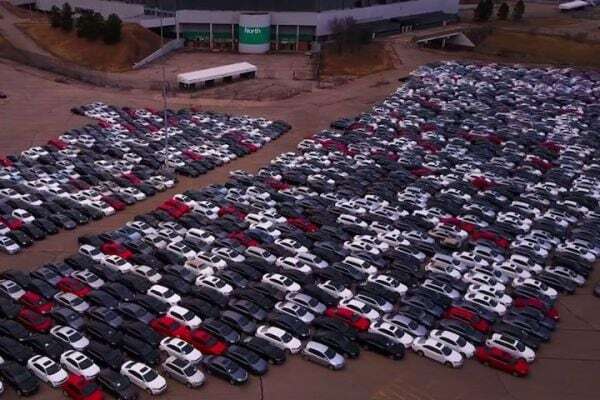
In the USA, Volkswagen had to buy back thousands of diesels.