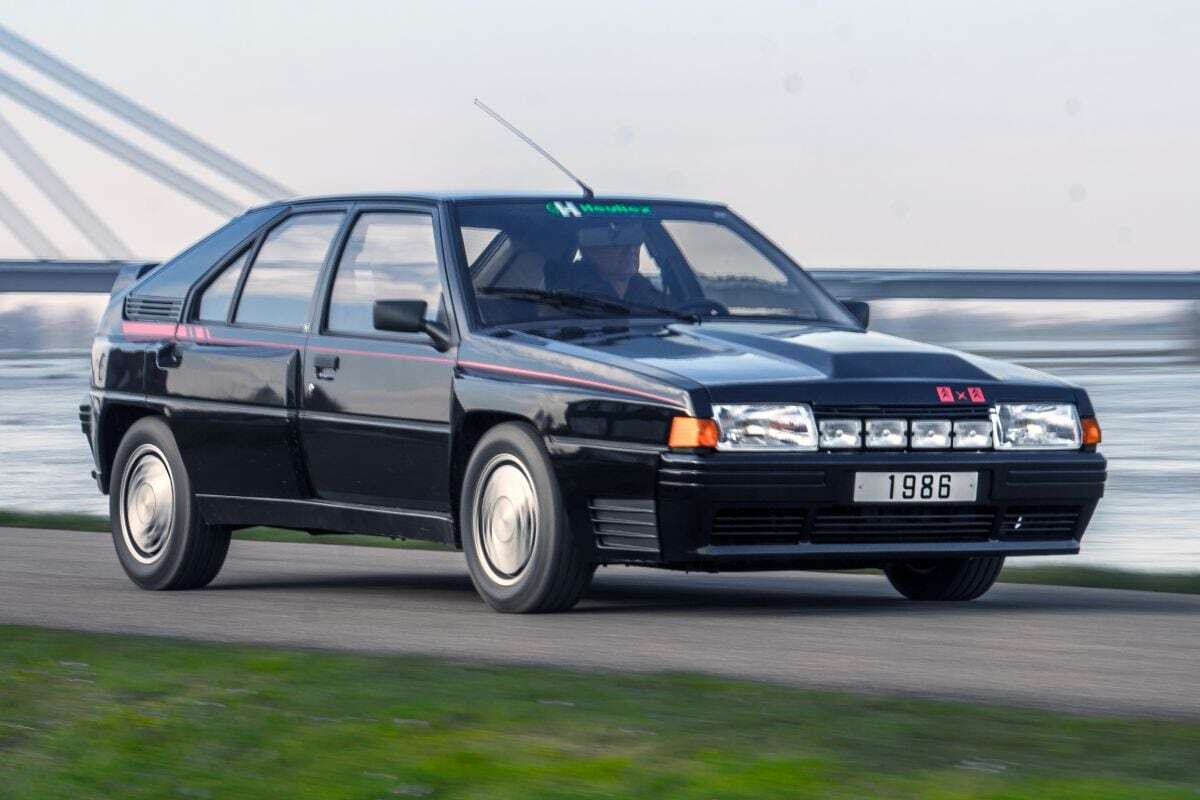
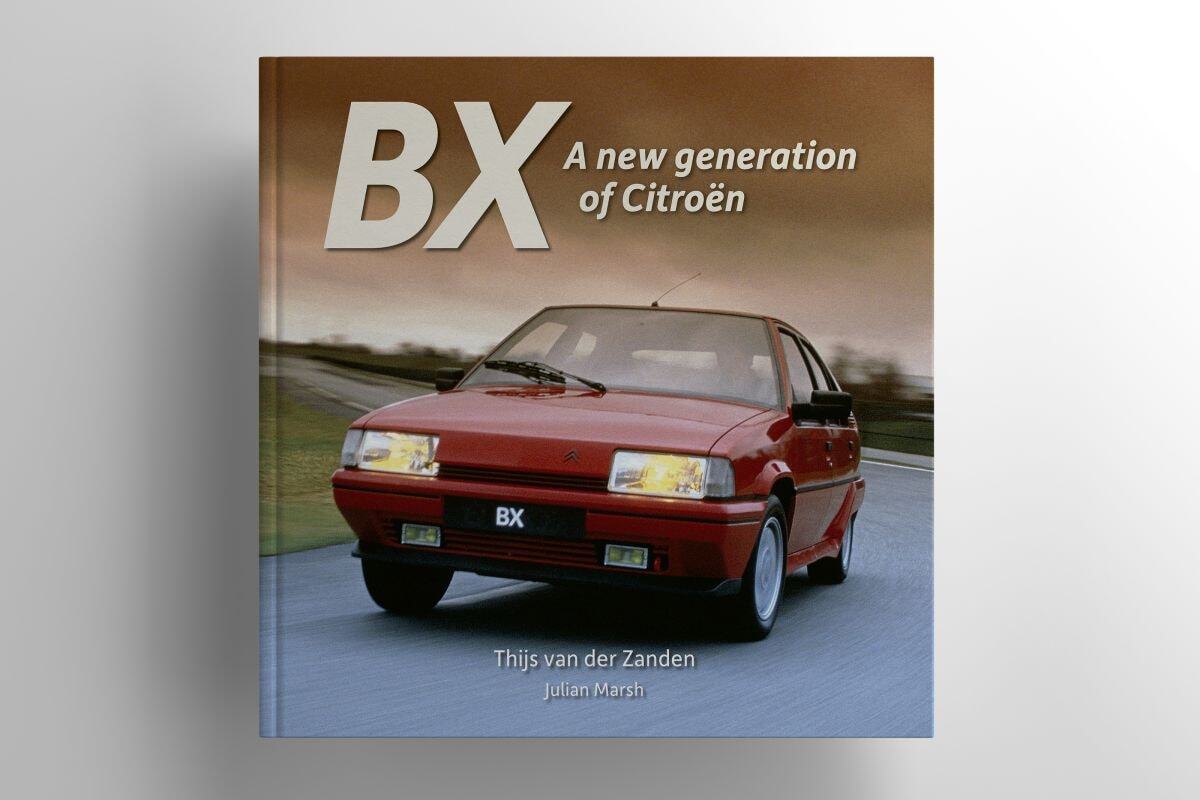
The Citroën BX is characterized by its distinctive design, great value for money, and therapeutic suspension comfort. The BX Sport, BX GTI, and BX 16V demonstrate that the sleek Frenchman can also be sporty.
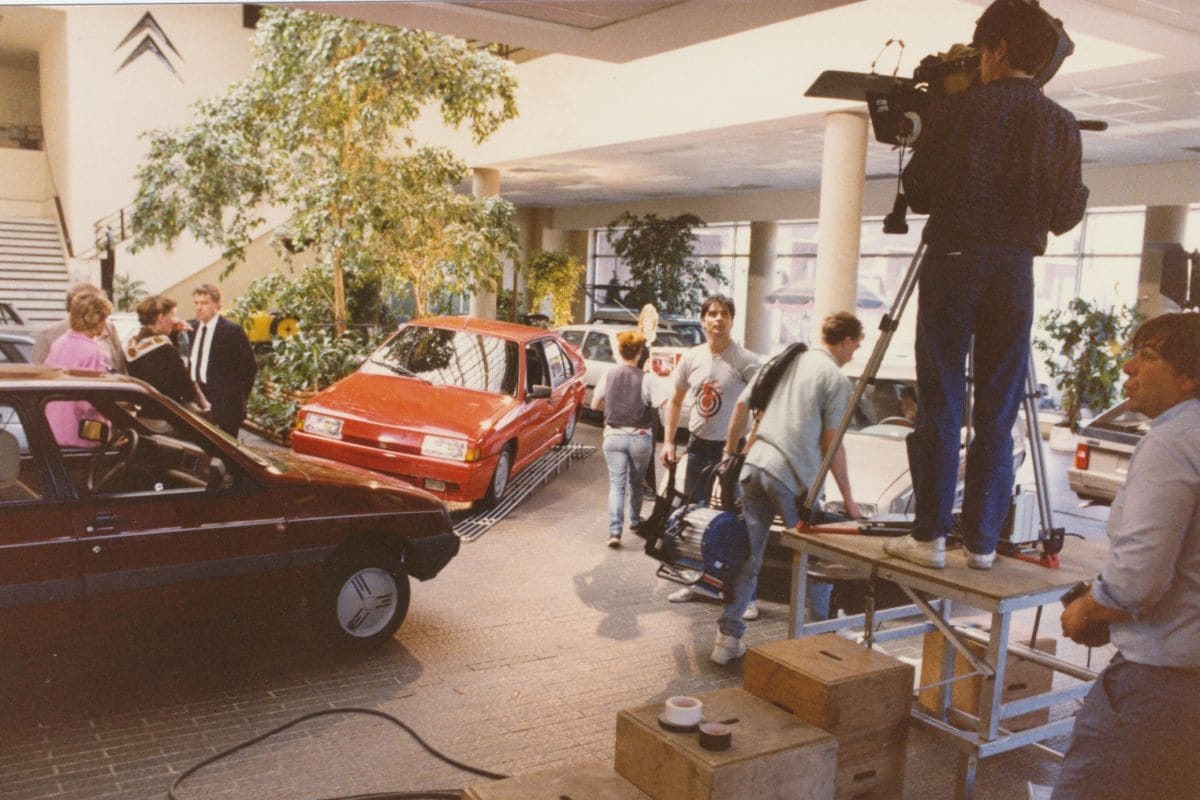
Close the door of a BX and you know this car doesn’t carry much weight. The embrace between the lock and the latch and everything around it cannot be described in a more flattering term than ‘tinny’. Look up the fragment on YouTube in which Johnnie Flodder slams the door of his slyly obtained red BX Sport. As sporty as that version of the BX is, the career of the mid-range car that will replace the GSA in 1982 begins so tamely. And to save the financially shaky PSA, although they didn’t know it yet. By ‘tame’ we do not mean the propaganda machine that Citroën runs at full speed to bring the new model to the public’s attention. With month-long TV campaigns and BXs strategically parked throughout France, there is no escaping the newcomer in the early 1980s. Citroën even hangs a BX in a wooden box under the Eiffel Tower as a ‘teaser’ for the official presentation, which takes place during the Paris Motor Show in October 1982.
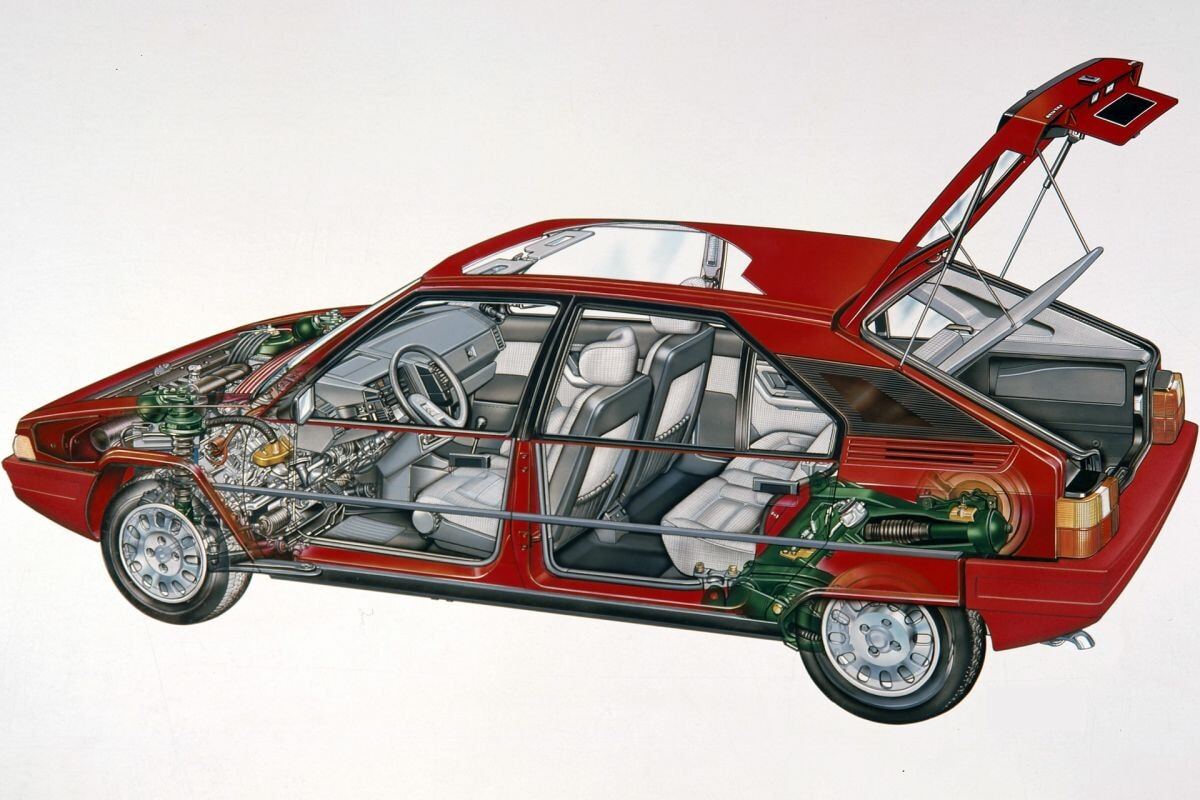
It started with 62 and 90 hp for the BX
Motorically tame, those are the versions that Citroën presents to the public in Paris during the first months in the showroom; with a 1.4 and 1.6 with outputs between 62 and 90 hp, the BX does not immediately present itself as a speed demon. Let people first get acquainted with the groundbreaking appearance before we put spoilers on it or start talking about more potent engines, that must have been the idea. More plausible is the idea that sporty versions of ‘normal’ cars are rarely launched directly, but rather later in the life cycle. A promising signal towards future sportiness is the low weight of the BX. Thanks to plastic bumpers and a fiberglass-reinforced composite bonnet and tailgate, a basic BX weighs only 900 kilos.
Sporty top Talbot in mind
Of course, it is not the case that at Citroën they suddenly thought: ‘Oh, let’s put a sporty BX on the market’. Even before the introduction of the BX, in 1981, the management is thinking about a sporty top model. Not for Citroën but for Talbot, which then also belonged to the PSA concern and where they were working on a competitor for the Volkswagen Golf GTI. The French are experimenting with a 1,442 cc four-cylinder, which the British Lotus provides with a turbo, good for an output of 115 hp. Citroën watches from the sidelines and orders an extra engine block to try out in the GSA. According to Thijs van der Zanden, author of the BX book, it is not clear why Citroën used a Talbot block because it had already been decided internally that the 1.4 and 1.6 power sources from Peugeot would be used for the BX, possibly supplemented with a turbo version of the 1.6.
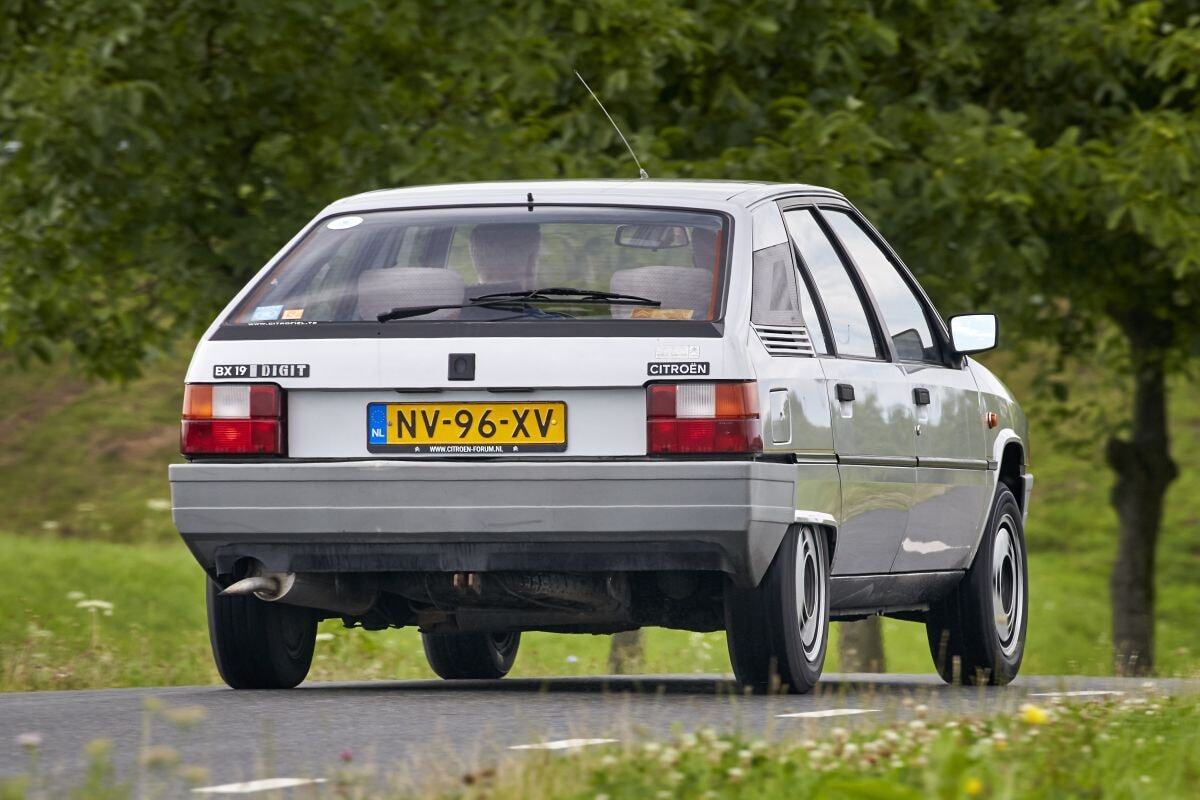
An early BX, the DIGIT with digital instrumentation.
First step is BX GT
The first step towards a sporty BX was taken in 1984 with the BX GT, a smartly dressed model with a 105 hp 1.9 four-cylinder. Although anything but earth-shattering, certainly by today’s standards, a zero to hundred time of 10 seconds and a top speed of 185 km/h were above average fast. For Citroën in any case sufficient reason to print the specifications and performance of the BX GT page-sized. ‘Are there any thirty-somethings with wild hair?’, is the main question in another commercial, in which Citroën presents the remedy for people ‘with so much stability that life threatens to become a ruin’: a BX 19 GT.
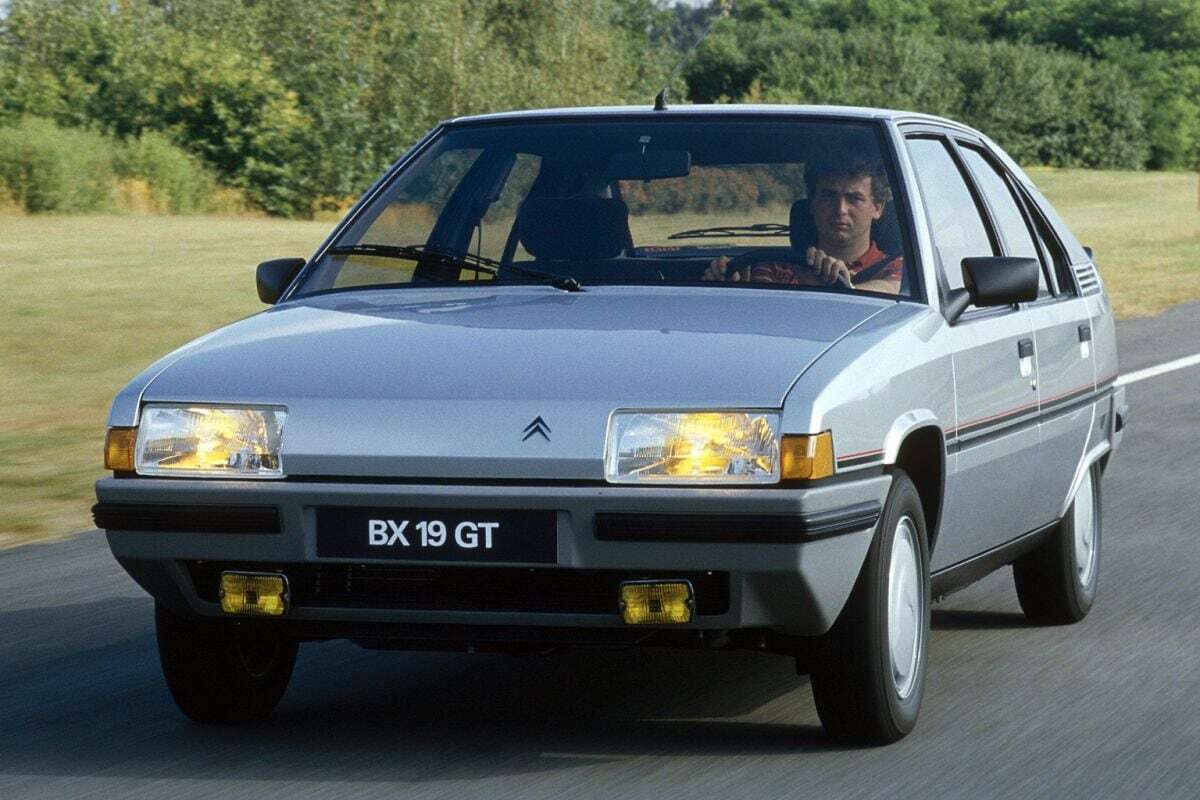
At the end of 1983 there are plans for a limited, more spicy version of the GT, for which the names GTX, 130 S and 19 Sport are circulating. The GT turns out to be the prelude to the car that Citroën proposes in March 1985 as BX Sport. Without ’19’ in the type name but indeed with a 1.9 under the plastic hood, now good for 126 hp. Now it starts to look like something.
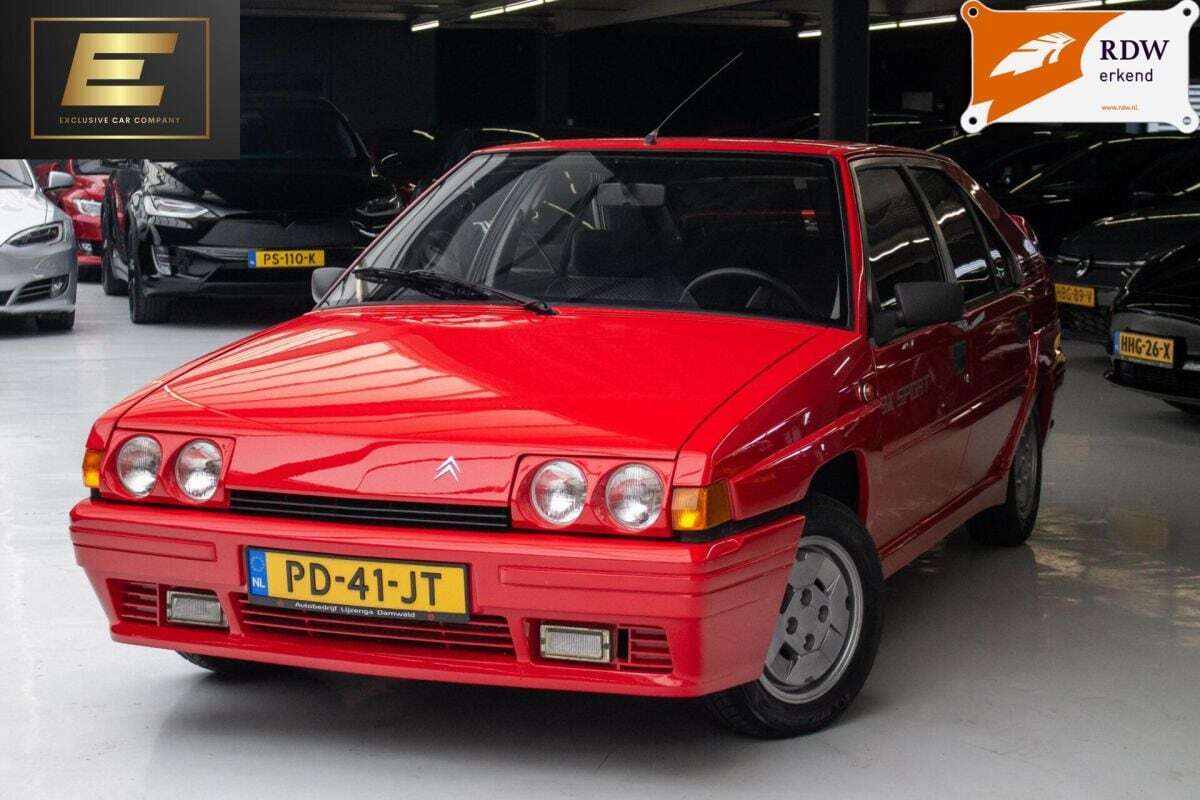
This is the copy from Flodder, the Citroën BX Sport that was recently for sale.
Flagship of the sporty Citroën
Together with the Visa GTI and CX GTI Turbo, the BX Sport is the flagship of the sporty Citroën in the mid-eighties. An unknown, underexposed side of the brand that has been associated with style and comfort for years. To visually reinforce the ambitions, there is even a new house style with bright red and clear white, which replace the blue and yellow. They notice at Citroën that a little controversy is never bad for publicity when the advertising campaign for the CX GTI (in which the proudly mentioned top speed of 220 km/h would encourage hard driving) is banned.
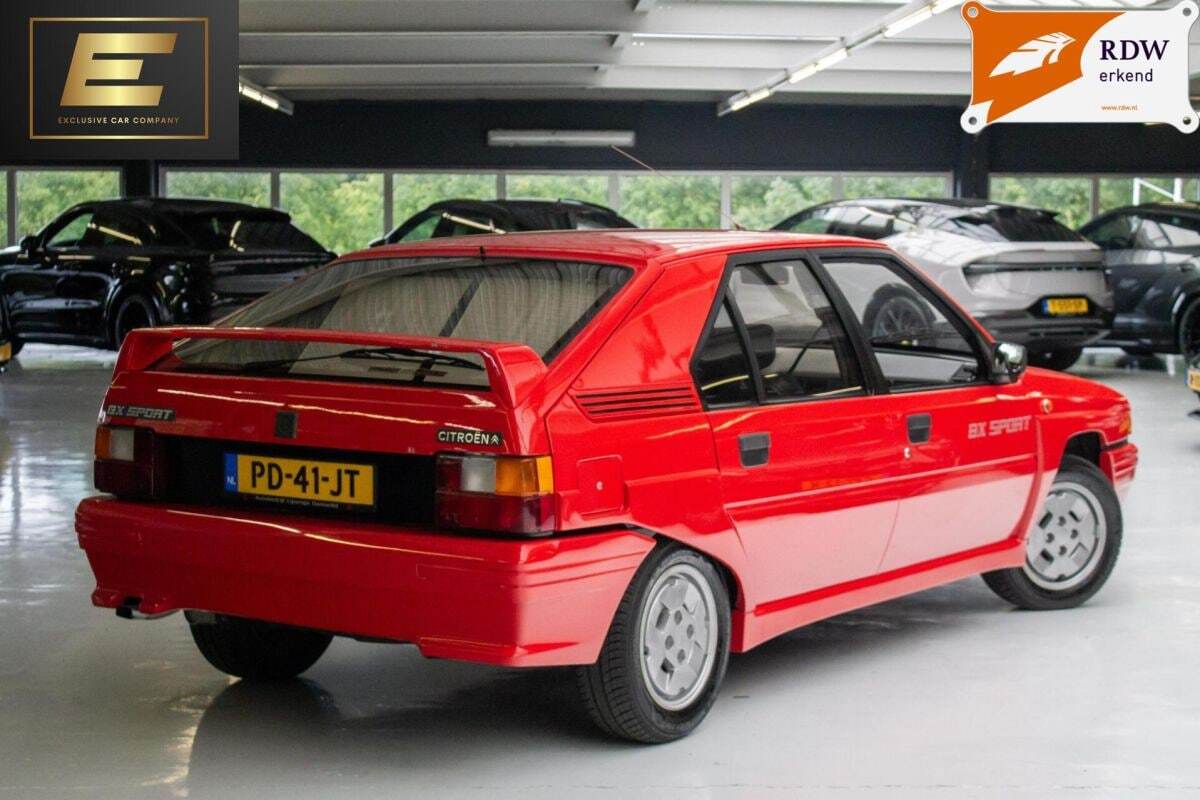
Citroën BX Sport, Johnny and Kees once sat here!
Back to the BX Sports. It is optically tackled with a new front bumper with integrated fog lamps, a large rear bumper, ditto rear spoiler, fender flares, side skirts, obliquely cut rear fenders (which we see back on the Maserati Quattroporte a decade later), a rectangular exhaust end piece and new light metal. The grille is painted in body color and on the body we see various matte black accents. If you are still in doubt with which type BX you are dealing with: see the text on the front doors. The interior is similar to that of the 19 GT, but with more velor, a new three-spoke steering wheel and a special gear knob.
Double Webers
The Sport also takes over the 1,905 cc four-cylinder from the GT, but with two double Weber carburetors, modified valve diameters and other combustion chambers. That combination is initially good for 145 hp, but to meet the Euro 3 standard, the Citroën engineers screw the power back to 126 hp. To make the road holding match the sporty intentions of the engine and bodywork, the track width is increased by 1 cm at the front and rear, there is more pressure in the suspension spheres and Citroën mounts Michelin MXV tires on wider wheels. Although they reportedly preferred to put Pirelli’s underneath…
Sport later also in red, black and white
Initially, the BX Sport is only available in two shades of gray and the edition remains limited to 2,500 copies. They fly out the door and so the model quickly goes into series production. The Sport is also in high demand in the Netherlands, which leads to joy but also concerns at the importer. After all, a modest purchase had been made because it was expected that the price of 34,990 guilders (€ 15,837), almost double that of an entry-level BX, would scare off buyers. Moreover, the debacle with the Visa Chrono (of which only 70 of the ordered 400 were sold) is still fresh in the memory. The concerns prove unfounded, and in 1986 the BX Sport is included in the fixed delivery program. Now also in red, black and white.
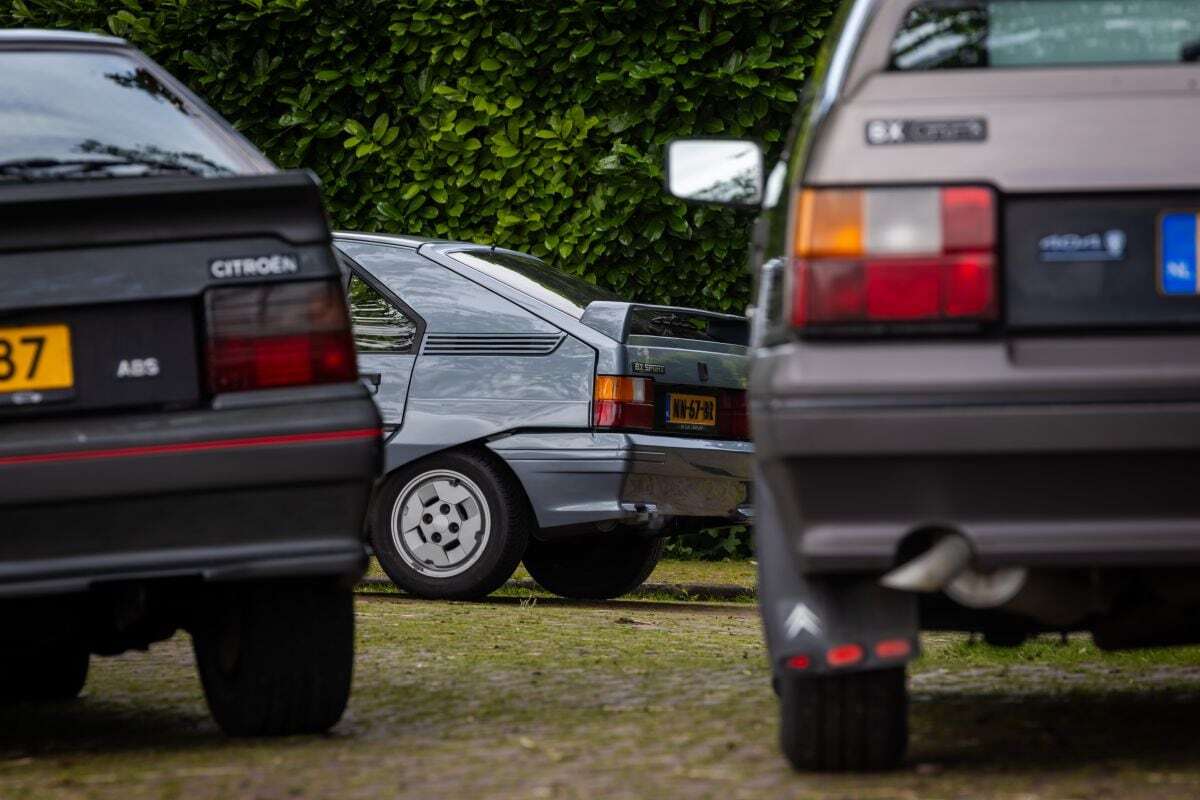
Less tinny after 1986
While photographer Chris is capturing Erik Hannewijk’s BX Sport from all sides, we take the opportunity to take a tour with Dennis van de Bilt’s BX 16V. Opening and closing the door feels and sounds noticeably less tinny than with the Sport. The improved insulation was one of the fruits that the BX picked at the facelift that Citroën implemented in the summer of 1986. Much more visible is the new dashboard that the BX was fitted with at that time. Less idiosyncratic than the original board, but much clearer and ergonomically more thoughtful. In the GTI 16V, the fastest BX that Citroën built if you don’t count the 4TC (see box), you have to look hard for sporty elements. Although, to be honest, that also applies to the Sport, which also does not get much further than a three-spoke steering wheel and a red trim around the gear knob.
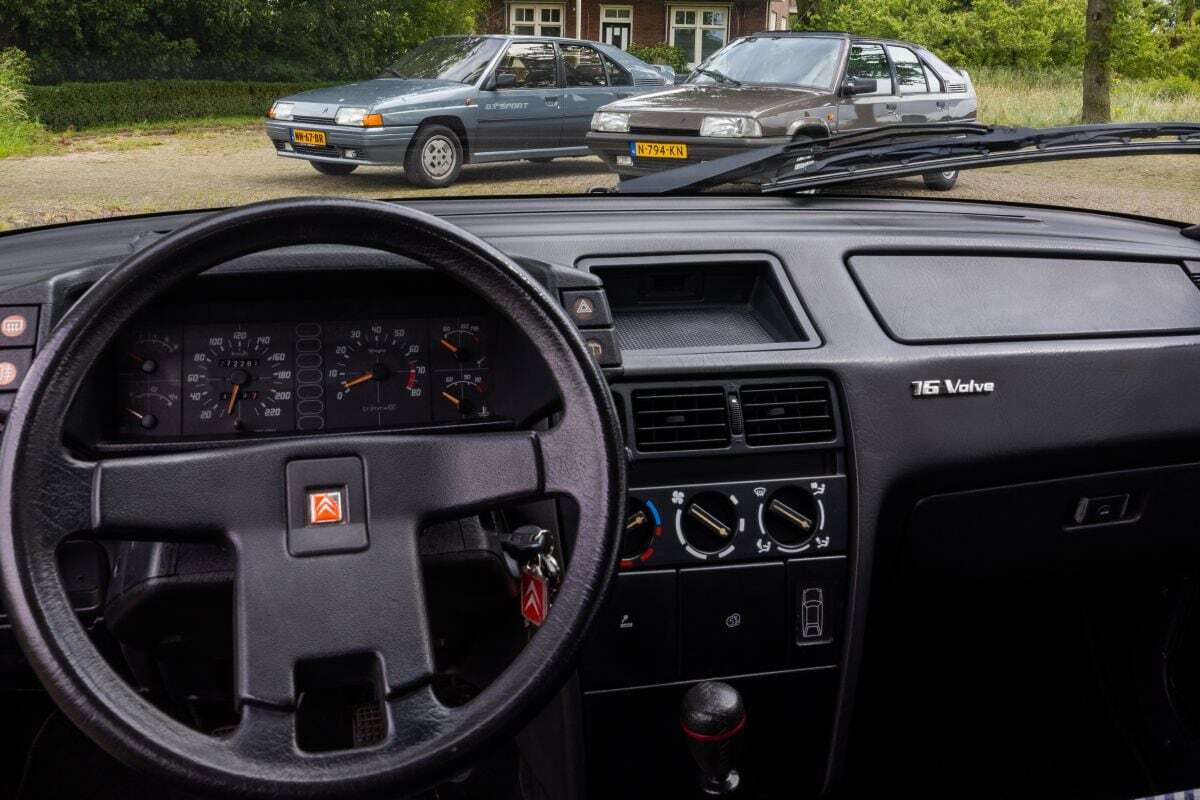
However, the sports seats of the GTI 16V are more pronounced in shape, have a smoother fabric and offer more support than those of the Sport. On the right of the dashboard we see a shield with 16 Valve. A personal addition from Dennis? No, it really belongs there. An engine with 16 valves, or as the French say: ‘soupapes’, was something to specifically mention at the time, it was that special. In fact, according to its creators, the BX GTI 16V was the first French car with a multi-valve engine in 1987. In the Netherlands, Citroën dealers sell this version, as well as the regular 19 GTI, until December 1989 with and without a catalytic converter. That made quite a difference – apart from the emissions – in power. With a catalyst you lost 12 hp and 11 Nm with the 16-valve; from 160 to 148 hp and from 177 to 166 Nm. And that had consequences for the 0-100 time (7.9 to 9.6 seconds) and the top speed (218 to 213 km/h).
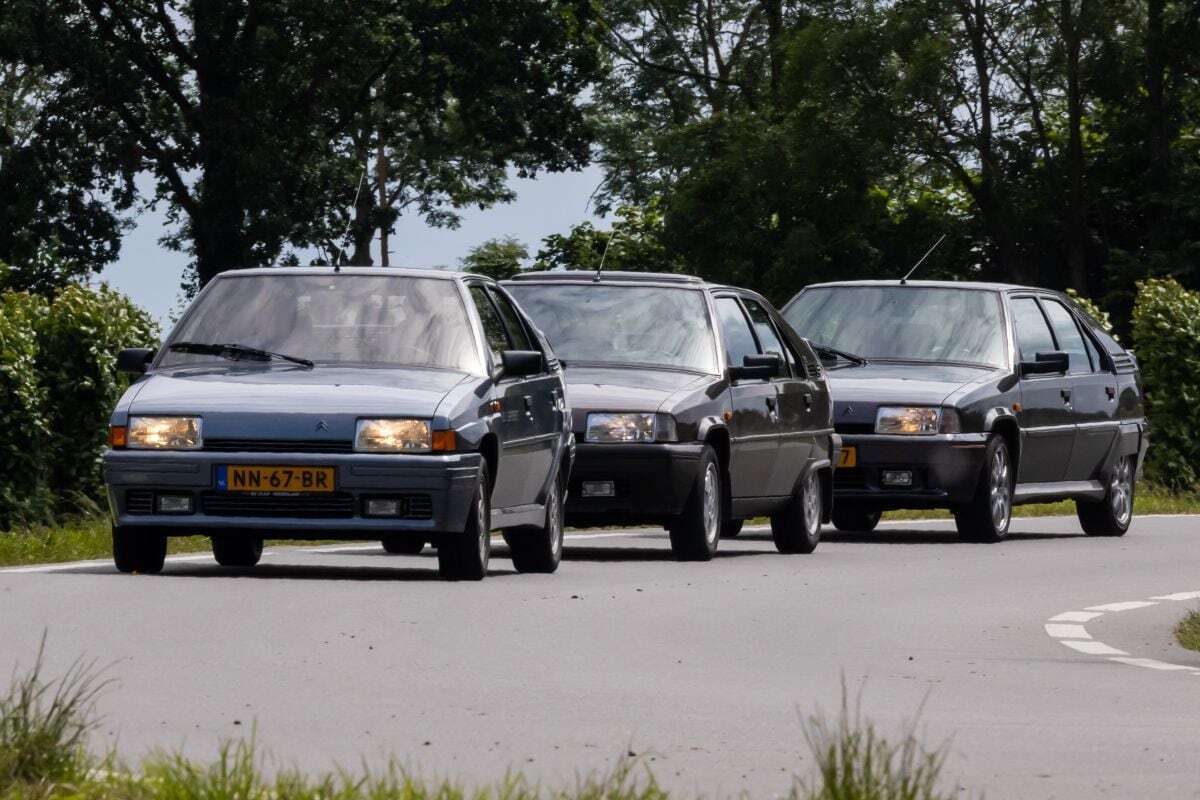
Dennis’ GTI 16V is from 1990, so the version with a catalytic converter. Not that we have one without a cat next to it for a direct comparison, but we just wanted to say it. What is striking is that the sixteen-valve runs very nicely, there is no stuttering in the engine speed to be detected at idle running. The engine picks up well when accelerating and really comes to life above 4,000 rpm. Then the pace is nice and you could theoretically continue to the red area that starts at 7,000. Shifting is nice and smooth and the whole car feels tight and solid, with the steering behavior being positively influenced by the relatively flat tires that Dennis himself mounted.

Different engine character and sound
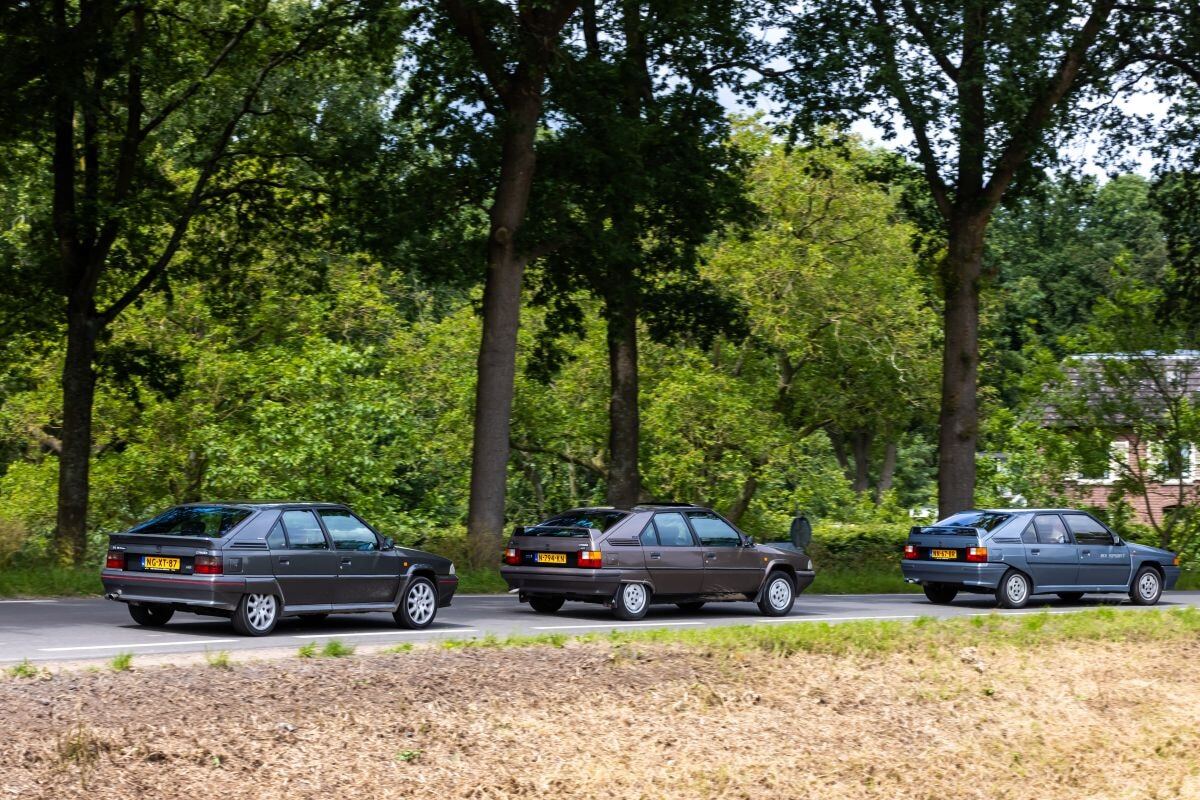
Back at the photo location, house photographer Chris Schotanus has now ‘cut and shaved’ the BX Sport. When it comes to driving experience, the biggest difference between the Sport and the 16V is in the engine character and sound, which is more prominent in the Sport. As far as performance is concerned, the two are not much different from each other, even though on paper there is a difference of 22 hp in favor of the sixteen-valve, of which the torque is again a few Newton meters lower. It is more the way in which the eight-valve of the Sport transfers its 126 hp to the front wheels. Eagerly, with a lot of pulling power low in the revs. He reacts more enthusiastically than the 16V, which only comes to life later. Because the Sport is equipped with other stabilizer bars, it has more roll and dive tendencies, which makes the road holding tend more towards comfort than real sportiness.
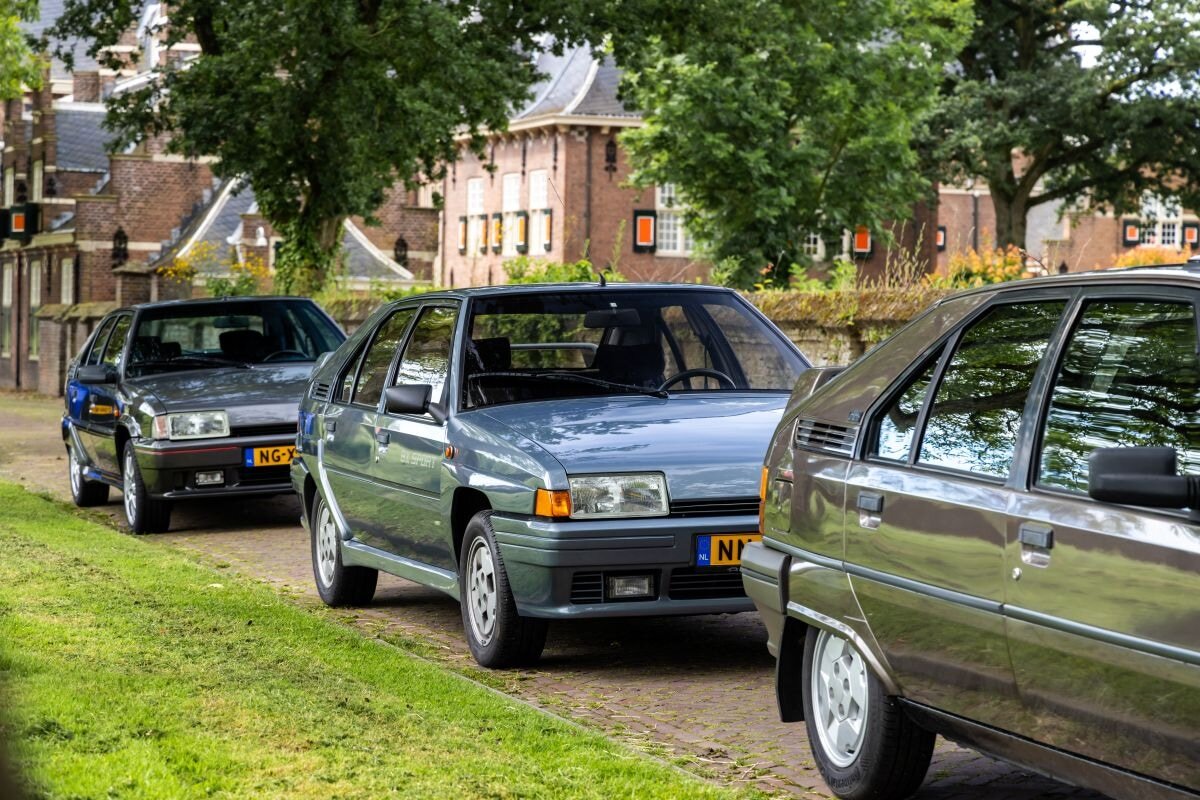
Our GTI had the 1.9, but there were also countries where there was 1.6 in it
When our round with the Sport is over, the last remaining BX, the GTI from Michiel van Geffen, is also ready for an introductory ride. For the record: this one does not have 1.9 under the hood but a 1.6. You can’t see that on the outside, but it is the variant that Citroën built for countries where the tax rate was linked to the engine capacity. That means that we have to do with ‘only’ 113 hp, where the 1.9 GTI has 122. That makes this BX 16 GTI smooth across the board, but not as eager as the Sport or as alert as the 16V in the higher rev ranges. That the sound of the engine reminds us of the Peugeot 205 GTI is not surprising; it IS the engine from the 205 GTI, just like the 1.9 by the way! According to Michiel, this version of the BX is also called the ‘dirty GTI’ because of the not so subtle air mass and temperature meter. This results in a less good ignition moment. Nevertheless, the BX GTI really feels like the golden mean between the 16V and the Sport. Perhaps helped by the so-called ‘comfort’ suspension spheres that the owner has mounted ‘for the real BX feeling’.
GTI and Sport next to each other until facelift
Incidentally, Citroën described the BX GTI as a ‘fast, luxurious touring car’ at its introduction and the Sport – which simply remained available – as the ‘purebred sports car’. To prevent the two from getting in each other’s way and/or causing confusion among customers, Citroën decided not to include the BX Sport in the 1987 facelift round. As a result, it has never been available with the new dashboard. This means that you are always assured of that secretly very nice tinny sound of a BX door when you slam it shut. Especially for all thirty-somethings (with inflation correction: seventy-somethings) with wild hair.
 “`
“`