Sometimes we get the impression that the European automotive industry has started its last chapter, but BMW is not giving up so easily. With the iX3, it presents a completely new EV that gives the concerned citizen a little courage again.
The concerned citizen? Why should we be concerned?
Well, where do we start. Increased competition from China, disappointing sales figures in that country, unclear and complicated European regulations, sky-high development costs and a volatile demand for electric cars together form a disastrous package for European car manufacturers. One report after another about declining market shares and major rounds of layoffs are currently our share, and that is quite worrying.
Time for change then!
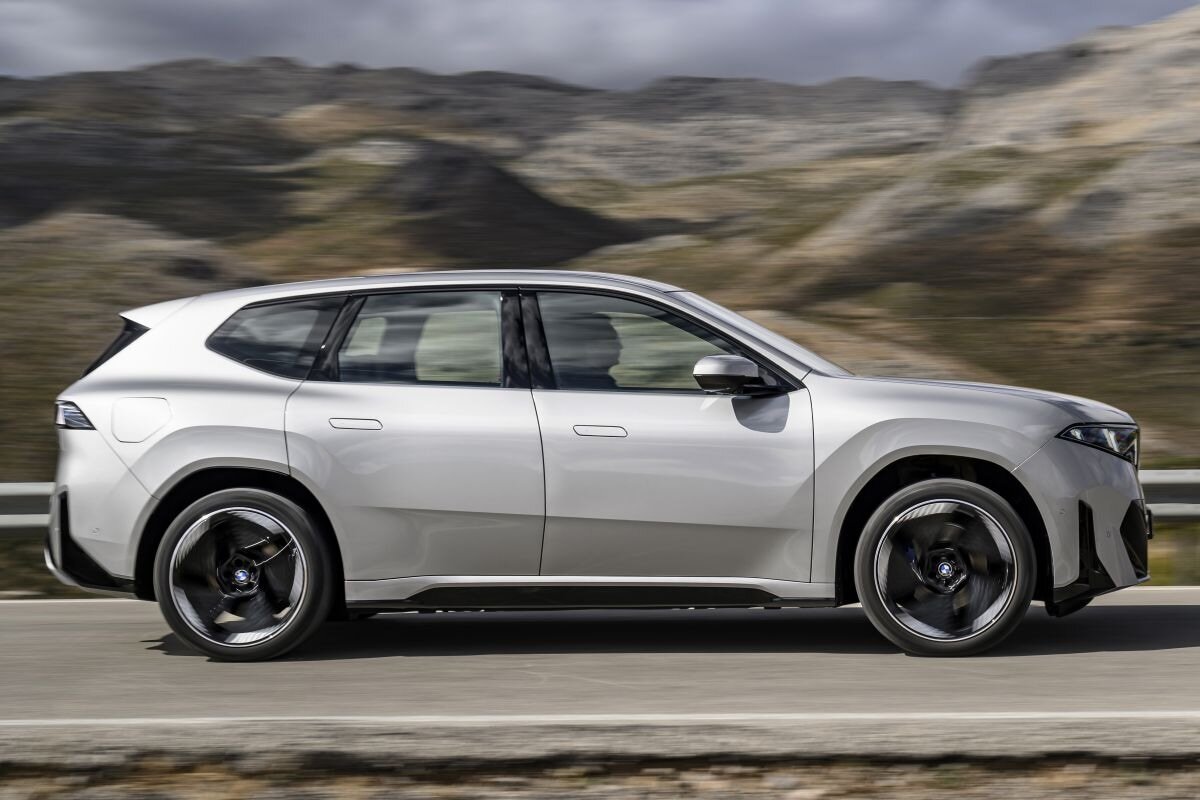
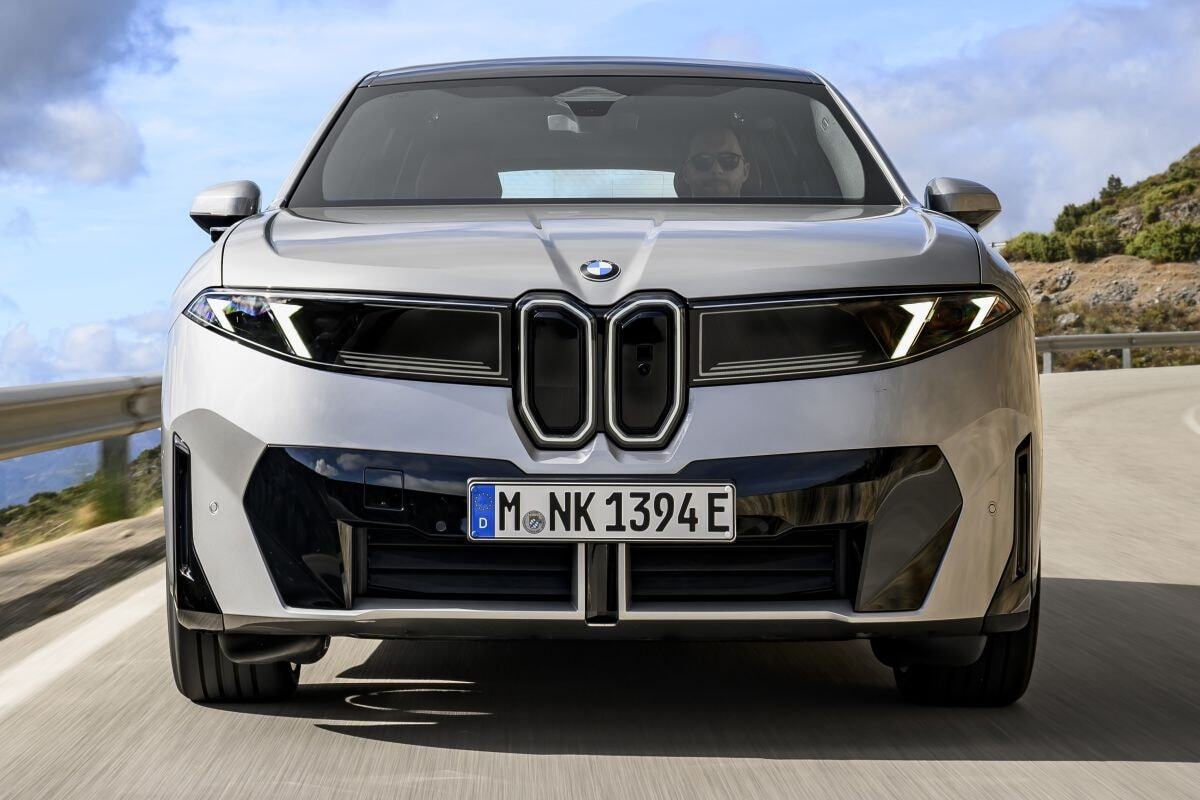
Indeed, and of course they know that at BMW too. The new iX3 only shares its market positioning with the fuel-powered X3, is the first model in the ‘Neue Klasse’ model series and is the first with a new design and a completely new interior concept. The specifications are already very impressive on paper. BMW introduces the iX3 as xDrive50, a four-wheel drive car with two engines and no less than 469 hp. This allows the car to achieve serious sprint times, but even more impressive is the WLTP consumption.
How economical is the BMW iX3 then?
That depends strongly on your choice of wheels, but in the most favorable case we are talking about 15.1 kWh/100 km. This makes this new iX3 much more economical than its rear-wheel drive predecessor (17.6/100) and even more economical than a brand new i4 with four-wheel drive, while that car is much lower and lighter. Partly thanks to a new battery with cylindrical cells, BMW manages to cram no less than 108.7 kWh of power into the bottom of this car. Thanks to that low consumption, these results in a range of up to 805 kilometers.
That is indeed very neat. What about the charging speeds?
Partly thanks to an 800V on-board network, you should be able to reach 400 kW at the fast charger. Not unheard of – some Chinese preceded BMW – but still special. The design of the car is also completely different than we are used to from BMW. For example, BMW speaks of four ‘super brains’ that each have a specific task. The amount of wiring has been reduced by no less than 600 meters compared to more traditional BMWs, which saves weight, although the iX3 is certainly not a light car at over 2,300 kg. Vehicle-to-Load is also available, while BMW in Germany is even working on Vehicle-to-Grid.
Is the chassis also so complex?
Surprisingly, but no. The car never has four-wheel steering and always ‘just’ steel coil springs and non-adaptive shock absorbers, so adjusting the ride height or damping is simply not possible. BMW’s engineers indicate upon request that they preferred to invest time in developing one solution that works well for everyone, and they seem to have succeeded well in this.
How does the new BMW iX3 drive?
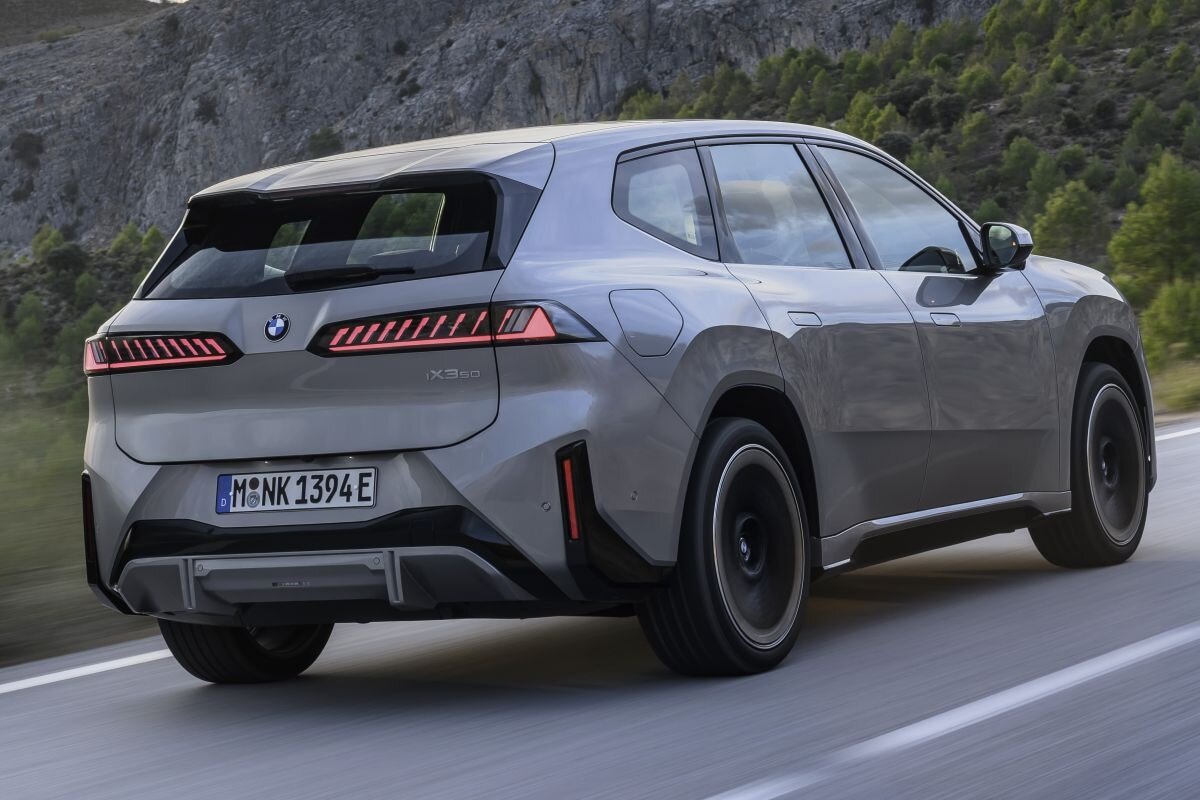
The iX3 is certainly not a waterbed, but it does remove bumps quickly and refined. Its road holding is simply impressive and it even seems almost impossible to put an end to the grip. Only when steering very clumsily (on the Ascari circuit, don’t worry) do we notice once that the rear becomes a bit light, but otherwise the car actually always just follows the chosen path. BMW attributes the driving pleasure to a large extent to what the brand calls the ‘Heart of Joy’, a computer that interferes with the steering and brakes, among other things. The steering is indeed very tight, direct and pleasant. According to the engineers, you only use the disc brakes in 2 percent of cases in daily practice, but as a driver you do not notice this transition. The pedal feels tight and inspires confidence, except when the car almost comes to a standstill. That initially feels a bit awkward due to the new ‘Soft Stop’ function, which ensures that the car comes to a complete stop without shocks. A solution to a problem we didn’t know existed, but secretly quite pleasant.
Are there any other novelties when it comes to driving?
The degree of recuperation can be set via the screen and, like in other BMWs, also has a well-functioning adaptive mode that is based on the circumstances, but a set of ‘flippers’ would not have been out of place. Now you always have to go into the menu, although that in itself is not a punishment with the new Operating System What’s nice is that the driver assistant can now handle corrections and input from the driver. For example, the adaptive cruise control continues to work if you brake gently, and the system is only switched off if you brake harder. The system can also be easily corrected via the steering wheel, which works quite pleasantly in practice. However, we miss a ‘resume’ button on the steering wheel to retrieve the previously set speed and it is a pity that you have to be in the central screen to switch to another cruise control mode.
Oh yeah, infotainment. That also looks completely new?
Absolutely. It consists of a slanted touchscreen of almost 18 inches and a special projection directly under the windshield, which takes over the role of instrumentation and is directly in the driver’s field of vision. The result is a setup that is somewhat reminiscent of Peugeot’s i-Cockpit, but works even better due to the maximum high position of that room-wide screen. In the screen you can drag all kinds of widgets and also keep an eye on things like consumption. The touchscreen is for almost everything else and there are actually only buttons on the steering wheel, although BMW fortunately adheres to the cleverly placed shortcuts here and there that take you to, for example, the seat settings or the lighting in one go. The screen is lightning fast and razor sharp and the menu structure is a lot nicer than its predecessor. There is still a field with separate apps, but for all car-related settings you now end up in a considerably clearer menu with a list of topics in which it is easy to search. The buttons on the rather bizarrely shaped steering wheel are of the ‘haptic’ type and we are not really a fan of that, although it seems to work well here.
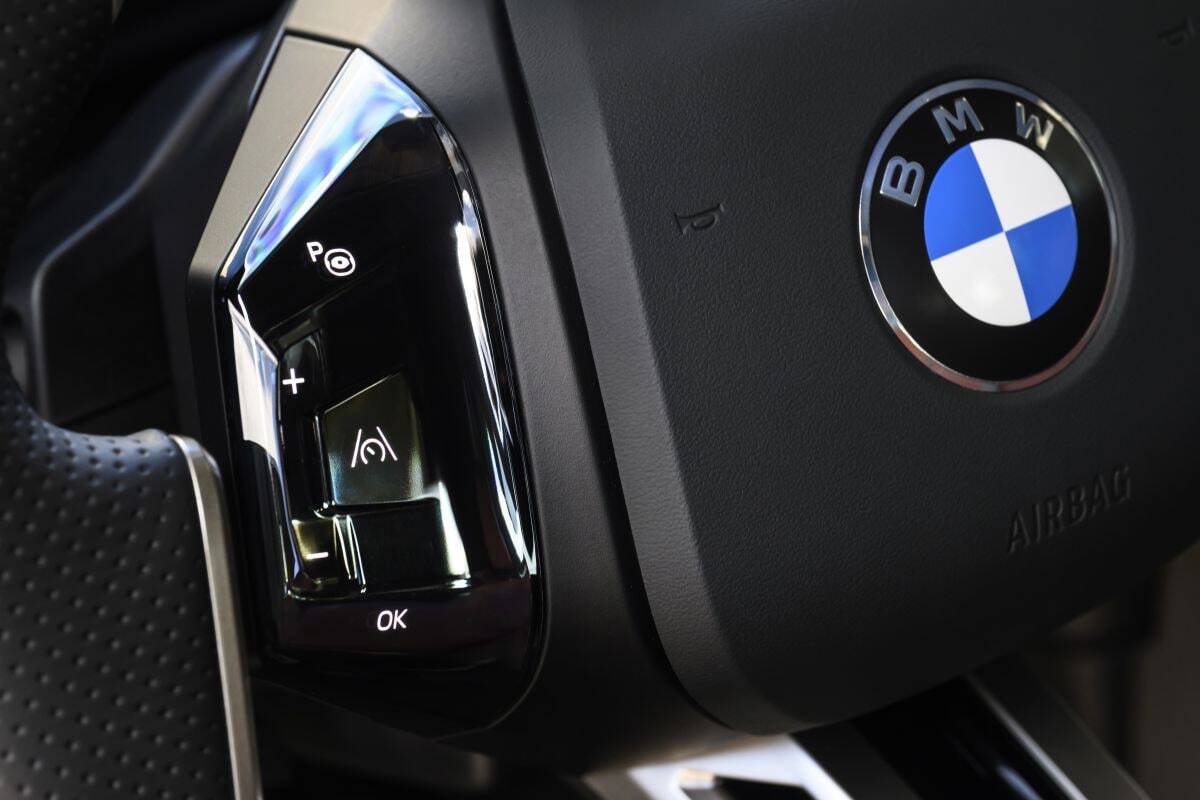
Functions on the steering wheel ‘buttons’ only light up when they are available.
How spacious is the new BMW iX3?
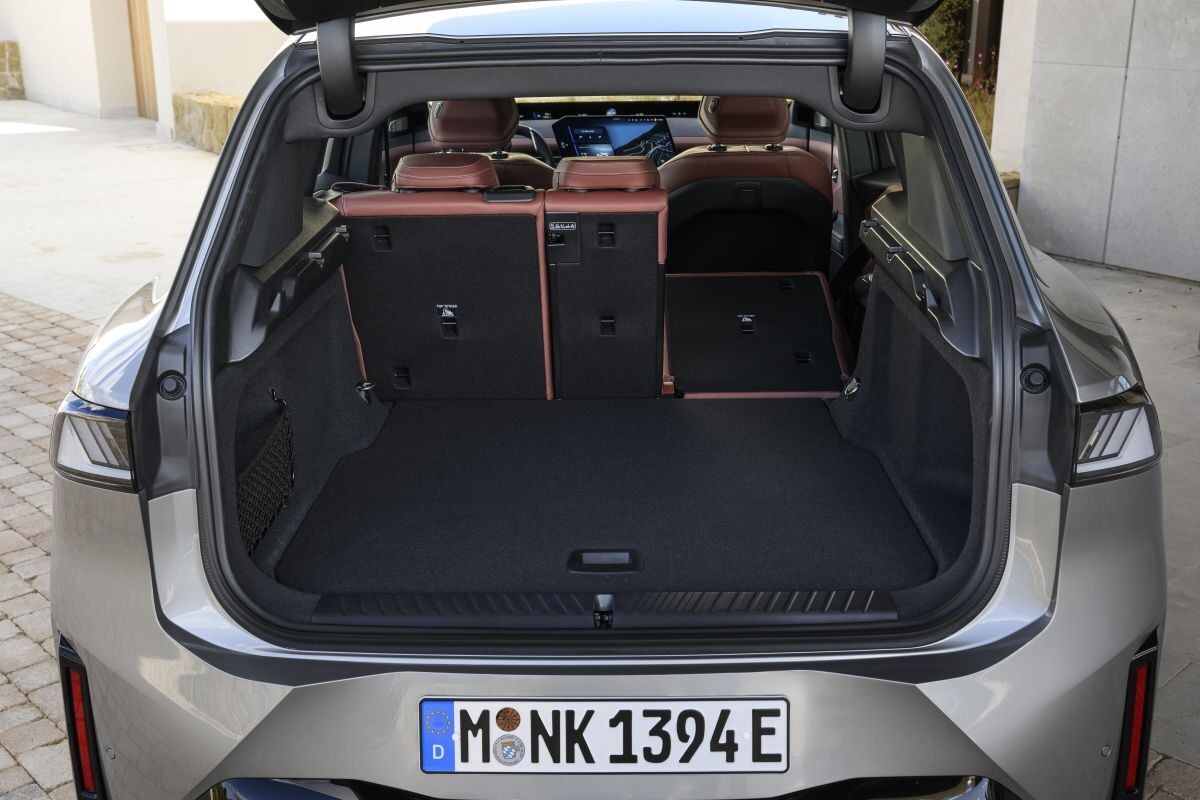
Compared to the non-electric X3, the new iX3 is a bit longer, but also narrower and lower. The result is a car that looks and feels less SUV-like and offers quite a bit of interior space, although the difference is not as big as thought. For example, the luggage space of 520 liters is only larger than that of an X3 if you calculate with the PHEV variant of that car, which is popular in the Netherlands. The iX3 does have a ‘frunk’ of 58 liters, a unique feature for a German EV. The tow bar can still carry a very decent 2,000 kg. On the standard three-part folding rear seat, we find a pleasant amount of leg and headroom and a good seating position for EV standards, helped by a slightly tilted seat.
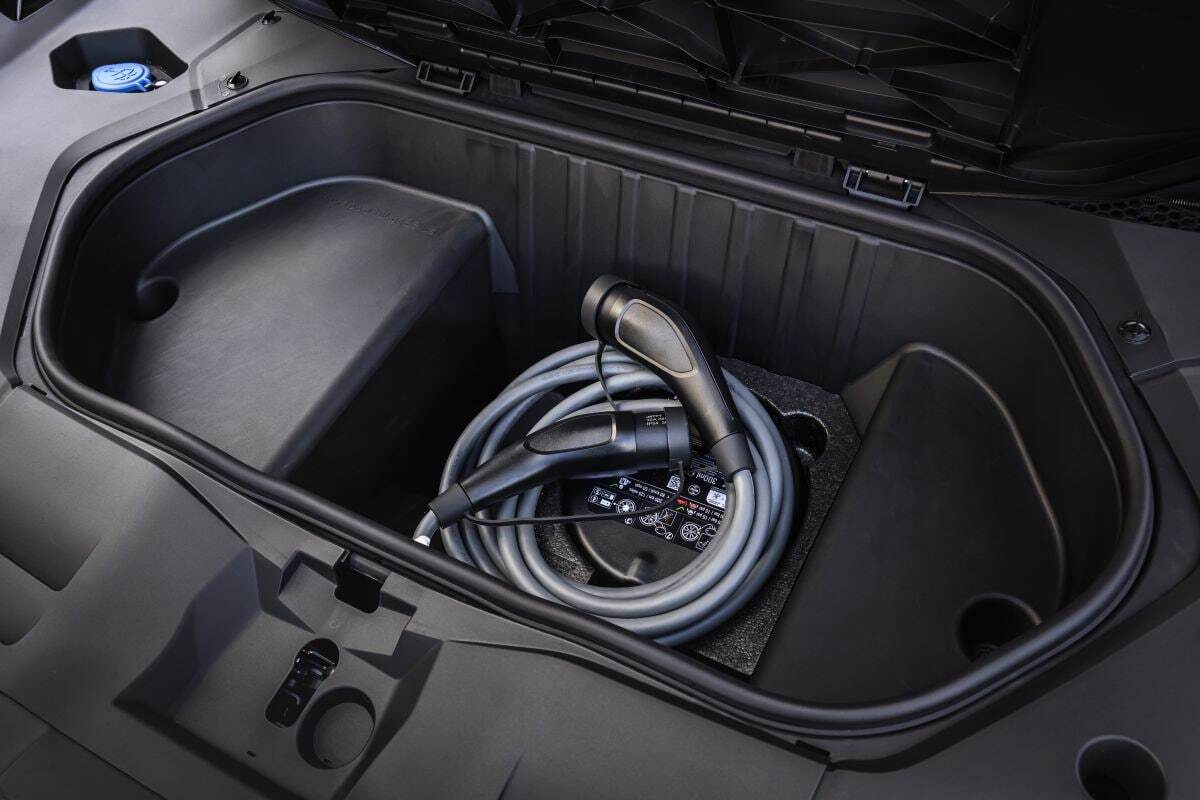
Bizarre: a frunk in a German EV!
How do you like that remarkable interior of this new iX3?
The seating position in the front is also excellent and we have no complaints about the finish and materials used. However, it is a pity that there are considerably fewer personalization options, a process that has been going on at BMW for some time. For example, the fine sports seats with seat extender are currently only available in dark colors and in combination with M Sport trim, where that used to be possible ‘just’ on a more modestly executed car.
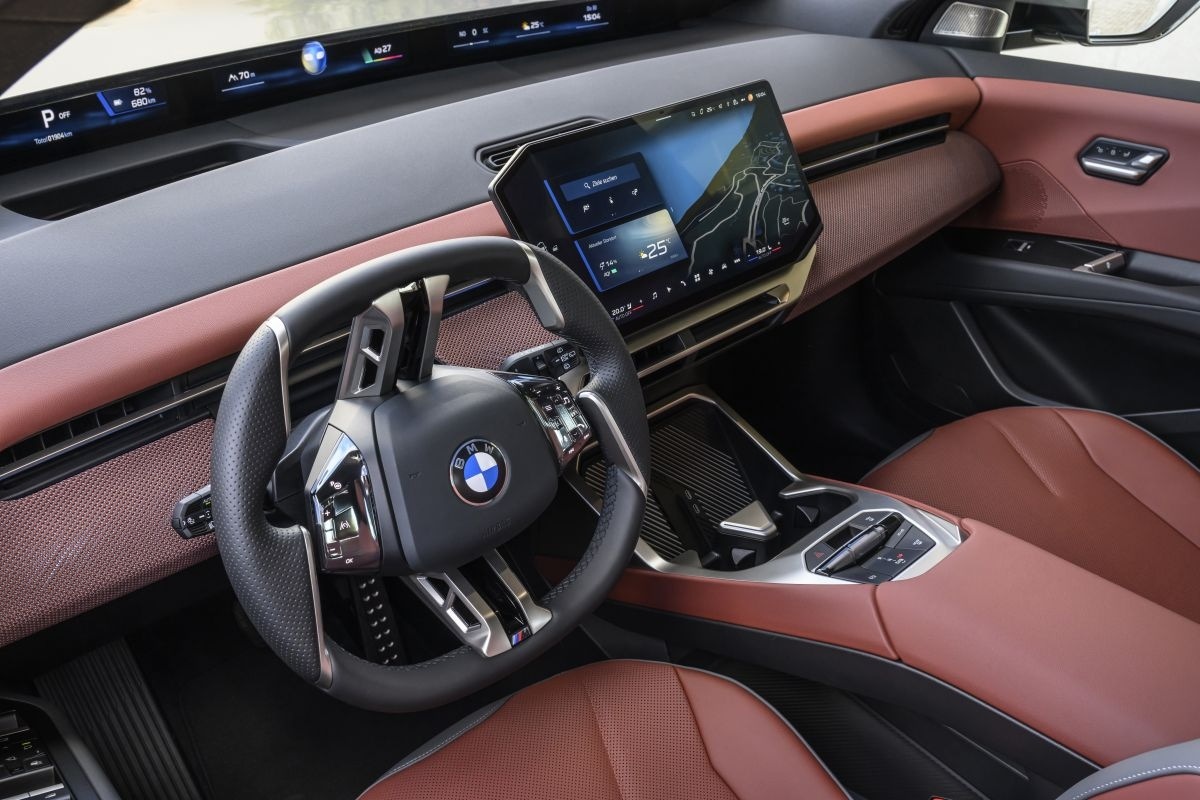
There is also a steering wheel without those vertical spokes available, for those who find that a bit too strange.
And it’s a BMW, so it won’t be cheap.
Indeed, but it is relatively reasonable. The iX3 starts at over 70,000 and then actually has everything you want as standard, from keyless entry to climate control and from adaptive cruise control to an electric tailgate. Of course, it will be more for a nicely decorated and colored copy, but that is still reasonable for a car with so much power, such a large battery and such an immense range. Later there will also be a cheaper version with rear-wheel drive and undoubtedly a smaller battery. That takes a few thousand euros off the price and certainly in that form this iX3 could well be a success in the Netherlands. However, expectations for this model are higher than that, because on the same Neue Klasse basis there will also be an i3 sedan and a whole series of other models. Watch out, China: Europe is still participating!